

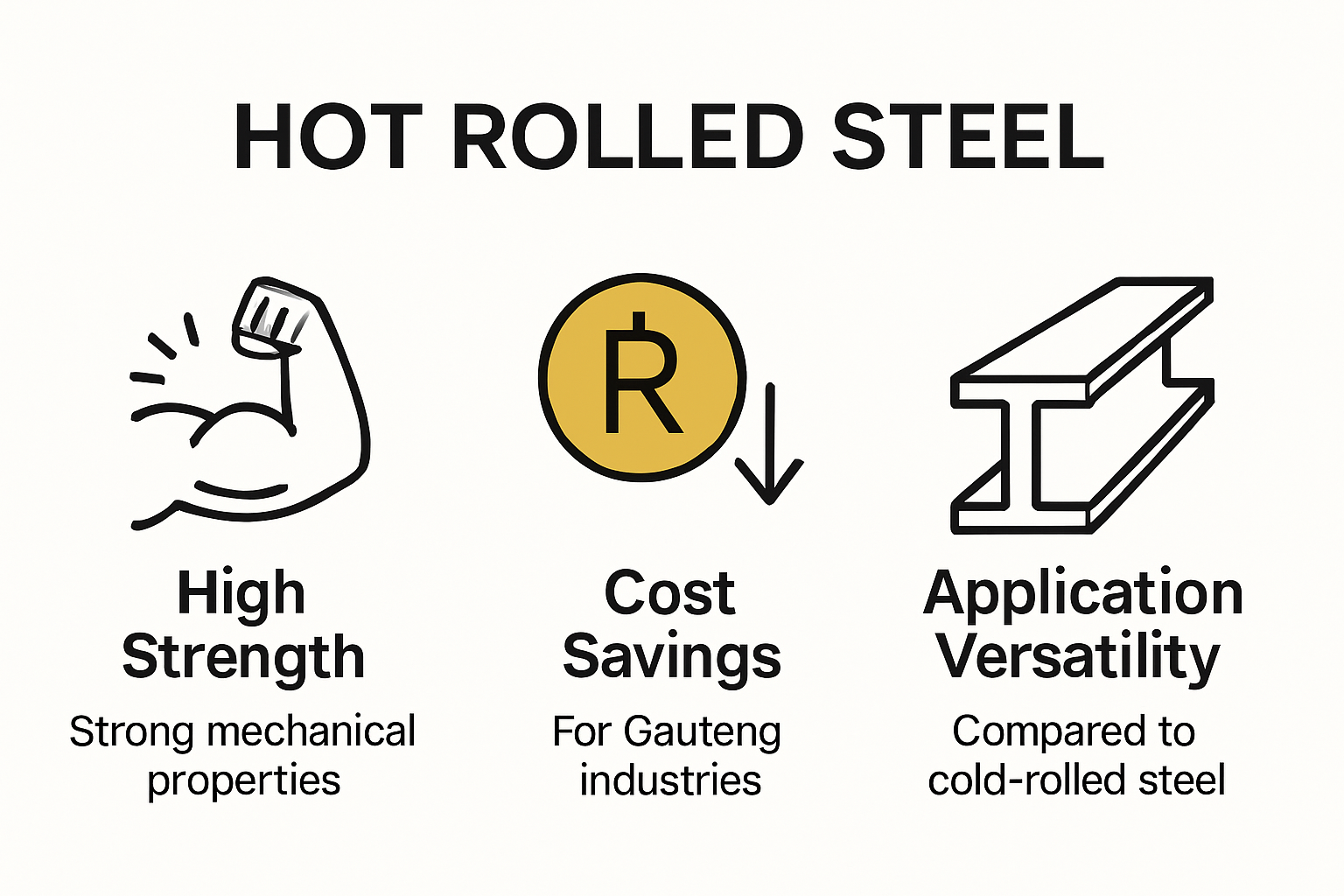
Hot rolled steel is shaping everything from new skyscrapers in Sandton to massive mining rigs across Gauteng. Most people know hot rolled steel gets heated above 900 degrees Celsius so it can be moulded into any size or shape you want. But few realise the biggest advantage is not just what you can build with it. The real game shift is how this process makes steel much tougher and cheaper for local companies, pushing Gauteng’s industries ahead of the pack.
Table of Contents
- What Is Hot Rolled Steel Process
- Key Properties And Benefits Of Hot Rolled Steel
- Hot Rolled Steel Applications In Gauteng Industries
- Choosing Hot Rolled Steel: Tips For B2B Procurement
Quick Summary
| Takeaway | Explanation |
|---|---|
| Hot rolled steel withstands high temperatures | The process involves heating steel to over 900 degrees Celsius, making it malleable for shaping. |
| Mechanical strength is a key property | Hot rolled steel is known for its toughness and ability to support significant loads. |
| Versatility leads to cost efficiency | The production process allows for varied size and shape, reducing waste and improving economic efficiency. |
| Critical for diverse industrial applications | Widely used in mining, construction, and manufacturing, providing strength in demanding environments. |
| Thorough supplier evaluation is crucial | Selecting suppliers based on quality, capacity, and reliability ensures access to high-performance materials. |
What is Hot Rolled Steel Process
The hot rolled steel process represents a fundamental manufacturing technique that transforms raw steel into versatile industrial materials through precise thermal and mechanical treatments. Understanding this intricate process provides critical insights into how steel transforms from its original state into a robust product essential for numerous industrial applications.
Thermal Transformation and Initial Stages
Hot rolling begins with steel heated to extremely high temperatures typically ranging between 900 and 1200 degrees Celsius. At these temperatures, steel becomes malleable and can be dramatically reshaped without compromising its structural integrity. According to the National Renewable Energy Laboratory, this process enables cost-effective and large-scale production by utilizing temperatures that facilitate significant material deformation and structural modifications.
The initial stage involves preparing steel slabs or billets, which are heated in specialized furnaces until they reach the optimal plasticity. These heated materials are then progressively passed through a series of heavy rollers that apply immense pressure, systematically reducing the steel’s thickness and altering its shape. The extreme heat allows the material to flow more easily, enabling manufacturers to create complex geometric profiles with remarkable precision.
Mechanical Processing and Structural Characteristics
During mechanical processing, the hot steel undergoes continuous deformation. Rolling mills equipped with sophisticated machinery apply carefully calculated pressure to elongate and flatten the material. This process not only changes the steel’s physical dimensions but also modifies its internal microstructure. The high temperatures and sustained mechanical stress cause grain recrystallization, which significantly influences the final product’s mechanical properties.
The resulting hot rolled steel typically exhibits distinctive characteristics: slightly rougher surface textures compared to cold-rolled alternatives, marginally less precise dimensional tolerances, and enhanced formability. These properties make hot rolled steel particularly suitable for applications requiring substantial strength and adaptability, such as construction frameworks, automotive components, and heavy industrial equipment.
Post-Processing and Industrial Applications
After the primary rolling process, hot rolled steel undergoes critical post-processing stages. The material is allowed to cool naturally at ambient temperatures, which introduces unique metallurgical transformations. This cooling process can be controlled to achieve specific material characteristics, influencing hardness, ductility, and overall mechanical performance.
Industrial sectors ranging from construction and manufacturing to automotive and infrastructure heavily rely on hot rolled steel. Its versatility stems from the ability to produce materials with consistent mechanical properties that can withstand significant structural loads. Whether fabricating large structural beams, creating intricate machinery components, or developing robust transportation infrastructure, hot rolled steel provides engineers and designers with a reliable and adaptable material solution.
The hot rolled steel process exemplifies modern metallurgical engineering, transforming raw materials into sophisticated products through a complex interplay of thermal energy, mechanical force, and precise manufacturing techniques.
Here is a step-by-step overview summarizing the hot rolled steel process, helping you visualise the flow from raw material to finished product:
| Stage | Description |
|---|---|
| Preparation | Steel slabs/billets are sourced and prepared for processing |
| Heating | Steel is heated in furnaces to 900–1200°C for optimum malleability |
| Rolling | Hot steel is passed through heavy rollers to reduce thickness and form desired shapes |
| Cooling | Rolled steel is air-cooled at room temperature, allowing metallurgical properties to develop |
| Post-Processing | Additional treatments (cutting, surface finishing, inspection) are done before use |
Key Properties and Benefits of Hot Rolled Steel
Hot rolled steel represents a critical material in modern industrial manufacturing, offering a unique combination of mechanical properties and performance characteristics that make it indispensable across multiple sectors. Understanding its distinctive attributes enables engineers and procurement specialists to make informed decisions about material selection for complex industrial applications.
Mechanical Strength and Structural Performance
Mechanical strength emerges as a primary attribute of hot rolled steel. According to the U.S. Department of Energy, this material is prized for its exceptional toughness and ability to withstand substantial structural loads. The manufacturing process contributes directly to its robust mechanical properties, creating a material capable of supporting significant weight and resisting deformation under challenging environmental conditions.
The inherent structural integrity of hot rolled steel allows manufacturers to design components with high load-bearing capacities. Engineers appreciate its consistent performance across various stress scenarios, making it ideal for critical infrastructure projects, heavy machinery construction, and industrial equipment fabrication. Its capacity to maintain structural stability under varying temperature and pressure conditions sets it apart from alternative materials.
Manufacturing Versatility and Cost Efficiency
Versatility represents another remarkable benefit of hot rolled steel. The production process enables manufacturers to create steel in extensive size ranges and complex geometric configurations. This flexibility translates into significant economic advantages, particularly for large-scale industrial projects requiring substantial material quantities.
The manufacturing approach allows for rapid production of steel components, reducing overall project timelines and material procurement challenges. Manufacturers can efficiently produce standardized and custom steel sections, providing engineering teams with adaptable solutions for diverse project requirements. The cost-effectiveness stems from the ability to generate large volumes of material with minimal waste and streamlined production processes.
Performance Characteristics and Industrial Applications
Hot rolled steel exhibits a range of performance characteristics that make it suitable for demanding industrial environments. Its slightly rougher surface texture provides enhanced adhesion properties, which can be advantageous in applications requiring paint, coating, or welding. The material’s inherent ductility allows for complex forming and shaping without compromising structural integrity.
Industrial sectors including construction, automotive manufacturing, heavy machinery production, and infrastructure development rely extensively on hot rolled steel. Its ability to maintain consistent mechanical properties across different manufacturing scales makes it a preferred choice for critical components requiring reliability and performance.
From creating robust structural beams in skyscrapers to manufacturing precision engineering components, hot rolled steel continues to play a pivotal role in modern industrial innovation. Its combination of mechanical strength, manufacturing versatility, and cost-effectiveness ensures its ongoing significance in global manufacturing ecosystems.
Below is a summary table highlighting the key properties and benefits of hot rolled steel as discussed above:
| Property / Benefit | Description / Advantage |
|---|---|
| High Mechanical Strength | Excellent toughness, supports large loads, resists deformation |
| Versatility | Can be shaped into many sizes and geometries; adaptable to various uses |
| Cost Efficiency | Rapid production, minimal waste, reduces project material costs |
| Surface Characteristics | Rougher texture enables better adhesion for coatings and welding |
| Structural Integrity | Maintains performance under temperature/pressure changes |
| Suitability | Ideal for construction, automotive, machinery, and infrastructure industries |
Hot Rolled Steel Applications in Gauteng Industries
Gauteng serves as a critical industrial hub where hot rolled steel plays a pivotal role across multiple manufacturing and infrastructure sectors. The region’s robust industrial ecosystem demands high-performance materials that can withstand complex operational requirements and provide exceptional structural integrity.
Mining and Heavy Industrial Infrastructure
In Gauteng’s mining sector, hot rolled steel represents an essential material for constructing robust equipment and infrastructure. According to the International Trade Administration Commission (ITAC), the material is crucial for manufacturing mining equipment, water tanks, gas cylinders, and specialized truck trailers. The region’s mining industries require materials that can endure extreme environmental conditions, high mechanical stress, and prolonged operational demands.
The manufacturing process of hot rolled steel enables the creation of components with superior strength-to-weight ratios, making it ideal for developing heavy-duty machinery used in platinum, gold, and coal extraction operations. Gauteng’s mining engineering firms consistently rely on these materials to design equipment that can operate efficiently in challenging underground and surface mining environments.
Construction and Infrastructure Development
Construction represents another critical sector where hot rolled steel finds extensive application. Tradecore Steel’s new processing facility in Gauteng highlights the region’s commitment to advancing steel processing capabilities for infrastructure projects. The material is fundamental in creating structural frameworks for buildings, bridges, industrial complexes, and transportation infrastructure.
Engineering firms in Gauteng utilize hot rolled steel to develop large-scale architectural frameworks that require exceptional load-bearing capacities. Its ability to maintain structural integrity under varying temperature and stress conditions makes it indispensable for constructing complex architectural designs and critical infrastructure components. From skyscrapers in Sandton to industrial facilities in Midrand, hot rolled steel provides the foundational strength necessary for modern urban development.

Manufacturing and Industrial Equipment
Scaw Metals’ new R5-billion hot-strip steel mill in Germiston demonstrates the region’s commitment to enhancing domestic steel production capabilities. This investment underscores the material’s significance in manufacturing sectors ranging from automotive production to precision engineering.
Manufacturers in Gauteng rely on hot rolled steel to create machinery components, industrial equipment, and specialized engineering solutions. Its versatility allows for complex shaping and fabrication, enabling the production of everything from heavy industrial machinery to intricate mechanical systems. The material’s consistent mechanical properties ensure reliable performance across diverse manufacturing applications.
The strategic importance of hot rolled steel in Gauteng’s industrial landscape cannot be overstated. Its unique combination of strength, adaptability, and cost-effectiveness positions it as a critical material driving technological innovation and industrial growth in the region. Learn more about our steel processing capabilities and how we support Gauteng’s dynamic industrial ecosystem.
The table below summarises key application areas for hot rolled steel across Gauteng industries, reflecting their specific requirements and advantages:
| Sector | Key Uses | Performance Requirements |
|---|---|---|
| Mining | Mining equipment, water tanks, gas cylinders, truck trailers | Withstand high stress, harsh environments |
| Construction | Structural frameworks (buildings, bridges, etc.) | High load-bearing, structural stability |
| Manufacturing | Machinery components, industrial equipment | Precision shaping, reliable mechanical strength |
Choosing Hot Rolled Steel: Tips for B2B Procurement
Procurement of hot rolled steel requires strategic decision-making and comprehensive understanding of material specifications, supplier capabilities, and industry standards. For B2B procurement professionals in Gauteng’s industrial sectors, selecting the right hot rolled steel involves a nuanced approach that balances technical requirements, cost-effectiveness, and long-term project performance.
Technical Specification and Material Assessment
Successful procurement begins with a meticulous evaluation of technical specifications. B2B buyers must thoroughly understand their project’s specific mechanical and structural requirements before initiating steel procurement. This involves comprehensive analysis of load-bearing capacities, environmental conditions, and anticipated stress factors that will impact material performance.
According to government procurement guidance, early engagement with steel producers and fabricators is crucial for understanding available market solutions and assessing delivery capabilities. Procurement teams should develop detailed material specifications that outline precise dimensional tolerances, strength requirements, and expected performance characteristics.
Key technical considerations include analyzing the steel’s yield strength, tensile properties, elongation percentage, and microstructural composition. These factors directly influence the material’s suitability for specific industrial applications, from heavy machinery construction to precision engineering components.
Supplier Evaluation and Strategic Sourcing
Comprehensive supplier assessment represents a critical phase in hot rolled steel procurement. Procurement professionals must evaluate potential suppliers based on multiple criteria beyond simple pricing structures. Critical evaluation parameters include manufacturing capabilities, quality control processes, certification standards, and proven track record in delivering consistent, high-quality materials.
Early market engagement strategies recommend testing potential procurement approaches and developing robust bid evaluation criteria. This process involves examining suppliers’ technical expertise, production capacity, delivery reliability, and ability to meet complex industrial requirements.
Additional evaluation metrics should include sustainability practices, compliance with international quality standards, technological capabilities, and responsiveness to custom manufacturing requirements. Procurement teams must also assess suppliers’ capacity to provide comprehensive technical support and potential customization options.
Cost Analysis and Long-Term Value Considerations
Effective hot rolled steel procurement extends beyond immediate cost considerations. B2B buyers must adopt a holistic approach that evaluates total cost of ownership, including material quality, performance longevity, and potential maintenance requirements.
Strategic procurement involves analyzing price structures, understanding market fluctuations, and developing flexible sourcing strategies. This approach requires continuous market intelligence gathering, tracking global steel production trends, and maintaining adaptable procurement frameworks.
Procurement professionals should consider factors such as material consistency, potential long-term supply agreements, volume discounts, and value-added services offered by suppliers. Comprehensive cost analysis includes evaluating potential performance advantages, reduced maintenance expenses, and overall project lifecycle economics.
Learn more about our procurement support services and discover how we can streamline your hot rolled steel acquisition process. Our expert team provides comprehensive guidance to ensure you make informed, strategic procurement decisions tailored to your specific industrial requirements.
Frequently Asked Questions
What is hot rolled steel?
Hot rolled steel is a type of steel that is processed at high temperatures, typically above 900 degrees Celsius, making it malleable. This allows it to be shaped into various sizes and forms for industrial applications.
What are the advantages of using hot rolled steel for construction?
The advantages of using hot rolled steel in construction include its mechanical strength, manufacturing versatility, and cost efficiency. It can support substantial loads and is suitable for creating complex structural frameworks.
How does the hot rolling process differ from cold rolling?
The hot rolling process involves heating steel above its recrystallization temperature, allowing for easy shaping and deformation. In contrast, cold rolling is performed at room temperature, yielding a smoother surface and tighter tolerances but often at a higher cost.
What are the primary applications of hot rolled steel in Gauteng?
Hot rolled steel is widely used in Gauteng’s mining, construction, and manufacturing industries. It is essential for creating structural components, heavy machinery, and various industrial equipment due to its strength and durability.
Ready to Power Your Gauteng Projects With Reliable Hot Rolled Steel?
When faced with rising demand and tight deadlines, you cannot afford delays or inferior materials. The article highlighted how mechanical strength, cost efficiency, and fast access to a wide range of hot rolled steel are essential for Gauteng industries. If your business relies on steel sheets or plates that must hold up under pressure and harsh working conditions, you need a partner who understands these challenges and delivers every time.
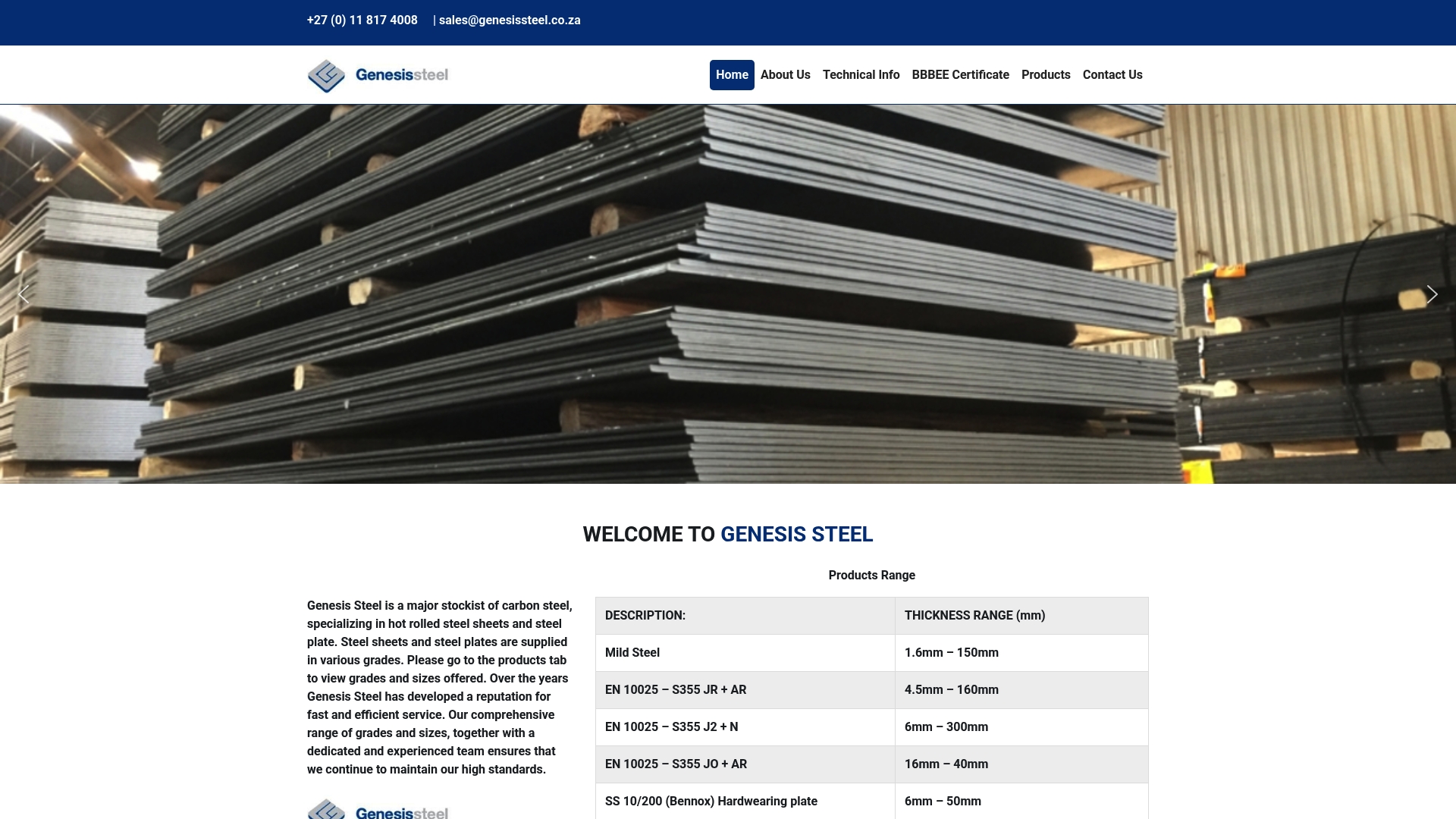
Take the next step with confidence. Genesis Steel is Gauteng’s trusted source specialising in hot-rolled steel sheets and plates. We stock a broad range of carbon steel grades and sizes, and our team is known for fast, efficient service tailored to your industrial requirements. Visit Genesis Steel now to experience reliable supply and proven support for your next big build. Don’t let your project fall behind—contact us today and discover the steel solution that moves you ahead.