

Construction sites across South Africa generate mountains of waste during every build. Studies show construction waste can make up as much as 35 percent of total landfill volumes. That sounds massive and expensive but so much of it actually ends up there needlessly. Instead of viewing construction waste as a headache, clever management can unlock serious savings and even improve your site’s efficiency. The real surprise is just how much of this scrap can be measured, planned for, and turned into value if you know exactly what steps to follow.
Table of Contents
- Step 1: Assess Current Waste Management Practices
- Step 2: Identify and Categorize Construction Waste Types
- Step 3: Develop a Waste Management Plan
- Step 4: Implement Waste Reduction Strategies
- Step 5: Monitor and Evaluate Waste Management Effectiveness
Quick Summary
| Key Point | Explanation |
|---|---|
| 1. Assess current waste management practices | Conduct a comprehensive assessment to identify waste generation patterns and areas for improvement. |
| 2. Categorize construction waste types | Create a detailed classification system for waste types, enabling effective handling and disposal strategies. |
| 3. Develop a robust waste management plan | Set measurable waste reduction goals and strategies, involving all project stakeholders for collaboration. |
| 4. Implement targeted waste reduction strategies | Establish designated waste reduction areas and train staff on segregation and recycling practices. |
| 5. Monitor and evaluate waste effectiveness | Track waste generation and recycling metrics continuously, adjusting strategies based on performance analytics. |
Step 1: Assess Current Waste Management Practices
Managing construction waste begins with a comprehensive understanding of your current practices. This initial assessment serves as the foundation for developing a more efficient and sustainable waste management strategy. By carefully evaluating existing processes, construction managers can identify critical areas for improvement and potential cost savings.
Start by conducting a thorough site audit that examines all aspects of waste generation and disposal. Walk through your construction site with a critical eye, documenting the types and volumes of waste produced during different project stages. Pay special attention to materials that are frequently discarded or create unnecessary waste streams. This might include packaging materials, excess cut materials, damaged components, and mixed debris that could potentially be sorted and recycled.
Documentation is crucial during this assessment phase. Create a detailed waste tracking system that captures key information about waste generation. This should include:
- Quantity of waste produced per material type
- Sources of waste within the construction process
- Current disposal methods and associated costs
- Existing recycling or reuse practices
Consult with your project team to gather insights about waste generation patterns. Frontline workers often have valuable observations about where and why waste occurs. Engage with site supervisors, laborers, and subcontractors to understand their perspective on waste management challenges. This collaborative approach not only provides comprehensive data but also helps build a culture of waste consciousness across the project team.
Utilize digital tools and software solutions to track and analyze waste data more effectively. Construction waste management software can help you generate detailed reports, track disposal costs, and identify optimization opportunities. These tools can transform raw data into actionable insights that drive more sustainable practices.
The assessment should also involve a financial analysis of current waste management expenses. Calculate direct costs associated with waste removal, landfill fees, and material replacement. Understanding the economic impact of inefficient waste practices can be a powerful motivator for implementing more streamlined approaches.
By the end of this assessment, you should have a clear picture of your current waste management landscape. This comprehensive overview will guide subsequent steps in developing a more efficient and environmentally responsible waste management strategy for your construction project.
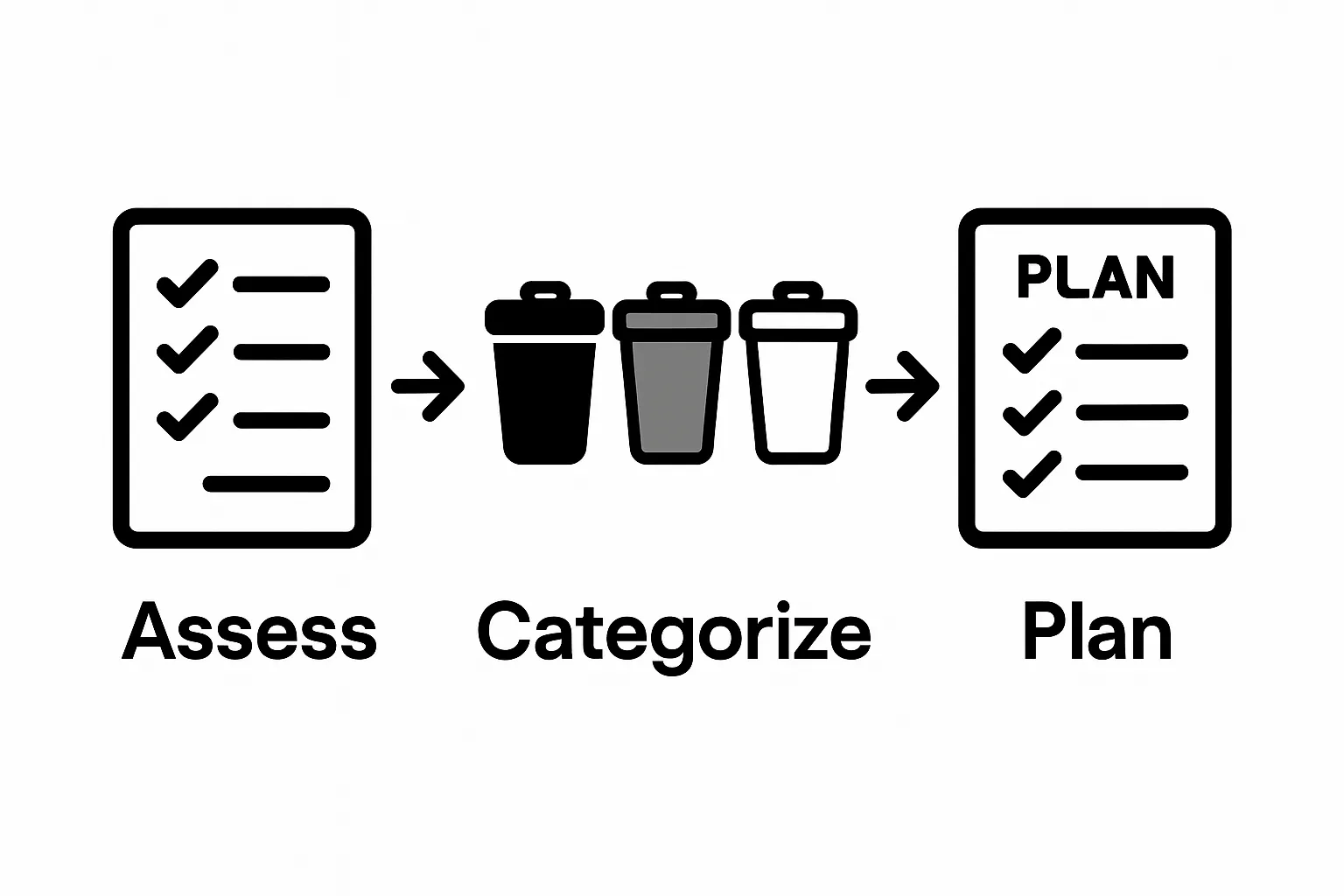
Step 2: Identify and Categorize Construction Waste Types
After completing your initial waste management assessment, the next critical step is to systematically identify and categorize the various waste types generated during construction. This process goes beyond simple waste recognition and involves creating a structured approach to understanding the materials that become waste streams on your project site.
Begin by conducting a comprehensive visual and physical inventory of waste materials. Careful categorization is the foundation of effective waste management. Construction sites typically generate multiple waste categories, each requiring different handling and disposal strategies. Focus on distinguishing between inert materials like concrete and bricks, recyclable materials such as metals and clean timber, and potentially hazardous waste including chemical containers, treated wood, and contaminated materials.
According to waste management research from the Green Building Council, precise waste categorization can significantly reduce landfill volumes and environmental impact. Create a detailed waste classification system that includes the following primary categories:
- Inert construction materials (concrete, bricks, ceramics)
- Recyclable metals
- Timber and wood waste
- Packaging materials
- Hazardous waste
- Mixed debris
Implement a color-coded or clearly labeled waste segregation system on the construction site. This visual approach helps workers quickly and accurately sort materials at the point of disposal. Consider investing in specialized waste sorting containers that facilitate immediate separation. Train all site personnel on the waste categorization system, ensuring they understand the importance of proper waste sorting and the potential environmental and economic benefits.
Digital tools can enhance your waste categorization process. Use site management software or custom spreadsheets to track waste types, volumes, and disposal methods. These tools can help you generate detailed reports that not only support current waste management efforts but also provide insights for future project planning and waste reduction strategies.
Take time to understand the specific recycling and disposal regulations in your area. Different waste types may have unique disposal requirements or recycling opportunities. Connect with local waste management facilities to understand their specific guidelines and potential recycling options for each waste category.
Below is a table summarising common construction waste types, their categories, and typical handling or disposal methods to help streamline on-site sorting and management.
| Waste Type | Category | Typical Handling/Disposal Approach |
|---|---|---|
| Concrete, bricks | Inert materials | Recycle/reuse if clean, otherwise landfill |
| Clean timber | Recyclable materials | Reuse onsite or recycle |
| Metals | Recyclable materials | Segregate and send to recycling facility |
| Packaging materials | General/construction | Recycle where possible, dispose if soiled |
| Hazardous waste | Hazardous | Special disposal via accredited providers |
| Treated wood, chemicals | Hazardous | Segregate and dispose as hazardous waste |
| Mixed debris | Mixed | Sort on-site, recycle or landfill as needed |
By the end of this step, you should have a clear, documented system for identifying and categorizing construction waste. This comprehensive approach sets the stage for more effective waste reduction, recycling, and responsible disposal in subsequent project stages.
Step 3: Develop a Waste Management Plan
With a comprehensive understanding of your current waste generation and categorization, the next crucial step is developing a detailed waste management plan. This strategic document will serve as your project’s blueprint for minimizing waste, reducing environmental impact, and optimizing resource utilization.
A robust waste management plan begins with setting clear, measurable objectives. Determine specific targets for waste reduction, recycling rates, and disposal efficiency. These goals should be realistic yet challenging, pushing your project team toward more sustainable practices. Consider establishing percentage-based targets for material recycling, waste diversion from landfills, and overall waste volume reduction.
The planning process requires collaboration across multiple project stakeholders. Engage architects, contractors, subcontractors, and waste management professionals to create a comprehensive and practical strategy. Each team member brings unique insights into potential waste reduction opportunities and implementation challenges.
According to construction waste management guidelines, your waste management plan should include several critical components:
- Detailed waste quantification and classification
- Specific waste reduction strategies
- Recycling and reuse protocols
- Responsible disposal procedures
- Budget allocation for waste management activities
- Training and implementation timeline
Design waste prevention strategies directly into your project workflow. This might involve selecting materials with minimal packaging, purchasing precisely measured quantities, and implementing modular construction techniques that reduce on-site cutting and waste generation. Encourage suppliers to minimize packaging and take back reusable materials when possible.
Economic considerations are equally important in your waste management plan. Calculate potential cost savings from waste reduction, including reduced material purchases, lower disposal fees, and potential revenue from recyclable materials. Financial incentives can be powerful motivators for maintaining waste management discipline.
Develop clear communication protocols and training programs to ensure all team members understand the waste management plan. Create visual guides, conduct regular training sessions, and establish accountability mechanisms. Site-wide signage, color-coded waste stations, and periodic progress reports can help maintain focus on waste reduction goals.
By the end of this planning stage, you should have a comprehensive, actionable document that provides clear guidance on managing construction waste throughout the project lifecycle.
The following checklist table helps ensure that all essential elements are covered during the development of your construction waste management plan.
| Plan Component | Description | Completed (Y/N) |
|---|---|---|
| Waste quantification/classification | Identify and measure all waste types | |
| Waste reduction targets | Set measurable goals for reduction and recycling | |
| Recycling/reuse protocols | Define clear guidelines for materials management | |
| Disposal procedures | Outline responsible disposal practices | |
| Budget allocation | Assign resources for managing waste activities | |
| Training plan | Schedule training for all site personnel | |
| Implementation timeline | Establish a timeline for rolling out the plan |
Step 4: Implement Waste Reduction Strategies
Transitioning from planning to active implementation marks a critical phase in managing construction waste effectively. This step transforms your carefully developed waste management plan into tangible on-site practices that can significantly reduce material waste and environmental impact.
Strategic implementation begins with creating dedicated waste reduction zones on the construction site. Establish clearly marked areas for material sorting, temporary storage, and potential recycling. These zones should be easily accessible, well-organized, and equipped with appropriate containers for different waste categories. Proper site layout can dramatically improve waste segregation efficiency and reduce cross-contamination of materials.
According to construction waste management research, implementing targeted waste reduction strategies can significantly minimize total waste volumes. Focus on practical approaches that prevent waste generation from the outset. This includes careful material ordering, precise cutting techniques, and prioritizing materials with minimal packaging.
Consider implementing these key waste reduction strategies:
- Utilize prefabricated building components
- Implement precise measurement and cutting techniques
- Negotiate with suppliers for minimal packaging
- Design modular construction elements
- Establish material recovery and reuse protocols
Training becomes paramount during implementation. Conduct comprehensive workshops that demonstrate proper waste sorting, material handling, and recycling techniques. Ensure every team member understands their role in waste reduction. Visual aids, practical demonstrations, and regular refresher sessions can help embed these practices into daily site operations.
Technology can be a powerful ally in waste reduction efforts. Employ digital tracking systems that monitor material usage, waste generation, and recycling rates in real-time. These tools provide immediate feedback and help identify potential inefficiencies quickly.
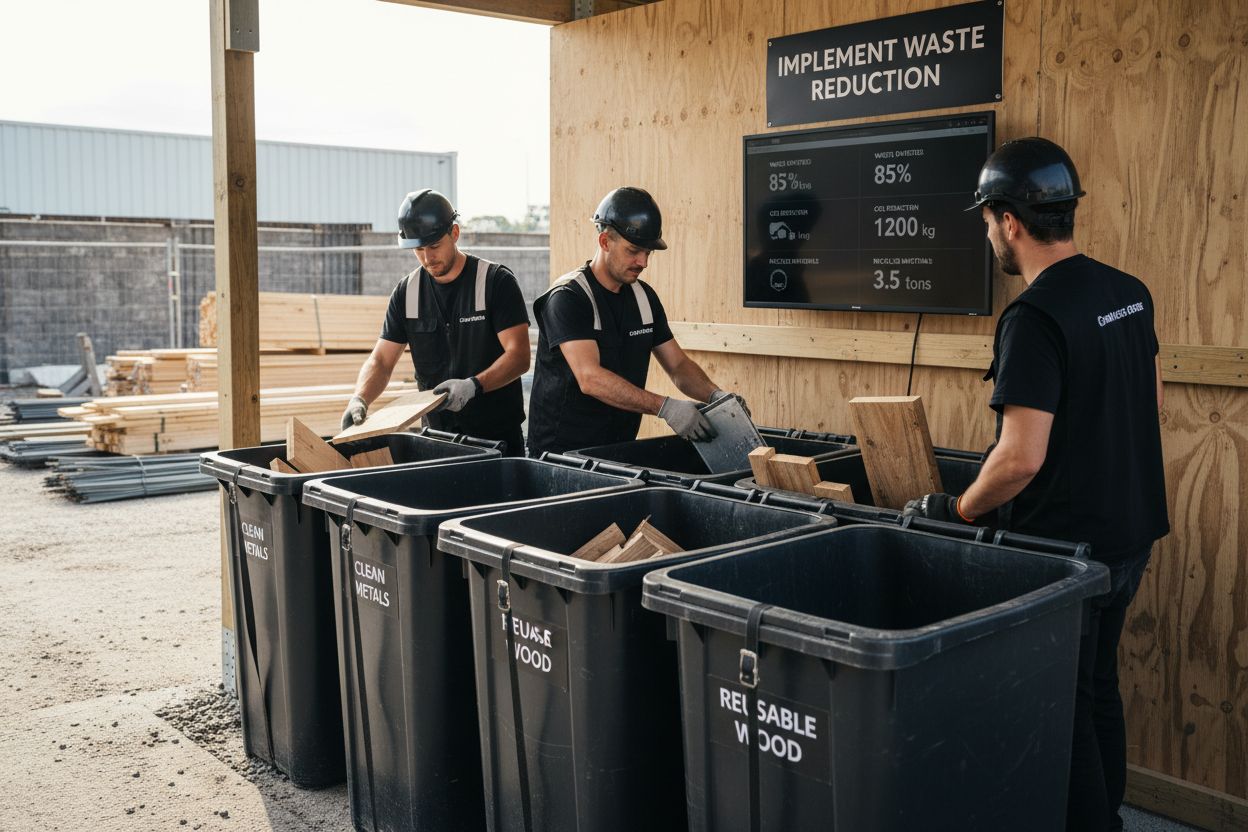 Some advanced software solutions can even predict potential waste streams based on project specifications and historical data.
Economic incentives can dramatically improve waste reduction compliance. Consider implementing a reward system that recognizes teams or individuals who consistently demonstrate excellent waste management practices. This might involve performance bonuses, public recognition, or career development opportunities tied to sustainable construction practices.
Regularly review and adjust your waste reduction strategies throughout the project lifecycle. What works in the initial stages might need modification as the project progresses. Maintain open communication channels that allow workers to provide feedback and suggest improvements to existing waste management protocols.
By the end of this implementation phase, your construction site should demonstrate a systematic, efficient approach to waste reduction. Measurable improvements in material efficiency, reduced disposal costs, and increased recycling rates will validate the effectiveness of your waste management strategies.
Step 5: Monitor and Evaluate Waste Management Effectiveness
Monitoring and evaluating waste management performance transforms your waste reduction strategies from theoretical plans into measurable, actionable insights. This critical step ensures continuous improvement and helps identify opportunities for further optimization throughout your construction project.
Establishing a robust tracking and measurement system is fundamental to effective waste management. Develop a comprehensive monitoring framework that captures detailed data about waste generation, disposal, and recycling efforts. This involves creating standardized documentation processes that track waste volumes, types, disposal methods, and associated costs across different project stages.
According to sustainable construction research, systematic performance monitoring can reduce construction waste by up to 20% through targeted interventions. Implement key performance indicators (KPIs) that provide clear, quantifiable metrics for waste management effectiveness.
Consider tracking these critical waste management metrics:
- Total waste volume generated per project phase
- Percentage of waste diverted from landfills
- Recycling and reuse rates
- Cost savings from waste reduction strategies
- Compliance with waste management regulations
Utilize digital tools and software platforms that enable real-time waste tracking and reporting. These technologies can generate detailed visual dashboards, helping project managers quickly understand waste management performance. Advanced analytics can highlight trends, predict potential waste generation, and suggest targeted improvement strategies.
Regular site audits are essential for maintaining waste management standards. Schedule periodic comprehensive reviews that involve walking through the construction site, examining waste sorting practices, and assessing compliance with established protocols. These audits should be conducted by trained professionals who can provide objective, detailed feedback.
Feedback loops are crucial for continuous improvement. Create mechanisms that allow workers to report waste management challenges, suggest improvements, and share observations. Anonymous suggestion systems, team meetings, and periodic surveys can provide valuable insights from frontline workers who interact directly with waste management processes.
Financial analysis forms an integral part of waste management evaluation. Calculate the economic impact of your waste reduction strategies, including cost savings from reduced material waste, lower disposal fees, and potential revenue generated through recycling. These financial metrics can help justify investments in waste management technologies and training.
By the end of this monitoring phase, you should have a comprehensive understanding of your project’s waste management performance. The data collected will not only demonstrate the effectiveness of your current strategies but also provide a foundation for refining and improving waste reduction approaches in future construction projects.
Tackle Construction Waste with Quality Steel Solutions from Genesis Steel
Struggling to keep construction waste in check while aiming for greater efficiency and cost savings? The article highlighted how proper assessment, effective waste categorisation, and accurate planning can make all the difference on site. Yet, too often, project managers face extra waste from low-quality, ill-sized, or unsuitable materials. Choosing the right partner for reliable steel supply helps you cut down on excess, waste, and frustration – so your waste management plan delivers true results.
Give your next project the edge by sourcing premium hot-rolled steel sheets and plates direct from Genesis Steel. Our broad stock range and specialist team ensure you get precisely what your job needs, on time. That means less offcut, lower disposal costs, and more time hitting your project targets. Ready to experience smarter construction waste management with seamless steel supply? Visit Genesis Steel today and unlock fast, efficient service tailored to your project’s needs.
Frequently Asked Questions
What are the first steps in managing construction waste?
To effectively manage construction waste, start with assessing your current waste management practices by conducting a thorough site audit. This audit should document the types, volumes, and sources of waste generated during different project stages to identify areas for improvement.
How can construction waste be categorized effectively?
Construction waste can be categorized into several types, including inert materials (like concrete and bricks), recyclable materials (such as metals and clean timber), and hazardous waste (including chemical containers). Implement a color-coded waste segregation system to facilitate proper sorting on-site.
What key components should be included in a waste management plan?
A comprehensive waste management plan should include waste quantification and classification, specific waste reduction strategies, recycling and reuse protocols, responsible disposal procedures, budget allocation for waste management activities, and a training and implementation timeline.
How can the effectiveness of waste management strategies be evaluated?
The effectiveness of waste management strategies can be evaluated by establishing a monitoring framework that tracks waste generation, disposal, recycling rates, and associated costs. Implementing key performance indicators (KPIs) and conducting regular site audits are essential for continuous improvement.