

Construction sites can look organised from the outside but every project hides risks that are easy to miss. Surprising though that using risk matrices can reduce workplace incidents by up to 35 percent, according to OSHA. Most managers think regular toolbox talks and paperwork are enough but real site safety actually starts with spot-on risk assessment and ongoing vigilance that protect your workers every day.
Table of Contents
- Step 1: Assess Potential Hazards And Risks
- Step 2: Develop A Comprehensive Safety Plan
- Step 3: Implement Safety Training For All Workers
- Step 4: Conduct Regular Safety Inspections
- Step 5: Monitor Compliance And Adjust The Safety Plan
Quick Summary
| Key Point | Explanation |
|---|---|
| 1. Conduct Thorough Site Walkthroughs | A detailed assessment of the site helps identify potential hazards before any work begins, ensuring worker safety. |
| 2. Develop a Comprehensive Safety Plan | A robust plan includes specific protocols for hazards, PPE requirements, and emergency procedures to manage risks effectively. |
| 3. Implement Engaging Safety Training | An effective training program transforms safety guidelines into practical knowledge, fostering a proactive safety culture among workers. |
| 4. Regularly Perform Safety Inspections | Systematic inspections validate the effectiveness of safety protocols and adapt them to any evolving site conditions. |
| 5. Monitor Compliance and Evolve Strategies | Tracking compliance and safety performance allows teams to enhance strategies, ensuring ongoing worker protection and safety improvement. |
Step 1: Assess Potential Hazards and Risks
Constructing a safe environment requires a systematic and thorough approach to identifying potential risks before work begins. Safety on construction sites demands meticulous preliminary assessment that protects workers and prevents potential accidents. This critical first step involves comprehensive evaluation of the entire work environment to understand and mitigate potential dangers.
Site Reconnaissance and Initial Assessment
Begin by conducting a comprehensive walkthrough of the entire construction site. During this initial reconnaissance, carefully observe the physical landscape, existing infrastructure, and potential environmental challenges. Look for obvious and hidden risks such as uneven terrain, overhead electrical lines, underground utility networks, and potential structural weaknesses. Document every observation methodically, creating a detailed record that will serve as the foundation for your safety strategy.
Professional safety inspectors recommend using structured assessment tools like risk matrices to categorise and prioritise potential hazards. These matrices help quantify risks by evaluating both the likelihood of an incident occurring and the potential severity of consequences. By systematically scoring each identified risk, construction managers can develop targeted mitigation strategies that address the most critical threats first.
Documentation and Risk Classification
After completing the site walkthrough, compile a comprehensive hazard identification document. This document should include detailed descriptions of potential risks, their estimated probability, potential impact, and recommended control measures. Key elements to document include:
- Structural instabilities or compromised ground conditions
- Electrical and mechanical equipment risks
- Potential chemical or material exposure hazards
- Environmental factors like weather conditions or terrain challenges
Working with experienced safety professionals can enhance the accuracy and depth of your risk assessment. According to SafeWork Australia, effective hazard identification requires a multidisciplinary approach that combines technical expertise, site-specific knowledge, and a proactive safety mindset.
Remember that risk assessment is not a one-time event but an ongoing process. Regularly update your hazard documentation as site conditions change, new equipment is introduced, or work phases progress. By maintaining a dynamic and responsive approach to safety, construction teams can create a protective environment that minimises potential incidents and ensures worker wellbeing.
Below is a summary table detailing key elements to document during hazard identification, helping teams ensure a thorough and systematic construction site risk assessment.
| Hazard Category | Example Risks | Documentation Requirement |
|---|---|---|
| Structural Instabilities | Compromised ground, weak scaffolding | Detailed description, location specifics |
| Electrical and Mechanical Equipment | Overhead lines, faulty machinery | Risk severity, mitigation measures |
| Chemical/Material Exposure | Hazardous substances, dust, airborne irritants | PPE requirements, control recommendations |
| Environmental Factors | Unpredictable weather, uneven terrain | Impact analysis, contingency strategies |
| Site Infrastructure Weakness | Damaged access points, unstable platforms | Photo evidence, maintenance schedule |
Step 2: Develop a Comprehensive Safety Plan
Transforming the initial hazard assessment into a robust safety strategy requires careful planning and strategic thinking. A comprehensive safety plan serves as the blueprint for protecting workers and preventing potential accidents on construction sites. This critical document will translate your risk identification into actionable protocols that guide every aspect of site operations.
Strategic Safety Planning Framework
Begin by organizing the insights gathered from your initial risk assessment into a structured safety framework.
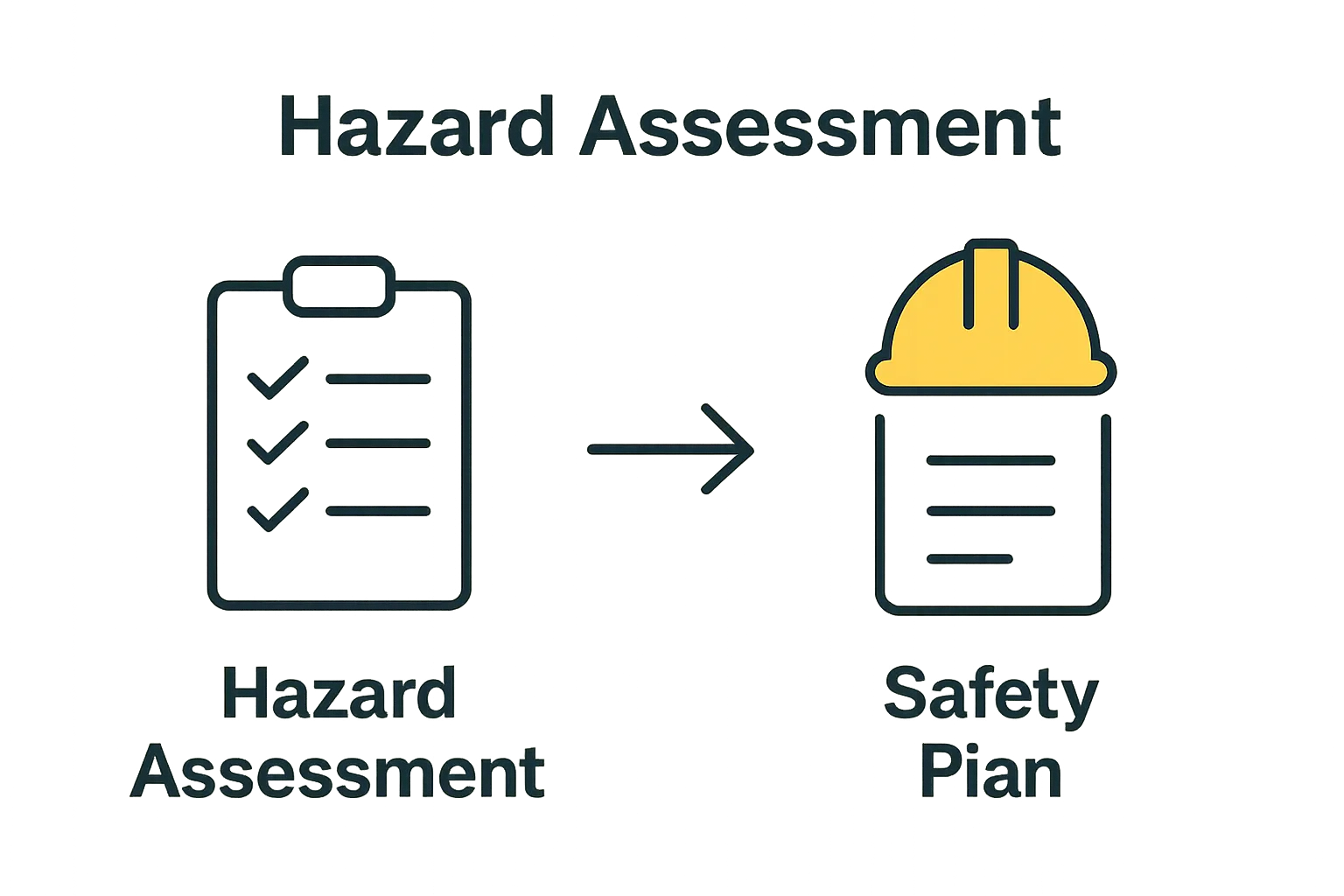 This involves creating detailed protocols that address each identified potential hazard with specific mitigation strategies. Professional construction safety managers recommend developing a plan that is both comprehensive and flexible, allowing for real-time adjustments as site conditions evolve.
Your safety plan should include clear guidelines for personal protective equipment (PPE) requirements, emergency response procedures, communication protocols, and specific safety instructions for different work zones. Precision and clarity are crucial when drafting these guidelines. Each section must be written in straightforward language that can be easily understood by workers at all skill levels.
Implementation and Communication Strategies
Developing the safety plan is only half the battle. Effective implementation requires a robust communication strategy that ensures every team member understands their responsibilities. Conduct comprehensive safety briefings that walk through the entire plan, using practical demonstrations and interactive training sessions. According to Occupational Safety and Health Administration, effective safety communication can reduce workplace incidents by up to 35 percent.
Critical elements to include in your comprehensive safety plan:
- Detailed PPE specifications for each work zone
- Emergency contact information and evacuation procedures
- Specific safety protocols for high-risk activities
- Training requirements for all personnel
- Documentation and reporting mechanisms for incidents
Remember that a safety plan is a living document. Schedule regular review sessions to assess its effectiveness, incorporate feedback from workers, and adapt to changing site conditions. By treating safety planning as an ongoing process of improvement, construction teams can create a culture of proactive risk management that protects workers and enhances overall project efficiency.
A well-constructed safety plan demonstrates your commitment to worker wellbeing and serves as a critical tool for preventing accidents, managing risks, and ensuring smooth project execution.
Step 3: Implement Safety Training for All Workers
Safety training transforms written protocols into practical workplace protection, bridging the gap between documentation and actual worker understanding. Effective training goes beyond simple instruction, creating a comprehensive safety culture that empowers workers to recognize, prevent, and respond to potential risks on construction sites.
Comprehensive Training Approach
Design a multilayered training program that addresses the diverse skill levels and roles within your construction team. The training should be structured to provide both theoretical knowledge and practical skill development. Begin with foundational safety principles that apply universally, then develop specialized modules for specific job functions and equipment interactions.
Utilize a mix of training methods to maximize learning retention. Interactive workshops, hands-on demonstrations, digital simulations, and scenario-based learning can help workers internalize safety concepts more effectively than traditional lecture-style presentations. Practical experience is key to transforming theoretical knowledge into instinctive safety awareness.
Verification and Continuous Learning
Implement a robust system for tracking and verifying training completion. This includes maintaining detailed records of each worker’s training progress, certification levels, and periodic recertification requirements. According to SafeWork Australia, systematic training documentation is crucial for maintaining workplace safety standards and legal compliance.
Essential training components to include:
- Comprehensive personal protective equipment (PPE) usage training
- Emergency response and first aid procedures
- Specific equipment operation safety protocols
- Risk recognition and immediate reporting mechanisms
- Site-specific hazard awareness training
Create a continuous learning environment that encourages workers to share safety insights and lessons learned. Regular safety discussions, incident review sessions, and open communication channels can help evolve your training approach. Workers should feel empowered to contribute their observations and suggestions, transforming safety training from a compliance requirement into a collaborative process of ongoing improvement.
Remember that safety training is not a one-time event but an ongoing commitment. Regular refresher courses, updates based on new site conditions, and adaptive training strategies ensure that your workforce remains prepared and protected. By investing in comprehensive, engaging, and practical safety training, construction teams can significantly reduce workplace incidents and create a culture of proactive risk management.
Step 4: Conduct Regular Safety Inspections
Safety inspections are the critical pulse check that ensures your meticulously developed safety protocols remain effective and relevant. These systematic evaluations transform theoretical safety plans into practical, real-world protection mechanisms that actively identify and mitigate potential risks on construction sites.
Strategic Inspection Methodology
Develop a structured inspection framework that goes beyond superficial checks. Each safety inspection should be a comprehensive examination that combines visual assessment, documented evidence, and proactive risk identification. Assign dedicated safety professionals or trained team leaders to conduct these inspections, ensuring they have both the technical expertise and the authority to make immediate recommendations.
Create a standardized inspection checklist that covers every critical aspect of site safety. This document should be dynamic, allowing for site-specific modifications and capturing nuanced details that generic forms might miss. Thoroughness and precision are key when documenting potential hazards, equipment conditions, and worker compliance with safety protocols.
Documentation and Continuous Improvement
Transform safety inspections from routine checks into strategic improvement opportunities. Each inspection should generate a detailed report that not only highlights existing risks but also provides actionable recommendations for mitigation. Implement a tracking system that monitors the resolution of identified issues, ensuring that no potential safety concern goes unaddressed. According to Occupational Safety and Health Administration, systematic documentation is crucial for maintaining workplace safety standards and legal compliance.
Key elements to document during safety inspections:
- Personal protective equipment condition and usage
- Equipment maintenance and operational safety
- Site infrastructure and potential structural risks
- Worker safety practices and protocol adherence
- Environmental and hazardous material management
Establish a frequency for safety inspections that matches the dynamic nature of your construction site. While daily quick checks are essential, more comprehensive inspections should be scheduled weekly or bi-weekly. These in-depth reviews allow for a holistic assessment of site safety, capturing evolving risks and verifying the ongoing effectiveness of your safety strategies.
Remember that safety inspections are not about finding fault but about creating a proactive safety culture. Encourage open communication, where workers feel comfortable reporting potential risks and contributing to the site’s safety improvements.
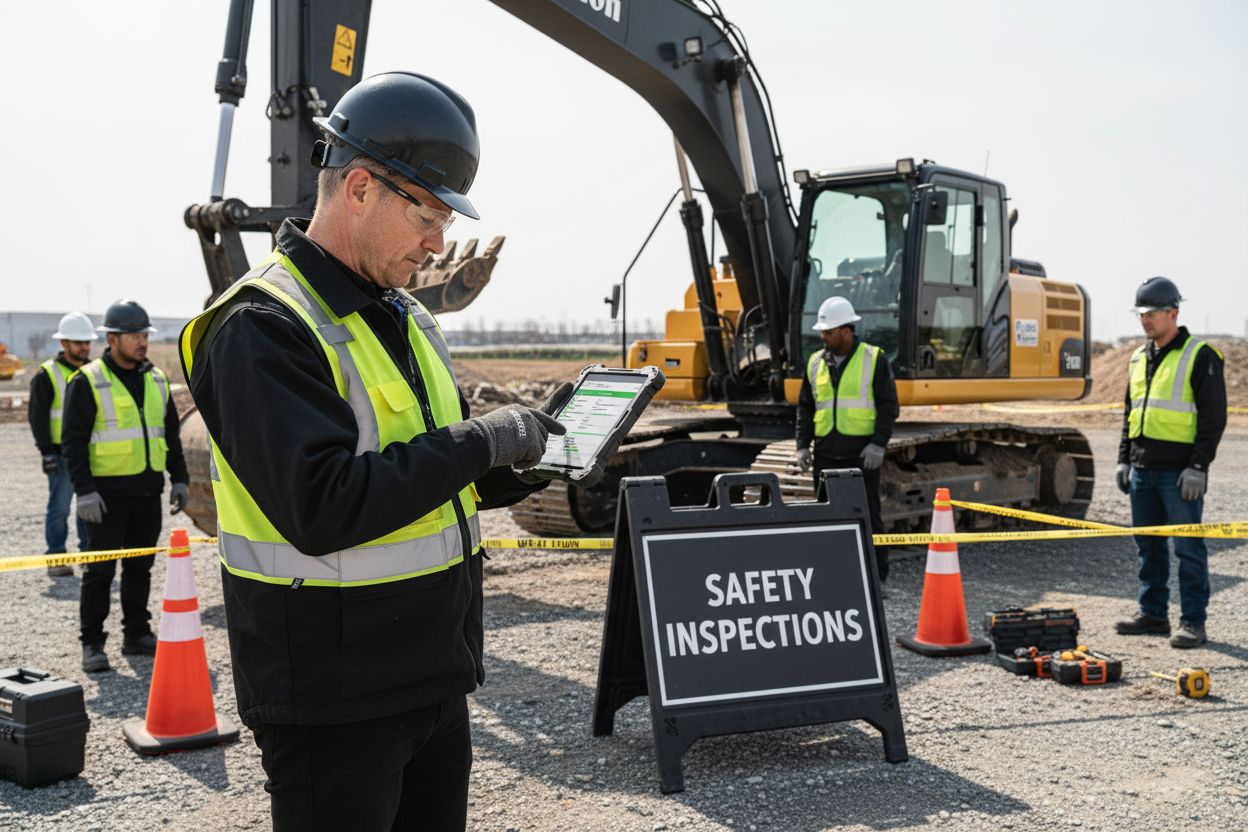 By treating each inspection as an opportunity for collaborative problem-solving, construction teams can continuously enhance their safety approach and protect their most valuable asset: their workforce.
This table provides an overview of essential inspection documentation elements, supporting effective hazard tracking and continuous improvement efforts during safety inspections.
| Inspection Focus Area | What to Record | Suggested Documentation Format |
|---|---|---|
| PPE Condition and Usage | State of PPE, correct usage by workers | Checklist, incident record |
| Equipment Maintenance & Safety | Operational faults, routine maintenance log | Maintenance register, photo log |
| Site Infrastructure & Risks | Signs of structural weakness, hazards | Inspection report, annotated site map |
| Worker Practice & Compliance | Adherence to protocols, unsafe behaviours | Observation logs, compliance check |
| Environmental/Hazardous Material | Storage & handling procedures, spills | Incident log, procedure audit |
Step 5: Monitor Compliance and Adjust the Safety Plan
Effective safety management is a dynamic process that requires continuous monitoring, evaluation, and adaptation. Compliance tracking transforms safety protocols from static documents into living strategies that respond to real-world conditions and evolving workplace challenges on construction sites.
Comprehensive Compliance Tracking Systems
Establish a robust monitoring framework that goes beyond simple checklist compliance. Develop a multifaceted approach that combines quantitative data collection, qualitative observations, and proactive analysis. Implement digital tracking systems that allow real-time documentation of safety performance, enabling managers to identify trends, potential risks, and areas requiring immediate attention.
Performance Measurement and Strategic Adaptation
Create a comprehensive performance measurement system that captures multiple dimensions of safety compliance. This involves developing key performance indicators (KPIs) that track not just incident rates, but also preventative actions, training effectiveness, and worker engagement with safety protocols. Detailed documentation becomes your primary tool for understanding and improving site safety dynamics.
Designing an effective monitoring strategy requires a holistic approach that considers both statistical data and human factors. Track metrics that reveal underlying safety culture trends, such as near-miss reporting rates, voluntary safety suggestions, and individual worker safety awareness levels.
Critical compliance monitoring elements include:
- Systematic documentation of safety protocol adherence
- Tracking of personal protective equipment usage rates
- Analysis of incident and near-miss reports
- Regular skills and knowledge assessments
- Evaluation of training program effectiveness
According to SafeWork Australia, successful safety management requires a continuous improvement mindset. This means treating your safety plan as a living document that evolves with changing site conditions, technological advancements, and emerging industry best practices.
Schedule regular review sessions where safety performance data is comprehensively analyzed. These meetings should involve key stakeholders from different operational levels, ensuring that insights are gathered from workers who directly experience site conditions. By creating an inclusive approach to safety management, construction teams can develop more responsive and effective protective strategies.
Remember that compliance monitoring is not about punishment but about creating a collaborative environment that prioritizes worker protection. Reward positive safety behaviors, encourage open communication, and demonstrate a genuine commitment to continuous improvement. This approach transforms safety compliance from a mandatory requirement into a shared organizational value.
Build Your Project on a Stronger, Safer Foundation
When it comes to ensuring safety on construction sites, the quality and reliability of your materials are just as important as your safety plan. The article highlighted how critical it is to minimize hazards, maintain compliance, and perform regular safety inspections. Yet, even the most rigorous safety protocols can be undermined by substandard steel products or unreliable supply chains. At Genesis Steel, we truly understand the everyday pressure of keeping your team protected and your project timelines on track.
Choose premium-grade hot-rolled steel sheets and plates, backed by rapid delivery and local expertise. Trust the team with a proven track record in South Africa to deliver what your site demands. If you are planning a new build or reinforcing your existing safety strategy, visit Genesis Steel to secure materials that help you maintain compliance and worker safety at every stage. Explore our comprehensive selection in the Uncategorised Archives and let our dedicated service and quality products support your next safe, successful construction project.
Frequently Asked Questions
What are the key steps to assess potential hazards on a construction site?
To assess potential hazards, start with a comprehensive site reconnaissance to identify risks like uneven terrain, overhead lines, and structural weaknesses. Document these observations using tools like risk matrices to categorize and prioritize issues.
How do I develop an effective safety plan for a construction site?
An effective safety plan should include structured protocols for addressing identified hazards, clear PPE guidelines, emergency procedures, and communication protocols. It must be adaptable to changes on site and regularly reviewed for effectiveness.
What types of safety training should construction workers receive?
Construction workers should receive training on PPE usage, emergency response procedures, equipment operation safety protocols, risk recognition, and site-specific hazards. Training should involve a mix of practical and theoretical components for better retention.
How often should safety inspections be conducted on construction sites?
Safety inspections should be conducted regularly, such as daily quick checks and more comprehensive inspections weekly or bi-weekly. This frequency allows for capturing evolving risks and verifying the implementation of safety strategies.
Recommended
- Master Managing Construction Waste for Efficient Projects – Genesis Steel
- 7 Essential Industrial Safety Best Practices You Need to Know – Genesis Steel
- Understanding Project Management in Construction Effectively – Genesis Steel
- Understanding Energy Efficiency in Construction Practices – Genesis Steel