

Every construction project starts with the ground beneath our feet. Gauteng’s tallest buildings and heaviest machines would not stand a chance without proper foundations. Yet, most people find it surprising that foundation failures account for over 60 percent of major structural issues in South Africa. The real shock is that the foundation is not just a technical detail but the deciding factor for both long-term safety and financial success in any building project.
Table of Contents
- What Are Strong Foundations In Construction?
- The Importance Of Building Strong Foundations
- Key Components Of Strong Foundations
- Understanding Soil And Structural Support
- Real-World Applications In Gauteng’s Industries
Quick Summary
| Takeaway | Explanation |
|---|---|
| Strong foundations ensure structural stability | Foundations are crucial for load distribution and overall support of buildings, impacting their integrity and safety over time. |
| Accurate soil analysis is vital for design | Understanding soil composition and characteristics allows engineers to create foundations that match specific site conditions and structural requirements. |
| Different structures require tailored foundation types | Foundation strategies must adapt to the size, weight, and environment of the building to ensure robust support and longevity. |
| Investing in good foundations saves costs long-term | Properly designed foundations reduce risks of structural failures, maintenance expenses, and enhance property value over time. |
| Advanced materials enhance foundation performance | Selecting the right concrete and reinforcement types leads to superior load-bearing capacities and durability in diverse conditions. |
What are Strong Foundations in Construction?
In construction, foundations represent the critical ground-level infrastructure that supports entire building structures, transferring loads and ensuring structural integrity. Foundations are engineered systems designed to distribute weight, resist environmental forces, and provide stable support for everything built above ground.
Understanding Foundation Fundamentals
A strong foundation performs multiple essential functions beyond simple load bearing. These functions include:
- Distributing the total weight of the structure evenly across the ground
- Preventing settlement and structural deformation
- Creating a level and stable base for construction
- Protecting against ground movement and geological shifts
- Providing thermal and moisture insulation
Foundation engineering requires precise calculation of soil conditions, anticipated structural loads, and potential environmental stresses.
Professional engineers assess multiple factors including ground composition, water table levels, seismic activity, and local climate conditions to design foundations that will remain stable and secure.
Types of Foundational Approaches
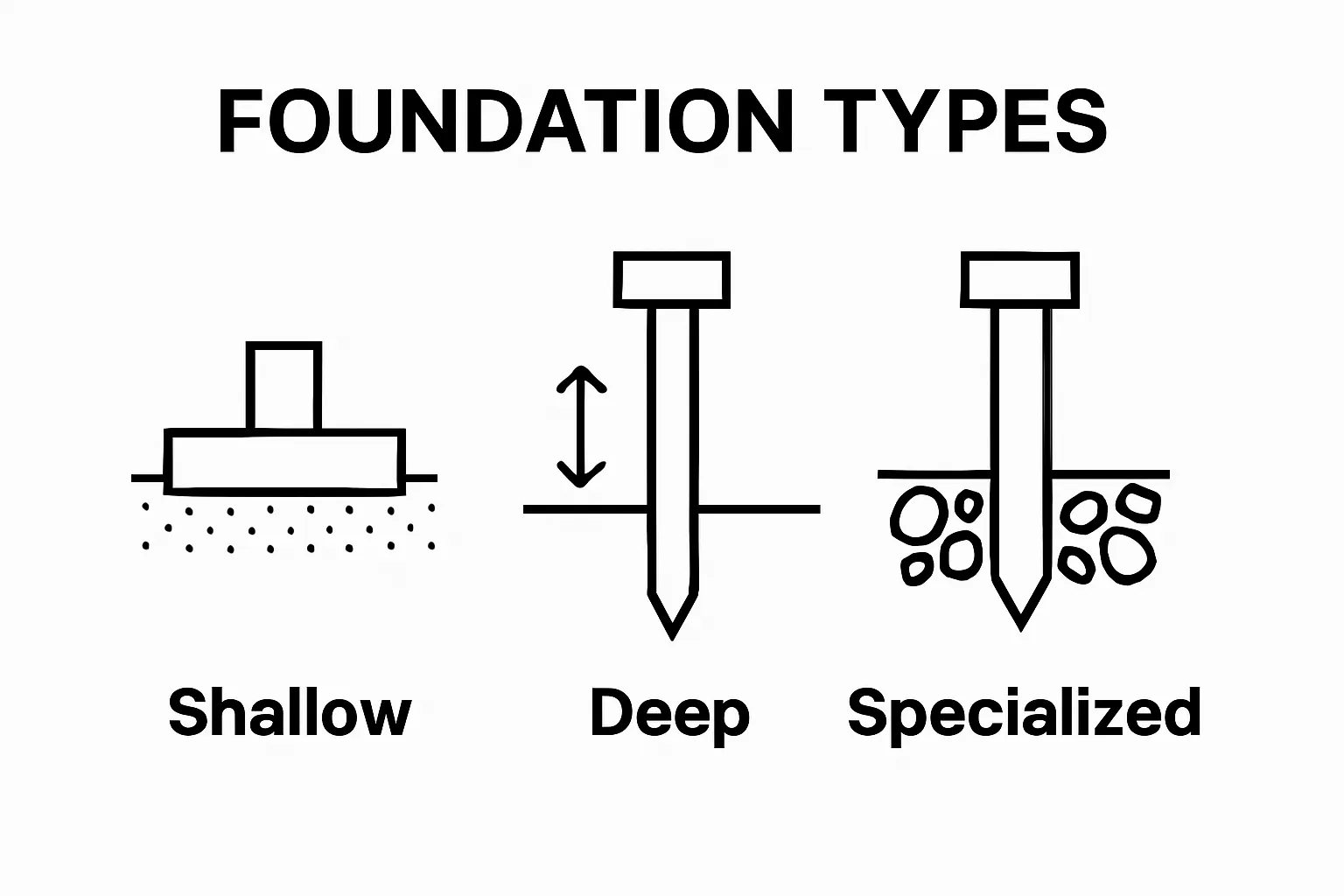
Different construction scenarios demand specialized foundation strategies. According to engineering research, primary foundation types include:
- Shallow foundations suitable for smaller structures and stable ground conditions
- Deep foundations required for large buildings or challenging soil environments
- Specialized foundations like pile foundations for areas with complex geological profiles
The selection of an appropriate foundation type depends on comprehensive site analysis, structural requirements, and long-term performance expectations.
Below is a comparative table summarising the main types of foundation approaches referenced in the article, highlighting their typical use scenarios and key attributes.
| Foundation Type | Typical Use Case | Key Attributes |
|---|---|---|
| Shallow Foundations | Smaller structures, stable ground | Cost-effective, less invasive, suitable for good soil |
| Deep Foundations | Large buildings, challenging soil conditions | High load capacity, suitable for poor or variable soil |
| Pile Foundations | Complex geological profiles, problematic soil | Driven deep into ground, transfers load to hard strata |
| Specialised Foundations | Industrial or unique operational requirements | Custom engineering, adapts to environmental demands |
 Engineers must balance technical specifications with practical constraints to create robust, reliable foundation systems that will support structures safely and effectively for decades.
The Importance of Building Strong Foundations
Building strong foundations is not merely a technical requirement but a critical investment in structural durability, safety, and long-term performance. Structural engineering research emphasizes that foundations serve as the primary mechanism for transferring loads, managing environmental stresses, and ensuring comprehensive structural stability.
Economic and Structural Implications
The significance of robust foundations extends far beyond initial construction considerations. A well-designed foundation represents a strategic investment with substantial long-term economic benefits. Poor foundation design can lead to significant financial consequences, including:
- Expensive structural repairs
- Accelerated material degradation
- Potential complete structural failure
- Reduced property value
- Increased maintenance costs
Professional engineers recognize that foundation quality directly correlates with a structure’s lifespan, performance reliability, and overall economic sustainability. Precision in foundation engineering minimizes future risk and maximizes structural integrity.
Risk Mitigation and Performance Standards
Geotechnical engineering experts highlight that comprehensive foundation design involves sophisticated risk assessment strategies. Critical considerations include ground condition analysis, anticipated load distributions, and potential environmental challenges.
Foundation development requires meticulous evaluation of multiple complex factors:
- Soil composition and load-bearing capacity
- Regional geological characteristics
- Potential seismic activity
- Water table fluctuations
- Climate-related stress factors
By implementing rigorous design protocols and utilizing advanced engineering methodologies, construction professionals can create foundation systems that provide exceptional structural protection and long-term performance reliability. The goal extends beyond mere load transfer to creating resilient, adaptive infrastructure capable of withstanding diverse environmental challenges.
Key Components of Strong Foundations
Foundation engineering involves intricate design and strategic selection of critical components that collectively ensure structural stability and performance. Advanced construction research reveals that successful foundation systems integrate multiple sophisticated elements working in precise synchronization.
Material Composition and Selection
The fundamental strength of any foundation begins with strategic material selection. Professional engineers carefully evaluate and combine materials to create robust foundational infrastructures that can withstand complex environmental challenges. Critical material considerations include:
- Concrete grade and compressive strength
- Steel reinforcement specifications
- Aggregate quality and composition
- Chemical resistance properties
- Thermal expansion characteristics
High-performance concrete and precision-engineered steel reinforcements form the backbone of modern foundation construction, providing exceptional load-bearing capabilities and long-term durability.
Structural Design Principles
Geotechnical engineering standards emphasize that foundation components must be meticulously designed to distribute structural loads efficiently. Successful foundation design integrates multiple engineering principles:
- Load distribution mechanisms
- Stress transfer pathways
- Structural redundancy strategies
- Thermal and moisture management
- Geological interaction dynamics
Engineers employ sophisticated computational modeling and advanced simulation techniques to predict foundation performance under diverse environmental conditions. The objective extends beyond immediate structural support to creating adaptive systems capable of managing complex mechanical and environmental interactions over extended periods.
Understanding Soil and Structural Support
Soil characteristics play a fundamental role in determining foundation performance, serving as the critical interface between constructed structures and natural terrain. Geotechnical engineering research demonstrates that comprehensive soil analysis is essential for creating stable, resilient building foundations.
Soil Composition and Load-Bearing Capacity
Different soil types exhibit unique mechanical properties that directly impact structural support. Professional engineers conduct rigorous assessments to understand how various soil compositions influence foundation design. Critical soil characteristics include:
- Particle size and distribution
- Moisture retention capabilities
- Compaction potential
- Mineral composition
- Geological stability
Soil classification determines the foundation’s capacity to distribute structural loads effectively, with each soil type presenting distinct engineering challenges. Sandy soils, clay-based terrains, and rocky ground require specialized approaches to ensure optimal structural performance.
Structural Interaction Mechanisms
Structural engineering experts highlight the complex dynamic between soil properties and structural support. The interaction involves sophisticated load transfer mechanisms that must account for multiple environmental and geological factors:
- Ground settlement potential
- Lateral earth pressure
- Seismic response characteristics
- Thermal expansion variations
- Groundwater influence
Engineers utilize advanced computational modeling and geotechnical testing to predict and mitigate potential soil-related structural challenges.
The following table organises critical soil characteristics and their impacts on foundation design, helping clarify why in-depth soil analysis is essential.
| Soil Characteristic | Description | Impact on Foundation Design |
|---|---|---|
| Particle Size & Distribution | Determines soil texture and compactness | Influences load-bearing and settlement behaviour |
| Moisture Retention | Soil’s ability to hold water | Affects expansion, contraction, and stability |
| Compaction Potential | Capacity to become denser under load | Influences strength and settlement over time |
| Mineral Composition | Presence of clay, sand, silt, or rock | Alters reaction to stress and environmental change |
| Geological Stability | Resistance to shifting due to natural factors | Impacts risk of movement and structural integrity |
Real-World Applications in Gauteng’s Industries
Structural steel applications play a critical role in Gauteng’s diverse industrial landscape, demonstrating how robust foundation engineering translates into practical infrastructure development. Industrial engineering research highlights the region’s sophisticated approach to foundation design across multiple critical sectors.
Mining and Heavy Industrial Infrastructure
Gauteng’s mining and heavy industrial sectors demand exceptional foundation engineering due to extreme operational conditions. Foundation systems must withstand significant dynamic loads, vibration, and environmental challenges. Critical considerations include:
- Massive equipment weight distribution
- Seismic resistance capabilities
- Chemical and thermal stress management
- Rapid installation requirements
- Long-term structural durability
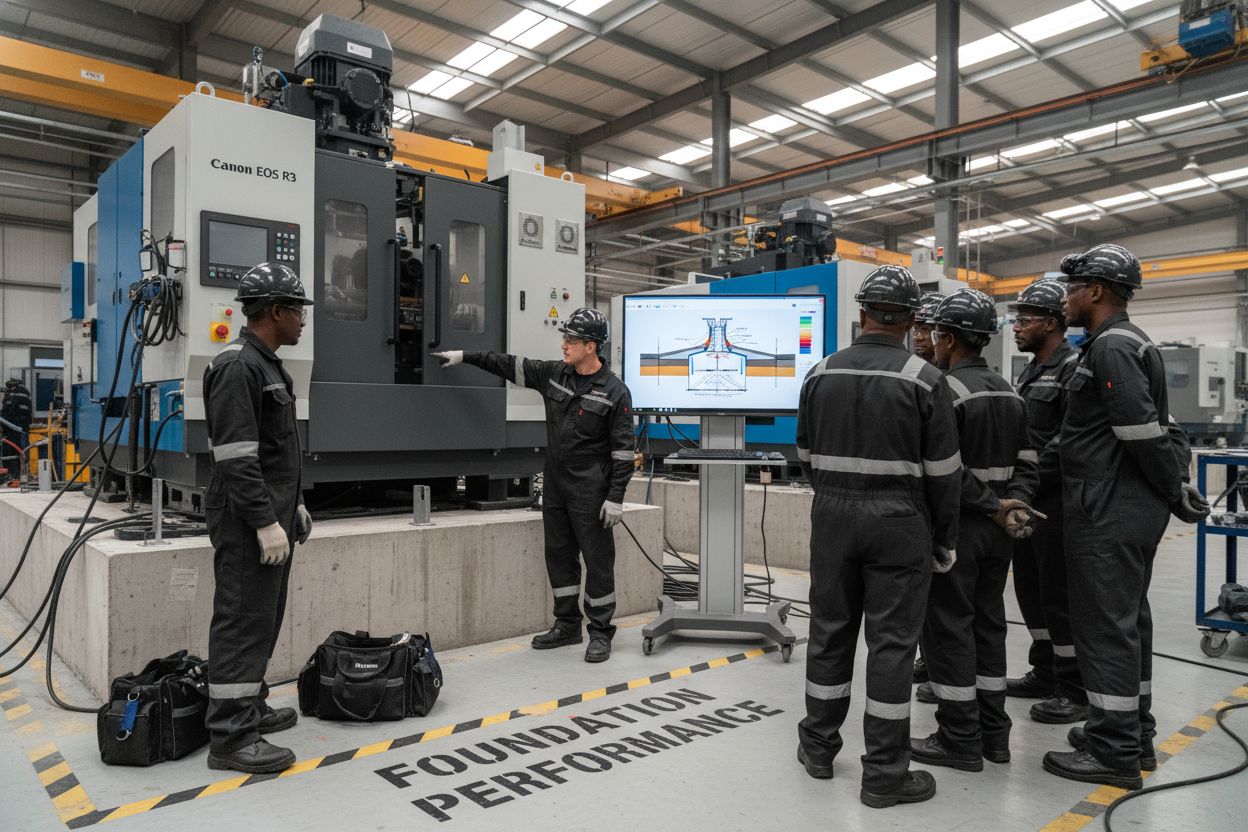
Advanced foundation technologies enable complex industrial installations, providing stable platforms for sophisticated mining and manufacturing equipment that require precision engineering and exceptional load-bearing capacities.
Manufacturing and Processing Facilities
Geotechnical engineering standards emphasize that manufacturing foundations require comprehensive design strategies tailored to specific operational requirements. Precision foundation engineering in manufacturing environments addresses multiple complex challenges:
- Vibration isolation mechanisms
- Precise equipment alignment
- Temperature fluctuation management
- Corrosion resistance strategies
- Modular expansion potential
Engineers develop specialized foundation systems that not only support current infrastructure but also provide flexibility for future technological upgrades and operational expansions. The goal extends beyond immediate structural support to creating adaptive industrial platforms capable of meeting evolving technological and operational demands.
Build Lasting Industrial Foundations With Superior Steel
Are you struggling to secure the strength and reliability needed for your industrial foundations? As you saw in this article, poor material choices compromise load distribution, cause costly repairs, and threaten your long-term project stability. It is essential to choose steel that delivers both outstanding durability and precise engineering—especially when building for Gauteng’s toughest industries.
Genesis Steel supplies hot-rolled steel sheets and steel plates in a massive range of grades and sizes, supporting the demanding foundation requirements described here. Our experienced team ensures you always receive fast, reliable service and technical expertise when you need it most.
Explore your options now at Genesis Steel and partner with a supplier trusted by South Africa’s industrial leaders. Secure a foundation built to last—because the next phase of your project cannot wait.
Frequently Asked Questions
What are the key functions of strong foundations in construction?
Strong foundations distribute the weight of the structure evenly, prevent settlement and deformation, ensure a level base for construction, and provide protection against environmental forces and geological shifts.
What types of foundations are typically used in industrial construction?
The main types of foundations used in industrial construction include shallow foundations for smaller structures, deep foundations for larger buildings or challenging soil conditions, and specialized foundations like pile foundations for complex geological environments.
How does soil composition affect foundation design?
Soil composition significantly impacts the load-bearing capacity of foundations. Different soil types have unique mechanical properties that engineers assess to ensure that the foundation can effectively distribute structural loads.
What are the economic implications of poor foundation design?
Poor foundation design can lead to expensive structural repairs, accelerated material degradation, potential failures, reduced property value, and increased maintenance costs, ultimately impacting the overall economic sustainability of the structure.