
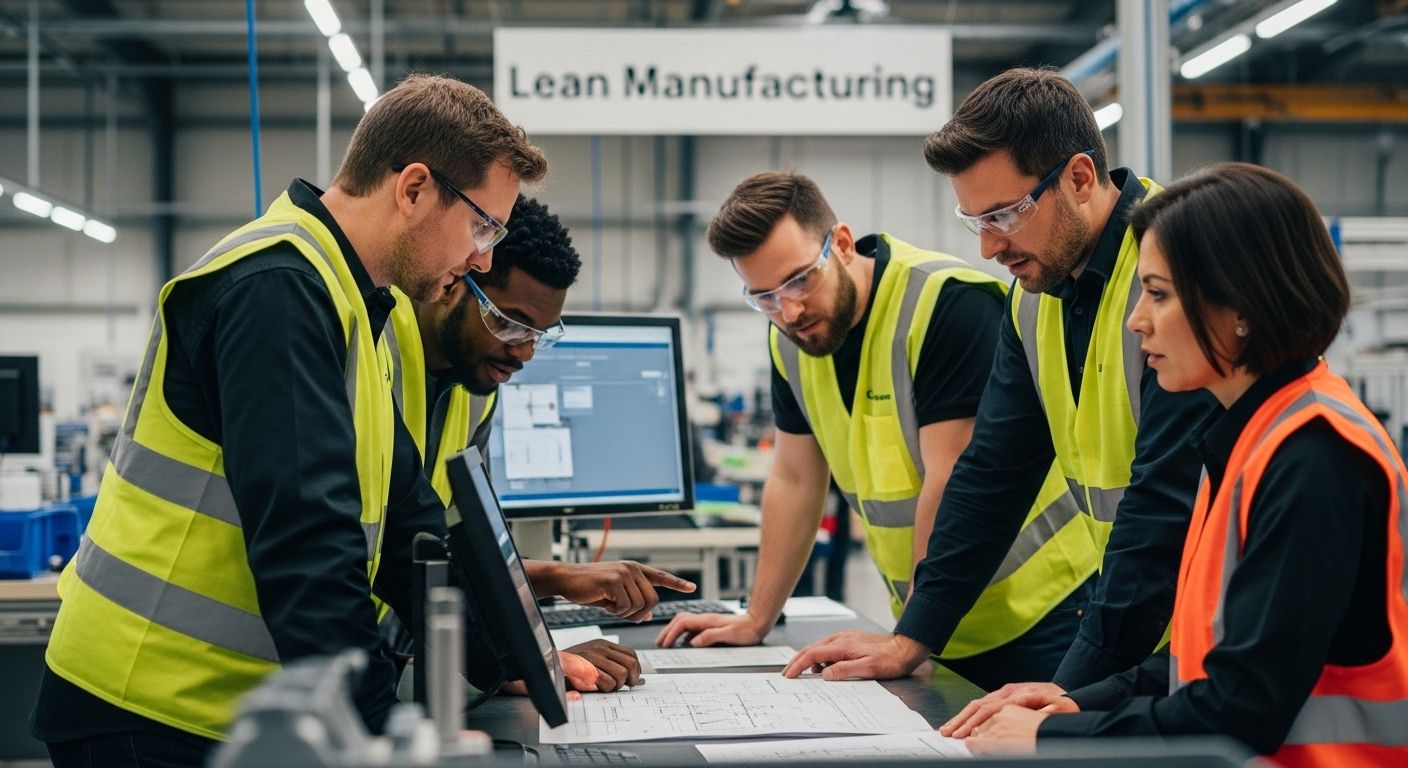
Lean manufacturing shapes how factories from Gauteng to Japan get more out of less. Some Gauteng manufacturers have cut non-value-added time by over 60% using lean methods. Most people think lean is only about trimming waste on the production line. Yet the real secret weapon is turning every worker into a problem-solver, shifting the entire company’s mindset towards constant improvement.
Table of Contents
- What Is Lean Manufacturing And Its Core Purpose?
- Why Lean Manufacturing Matters In Modern Industries
- Key Principles And Concepts Of Lean Manufacturing
- How Lean Manufacturing Transforms Operational Efficiency
- Real-World Applications And Examples In Gauteng
Quick Summary
| Takeaway | Explanation |
|---|---|
| Maximise customer value through lean practices. | Focus on understanding and delivering what customers truly value in products or services. |
| Implement continuous improvement as a culture. | Encourage every team member to seek and implement lasting process enhancements regularly. |
| Utilise pull systems to reduce inventory. | Produce only when there is actual customer demand to lower excess inventory costs. |
| Conduct value stream mapping for efficiency. | Visualise production processes to identify waste and streamline workflows effectively. |
| Foster a holistic approach to waste elimination. | Systematically identify and remove non-value-added activities to boost overall operational efficiency. |
What is Lean Manufacturing and Its Core Purpose?
Lean manufacturing represents a transformative approach to production that fundamentally reimagines how organisations create value and eliminate inefficiencies. At its core, this methodology focuses on maximising customer value while systematically reducing waste across manufacturing processes.
Understanding the Fundamental Concept
Lean manufacturing originated from Toyota’s production system and has since become a globally recognised strategy for operational excellence. According to research from the American Society of Mechanical Engineers, this approach is centered on creating more value for customers with fewer resources.
The primary objectives of lean manufacturing include:
- Minimising production waste
- Improving overall process efficiency
- Reducing operational costs
- Enhancing product quality
- Shortening production lead times
Key Principles of Lean Manufacturing
Lean manufacturing operates on several critical principles that guide its implementation. These principles are not just theoretical constructs but practical strategies designed to transform manufacturing environments. Value identification stands as the first crucial step, where organisations must understand what customers truly value in a product or service.
The methodology emphasises continuous improvement, encouraging manufacturers to constantly evaluate and refine their processes. By mapping value streams, identifying non-value-adding activities, and implementing streamlined workflows, companies can create more responsive and efficient production systems.
Pull systems represent another fundamental lean manufacturing concept. Unlike traditional push manufacturing, where products are made in anticipation of demand, pull systems produce goods only when actual customer demand exists. This approach significantly reduces inventory costs and minimises the risk of overproduction.
For manufacturers in industrial sectors like steel fabrication and heavy machinery, lean manufacturing offers a strategic framework to enhance competitiveness. By systematically eliminating waste and focusing on continuous improvement, organisations can achieve higher productivity, better quality, and increased customer satisfaction.
Why Lean Manufacturing Matters in Modern Industries
In an increasingly competitive global marketplace, lean manufacturing has transformed from a theoretical concept to a critical strategic imperative for industrial organisations seeking sustained success. This approach represents more than a simple production methodology it is a comprehensive philosophy that fundamentally reimagines how businesses create value and compete effectively.
Economic and Competitive Advantages
According to research from the National Institute of Standards and Technology, lean manufacturing provides organisations with substantial economic benefits that directly impact their bottom line. By systematically eliminating waste and optimising processes, companies can achieve significant operational improvements.
The core economic advantages of lean manufacturing include:
- Reduced production costs
- Enhanced operational efficiency
- Improved product quality
- Faster market responsiveness
- Increased customer satisfaction
This table summarises the key economic and operational benefits of lean manufacturing as highlighted in the article for various manufacturing sectors.
| Benefit | Description |
|---|---|
| Reduced production costs | Lower expenses through waste elimination |
| Enhanced operational efficiency | Improved productivity and workflow |
| Improved product quality | Higher consistency and reduced defects |
| Faster market responsiveness | Quicker adaptation to demand changes |
| Increased customer satisfaction | Meeting customer expectations more closely |
Strategic Transformation of Manufacturing Processes
Lean manufacturing goes beyond traditional cost-cutting approaches by fundamentally restructuring how organisations think about production. Continuous improvement becomes a core cultural value, where every team member is empowered to identify and eliminate inefficiencies.
This methodology enables manufacturers to create more adaptive and resilient production systems. By implementing pull systems and value stream mapping, companies can respond more quickly to market changes, reduce inventory holding costs, and minimise potential disruptions.
For industrial sectors like steel fabrication, lean manufacturing offers a strategic framework to enhance competitiveness. Learn more about our steel manufacturing processes to understand how these principles can be practically applied.
Moreover, lean manufacturing is not just about reducing waste it is about creating a culture of ongoing innovation and efficiency. By consistently challenging existing processes and seeking incremental improvements, organisations can develop more agile and responsive manufacturing ecosystems that can quickly adapt to changing market demands and technological advancements.
Key Principles and Concepts of Lean Manufacturing
Lean manufacturing represents a sophisticated approach to production that goes beyond traditional manufacturing methodologies. It is a comprehensive system designed to maximise efficiency, reduce waste, and create value through strategic operational principles that transform how organisations approach production.
The Fundamental Five Principles
According to the Lean Enterprise Institute, lean manufacturing is built upon five interconnected principles that serve as a strategic framework for organisational transformation.
These foundational principles include:
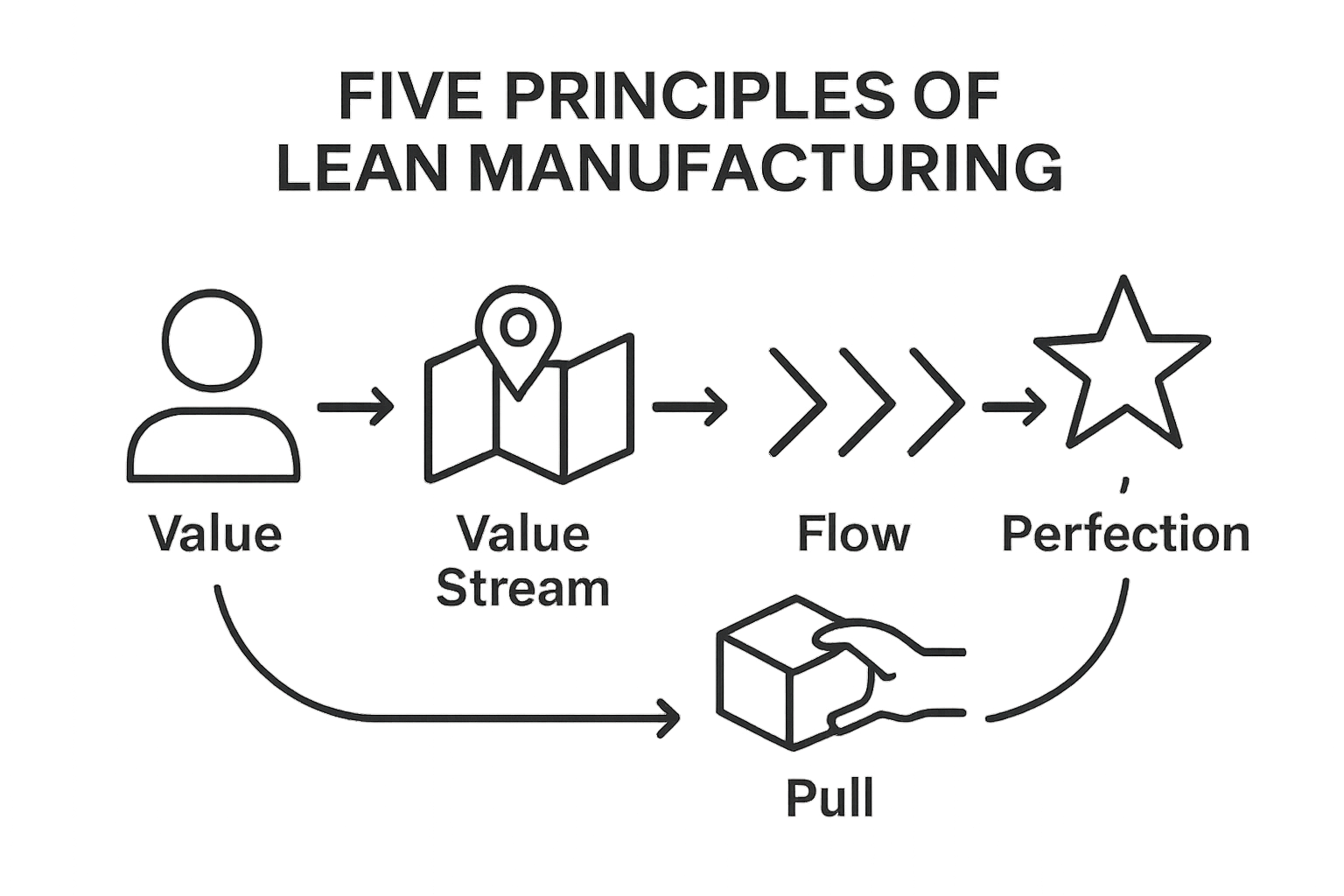
- Define Value: Understanding customer requirements and expectations
- Map the Value Stream: Identifying and eliminating non-value-adding activities
- Create Flow: Ensuring smooth, uninterrupted production processes
- Establish Pull: Producing only what is demanded by customers
- Pursue Perfection: Committing to continuous improvement
Below is a table breaking down the five fundamental principles of lean manufacturing and their core focus areas for easy reference.
| Principle | Core Focus |
|---|---|
| Define Value | Understanding customer requirements and expectations |
| Map the Value Stream | Identifying and eliminating non-value-adding activities |
| Create Flow | Ensuring smooth, uninterrupted production processes |
| Establish Pull | Producing only what is demanded by customers |
| Pursue Perfection | Committing to continuous improvement |
Practical Implementation Strategies
Value stream mapping emerges as a critical technique in lean manufacturing, allowing organisations to visualise and analyse the entire production process. This technique helps identify bottlenecks, redundancies, and opportunities for efficiency improvements.
Pull systems represent another revolutionary concept in lean manufacturing. Unlike traditional push systems where products are manufactured in anticipation of demand, pull systems ensure production occurs precisely when customer demand exists. This approach minimises inventory costs, reduces waste, and enhances overall operational responsiveness.
For manufacturers in industrial sectors like steel fabrication, these principles translate into tangible operational benefits. Learn more about our precision manufacturing approaches to see how lean principles can be practically implemented.
Continuous improvement or Kaizen stands as the philosophical cornerstone of lean manufacturing. It encourages every team member, from shop floor workers to senior management, to constantly seek incremental improvements in processes, technologies, and workflows. This cultural approach ensures that organisations remain adaptive, efficient, and competitive in rapidly evolving industrial landscapes.
How Lean Manufacturing Transforms Operational Efficiency
Operational efficiency represents the cornerstone of competitive manufacturing, and lean manufacturing provides a revolutionary approach to achieving unprecedented levels of productivity and performance. By systematically addressing inefficiencies and reimagining production processes, organisations can unlock transformative operational capabilities.
Waste Elimination and Resource Optimization
According to research from New Mexico State University, lean manufacturing fundamentally changes how organisations approach resource utilization. By identifying and eliminating non-value-added activities, companies can dramatically improve their operational performance.
The primary areas of waste reduction include:
- Excess inventory management
- Unnecessary processing steps
- Inefficient equipment utilization
- Redundant administrative processes
- Unnecessary transportation and movement
Strategic Performance Enhancement
Process standardization emerges as a critical strategy in lean manufacturing, enabling organisations to create consistent, predictable, and efficient workflows. By developing clear, repeatable processes, manufacturers can significantly reduce variability and improve overall quality.
The implementation of lean principles transforms traditional manufacturing paradigms by introducing flexibility and responsiveness. Pull systems and just-in-time production methods allow companies to adapt quickly to market demands, reducing inventory holding costs and minimizing potential disruptions.
Learn more about our precision manufacturing techniques to understand how these efficiency principles can be practically applied in industrial settings.
Lean manufacturing goes beyond mere cost reduction it represents a holistic approach to organisational performance. By empowering employees, fostering a culture of continuous improvement, and systematically eliminating inefficiencies, companies can create more agile, responsive, and competitive manufacturing ecosystems that can rapidly adapt to changing market conditions and technological advancements.
Real-World Applications and Examples in Gauteng
Lean manufacturing principles have found significant traction within Gauteng’s diverse industrial landscape, transforming how local manufacturers approach production, efficiency, and competitive strategy. The region’s industrial sectors demonstrate remarkable adaptability by implementing lean methodologies across various manufacturing domains.
Industrial Sector Implementation
According to a case study in the South African Journal of Industrial Engineering, lean manufacturing techniques have yielded substantial improvements for local enterprises. Small and medium manufacturers in Gauteng have successfully reduced non-value-added time by over 60% through strategic lean interventions.
Key sectors embracing lean manufacturing in Gauteng include:
- Automotive manufacturing
- Steel fabrication
- Heavy machinery production
- Electronics manufacturing
- Precision engineering
Strategic Performance Transformation
Supply chain optimization represents a critical application of lean principles in Gauteng’s industrial ecosystem. By integrating just-in-time production methods and strategic partnerships, local manufacturers can significantly enhance operational responsiveness and reduce unnecessary inventory costs.
The automotive industry provides a compelling example of lean manufacturing implementation. Explore our insights on steel applications in industrial settings to understand how material selection influences lean production strategies.
Manufacturers in Gauteng are increasingly recognizing that lean manufacturing is not merely a production technique but a comprehensive management philosophy. By fostering a culture of continuous improvement, empowering employees, and systematically eliminating inefficiencies, local industries can create more adaptive and competitive manufacturing environments that respond rapidly to market dynamics and technological advancements.
Take Lean Manufacturing Efficiency Further With Genesis Steel
Struggling to minimise waste and create true value in your manufacturing process? The article you just read highlights how lean manufacturing depends on quality materials, process consistency and reliable supply to achieve continuous improvement. Many South African manufacturers find that uneven material quality, delayed deliveries and limited steel options can hold back operational excellence and waste reduction. If you want to eliminate these bottlenecks, you need a partner who understands lean manufacturing goals like just-in-time fulfilment, efficiency and process flow.
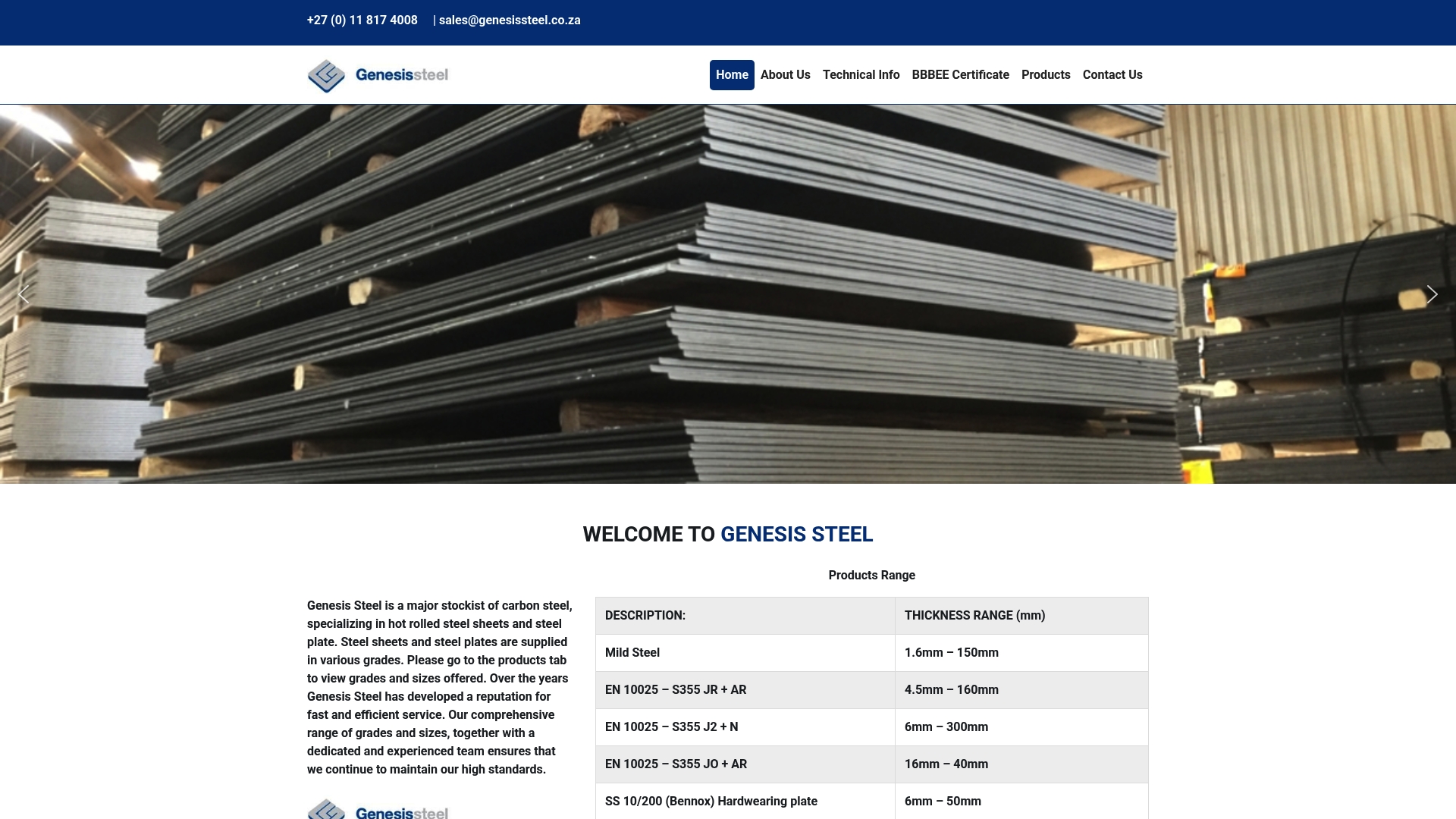
Genesis Steel offers a comprehensive range of hot-rolled steel sheets and plates in various grades and sizes, ensuring you always have reliable access to the material you need for streamlined production. Our fast and efficient service helps you maintain the flow, reduce unnecessary inventory and avoid costly stoppages. Ready to put lean manufacturing principles to work in your operation? Visit Genesis Steel today and let our expert team help you choose the right steel solutions for your efficiency targets. Make the switch now to improve productivity, reduce waste and lead your sector in operational excellence.
Frequently Asked Questions
What is lean manufacturing?
Lean manufacturing is a methodology focused on maximising customer value while systematically reducing waste in production processes. It originated from Toyota’s production system and aims to improve overall efficiency, reduce operational costs, and enhance product quality.
What are the core principles of lean manufacturing?
The core principles of lean manufacturing include defining value, mapping the value stream, creating flow, establishing pull, and pursuing perfection. These principles guide organisations in eliminating waste and continuously improving processes.
How does lean manufacturing improve operational efficiency?
Lean manufacturing improves operational efficiency by identifying and eliminating non-value-added activities, optimising resource allocation, and implementing standardized processes. This results in reduced production costs and increased responsiveness to market demands.
What industries benefit from lean manufacturing?
Several industries benefit from lean manufacturing, including automotive manufacturing, steel fabrication, heavy machinery production, electronics manufacturing, and precision engineering. Lean principles help these sectors enhance competitiveness and operational performance.
Recommended
- Understanding How Steel is Made
- Understanding the Life Cycle of Steel
- How to Check Steel Quality
- How to Cut Steel Sheets Efficiently in 2025
- Maximizing Efficiency
- What is JIT Delivery? Guide for UK Businesses 2025