

Steel plate sizes might sound simple enough. Just pick the right thickness, width, and length for your project, right? Not quite. In South Africa, choosing the wrong steel plate size can cost a company thousands in wasted material and delays, yet most teams only look at the numbers on a chart. The real challenge is knowing how each small decision on size and grade can change the safety, cost, and success of your project in ways few people expect.
Table of Contents
- Introduction To Steel Plate Sizes And Specifications
- Understanding Common Steel Plate Dimensions
- How To Read A Steel Plate Sizes Chart Effectively
- Importance Of Thickness In Steel Plates
- Various Steel Grades And Their Sizes
- Selecting The Right Steel Plate For Your Project
- Practical Tips For Sourcing Steel Plates In Gauteng
Quick Summary
| Takeaway | Explanation |
|---|---|
| Understand steel plate sizes and specifications. | Steel plate dimensions, including thickness, width, and length, are crucial for engineering applications and project success. |
| Select the correct thickness for performance. | The thickness of steel plates impacts structural integrity and load-bearing capabilities, requiring careful selection based on application needs. |
| Master reading steel plate sizes charts. | Effectively interpreting steel plate charts aids in precise material selection, considering dimensions and material grades. |
| Evaluate steel grades for suitability. | Different steel grades have unique properties; selecting the right grade ensures compatibility with specific engineering requirements. |
| Adopt a strategic approach to sourcing. | Strategic sourcing of steel plates involves verifying supplier credentials, understanding regulations, and ensuring long-term reliability. |
1: Introduction to Steel Plate Sizes and Specifications
Steel plate sizes represent a critical aspect of industrial design and manufacturing, serving as fundamental components across numerous engineering applications. Understanding these specifications is essential for professionals working in construction, fabrication, and industrial sectors. When examining a steel plate sizes chart, engineers and procurement managers must consider multiple critical factors that influence material selection and performance.
According to the International Trade Administration Commission of South Africa, steel plate specifications involve complex measurements and standardized parameters that determine their suitability for specific industrial requirements. These specifications encompass several key aspects:
- Thickness: Ranges from thin sheets to heavy industrial plates
- Width and Length: Determining plate dimensions for specific applications
- Material Grade: Indicating structural and mechanical properties
Professionals in Gauteng’s industrial landscape require comprehensive knowledge of steel plate dimensions to ensure optimal project outcomes. Our comprehensive guide on steel plate load capacity provides additional insights into selecting appropriate plate specifications for various engineering challenges.
The complexity of steel plate sizing extends beyond simple measurements. Engineers must consider factors such as material composition, intended application, environmental conditions, and load-bearing requirements. Precision in selecting the correct steel plate size can significantly impact structural integrity, performance, and overall project cost-effectiveness.
By developing a nuanced understanding of steel plate sizes and specifications, industrial professionals can make informed decisions that optimize material usage, reduce waste, and enhance project efficiency. This introductory overview sets the foundation for navigating the intricate world of steel plate specifications with confidence and technical expertise.
2: Understanding Common Steel Plate Dimensions
Steel plate dimensions represent a complex landscape of standardized measurements that vary significantly across industrial applications. Professional engineers and procurement specialists must navigate these specifications with precision and technical expertise. The fundamental dimensions typically include thickness, width, and length parameters that determine a plate’s suitability for specific engineering requirements.
According to the South African Government’s Standards Act, national regulations establish critical guidelines for steel plate dimensional standards. These specifications encompass several important considerations:
- Thickness Range: From thin sheets (1mm) to heavy industrial plates (150mm)
- Standard Widths: Typically ranging between 1000mm to 3000mm
- Length Variations: Commonly available from 2000mm to 12000mm
Thickness classifications play a crucial role in determining a steel plate’s potential applications. Manufacturers categorize plates into distinct groups based on their dimensional characteristics:
- Thin plates (1mm to 6mm): Ideal for lightweight structural applications
- Medium plates (6mm to 25mm): Used in general fabrication and construction
- Thick plates (25mm to 150mm): Essential for heavy industrial and marine engineering
Our comprehensive weight calculation guide provides additional insights into understanding how dimensions directly correlate with material weight and performance characteristics.
Professionals must recognize that steel plate dimensions are not arbitrary but carefully engineered to meet specific structural and mechanical requirements. Precision in selecting the correct dimensions ensures optimal performance, structural integrity, and cost-effectiveness across various industrial sectors.
Understanding these dimensional nuances requires a systematic approach that considers material grade, intended application, and environmental conditions. By mastering these specifications, engineers and procurement managers can make informed decisions that drive operational excellence and technological innovation.
3: How to Read a Steel Plate Sizes Chart Effectively
Reading a steel plate sizes chart requires a systematic approach that combines technical knowledge and attention to critical details. Professional engineers and procurement managers must develop a methodical strategy for interpreting these complex technical documents to ensure accurate material selection and specification.
According to the South African Qualifications Authority, understanding steel plate chart specifications involves mastering several key interpretation techniques. When analyzing a steel plate sizes chart, professionals should focus on the following essential elements:
- Dimensional Parameters: Precise measurements of thickness, width, and length
- Material Grade Codes: Identifying specific steel composition and characteristics
- Tolerance Ranges: Understanding acceptable dimensional variations
The process of effectively reading a steel plate sizes chart involves a structured approach that breaks down complex information into manageable components. Key visual interpretation strategies include:
- Identifying the chart’s horizontal and vertical axis labels
- Understanding the scale and measurement units
- Recognizing standard industry abbreviations and notations
Learn more about checking steel quality to complement your chart reading skills and ensure comprehensive material assessment.
Practical interpretation requires careful attention to several critical factors. Engineers must pay close attention to:
- Correlation between dimensional specifications and intended application
- Material grade compatibility with project requirements
- Tolerance limits that impact structural performance
Professionals should approach steel plate sizes charts as comprehensive technical documents that communicate far more than simple measurements. Each chart represents a detailed blueprint of material specifications, requiring a nuanced understanding of industrial engineering principles.
Successful interpretation demands not just technical knowledge, but also an analytical mindset that can translate complex graphical information into practical engineering solutions. By developing a systematic approach to reading steel plate sizes charts, industrial professionals can make informed decisions that optimize material selection and project performance.
4: Importance of Thickness in Steel Plates
Steel plate thickness represents a critical parameter that fundamentally determines material performance, structural integrity, and engineering capabilities. Professional engineers and industrial designers must approach thickness selection with meticulous precision, understanding that even minor variations can significantly impact project outcomes.
According to research from Stellenbosch University, the thickness of steel plates plays a pivotal role in determining mechanical properties, load-bearing capacity, and structural reliability. Thickness is not merely a measurement but a complex specification that influences multiple engineering considerations.
Key thickness categories for industrial applications include:
- Thin plates (1-6mm): Ideal for lightweight structural components
- Medium plates (6-25mm): Used in general fabrication and construction
- Thick plates (25-150mm): Essential for heavy industrial and marine engineering
Our comprehensive steel thickness conversion chart provides additional insights into navigating these critical dimensional specifications.
Critical factors influenced by steel plate thickness:
- Structural load-bearing capacity
- Thermal and mechanical properties
- Welding and fabrication complexity
- Corrosion resistance characteristics
- Material cost and weight considerations
Engineers must recognize that thickness directly correlates with a plate’s ability to withstand mechanical stress, environmental conditions, and specific project requirements. Precise thickness selection requires a holistic approach that considers multiple interdependent variables.
Professionals in industries ranging from construction to marine engineering must develop a nuanced understanding of how thickness impacts material performance. This involves not just measuring dimensions but comprehending the intricate relationship between thickness and the plate’s overall structural capabilities.
By approaching steel plate thickness as a sophisticated engineering parameter rather than a simple measurement, industrial designers can optimize material selection, enhance structural performance, and drive technological innovation across multiple sectors.
5: Various Steel Grades and Their Sizes
Steel grades represent a sophisticated classification system that defines material characteristics, performance capabilities, and structural integrity. Professional engineers must navigate these complex specifications with precision, understanding that each grade corresponds to specific mechanical and chemical properties.
According to Engineering News publications, South African industrial standards recognize multiple steel grades that serve diverse engineering requirements. These grades are characterized by unique composition and performance attributes.
Primary steel grades encountered in industrial applications include:
- Structural Grades: Suitable for construction and general fabrication
- Boilerplate Grades: Designed for high-temperature and pressure applications
- Weathering Grades: Engineered for enhanced corrosion resistance
- Pressure Vessel Grades: Optimized for specialized industrial equipment
Learn more about identifying steel grades to enhance your technical understanding of material specifications.
Critical considerations when selecting steel grades:
- Mechanical strength requirements
- Environmental exposure conditions
- Welding and fabrication complexity
- Cost-effectiveness
- Long-term performance expectations
Steel grade classifications typically incorporate:
- Chemical composition percentages
- Tensile strength measurements
- Impact resistance characteristics
- Recommended temperature ranges
Professionals must recognize that steel grades are not static specifications but dynamic indicators of material performance. Each grade represents a carefully engineered balance between mechanical properties, manufacturing processes, and intended application.
By developing a comprehensive understanding of steel grades and their corresponding sizes, industrial engineers can make informed decisions that optimize material selection, enhance structural reliability, and drive technological innovation across multiple sectors. The nuanced approach to understanding steel grades transforms them from mere technical specifications into strategic engineering tools.
6: Selecting the Right Steel Plate for Your Project
Selecting the appropriate steel plate requires a systematic approach that balances technical specifications, project requirements, and economic considerations. Professional engineers must navigate a complex landscape of material choices to ensure optimal performance and cost-effectiveness.
According to the South African Qualifications Authority, successful steel plate selection involves comprehensive analysis of multiple critical factors. The decision-making process extends far beyond simple dimensional measurements.
Key considerations when selecting steel plates include:
- Structural load-bearing requirements
- Environmental exposure conditions
- Fabrication and welding complexity
- Budget constraints
- Long-term performance expectations
Explore our comprehensive guide to steel plate types to gain deeper insights into material selection strategies.
Critical evaluation parameters for steel plate selection:
- Mechanical strength characteristics
- Corrosion resistance
- Temperature tolerance
- Material grade compatibility
- Specific industry application requirements
Professionals must approach steel plate selection as a strategic engineering decision. The right plate can significantly impact project durability, performance, and overall cost-effectiveness. This requires a nuanced understanding of how material properties align with specific project demands.
Engineers should develop a comprehensive evaluation framework that considers both immediate project requirements and potential long-term performance implications. This means looking beyond surface-level specifications and understanding the intricate relationship between material characteristics and operational challenges.
Ultimately, selecting the right steel plate is an art form that combines technical knowledge, practical experience, and strategic thinking. By developing a holistic approach to material selection, industrial professionals can optimize their projects, reduce potential risks, and achieve superior engineering outcomes.
7: Practical Tips for Sourcing Steel Plates in Gauteng
Sourcing steel plates in Gauteng requires a strategic approach that balances technical specifications, regulatory compliance, and local industry dynamics. Professional procurement managers must navigate a complex landscape of suppliers, quality standards, and economic considerations to ensure optimal material acquisition.
According to the Department of Trade, Industry and Competition, successful steel plate procurement involves comprehensive evaluation of multiple critical factors. Local content requirements and procurement guidelines play a crucial role in material selection.
Essential considerations for steel plate sourcing include:
- Verifying supplier certification and industry credentials
- Confirming material grade and quality standards
- Understanding local content procurement regulations
- Evaluating supplier delivery capabilities
- Assessing long-term supply reliability
Explore our comprehensive guide on industrial steel plate selection to enhance your procurement strategies.
Strategic procurement approach for steel plates:
- Conduct thorough supplier background checks
- Request comprehensive material certifications
- Compare pricing across multiple potential suppliers
- Evaluate technical specifications against project requirements
- Negotiate favorable terms and delivery conditions
Procurement professionals must recognize that sourcing steel plates extends beyond simple transactional processes. Successful acquisition requires a holistic approach that considers technical specifications, regulatory compliance, and strategic industrial relationships.
Engineers and procurement managers should develop robust evaluation frameworks that prioritize material quality, supplier reliability, and alignment with local industrial development objectives. This means looking beyond immediate cost considerations and understanding the broader implications of material sourcing decisions.
By adopting a comprehensive and strategic approach to steel plate procurement, industrial professionals can optimize their material acquisition processes, support local manufacturing, and drive technological innovation across Gauteng’s industrial sectors.
Below is a comprehensive table summarising the essential topics, steps, and outcomes discussed throughout the article on understanding steel plate sizes and charts in South Africa.
| Key Topic/Step | Main Points Covered | Practical Outcomes/Benefits |
|---|---|---|
| Importance of Correct Plate Size Selection | Accuracy in thickness, width, length, and grade is vital for structural safety and project success | Reduces material waste and costly delays; enhances structural reliability |
| Understanding Steel Plate Dimensions | Breakdown of standard thicknesses (1-150mm), widths (1000-3000mm), and lengths (2000-12000mm) | Ensures optimal material fit for application and compliance with SA standards |
| Reading Steel Plate Sizes Charts Effectively | Focus on interpreting dimensions, grade codes, scale, tolerances, and decoding notation | Enables precise material specification, project alignment, and reduced errors |
| Assessing the Role of Thickness | Thickness determines load-bearing, welding ease, and cost; detailed thickness classifications | Assists in selecting plates that match project mechanical and economic needs |
| Comparing Steel Grades and Properties | Overview of structural, boilerplate, weathering, and pressure vessel grades | Ensures correct grade selection for environmental and application-specific factors |
| Steps for Effective Plate Selection | Consider load, environment, fabrication, budget, grade compatibility, and long-term expectations | Aligns material choice with engineering demands, performance, and risk reduction |
| Sourcing and Procurement in Gauteng | Evaluate suppliers on certification, compliance, quality, delivery, and local requirements | Guarantees material traceability, legal compliance, and reliable project delivery |
Take Control of Your Steel Plate Choices with Local Experts
Understanding complex steel plate sizes and charts can feel overwhelming, especially when your project depends on getting the dimensions and grades exactly right. The article highlighted how a single mistake in reading a steel plate sizes chart can lead to wasted materials, higher costs, or compromised safety. Many professionals in construction and industry feel this pressure to get their specifications right the first time. That is exactly where Genesis Steel steps in to help.
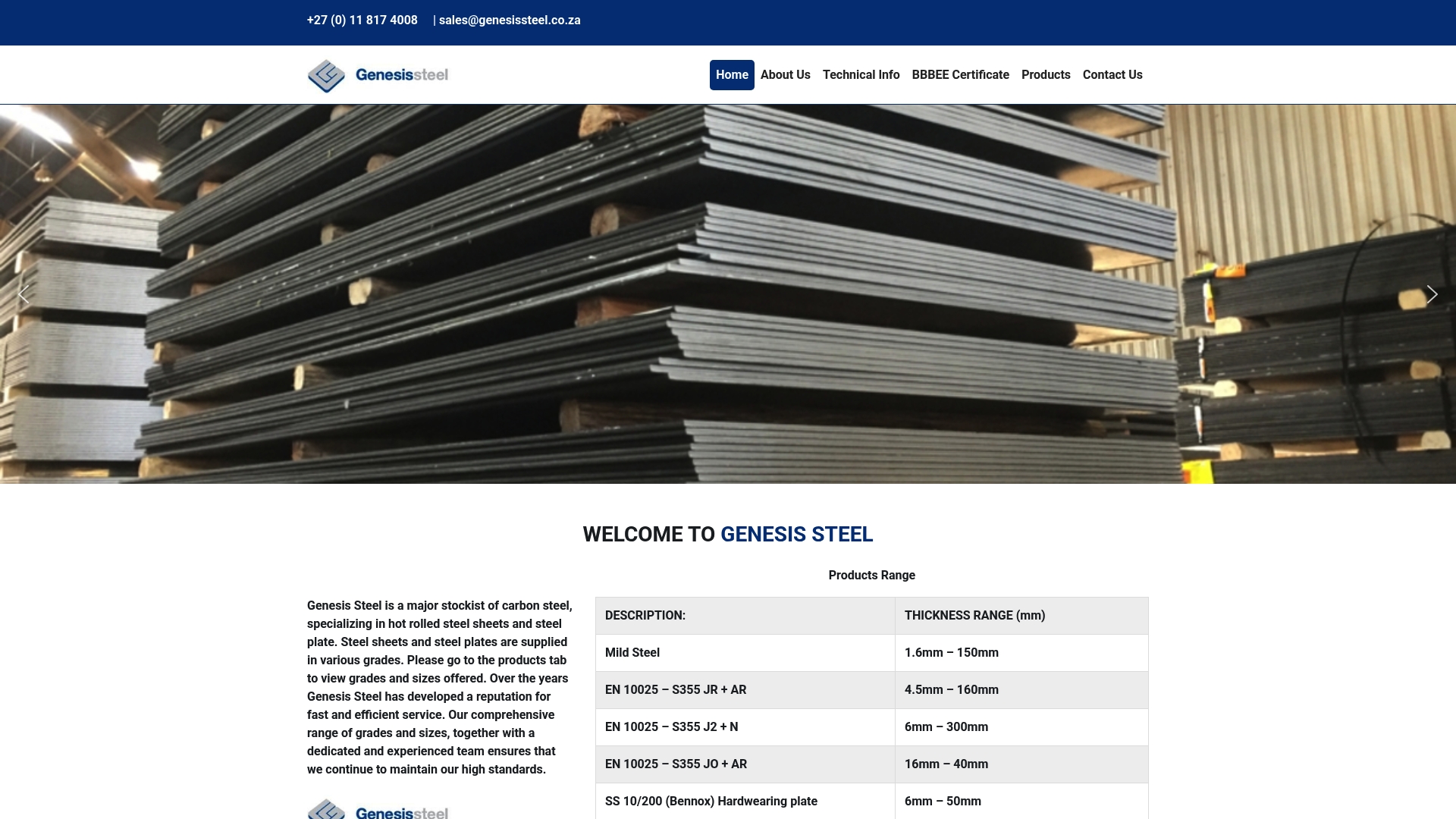
Looking for reliable guidance and access to an extensive range of hot-rolled steel plates and sheets in Gauteng? Let our experienced team make things simple for you. Visit our main website for practical solutions tailored to your needs. For more expert tips and industry knowledge, explore our Uncategorised Archives. Get in touch with Genesis Steel today to remove the guesswork and secure accurate, project-ready steel from a trusted local partner.
Frequently Asked Questions
What are the key dimensions included in a steel plate sizes chart?
A steel plate sizes chart typically includes thickness, width, and length dimensions, which are essential for determining the suitability of a plate for specific engineering applications.
How do I interpret the material grade codes in a steel plate sizes chart?
Material grade codes in a steel plate sizes chart identify the specific composition and mechanical properties of the steel. Understanding these codes is crucial for selecting the right material for your project’s requirements.
What factors should I consider when selecting the thickness of a steel plate?
When selecting the thickness of a steel plate, consider structural load-bearing capacity, thermal and mechanical properties, welding and fabrication complexity, and the overall weight and cost of the material.
Can the dimensions in a steel plate sizes chart vary for different applications?
Yes, steel plate dimensions can vary significantly based on the intended application. Factors such as structural requirements, environmental conditions, and specific industry standards will influence the dimensions needed.