

Carbon steel is used in everything from skyscraper frames to industrial machinery. That sounds like any old metal, right? But what catches people off guard is that carbon steel can save nearly $9.93 per ton in annual maintenance costs compared to other metals. This isn’t just about strength, it’s about smart money and lasting value for any big project.
Table of Contents
- Superior Strength And Durability Advantages
- Cost-Effectiveness In Large-Scale Projects
- Versatility Across Multiple Industries
- Ease Of Fabrication And Maintenance
Quick Summary
| Takeaway | Explanation |
|---|---|
| Carbon steel offers exceptional strength and durability | Its remarkable tensile strength makes it ideal for supporting heavy loads in demanding environments. |
| Cost-effective for large-scale projects | Lower initial acquisition costs and minimal lifecycle expenses make carbon steel a strategic material for economic performance. |
| Versatile across multiple industries | Adaptability allows use in construction, energy, and precision manufacturing, meeting diverse project needs. |
| Easily fabricated and maintained | Carbon steel can be welded, modified, and treated with surface protections, ensuring efficient manufacturing and long lifespan. |
| Reduces long-term maintenance costs | Its durability allows for extended service life, lowering replacement needs and associated downtime expenses. |
Superior Strength and Durability Advantages
Carbon steel stands as a cornerstone material in industrial engineering, offering unparalleled strength and durability that sets it apart from alternative metal solutions. Its exceptional mechanical properties make it an indispensable resource for projects demanding robust performance under challenging conditions.
Remarkable Tensile Strength and Structural Integrity
The core advantage of carbon steel lies in its extraordinary tensile strength. Corrosion Engineering experts confirm that carbon steel exhibits superior resistance to deformation and mechanical stress. Industrial applications require materials that can withstand significant loads without compromising structural integrity, and carbon steel delivers precisely this capability.
Engineering specifications demonstrate that carbon steel can support substantial weight and resist dynamic forces, making it ideal for critical infrastructure projects. The material’s ability to maintain structural stability under extreme conditions ensures long-term reliability and reduced maintenance requirements.
Resistance to Wear and Environmental Challenges
Beyond pure strength, carbon steel demonstrates remarkable durability across diverse environmental conditions. Materials Science Research indicates that strategic carbon content variations enable engineers to customize steel’s performance characteristics for specific industrial environments.
When exposed to challenging conditions such as high temperatures, mechanical stress, or corrosive atmospheres, carbon steel maintains its structural properties. This resilience translates into extended equipment lifecycles, reduced replacement costs, and enhanced operational efficiency for industrial projects.
Long-Term Performance and Economic Advantages
The durability of carbon steel represents more than just mechanical performance – it delivers significant economic benefits. By selecting carbon steel, industrial projects can minimize long-term maintenance expenses and reduce downtime associated with material degradation.
Engineering teams recognize that initial investments in high-quality carbon steel components yield substantial returns through extended service life and consistent performance. Learn more about our industrial steel solutions that leverage these exceptional material characteristics.
The combination of superior strength, environmental resistance, and economic efficiency positions carbon steel as a premier choice for demanding industrial applications.
To help project managers and engineers quickly compare the main advantages of using carbon steel over other metals in industrial projects, the table below organises key differentiators mentioned in this section.
| Feature | Carbon Steel | Alternative Metals |
|---|---|---|
| Tensile Strength | Exceptional | Varies, often lower |
| Structural Integrity | Maintains under heavy load/force | May deform under stress |
| Resistance to Environmental Challenges | High (customisable by carbon content) | Moderate to high, but costlier |
| Maintenance Needs | Minimal | Moderate to high |
| Service Life | Extended | Sometimes shorter |
| Cost (per ton, annual maintenance) | Saves nearly R9.93 | Higher cost |
| Adaptability to Demanding Conditions | Excellent | Dependent on alloy |
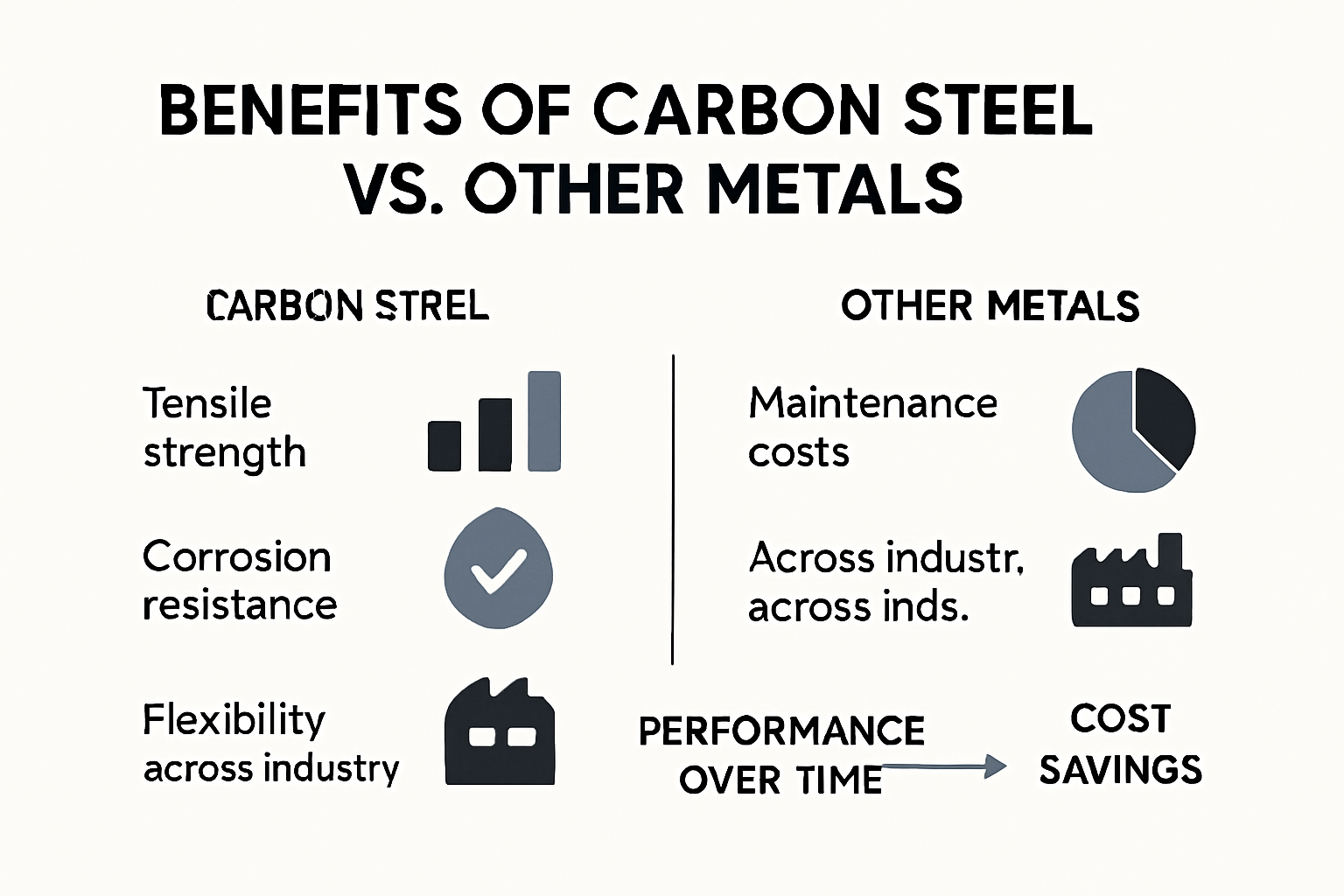
Its ability to perform consistently under extreme conditions makes it an invaluable material for engineers and project managers seeking reliable, cost-effective solutions.
Cost-Effectiveness in Large-Scale Projects
Carbon steel emerges as a transformative solution for industrial projects seeking strategic economic advantages. Its unparalleled cost-effectiveness makes it an attractive material for large-scale engineering and construction endeavors across multiple sectors.
Material Acquisition and Initial Investment Efficiency
Research from the Massachusetts Institute of Technology reveals that carbon steel provides substantial economic benefits, particularly when considering salvaged structural materials. By utilizing carbon steel, project managers can significantly reduce initial material acquisition costs while maintaining high-performance standards.
The raw material costs of carbon steel are comparatively lower than alternative metals, allowing engineering teams to optimize project budgets without compromising structural integrity. This economic advantage becomes exponentially more significant in large-scale industrial projects where material quantities are substantial.
Lifecycle Cost Management and Maintenance Optimization
According to the U.S. Environmental Protection Agency, carbon steel demonstrates remarkable cost-efficiency throughout its operational lifecycle. Their comprehensive analysis indicates potential annual savings of nearly $9.93 per ton when selecting appropriate steel variants for specific environmental conditions.
Industrial projects benefit from carbon steel’s lower maintenance requirements and extended durability.
The material’s resilience translates into reduced replacement frequencies, minimized downtime, and decreased long-term operational expenses. Engineers can strategically plan maintenance schedules, knowing that carbon steel components offer consistent performance with minimal intervention.
Strategic Material Selection for Economic Performance
The Journal of Engineering Research highlights that carbon steel provides the most competitive life-cycle solution for typical structural applications. Project planners can leverage this material’s economic advantages across diverse industrial contexts, from infrastructure development to manufacturing facilities.
The cost-effectiveness of carbon steel extends beyond immediate financial considerations. By exploring our comprehensive steel solutions, industrial teams can make informed decisions that balance performance, durability, and economic efficiency.
Carbon steel represents more than a material choice – it is a strategic investment in long-term project success. Its combination of affordable acquisition costs, minimal maintenance requirements, and robust performance makes it an unparalleled option for organizations seeking intelligent engineering solutions that deliver exceptional value.
Versatility Across Multiple Industries
Carbon steel stands out as a remarkably adaptable material, capable of meeting diverse industrial requirements across multiple sectors. Its unique composition and exceptional properties enable engineers and manufacturers to leverage this material in an extensive range of applications.
Industrial Engineering and Infrastructure Applications
Research from the Royal Society of Chemistry confirms carbon steel’s critical role in structural components and industrial infrastructure. The material’s flexibility allows for precise engineering solutions across construction, manufacturing, and energy sectors.
Engineering teams appreciate carbon steel’s ability to be customized through variations in carbon content. This characteristic enables manufacturers to develop components with specific mechanical properties tailored to unique project requirements. From heavy machinery frameworks to intricate industrial piping systems, carbon steel provides a versatile foundation for complex engineering challenges.
Advanced Energy and Technology Sectors
Corrosion and Industrial Engineering studies demonstrate carbon steel’s remarkable adaptability in advanced technological environments. A pilot-scale investigation revealed its potential in sophisticated applications such as post-combustion CO2 capture facilities, highlighting the material’s capacity to perform under demanding technological conditions.
In renewable energy infrastructure, carbon steel plays a crucial role in wind turbine construction, solar panel mounting systems, and critical infrastructure components. Its ability to withstand extreme environmental conditions while maintaining structural integrity makes it an invaluable resource for emerging technological platforms.
Precision Manufacturing and Specialized Applications
Materials science research underscores carbon steel’s extraordinary versatility in precision manufacturing. The material’s varying carbon content enables the creation of components ranging from robust automotive parts to intricate cutting tools.
Manufacturers across automotive, aerospace, and machinery sectors leverage carbon steel’s unique properties to develop high-performance components. Its capacity to be heat-treated, welded, and formed into complex shapes provides engineers with unprecedented design flexibility.
By exploring our comprehensive steel solutions, industrial professionals can unlock the full potential of carbon steel across their specific operational requirements. The material’s adaptability ensures that it remains a cornerstone of modern industrial innovation, bridging traditional engineering principles with cutting-edge technological demands.
Carbon steel transcends traditional material limitations, offering a dynamic solution that empowers industries to push technological boundaries while maintaining economic and performance standards. Its unparalleled versatility continues to make it an indispensable resource in the global manufacturing landscape.
For a clear overview, the following table summarises carbon steel’s adaptability and roles across key industrial sectors highlighted in this section.
| Industry/Sector | Typical Applications | Key Benefit of Carbon Steel |
|---|---|---|
| Construction/Infrastructure | Structural frames, piping, heavy machinery frameworks | High strength, customisable form |
| Energy (Renewables) | Wind turbines, solar mounts, infrastructure | Withstands harsh environments |
| Manufacturing | Machinery, equipment, automotive parts | Easy to fabricate, durable |
| Precision Engineering | Cutting tools, complex components | Formable into intricate designs |
| Advanced Technology | CO₂ capture, pilot-scale facilities | Performs under advanced conditions |
Ease of Fabrication and Maintenance
Carbon steel emerges as an exceptional material distinguished by its remarkable ease of fabrication and straightforward maintenance requirements. Industrial engineers and manufacturing professionals consistently value its adaptability and workability across diverse production processes.
Welding and Structural Modification Capabilities
Carbon steel offers extraordinary flexibility during fabrication processes. Welding Technology International confirms that carbon steel can be readily welded, cut, formed, and machined using standard industrial techniques. This adaptability allows manufacturers to create complex structural components with minimal specialized equipment.
The material’s inherent properties enable precise modifications without compromising structural integrity. Fabrication teams can efficiently shape carbon steel into intricate designs, ranging from industrial machinery components to architectural structural elements. Its consistent metallurgical characteristics ensure predictable performance during transformation processes.
Surface Treatment and Protective Techniques
Materials Engineering Research demonstrates that carbon steel readily accepts multiple surface treatments, including painting, galvanization, and specialized coating technologies. These protective techniques significantly extend the material’s operational lifespan and enhance resistance to environmental degradation.
Industrial maintenance teams appreciate carbon steel’s compatibility with various preservation strategies. Protective coatings can be applied efficiently, creating robust barriers against corrosion, mechanical wear, and environmental challenges. This adaptability translates into reduced long-term maintenance expenses and extended equipment reliability.
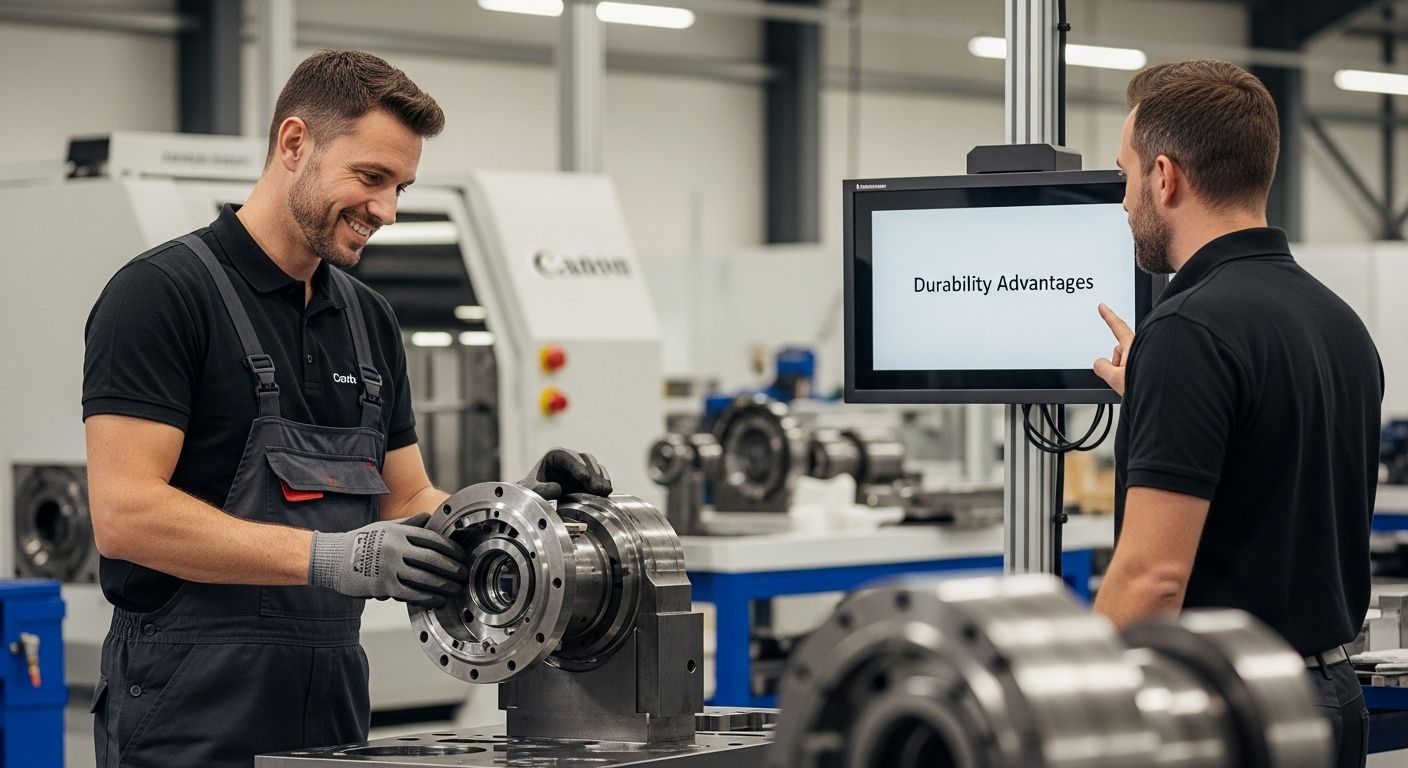
Standardized Maintenance Protocols
Carbon steel’s predictable material characteristics enable the development of standardized maintenance protocols across multiple industrial sectors. Industrial Maintenance Journal highlights that its consistent performance allows engineers to implement systematic inspection and preservation strategies with high precision.
Maintenance professionals can develop repeatable procedures for monitoring, cleaning, and preserving carbon steel components. These streamlined approaches minimize downtime, reduce operational disruptions, and optimize resource allocation. By exploring our comprehensive steel maintenance guidelines, industrial teams can implement best practices tailored to their specific operational requirements.
The combination of exceptional fabrication flexibility and simplified maintenance protocols positions carbon steel as a premier material choice for industries seeking efficient, cost-effective engineering solutions. Its ability to be transformed, protected, and maintained with relative ease makes it an invaluable resource for forward-thinking manufacturing and infrastructure development projects.
Frequently Asked Questions
What are the main advantages of using carbon steel in industrial projects?
Carbon steel offers exceptional strength, durability, cost-effectiveness, and versatility, making it ideal for various industrial applications, including construction, machinery, and infrastructure.
How does carbon steel compare to other metals in terms of maintenance costs?
Carbon steel can save nearly R9.93 per ton in annual maintenance costs compared to other metals, thanks to its durability and reduced need for frequent replacements.
In which industries is carbon steel commonly used?
Carbon steel is widely utilized across multiple industries, including construction, energy, manufacturing, and precision engineering, thanks to its adaptability and robust performance.
What makes carbon steel easy to fabricate and maintain?
Carbon steel is easily welded, cut, and formed into complex shapes, and it accepts various surface treatments for protection. Its predictable material characteristics streamline maintenance protocols, making it convenient for industrial use.
Take Your Industrial Projects Further with Genesis Steel
Are you ready to eliminate the common frustrations of high material costs, frequent replacements, and unreliable steel supply? The article has shown how carbon steel can save nearly R9.93 per ton in annual maintenance costs and deliver long-lasting strength in tough environments. But making these benefits a reality depends on choosing the right supplier. Explore our Uncategorised Archives to see how other South African industries have found solutions that work.
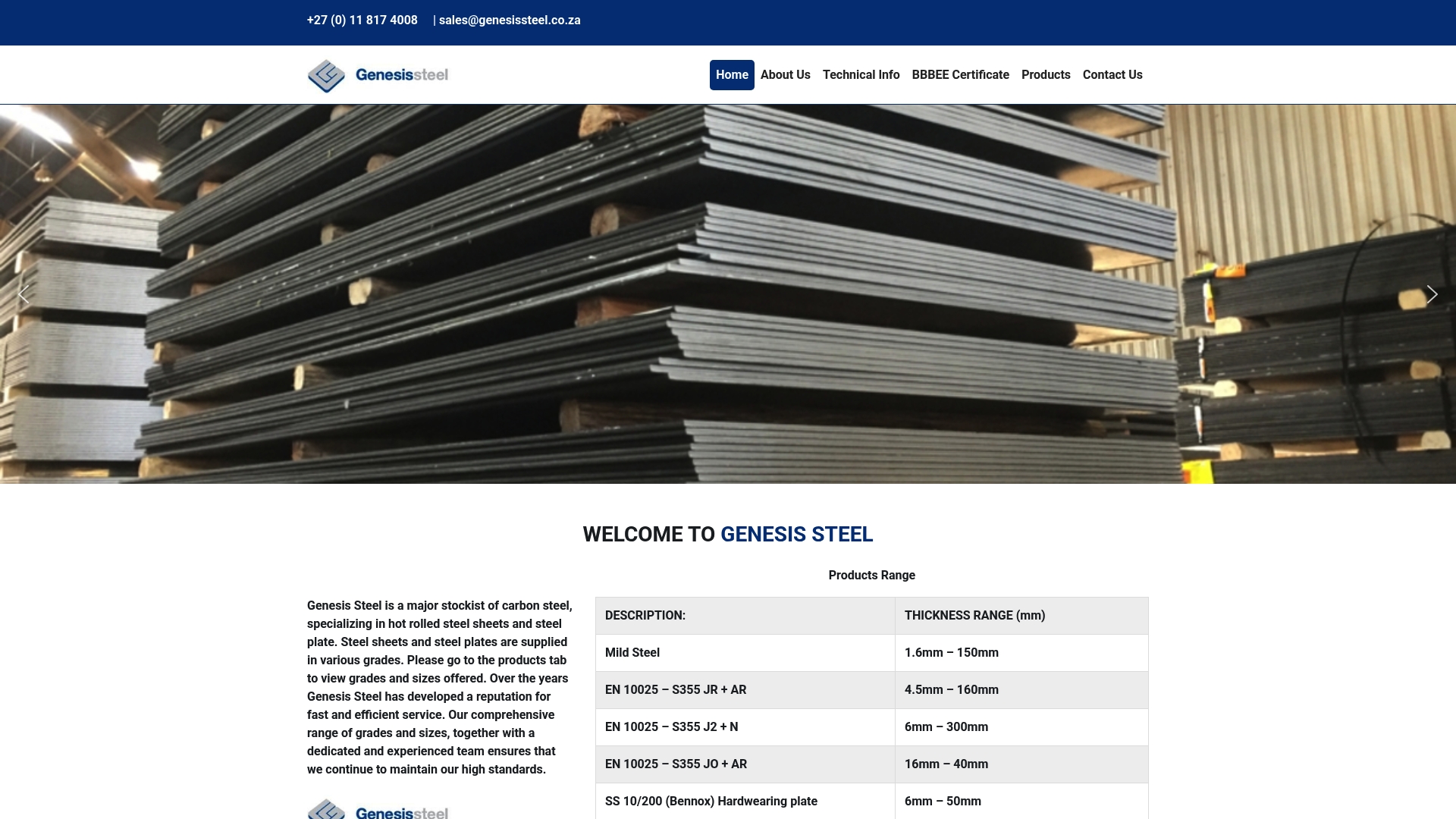
Experience the difference that quality makes. Whether you need steel sheets or plates in any grade or size, our dedicated team is ready to support your project from start to finish. Visit Genesis Steel today and speak with experts who understand your unique challenges. Secure your materials now and keep your projects strong, efficient, and on budget.