
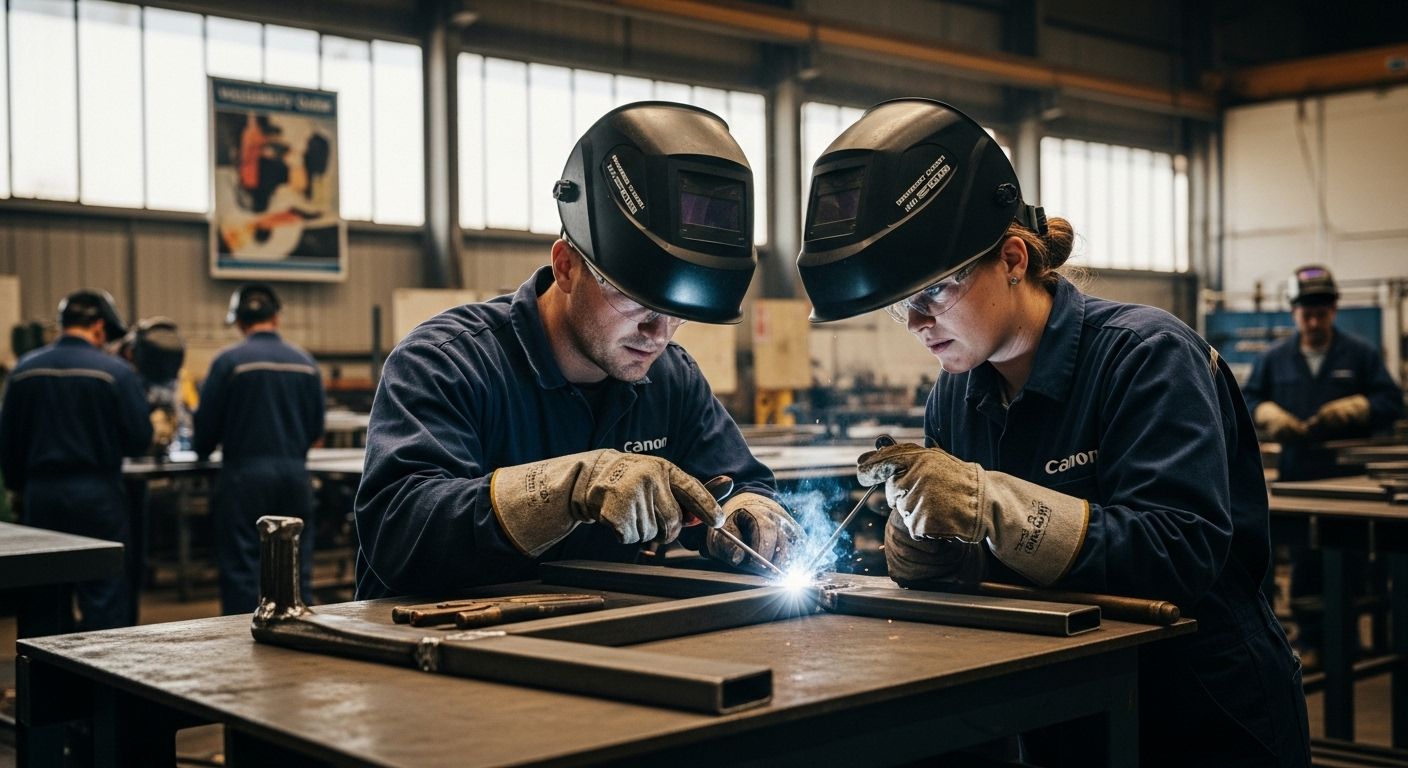
Weldability of carbon steel shapes how lasting and safe our factories, mines and high-rise jobs become across Gauteng. You might think the trickiest part is handling thick plates or fancy welding gear. Not quite. The real curveball is hidden in a single number called the carbon equivalent. If this number creeps above 0.4, the risk of cracking and costly defects climbs sharply. That turns a simple weld into a make-or-break decision for every project.
Table of Contents
- Understanding Weldability Of Carbon Steel
- Key Factors Impacting Weld Quality
- Selecting The Right Welding Methods In Gauteng
- Best Practices For Industrial And Construction Projects
Quick Summary
| Takeaway | Explanation |
|---|---|
| Understanding carbon equivalent is vital | Carbon equivalent indicates a steel’s weldability; lower values are preferable for reducing weld defects. |
| Control welding parameters for quality | Meticulous management of heat input, travel speed, and shielding gas composition can prevent common defects. |
| Select appropriate welding methods | Choosing the right technique based on material thickness and environmental factors ensures structural integrity and performance. |
| Implement rigorous surface preparation | Cleaning surfaces and validating materials prior to welding leads to stronger bonds and fewer defects. |
| Quality assurance is essential | Establishing thorough quality control measures, including non-destructive testing, is critical for dependable welded structures. |
Understanding Weldability of Carbon Steel
Weldability represents the capacity of carbon steel to be welded successfully without compromising its structural integrity or mechanical properties. This critical characteristic determines how effectively steel can be joined through various welding techniques while maintaining the material’s strength and performance.
Chemical Composition and Carbon Equivalent
The weldability of carbon steel fundamentally depends on its chemical composition, with carbon content playing a pivotal role. Researchers from the International Institute of Welding explain that the carbon equivalent (CE) is a key metric used to predict a steel’s weldability. The higher the carbon content, the more challenging the welding process becomes. Steel with excessive carbon tends to develop increased hardness and susceptibility to cracking during and after welding.
The CE calculation involves analyzing the percentages of various alloying elements, including carbon, manganese, chromium, molybdenum, and other components that influence the steel’s metallurgical behavior. A lower carbon equivalent indicates better weldability, suggesting the material can be welded with minimal risk of structural defects.
Welding Defect Mechanisms
Carbon steel presents several potential welding challenges that can compromise joint quality. According to the ESDEP Lecture Notes on Structural Steels, multiple welding defect mechanisms can emerge during the process:
For ease of reference, the table below organises the main welding defect mechanisms, their causes, and recommended mitigation strategies specifically for carbon steel as described in the article.
| Defect Mechanism | Main Cause | Mitigation Strategy |
|---|---|---|
| Solidification Cracking | Metal contraction during solidification phase | Control cooling rates, preheating |
| Hydrogen-Induced Cracking | Hydrogen absorption during welding | Preheating, use low-hydrogen consumables |
| Lamellar Tearing | Structural separation parallel to rolling | Use steel with better through-thickness properties, joint design adjustments |
- Solidification Cracking: Occurs during the metal’s solidification phase, creating longitudinal cracks in the weld zone.
- Hydrogen-Induced Cracking: Results from hydrogen absorption during welding, leading to microscopic fractures in the heat-affected zone.
- Lamellar Tearing: A structural separation that happens parallel to the steel’s rolling direction, typically in thick plates.
Mitigation Strategies
To address potential welding challenges, fabricators must implement strategic approaches. Preheating the steel, selecting appropriate welding consumables, controlling cooling rates, and performing post-weld heat treatments can significantly improve weldability. Learn more about advanced steel fabrication techniques to understand how professional manufacturers manage these complex metallurgical interactions.
Understanding these intricate mechanisms allows engineers and welding professionals to predict and prevent potential failures, ensuring the production of high-quality, reliable welded structures across various industrial applications.
Key Factors Impacting Weld Quality
Weld quality represents a complex interplay of multiple technical parameters that directly influence the structural integrity and performance of welded carbon steel components. Professional fabricators must meticulously manage these critical factors to ensure optimal welding outcomes.
Metallurgical Composition and Thermal Control
According to the National Academies Press, precise control of welding parameters emerges as a fundamental requirement for maintaining high-quality welds. The thermal input, travel speed, and shielding gas composition significantly impact the metallurgical transformation occurring during the welding process. Each parameter must be carefully calibrated to prevent defects such as incomplete fusion, porosity, and potential microstructural weaknesses.
The heat-affected zone (HAZ) represents a critical region where metallurgical changes occur. Temperature gradients and cooling rates directly influence the steel’s microstructure, potentially creating zones of reduced mechanical properties. Welding professionals must understand how different carbon steel grades respond to thermal cycles and implement strategies to mitigate potential structural vulnerabilities.
Welding Technique and Equipment Precision
Selecting the appropriate welding technique becomes paramount in achieving superior weld quality. Different methods such as gas metal arc welding (GMAW), shielded metal arc welding (SMAW), and flux-cored arc welding (FCAW) offer unique advantages and challenges. The choice depends on factors like material thickness, joint design, environmental conditions, and specific industrial requirements.
- Electrode Selection: Matching the electrode composition to the base metal ensures optimal metallurgical compatibility.
- Arc Stability: Maintaining consistent arc characteristics prevents discontinuities in the weld pool.
- Shielding Gas Purity: High-quality inert gases protect the molten metal from atmospheric contamination.
Environmental and Procedural Considerations
Beyond technical parameters, environmental conditions play a crucial role in weld quality. Humidity, ambient temperature, surface cleanliness, and material preparation significantly influence welding outcomes. Explore our advanced steel fabrication techniques to understand how professional manufacturers manage these complex interactions.
Pre-weld surface preparation involves removing contaminants like rust, oil, and mill scale. Proper cleaning ensures better electrode adhesion, reduces the risk of inclusions, and promotes stronger metallurgical bonding. Welding professionals must implement rigorous inspection protocols, including visual examination, non-destructive testing methods like ultrasonic and radiographic inspections, to validate weld integrity.
Understanding and controlling these multifaceted factors allows manufacturers to produce high-quality welded structures that meet stringent industrial performance standards. Continuous training, technological investment, and meticulous attention to detail remain key to achieving exceptional weld quality in carbon steel applications.
Selecting the Right Welding Methods in Gauteng
Selecting appropriate welding methods for carbon steel in Gauteng’s industrial landscape requires a strategic approach that balances technical requirements, economic considerations, and specific project demands. The choice of welding technique directly impacts the structural integrity, performance, and overall quality of fabricated steel components.
Welding Process Selection Criteria
According to the National Academies Press research on welding theory and practice, several critical factors influence the selection of welding methods for carbon steel. Engineers and fabricators must comprehensively evaluate multiple parameters to determine the most suitable approach. These considerations include material thickness, joint design, required mechanical properties, production volume, and environmental conditions specific to the Gauteng industrial context.
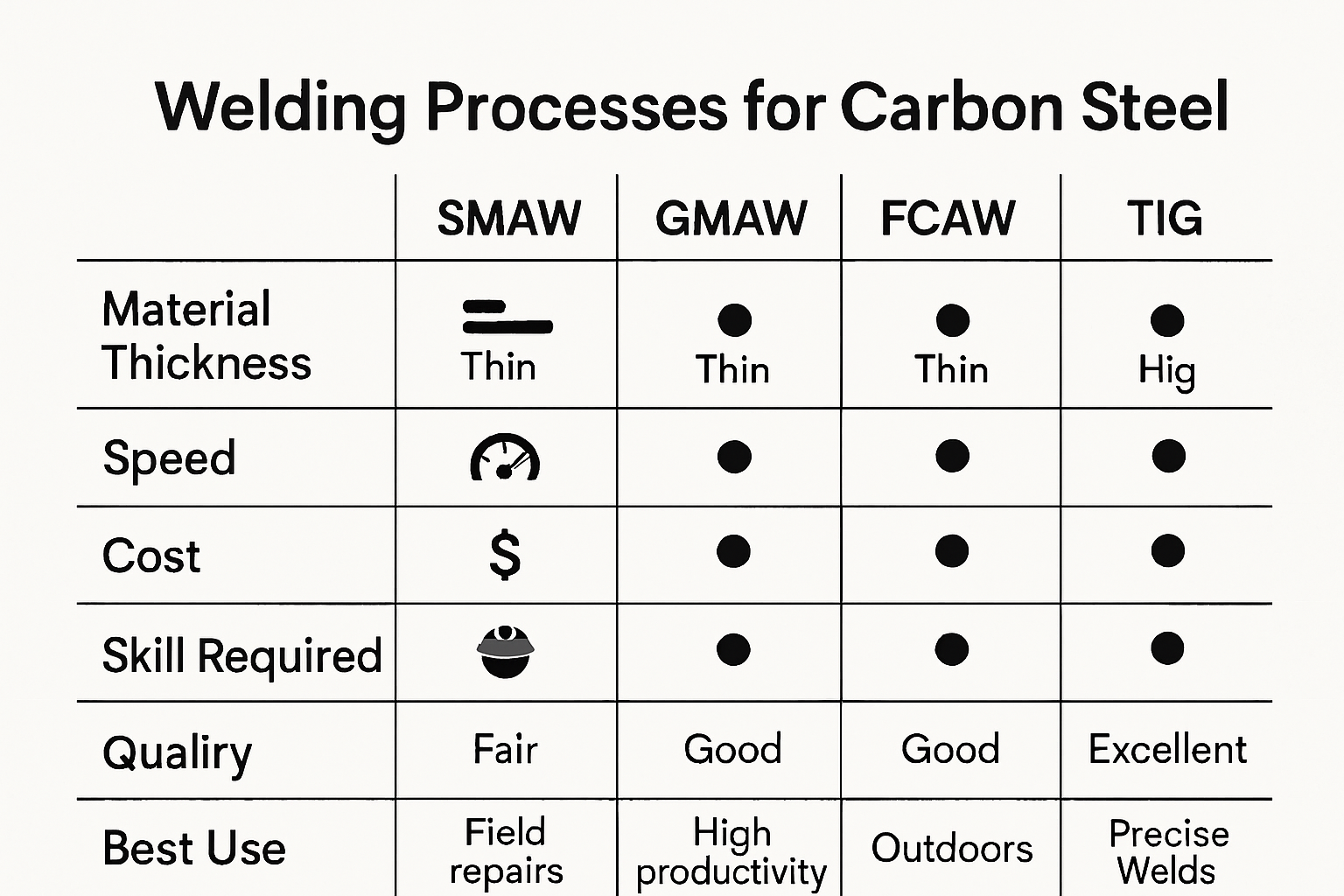
The primary welding methods for carbon steel include Shielded Metal Arc Welding (SMAW), Gas Metal Arc Welding (GMAW), Flux-Cored Arc Welding (FCAW), and Tungsten Inert Gas (TIG) welding. Each method presents unique advantages and limitations that must be carefully assessed against project specifications.
To help you compare welding methods for carbon steel projects in Gauteng, the table below summarizes their key advantages and typical industrial applications as outlined in the article.
| Welding Method | Key Advantages | Typical Application Sectors |
|---|---|---|
| SMAW (Stick) | Versatile, suitable for fieldwork & various thicknesses | Construction, Mining |
| GMAW (MIG/MAG) | High productivity, cleaner welds, faster deposition | Manufacturing, Construction |
| FCAW | High deposition rate, works well outdoors | Construction, Heavy Manufacturing |
| TIG | Precise, high-quality welds, good for thin materials | Heavy Manufacturing, Custom Fabrication |
Industrial Application Considerations
Different industrial sectors in Gauteng demand specialized welding approaches. Manufacturing, construction, mining, and heavy equipment fabrication require tailored welding techniques that address specific performance requirements:
- Construction Sector: Prioritizes rapid welding techniques with high deposition rates
- Mining Equipment: Demands high-strength welds capable of withstanding extreme environmental conditions
- Heavy Manufacturing: Requires precise welding methods for complex geometries and critical structural components
Explore our comprehensive guide to steel plate selection to understand how material characteristics influence welding method selection.
Economic and Technical Efficiency
Beyond technical considerations, economic factors play a crucial role in welding method selection. Fabricators must balance initial equipment investment, operational costs, labor requirements, and productivity rates. The choice of welding method directly impacts project timelines, material utilization, and overall manufacturing efficiency.
Advanced welding techniques like automated and robotic welding systems offer increased precision and consistency, particularly for large-scale production environments. These technologies enable higher repeatability, reduced human error, and improved quality control mechanisms.
Professional welding teams in Gauteng must continuously update their technical knowledge, invest in training, and remain adaptable to emerging welding technologies. The ability to select and implement the most appropriate welding method represents a critical competitive advantage in the region’s dynamic industrial landscape.
Ultimately, successful welding method selection requires a holistic approach that integrates technical expertise, industrial experience, and a deep understanding of material science principles. Continuous evaluation and optimization of welding processes ensure that Gauteng’s industrial manufacturers maintain high-quality standards and technological competitiveness.
Best Practices for Industrial and Construction Projects
Successful implementation of carbon steel welding in industrial and construction projects demands a comprehensive approach that integrates technical expertise, rigorous quality control, and strategic planning. Professional fabricators must navigate complex challenges to ensure structural integrity and long-term performance of welded components.
Preparation and Material Validation
According to research on carbon steel properties, understanding the material’s inherent characteristics is crucial for successful welding. Before commencing any welding operation, comprehensive material validation becomes paramount. This process involves detailed inspection of steel chemical composition, surface conditions, and potential metallurgical variations that could impact weld quality.
Key preparation steps include:
- Thorough surface cleaning to remove contaminants
- Precise material thickness measurement
- Comprehensive documentation of steel grade and origin
- Non-destructive testing of base materials
Welding Process Optimization
Exploring weldability considerations reveals the critical importance of precise process control. Industrial projects require meticulous management of welding parameters such as heat input, electrode selection, shielding gas composition, and cooling rates. Each parameter directly influences the mechanical properties and structural reliability of the final welded component.
Professional welding teams must implement:
- Consistent welding technique standardization
- Real-time process monitoring
- Advanced temperature control mechanisms
- Precise joint preparation techniques
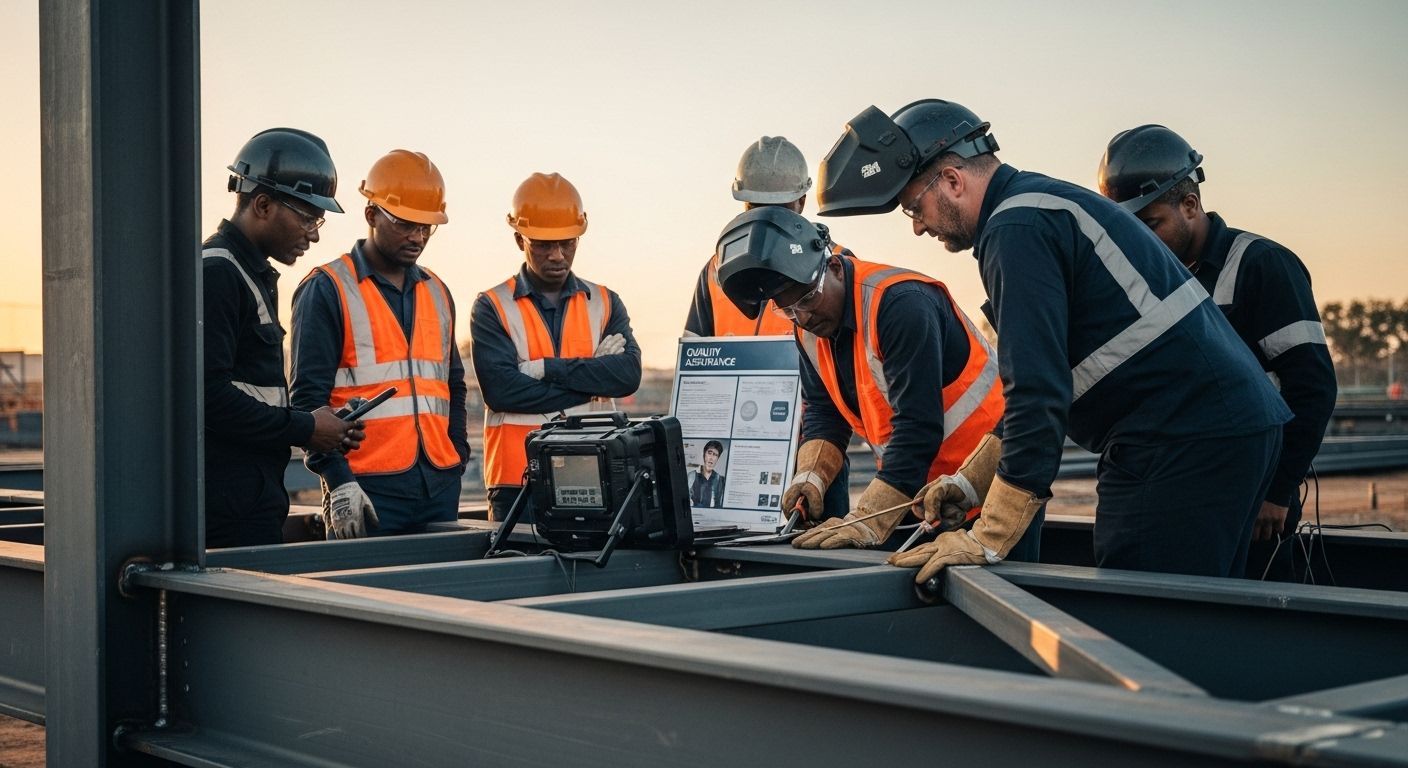
Quality Assurance and Compliance
Explore our advanced steel fabrication techniques to understand comprehensive quality management strategies. Rigorous quality assurance protocols are essential for industrial and construction projects involving carbon steel welding. These protocols extend beyond immediate welding processes and encompass comprehensive documentation, testing, and compliance verification.
Critical quality assurance components include:
- Detailed weld procedure specifications
- Comprehensive welder qualification records
- Systematic non-destructive testing protocols
- Continuous performance monitoring and evaluation
Successful carbon steel welding in industrial environments requires a holistic approach that combines technical knowledge, advanced technological capabilities, and unwavering commitment to quality. Gauteng’s industrial sectors demand nothing less than exceptional precision and reliability in every welded component, making these best practices not just recommendations, but essential requirements for competitive manufacturing and construction processes.
Frequently Asked Questions
What determines the weldability of carbon steel?
Weldability is primarily determined by the chemical composition of the steel, particularly its carbon equivalent. A lower carbon equivalent indicates better weldability, reducing the risk of cracking and other defects during the welding process.
How can I prevent welding defects in carbon steel?
To prevent welding defects, control critical parameters such as heat input, travel speed, and shielding gas composition. Additionally, surface preparation, including cleaning contaminants and proper joint design, is essential for achieving high-quality welds.
What are common welding methods for carbon steel in Gauteng?
Common welding methods for carbon steel in Gauteng include Shielded Metal Arc Welding (SMAW), Gas Metal Arc Welding (GMAW), Flux-Cored Arc Welding (FCAW), and Tungsten Inert Gas (TIG) welding. Each method has its advantages depending on the specific application and project requirements.
What factors should be considered when selecting a welding method?
When selecting a welding method, consider factors such as material thickness, joint design, mechanical property requirements, environmental conditions, and production volume. Each welding technique presents unique benefits tailored to specific industrial applications.
Unlock Carbon Steel Weldability Without the Guesswork
Worried that unpredictable weld defects or uncertain steel grades could set your Gauteng project back? If you battle with issues like carbon equivalent, proper material selection, or cracks after welding, you are not alone. Many in the industry face the same frustrations when reliable steel sourcing is needed for top weld quality. That is why finding the right partner makes the difference—especially when every weld counts for structural integrity and project deadlines.
Remove the uncertainty from your next steel order by choosing a supplier proven for fast service and trusted knowledge. At Genesis Steel, our dedicated team helps you match the correct steel plate or sheet to your welding needs. Explore our Uncategorised Archives to see how we support all aspects of fabrication and supply. Secure consistent, weld-ready materials and peace of mind now. Visit Genesis Steel online to get a personalised quote or discuss your project requirements today.