
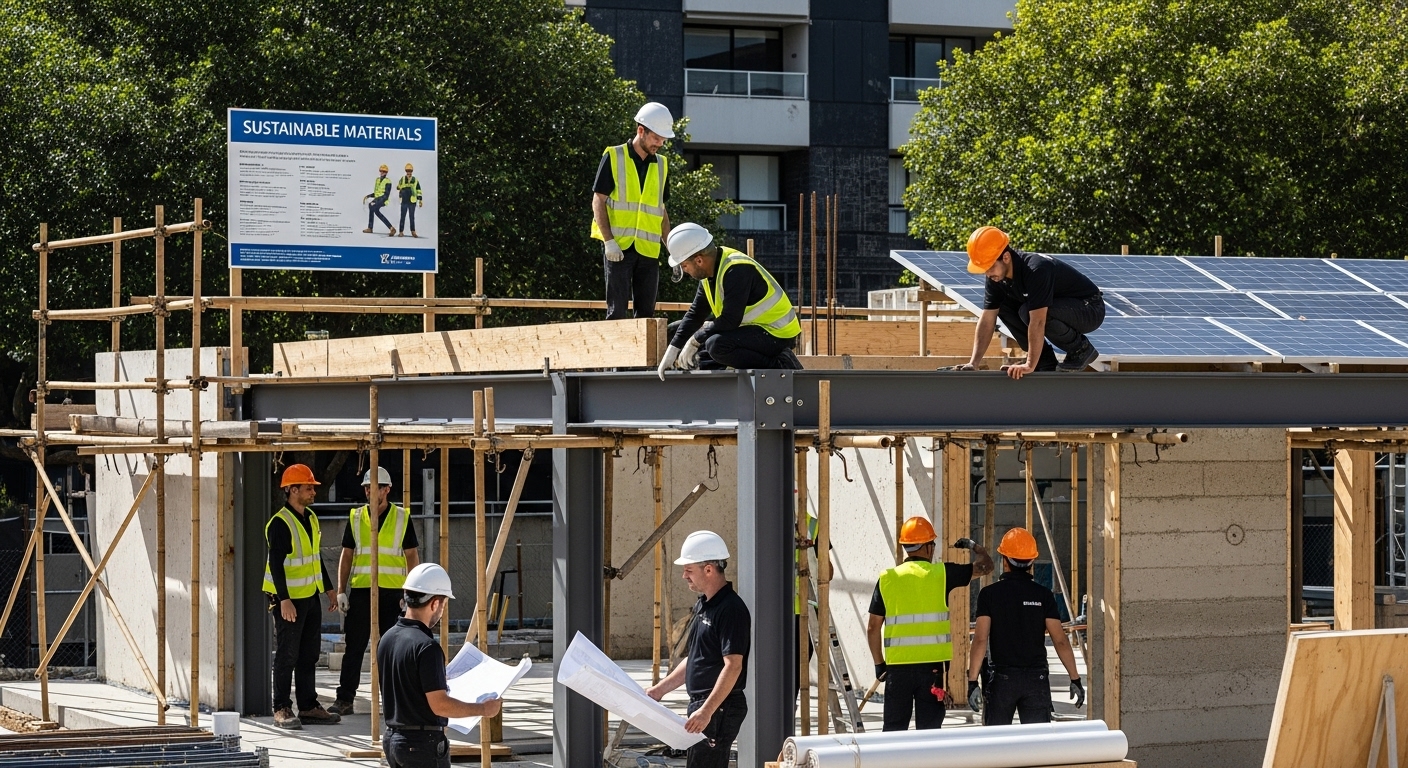
Sustainable materials in construction are redefining how we think about buildings, from skyscrapers in Joburg to new housing in Cape Town. It might sound like a trend for big-budget projects only, but the numbers tell a different story. The construction sector accounts for about 39 percent of worldwide carbon dioxide output, and switching to sustainable materials has proven to cut this impact drastically. What really surprises many is that these eco-friendly materials are no longer just about saving the planet. They are now helping builders, owners, and tenants save serious money over the long run and driving a new era of smarter projects across South Africa.
Table of Contents
- What Are Sustainable Materials In Construction?
- Why Sustainable Materials Matter In Today’s Building Sector
- How Building With Sustainable Materials Improves Projects
- Key Concepts Behind Sustainable Material Choices
- Real-World Applications Of Sustainable Construction Materials
Quick Summary
| Takeaway | Explanation |
|---|---|
| Sustainable materials reduce environmental impact | Choosing materials with low carbon footprints significantly lessens construction’s ecological footprint. |
| Lifecycle assessment is crucial for material selection | Evaluating a material’s entire lifecycle helps ensure sustainable choices and long-term benefits. |
| Sustainable materials can lead to long-term savings | Although initial costs may be higher, they often lead to reduced operational and maintenance expenses over time. |
| Innovative materials enhance project performance | Advanced materials, like recycled composites, boost durability and energy efficiency, improving overall building quality. |
| Sustainability is a strategic economic choice | Integrating sustainable practices not only protects the environment but also enhances market value and competitiveness. |
What are Sustainable Materials in Construction?
Sustainable materials in construction represent an innovative approach to building that prioritizes environmental responsibility, resource efficiency, and long-term performance. These materials are carefully selected and designed to minimise negative environmental impacts while maximising economic and social benefits throughout their lifecycle.
Understanding Sustainable Material Characteristics
Sustainable construction materials are defined by several key characteristics that distinguish them from traditional building components. Key characteristics include:
- Low environmental impact during production
- Renewable or recyclable content
- Energy efficiency in manufacturing
- Durability and long-term performance
- Minimal waste generation
- Reduced carbon footprint
According to research from the South African government, the construction industry is increasingly recognising the importance of adopting materials that support sustainable development goals. This shift involves selecting materials that not only meet structural requirements but also contribute to broader environmental conservation efforts.
Types of Sustainable Construction Materials
Sustainable construction materials encompass a wide range of innovative solutions. These include recycled steel, bamboo, reclaimed timber, hempcrete, rammed earth, and recycled plastic composites. Each material offers unique properties that make it suitable for different construction applications.
Below is a comparison table highlighting the types of sustainable construction materials mentioned in the article alongside their unique properties and primary environmental or economic benefits.
| Material | Unique Properties | Primary Benefits |
|---|---|---|
| Recycled Steel | High structural strength, recyclable | Lowers carbon emissions, reduces extraction of new metal |
| Bamboo | Rapidly renewable, lightweight | Fast growing, efficient carbon sequestration |
| Reclaimed Timber | Repurposed from existing structures | Reduces deforestation, minimises waste |
| Hempcrete | Excellent insulation, lightweight | Low embodied energy, renewable |
| Rammed Earth | High thermal mass, durable | Minimal processing, uses local soil |
| Recycled Plastic Composites | Durable, water-resistant | Diverts plastic from landfill, strong and versatile |
Recycled steel, for instance, reduces the need for new metal extraction and significantly lowers carbon emissions compared to traditional steel production. Bamboo provides a rapidly renewable alternative to hardwood, growing much faster and sequestering carbon more efficiently.
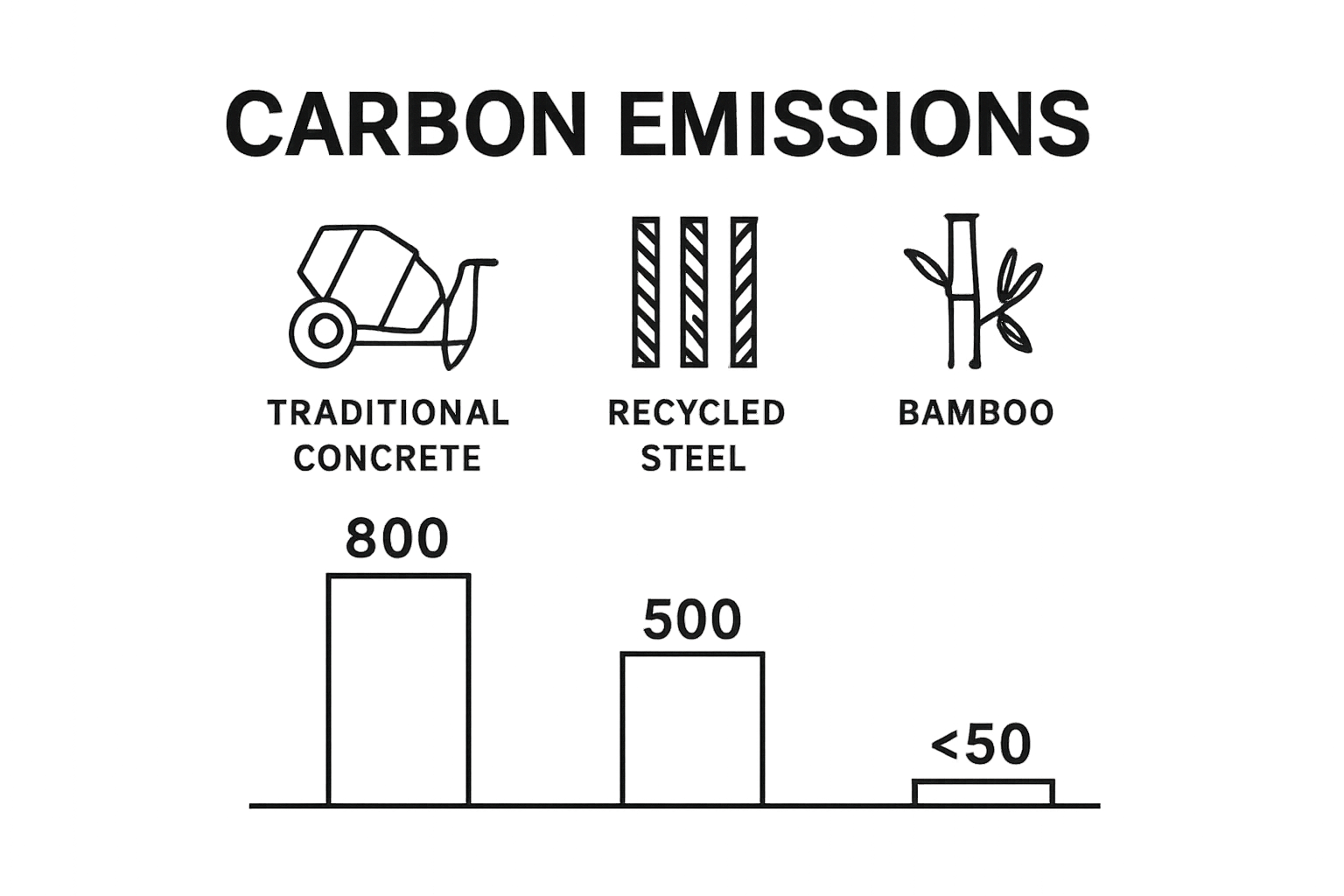
The Acta Structilia study on sustainable construction highlights that while sustainable materials can initially have higher upfront costs, they deliver substantial long-term economic and environmental benefits. Contractors and developers are increasingly recognising that investing in sustainable materials is not just an environmental choice but a strategic economic decision.
Why Sustainable Materials Matter in Today’s Building Sector
Sustainable materials have transformed from being a niche consideration to a critical strategic imperative in the modern construction landscape. As global environmental challenges intensify, the building sector increasingly recognises its responsibility to reduce carbon emissions, conserve resources, and create infrastructure that supports long-term ecological balance.
Environmental Impact and Economic Considerations
The construction industry is a significant contributor to global carbon emissions, responsible for approximately 39% of worldwide carbon dioxide output. Sustainable materials offer a direct pathway to mitigating these environmental challenges. By choosing materials with lower embodied energy, reduced waste generation, and minimal environmental footprint, construction professionals can dramatically decrease the sector’s ecological impact.
Key economic benefits of sustainable materials include:
- Reduced long-term operational costs
- Enhanced building durability and performance
- Potential tax incentives and green building certifications
- Improved market value of sustainable buildings
- Lower maintenance expenses
According to research from the University of Johannesburg, adopting circular economy principles in construction can generate substantial economic opportunities while addressing environmental concerns.
Technological Innovation and Future Readiness
Sustainable materials represent more than an environmental strategy they are a technological frontier. Innovative solutions like recycled plastic composites, carbon-negative concrete, and bio-based insulation materials demonstrate how advanced engineering can transform waste streams into high-performance construction components.
Professor Samson Bada’s groundbreaking work at Wits University exemplifies this innovation. His research showcases how waste materials like coal can be transformed into environmentally friendly building products, simultaneously addressing waste management and construction material needs.
The transition to sustainable materials is not just an environmental imperative but a strategic investment in future-proofing construction practices. By embracing these innovative solutions, the building sector can create resilient, efficient, and responsible infrastructure that meets the complex challenges of the 21st century.
How Building with Sustainable Materials Improves Projects
Building with sustainable materials represents a comprehensive approach to construction that goes beyond traditional methods, offering significant improvements in project performance, environmental responsibility, and long-term value creation. This strategic approach transforms construction from a resource-intensive process to a more intelligent, efficient, and responsible practice.
Performance and Efficiency Enhancements
Sustainable materials fundamentally elevate project quality and performance. By selecting materials with superior technical characteristics, construction professionals can achieve multiple strategic advantages. These materials typically offer enhanced durability, better thermal insulation, and improved structural integrity compared to conventional building components.
Key performance improvements include:
- Superior energy efficiency
- Reduced maintenance requirements
- Enhanced structural resilience
- Better indoor environmental quality
- Increased building lifespan
According to research from the South African Journal of Industrial Engineering, integrating green building practices with lean construction methodologies can significantly improve overall project outcomes and resource utilization.
Economic and Environmental Value Proposition
Sustainable materials deliver substantial economic benefits beyond their initial environmental credentials. By reducing long-term operational costs, minimizing waste generation, and improving building performance, these materials represent a strategic investment rather than an additional expense.
Lifecycle cost analysis consistently demonstrates that sustainable materials generate considerable financial advantages. The reduced energy consumption, lower maintenance requirements, and extended building lifespan translate into significant economic returns for developers, owners, and stakeholders.
The construction industry is recognising that sustainable materials are not just an environmental choice but a sophisticated economic strategy.
The following table breaks down key economic and environmental benefits of sustainable building materials as discussed in the article, providing a clear overview for stakeholders considering these investments.
| Key Benefit | Economic Advantage | Environmental Impact |
|---|---|---|
| Reduced operational costs | Lower energy bills, less repairs | Decreased overall resource use |
| Enhanced durability | Fewer replacements, longer lifespan | Limits landfill waste |
| Green building certifications | Increases property value, tax incentives | Drives adoption of green best practices |
| Improved market value | Higher sale/rental value | Signals environmental responsibility |
| Lower maintenance expenses | Saves money over building lifecycle | Less frequent use of materials and energy |
| Innovative materials like recycled composites, low-carbon concrete, and biomaterials are reshaping traditional cost-benefit calculations, offering more holistic value propositions. |
By embracing sustainable materials, construction projects can simultaneously address environmental challenges, enhance performance standards, and create more resilient, adaptable infrastructure for future generations.
Key Concepts Behind Sustainable Material Choices
Sustainable material choices represent a sophisticated decision-making process that goes far beyond simple environmental considerations. These choices involve a comprehensive evaluation of materials based on their entire lifecycle, performance characteristics, and broader ecological impact.
Lifecycle Assessment and Environmental Impact
Lifecycle assessment is the foundational concept driving sustainable material selection. This holistic approach examines a material’s environmental footprint from extraction and production through to installation, use, and eventual disposal or recycling. Construction professionals now recognize that true sustainability requires understanding the complete environmental journey of each material.
Key considerations in lifecycle assessment include:
- Carbon emissions during production
- Resource extraction methods
- Energy consumption in manufacturing
- Potential for recycling or reuse
- Long-term performance and durability
- Waste generation potential
According to the Green Building Council South Africa, green building practices fundamentally depend on making informed material choices that minimize environmental degradation while maximizing functional performance.
Performance and Technical Characteristics
Sustainable material selection is not solely about environmental credentials but also requires rigorous evaluation of technical performance. Materials must simultaneously meet structural requirements, provide thermal efficiency, and demonstrate long-term resilience.
Innovative sustainable materials are engineered to deliver multiple benefits. For instance, materials with superior thermal mass can reduce energy consumption by moderating indoor temperatures more effectively than traditional alternatives. Recycled steel offers comparable structural strength to virgin materials while significantly reducing carbon emissions.
The Clay Brick Association of Southern Africa highlights how thoughtful material selection can enhance building performance. Cavity wall systems constructed with sustainable materials can provide exceptional insulation, noise reduction, and energy efficiency, demonstrating that environmental responsibility can coexist with superior technical performance.
By understanding these key concepts, construction professionals can make material choices that balance environmental stewardship with practical building requirements, creating infrastructure that is both responsible and high-performing.
Real-World Applications of Sustainable Construction Materials
Sustainable construction materials are transforming architectural and engineering practices across residential, commercial, and industrial sectors. These innovative materials are not theoretical concepts but practical solutions being implemented in diverse building projects worldwide, demonstrating their versatility and effectiveness.
Residential and Urban Construction Applications
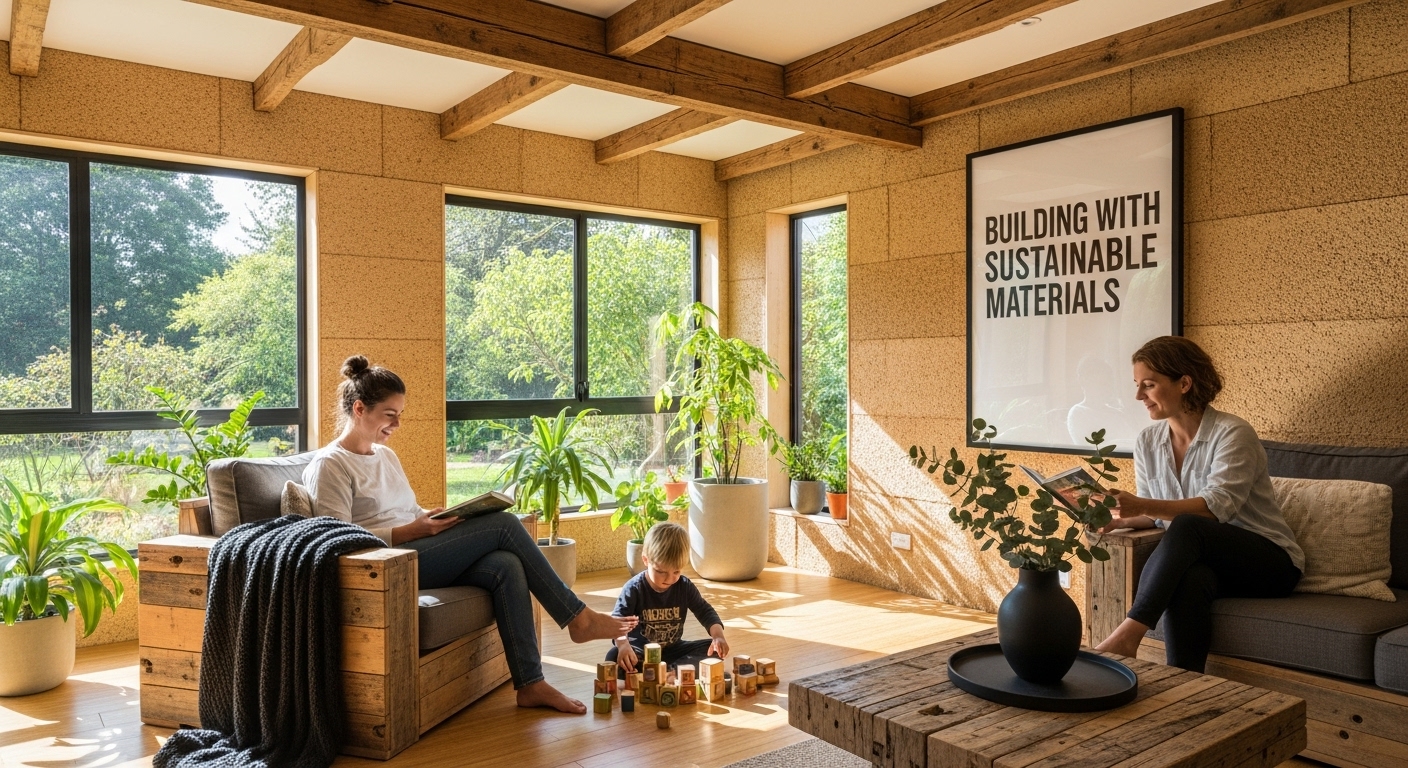
Sustainable materials are revolutionizing residential building techniques, offering homeowners and developers advanced solutions that combine environmental responsibility with superior performance. Emerging residential applications showcase how eco-friendly materials can address complex construction challenges.
Notable residential applications include:
- Bamboo flooring and structural elements
- Recycled plastic composite decking
- Hempcrete wall insulation systems
- Reclaimed timber framing
- Eco-friendly ceramic and clay wall tiles
These materials provide exceptional thermal regulation, reduce carbon footprint, and often deliver enhanced durability compared to traditional construction components.
Industrial and Commercial Building Innovations
Large-scale construction projects are increasingly adopting sustainable material technologies. Industrial facilities, warehouses, and commercial complexes are integrating advanced sustainable materials that offer robust performance, energy efficiency, and reduced environmental impact.
Industrial sustainable material applications encompass:
- Carbon-negative concrete for foundational structures
- Recycled steel framing systems
- Green roof technologies using native plant materials
- Photocatalytic exterior coatings
- High-performance insulation from agricultural waste
According to research from the University of Cape Town, these innovative materials are not just environmentally responsible but also economically competitive, challenging traditional construction paradigms.
The widespread adoption of sustainable materials represents a profound shift in construction philosophy. By prioritizing materials that minimize environmental impact while maximizing performance, the building sector is creating more resilient, efficient, and responsible infrastructure for future generations.
Choose Future-Ready Construction with Sustainable Steel from Genesis Steel
Are you ready to transform the way you build? The article on building with sustainable materials highlights the urgent need for solutions that offer durability, low environmental impact, and long-term value without compromising technical performance. Many in the construction industry are searching for materials that meet modern sustainability goals while still delivering strength and reliability on every project. If you find yourself striving to lower your carbon footprint and lead in responsible construction practices, it is time to consider a smarter, certified steel solution.
Make your project part of the new standard in South African construction. With Genesis Steel you access a wide range of hot-rolled steel sheets and plates that support sustainable building objectives. Our team is dedicated to fast service and technical support so your next project is future-proofed from the ground up. Visit Genesis Steel today and discover how our experience and comprehensive stock can help you stay competitive in a changing industry. Take the step toward responsible construction now and give your build the sustainable edge it deserves.
Frequently Asked Questions
What are sustainable materials in construction?
Sustainable materials in construction are those that prioritise environmental responsibility, resource efficiency, and long-term performance, minimising negative impacts while maximising benefits throughout their lifecycle.
What are the key characteristics of sustainable construction materials?
Key characteristics include low environmental impact during production, renewable or recyclable content, energy efficiency in manufacturing, durability, minimal waste generation, and a reduced carbon footprint.
How do sustainable materials improve building performance?
Sustainable materials enhance building performance through superior energy efficiency, reduced maintenance requirements, better thermal insulation, and increased structural resilience, contributing to longer building lifespans.
Why is lifecycle assessment important in sustainable material selection?
Lifecycle assessment is crucial as it evaluates a material’s environmental footprint from production to disposal, helping construction professionals make informed choices that minimise environmental degradation and maximise functional performance.
Recommended
- What Is S355 Steel? Guide for Gauteng Industries 2025 – Genesis Steel
- Types of Steel Plates for Gauteng Industry: 2025 Guide – Genesis Steel
- Carbon Steel Properties for Gauteng Industries 2025 – Genesis Steel
- What Is S355 Steel? Guide for Gauteng Industries 2025 – Genesis Steel
- Corner Storage Ideas 2025: Stylish Solutions for Busy Homes – BLUSHBEES USA
- Henry Greene’s Final Projects: The Master’s Last Chapter