
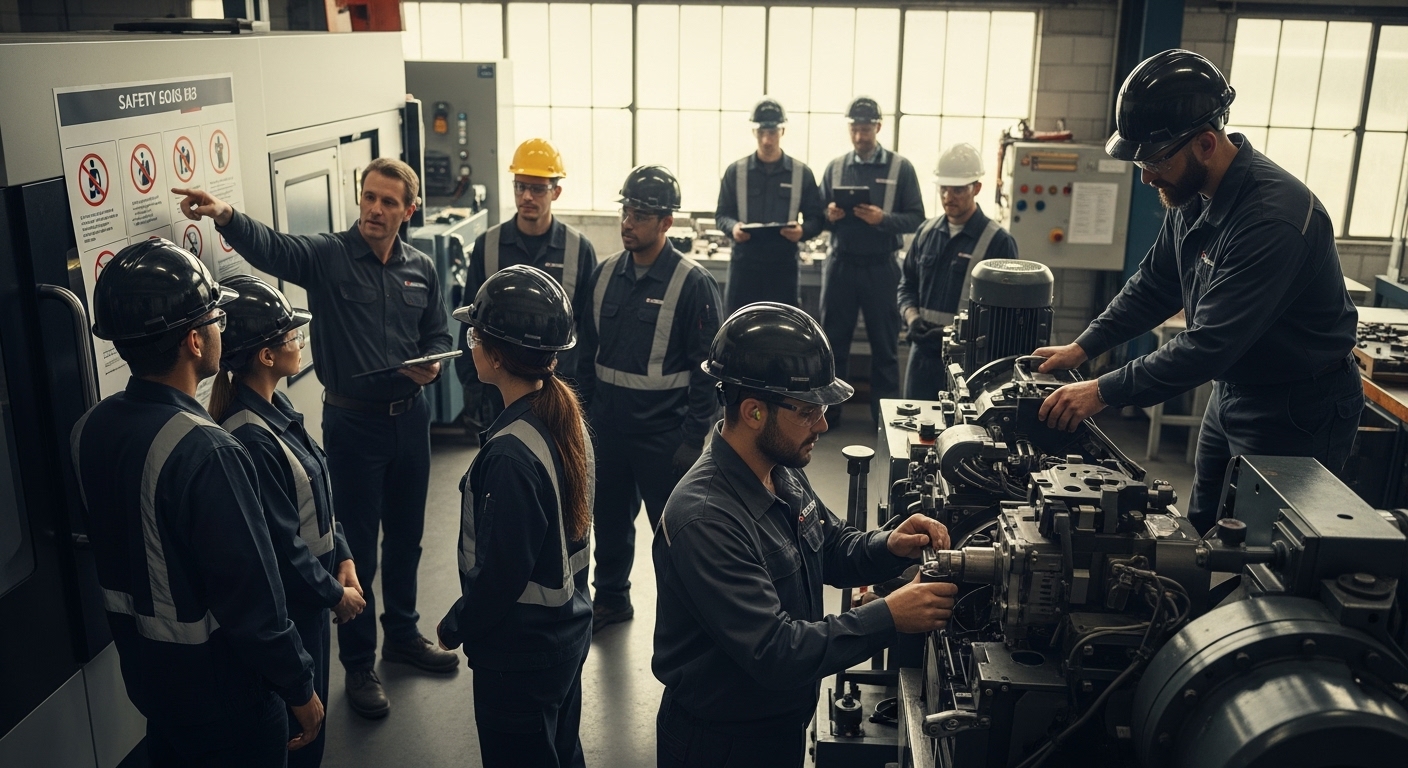
Industrial safety is the backbone of every factory floor in South Africa. It is not just an HR checkbox or a legal headache. And yet, nearly 25 percent of workplace injuries in local manufacturing are due to preventable hazards. Most people think safety is all about gear and warnings but the real secret lies in building a culture where every worker feels protected and heard. That is where real change starts.
Table of Contents
- Understanding The Importance Of Industrial Safety
- Conducting Regular Safety Training For Employees
- Implementing Effective Safety Protocols And Guidelines
- Utilizing Personal Protective Equipment (Ppe) Properly
- Maintaining Equipment And Machinery Regularly
- Conducting Hazard Assessments And Risk Analysis
- Promoting A Safety Culture Within The Workplace
Quick Summary
| Takeaway | Explanation |
|---|---|
| Prioritise industrial safety for success | Emphasising safety protects workers and boosts operational efficiency in high-risk sectors like manufacturing and construction. |
| Implement regular safety training | Ongoing training equips employees with essential skills to identify and respond to workplace hazards, enhancing safety awareness. |
| Develop customised safety protocols | Tailored safety guidelines help address specific workplace risks and ensure all employees understand and follow procedures. |
| Focus on PPE usage and training | Properly selected and maintained personal protective equipment is vital to safeguarding employees from potential hazards. |
| Cultivate a proactive safety culture | A safety-first mindset transforms workplace attitudes, empowering all employees to engage in and prioritise safety initiatives. |
1: Understanding the Importance of Industrial Safety
Industrial safety is a critical foundation for protecting workers, maintaining operational efficiency, and ensuring organisational sustainability. In high-risk sectors like manufacturing, construction, and steel fabrication, understanding and implementing robust safety practices is not just a legal requirement but a fundamental responsibility towards human life and workplace productivity.
At its core, industrial safety encompasses a comprehensive approach to preventing workplace accidents, minimising risks, and creating an environment where employees can perform their duties without compromising their physical well-being. According to the Department of Employment and Labour, workplace safety is a constitutional right that protects workers’ dignity and ensures they are not exposed to unsafe conditions.
The implications of inadequate industrial safety extend far beyond immediate physical harm. Poor safety practices can result in:
- Significant financial losses from worker compensation claims
- Reduced productivity due to workplace injuries
- Potential legal repercussions and regulatory penalties
- Decreased employee morale and trust
- Potential long-term reputational damage
Proactive safety management requires a holistic approach that integrates technological solutions, comprehensive training, and a culture of continuous risk assessment. This means creating systematic processes that identify potential hazards, implement preventive measures, and foster an organisational mindset where safety is everyone’s responsibility.
Moreover, effective industrial safety is not merely about preventing accidents but about creating an environment that values human capital. By investing in robust safety protocols, organisations demonstrate their commitment to their employees’ well-being, which ultimately translates into enhanced operational efficiency, reduced downtime, and a more engaged workforce.
For industries like steel fabrication and manufacturing, where inherent risks are significantly higher, understanding and implementing industrial safety best practices is not optional – it is absolutely essential for sustainable business operations and maintaining a competitive edge in the market.
2: Conducting Regular Safety Training for Employees
Regular safety training represents a critical cornerstone of comprehensive industrial safety strategies, transforming theoretical knowledge into practical workplace protection mechanisms. More than a compliance requirement, effective safety training empowers employees with the skills and awareness necessary to navigate complex industrial environments and mitigate potential risks.
According to the Department of Employment and Labour, continuous improvement of occupational health and safety systems is fundamental to preventing workplace accidents and protecting workers across high-risk industrial sectors.
Effective safety training programs should encompass multiple critical dimensions:
- Comprehensive technical skill development
- Understanding equipment-specific safety protocols
- Recognition and response to potential workplace hazards
- Emergency preparedness and response techniques
Successful training initiatives go beyond mere instruction. They require creating an interactive learning environment that encourages active participation, critical thinking, and genuine engagement with safety concepts. This means developing training modules that are contextually relevant, practically demonstrable, and tailored to specific workplace environments.
Companies must adopt a multifaceted approach to safety training that includes:
- Regular theoretical and practical training sessions
- Periodic skills assessment and refresher courses
- Simulation-based learning scenarios
- Documentation and tracking of individual employee training progress
Investing in robust safety training is not an expense but a strategic investment in human capital. By prioritizing employee education and skill development, organisations can significantly reduce workplace incidents, minimise potential financial losses, and create a culture of proactive safety awareness.
Moreover, comprehensive safety training demonstrates an organisation’s commitment to its workforce, fostering greater employee trust, engagement, and overall workplace morale. In high-risk industrial environments like steel fabrication and manufacturing, this approach transforms safety from a mandatory requirement into a shared organisational value.
3: Implementing Effective Safety Protocols and Guidelines
Implementing robust safety protocols and guidelines is a fundamental requirement for maintaining a secure industrial workplace. These protocols serve as a comprehensive framework that systematically identifies, assesses, and mitigates potential workplace hazards, transforming safety from a reactive measure to a proactive strategic approach.
According to research published in PLOS ONE, effective safety protocols in manufacturing and industrial sectors significantly reduce incident and injury rates by establishing clear, documented procedures for risk management.
Developing comprehensive safety protocols requires a multifaceted approach that encompasses several critical elements:
- Systematic hazard identification processes
- Clear risk assessment methodologies
- Documented safety intervention strategies
- Regular protocol review and update mechanisms
Successful safety guidelines must be contextually specific, addressing the unique challenges of each industrial environment. This means creating protocols that are not generic templates but tailored solutions that reflect the specific operational dynamics, equipment, and potential risks inherent in a particular workplace.
Key considerations for implementing effective safety protocols include:
- Ensuring protocols are easily accessible to all employees
- Developing clear communication channels for safety reporting
- Creating accountability mechanisms for protocol adherence
- Integrating technological solutions for real-time risk monitoring
Moreover, safety protocols are not static documents but living frameworks that require continuous refinement. Regular reviews, employee feedback, and incorporation of emerging safety technologies are essential for maintaining their relevance and effectiveness.
Organisations must also recognize that successful protocol implementation goes beyond documentation. It demands a comprehensive cultural shift that prioritizes safety as a fundamental organisational value. This involves leadership commitment, employee engagement, and a systematic approach to risk management that permeates every level of the workplace ecosystem.
4: Utilizing Personal Protective Equipment (PPE) Properly
Personal Protective Equipment (PPE) represents the final line of defense in industrial safety, providing critical protection when other risk mitigation strategies are insufficient. Proper selection, usage, and maintenance of PPE are fundamental to safeguarding workers from potential workplace hazards and preventing serious injuries.
According to the Department of Employment and Labour, employers must provide and maintain a working environment that eliminates or significantly reduces health risks to employees, with PPE serving as an essential component of this protection strategy.
Critical components of effective PPE management include:
- Comprehensive risk assessment for specific workplace environments
- Selection of appropriate equipment for identified hazards
- Regular equipment inspection and maintenance
- Proper employee training on equipment usage
Utilizing PPE extends beyond simply providing protective gear. It requires a systematic approach that considers the unique characteristics of each industrial setting. Different work environments demand specialized protective equipment, ranging from basic safety helmets and gloves to advanced respiratory protection systems and full-body protective suits.
Key considerations for PPE implementation include:
- Ensuring proper fit and comfort for individual workers
- Matching equipment to specific workplace hazards
- Establishing clear protocols for equipment maintenance
- Implementing regular replacement schedules
Moreover, PPE effectiveness depends on more than just the quality of equipment. Proper employee training is crucial. Workers must understand not only how to wear protective gear but also how to inspect, maintain, and store it correctly. This requires ongoing education and periodic skills assessment to ensure consistent and correct usage.
Organisations must recognize that PPE is not a standalone solution but part of a comprehensive safety strategy. While critical, protective equipment should be the last line of defense, implemented after exhausting other risk mitigation approaches such as engineering controls and administrative interventions.
5: Maintaining Equipment and Machinery Regularly
Regular equipment and machinery maintenance is a critical cornerstone of industrial safety, representing a proactive approach to preventing workplace accidents, minimizing operational disruptions, and ensuring optimal performance. Systematic maintenance goes beyond routine inspections, transforming into a strategic process that safeguards both human resources and technological investments.
According to the Occupational Health and Safety Act guidelines, comprehensive machinery maintenance is essential for controlling potential workplace hazards and ensuring safe operational environments.
Effective maintenance strategies encompass several fundamental principles:
- Implementing predictive and preventative maintenance schedules
- Documenting all equipment inspection and repair activities
- Tracking machinery performance and identifying potential wear patterns
- Establishing clear maintenance protocol and responsibility frameworks
A robust maintenance program requires more than sporadic checks. It demands a systematic and comprehensive approach that integrates technological monitoring, skilled human expertise, and structured documentation. This means developing detailed maintenance logs, understanding equipment lifecycle, and anticipating potential mechanical failures before they occur.
Key considerations for machinery maintenance include:
- Regular calibration of precision equipment
- Comprehensive lubrication and parts replacement schedules
- Advanced diagnostic technological integration
- Training maintenance personnel in specialized technical skills
Moreover, maintenance is not merely a technical requirement but a critical safety intervention. Well-maintained machinery reduces the risk of unexpected breakdowns, minimizes potential workplace accidents, and ensures consistent operational efficiency. This approach transforms maintenance from a reactive cost center into a strategic investment in organisational safety and productivity.
Industrial organisations must recognize that equipment maintenance is a continuous process requiring ongoing commitment, technological understanding, and a proactive safety culture. By prioritizing regular maintenance, companies can significantly reduce operational risks, protect their workforce, and maintain high-performance standards.
6: Conducting Hazard Assessments and Risk Analysis
Hazard assessments and risk analysis represent a systematic approach to identifying, evaluating, and mitigating potential workplace dangers before they can cause harm. This critical process transforms safety from a reactive strategy to a proactive, preventative methodology that protects workers and organisational assets.
According to the National Institute for Occupational Health, effective risk assessments follow a structured five-step process that ensures comprehensive workplace safety management.
Key elements of comprehensive hazard assessment include:
- Thorough identification of potential workplace hazards
- Detailed evaluation of risk probability and potential impact
- Systematic documentation of assessment findings
- Development of targeted risk mitigation strategies
A robust hazard assessment goes beyond superficial observations. It requires a deep analytical approach that considers multiple dimensions of workplace safety, including physical risks, equipment interactions, human factors, and potential environmental challenges. This means understanding not just what could go wrong, but why and how it might occur.
Critical considerations for effective risk analysis involve:
- Engaging workers directly in the assessment process
- Utilizing advanced technological tools for risk mapping
- Developing scenario-based risk evaluation techniques
- Establishing clear escalation and intervention protocols
Moreover, hazard assessments are not static documents but dynamic frameworks that require continuous updating. Organisations must create flexible risk analysis processes that can adapt to changing workplace conditions, technological advancements, and emerging safety challenges.
The ultimate goal of hazard assessments extends beyond mere compliance. By systematically identifying and addressing potential risks, companies create safer work environments, reduce potential financial losses, protect their workforce, and demonstrate a genuine commitment to organisational safety culture. This approach transforms risk analysis from a bureaucratic exercise into a strategic tool for protecting human capital and organisational resilience.
7: Promoting a Safety Culture Within the Workplace
Promoting a safety culture transcends mere compliance with regulations. It represents a fundamental transformation of workplace attitudes, where safety becomes an intrinsic organisational value embedded in every interaction, decision, and operational process.
According to Deputy Minister Jomo Sibiya, integrating safety matters into an organization’s core culture leads directly to enhanced profitability, efficiency, and overall productivity.
Key strategies for cultivating a robust safety culture include:
- Establishing clear leadership commitment to safety
- Encouraging open communication about potential risks
- Recognizing and rewarding safe workplace behaviors
- Creating transparent reporting mechanisms for safety concerns
A genuine safety culture requires more than policy documents. Workplace safety must become a shared responsibility that empowers every employee to act as a guardian of collective well-being. This means creating an environment where workers feel comfortable raising concerns, reporting potential hazards, and actively participating in safety initiatives without fear of retribution.
Critical considerations for developing a safety-first mindset involve:
- Implementing comprehensive safety training programs
- Developing clear accountability frameworks
- Creating positive reinforcement mechanisms
- Fostering a non-punitive approach to safety reporting
Successful safety cultures are built on trust, transparency, and continuous learning. Organisations must move beyond viewing safety as a compliance requirement and instead integrate it as a core organisational value. This involves leadership demonstrating unwavering commitment, investing in employee education, and creating systems that prioritize human well-being over short-term productivity.
Ultimately, a strong safety culture is not about avoiding penalties but about creating an environment where every worker returns home safely. It represents a profound commitment to human dignity, organisational excellence, and the fundamental principle that no job is so important that it cannot be done safely.
Below is a comprehensive table summarising the 7 essential industrial safety best practices discussed in the article, highlighting their key focus areas and benefits for South African industries.
| Best Practice | Key Focus Areas | Main Benefits |
|---|---|---|
| Understanding the Importance of Industrial Safety | Holistic safety management, legal and ethical responsibilities, nurturing wellbeing | Protects workers, ensures compliance, boosts productivity |
| Regular Safety Training for Employees | Ongoing training, practical skills, workplace hazard recognition, emergency preparedness | Reduces accidents, enhances skills, builds proactive mindset |
| Implementing Effective Safety Protocols & Guidelines | Hazard identification, risk assessment, tailored procedures, regular updates, accountability | Minimises risks, ensures clarity, drives consistency |
| Proper Use of Personal Protective Equipment (PPE) | Selecting suitable PPE, employee training, fit and comfort, maintenance and replacement | Reduces injury risk, fulfils legal requirements |
| Maintaining Equipment and Machinery Regularly | Preventative and predictive servicing, tracking performance, skilled maintenance staff, documentation | Prevents breakdowns, improves safety, sustains efficiency |
| Conducting Hazard Assessments and Risk Analysis | Systematic hazard identification, risk evaluation, worker engagement, continuous improvement | Proactively addresses risks, protects staff and assets |
| Promoting a Safety Culture Within the Workplace | Leadership commitment, open communication, recognition, non-punitive reporting, shared responsibility | Empowers workers, builds trust, enhances overall safety |
Turn Best Practices into Safer Steel Operations Today
Struggling to uphold safety protocols while meeting tough production deadlines? You already know that neglected maintenance or lack of robust safety guidelines around heavy steel sheets and plates can put workers at risk — and hurt your bottom line. The article highlighted exactly how proactive hazard management, regular training, and effective equipment care can protect your people and your profits.
Choose a steel supplier that cares as much about workplace safety as you do. At Genesis Steel, our expert team helps you select suitable hot-rolled steel products in the right grades and sizes for your unique challenges. Let us support your mission to create a safer environment by getting you the materials and the service you can trust. Take action now. Visit Genesis Steel for product enquiries or guidance matched to your safety goals.
Frequently Asked Questions
What are the key components of an effective industrial safety training program?
An effective industrial safety training program should include comprehensive technical skill development, equipment-specific safety protocols, recognition of potential workplace hazards, and emergency preparedness techniques. Active participation and contextually relevant training modules are essential for success.
How can organisations implement effective safety protocols in the workplace?
Effective safety protocols require systematic hazard identification, clear risk assessment methodologies, documented safety intervention strategies, and regular protocol reviews. Customizing these protocols to reflect specific operational dynamics is vital for their success.
What is the importance of personal protective equipment (PPE) in industrial settings?
PPE serves as the final line of defense against workplace hazards. Proper selection, usage, and maintenance of PPE are essential to safeguarding workers from potential risks, minimizing injury, and complying with safety regulations.
How do hazard assessments contribute to workplace safety?
Hazard assessments systematically identify and evaluate workplace dangers, allowing organizations to develop targeted risk mitigation strategies. This proactive approach significantly enhances workplace safety by anticipating potential risks before they can cause harm.