

Corrosion resistance shapes the future of everything from mining equipment to offshore rigs. Industrial corrosion can cause millions in financial losses every year and wreck entire operations if left unchecked. This sounds like a disaster waiting to happen, but not all hope is lost. The real breakthroughs come from understanding how invisible chemical shields and high-tech coatings can quietly outsmart even the harshest environments.
Table of Contents
- Defining Corrosion Resistance: What It Means
- The Importance Of Corrosion Resistance In Industry
- How Corrosion Resistance Works: Key Mechanisms
- Types Of Corrosion Resistance: Materials And Coatings
- Real-World Applications And Challenges Of Corrosion Resistance
Quick Summary
| Takeaway | Explanation |
|---|---|
| Corrosion resistance is essential for material longevity | It helps materials withstand environmental degradation, enhancing safety and efficiency in industrial applications. |
| Specialized alloys and coatings improve protection | Using materials like stainless steel and advanced coatings extends equipment lifespan and reduces maintenance costs. |
| Understanding environments is crucial for material selection | Engineers must consider factors like moisture and chemicals to choose materials that will perform reliably under specific conditions. |
| Economic implications of corrosion are significant | Corrosion can lead to high costs due to equipment failures, downtime, and safety risks; strategic material choices can mitigate these issues. |
| Advanced coatings enhance corrosion resistance mechanisms | Techniques like electroplating and ceramic coatings create barriers that improve durability against harsh environmental conditions. |
Defining Corrosion Resistance: What It Means
Corrosion resistance represents a critical material property that determines how effectively a substance can withstand environmental degradation and chemical attacks. At its core, corrosion resistance describes a material’s ability to prevent or significantly slow down destructive chemical reactions that cause structural deterioration.
Understanding the Core Concept
When discussing what is corrosion resistance, we fundamentally examine a material’s capacity to maintain its original properties and structural integrity when exposed to potentially damaging environments. According to the Council for Scientific and Industrial Research, corrosion resistance involves measuring the rate of material loss and evaluating the effectiveness of protective surface layers.
Key characteristics that define corrosion resistance include:
- Chemical stability under varying environmental conditions
- Ability to form protective surface layers
- Resistance to oxidation and electrochemical degradation
- Maintaining mechanical strength despite environmental challenges
Practical Significance in Industrial Applications
In industrial contexts, corrosion resistance becomes paramount for ensuring equipment longevity, safety, and operational efficiency. Different materials exhibit varying levels of corrosion resistance based on their elemental composition and structural characteristics.
Some materials naturally demonstrate superior corrosion resistance, such as stainless steel, titanium alloys, and certain ceramics. These materials are engineered to create protective oxide layers that shield the underlying substrate from environmental attacks. The protective mechanism prevents direct interaction between the base material and corrosive agents, thereby extending the material’s functional lifespan.
As Corrosionpedia explains, environmental factors like moisture, industrial atmospheres, and chemical exposures play crucial roles in determining a material’s corrosion resistance. Engineers and designers must carefully select materials that can withstand specific operational conditions, balancing performance, durability, and cost-effectiveness.
Understanding corrosion resistance goes beyond simple material selection—it represents a sophisticated approach to material science that considers complex interactions between substances and their surrounding environments.
The Importance of Corrosion Resistance in Industry
Corrosion resistance transcends technical specifications and becomes a critical strategic factor determining industrial infrastructure reliability, safety, and economic sustainability. In sectors ranging from manufacturing to mining, the ability of materials to withstand environmental degradation directly impacts operational efficiency and long-term financial performance.
Economic Impact of Corrosion
Industrial corrosion represents a substantial economic burden, causing significant financial losses across multiple sectors. Material degradation leads to unexpected equipment failures, increased maintenance costs, and reduced operational productivity. According to research from the University of Cape Town, strategic material selection and advanced alloy development can substantially mitigate these economic challenges.
Key economic considerations of corrosion include:
- Direct replacement costs for corroded equipment
- Unplanned production downtime
- Safety risks associated with structural degradation
- Potential environmental contamination from material breakdown
Critical Industrial Applications
Different industrial sectors demand specialized corrosion-resistant materials to ensure reliable performance. Mining, chemical processing, offshore engineering, and heavy manufacturing represent domains where corrosion resistance becomes paramount.
In mining environments, for instance, equipment must withstand extreme conditions involving abrasive materials, chemical interactions, and intense mechanical stress. Specialized alloys with enhanced corrosion resistance can extend equipment lifespans by several years, reducing replacement frequencies and minimizing operational interruptions.
Engineering teams increasingly prioritize materials with superior corrosion resistance, understanding that prevention is significantly more cost-effective than reactive maintenance. By selecting appropriate materials with inherent protective characteristics, industries can dramatically reduce long-term operational expenses and enhance overall system reliability.

The strategic importance of corrosion resistance extends beyond immediate technical requirements—it represents a sophisticated approach to material science that balances performance, durability, and economic sustainability across complex industrial landscapes.
How Corrosion Resistance Works: Key Mechanisms
Corrosion resistance operates through sophisticated material science principles that create protective barriers against environmental degradation. These mechanisms involve complex interactions between material composition, surface properties, and chemical environments.
Protective Layer Formation
Passive film development represents the primary mechanism of corrosion resistance. When certain metals encounter oxygen, they spontaneously generate ultrathin protective oxide layers that shield the underlying material from direct chemical interactions. According to research from the University of Pretoria, these protective layers can significantly modify a material’s resistance to environmental attacks.
Key characteristics of protective layer mechanisms include:
- Rapid self-healing capabilities
- Molecular density preventing further oxidation
- Uniform coverage across material surfaces
- Stability under varying environmental conditions
Chemical Composition Strategies
Material scientists strategically modify elemental compositions to enhance corrosion resistance. Alloying represents a sophisticated approach to improving material performance. By introducing specific elements like chromium, nickel, or molybdenum, metallurgists can dramatically alter a material’s interaction with corrosive environments.
For instance, stainless steel contains chromium, which creates a self-regenerating chromium oxide layer that provides exceptional protection against oxidation and chemical degradation. This approach transforms potentially reactive metals into highly stable materials capable of withstanding extreme industrial conditions.
Engineering teams carefully balance multiple elemental compositions to create materials with targeted corrosion resistance properties. The goal extends beyond simply preventing material breakdown—it involves designing substances that maintain structural integrity and performance under challenging environmental conditions.
The intricate science of corrosion resistance demonstrates how advanced material engineering can transform fundamental chemical interactions, providing industrial solutions that balance durability, performance, and economic sustainability.
Types of Corrosion Resistance: Materials and Coatings
Corrosion resistance manifests through diverse materials and advanced coating technologies designed to protect industrial infrastructure from environmental degradation. Different approaches offer unique protective mechanisms tailored to specific industrial challenges and operational environments.
Metallic Corrosion Resistant Materials
Specialized metal alloys represent the foundation of corrosion resistance strategies. Stainless steel, titanium alloys, and nickel-based compositions provide inherent protection through complex chemical interactions. According to research from the University of Johannesburg, advanced coating technologies can significantly enhance material performance.
Key metallic materials with superior corrosion resistance include:
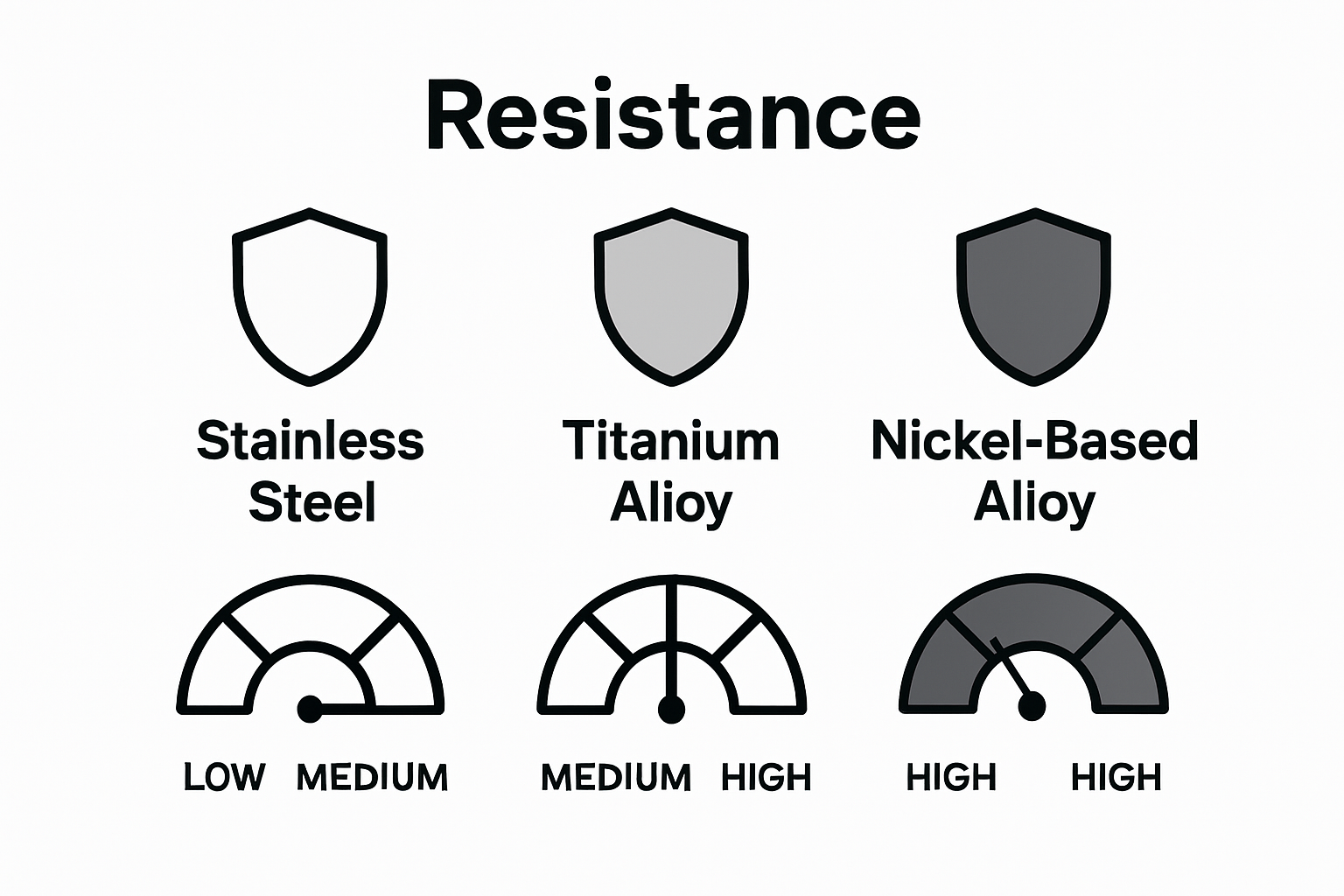
- Austenitic stainless steel
- Duplex stainless steel
- Nickel-based superalloys
- Titanium and titanium alloys
- Copper-nickel alloys
Advanced Protective Coating Technologies
Modern engineering leverages sophisticated coating technologies to create additional protective barriers. Surface modification techniques transform material properties, extending equipment lifespans and reducing maintenance requirements. Electroplating, thermal spraying, and chemical vapor deposition represent advanced methods for enhancing corrosion resistance.
Innovative coating approaches include ceramic coatings, polymer-based protective layers, and metal-ceramic composites. These technologies create ultrathin protective barriers that shield underlying substrates from environmental attacks. By strategically selecting coating materials and application techniques, engineers can dramatically improve equipment performance and durability.
The evolution of corrosion resistance technologies demonstrates the intricate relationship between material science, engineering precision, and industrial requirements.
To clarify the main types of corrosion-resistant materials and coatings discussed, the table below outlines their features and the protective mechanisms they provide.
| Material/Coating Type | Key Features | Protection Mechanism |
|---|---|---|
| Austenitic Stainless Steel | High chromium and nickel content, good formability | Forms passive chromium oxide layer |
| Duplex Stainless Steel | Mixture of austenitic and ferritic structure | Improved stress corrosion resistance |
| Nickel-based Superalloys | Exceptional chemical stability, high-temperature strength | Maintains integrity under harsh conditions |
| Titanium and Titanium Alloys | Low density, high strength | Stable titanium oxide protective layer |
| Copper-Nickel Alloys | Excellent resistance to seawater corrosion | Protective film of copper oxide |
| Ceramic Coatings | High hardness, thermal stability | Acts as inert barrier to chemicals |
| Polymer-based Protective Layers | Flexible, corrosion-resistant, electrically insulating | Prevents contact with corrosive environments |
| Metal-ceramic Composites | Combines metal strength with ceramic durability | Synergistic barrier against corrosion |
Real-World Applications and Challenges of Corrosion Resistance
Corrosion resistance plays a critical role across multiple industrial sectors, presenting complex engineering challenges that demand sophisticated material science solutions. From aerospace to maritime infrastructure, the ability to protect critical components against environmental degradation represents a fundamental technological imperative.
Industrial Sector Challenges
Corrosive environments pose significant threats to industrial infrastructure, requiring continuous innovation in material protection strategies. According to research from the University of Pretoria, exposure to specific chemical environments can dramatically reduce material performance and structural integrity.
Significant industrial sectors confronting corrosion challenges include:
- Offshore oil and gas exploration
- Chemical processing facilities
- Maritime and naval engineering
- Automotive manufacturing
- Aerospace and transportation infrastructure
Performance Degradation Mechanisms
Real-world applications reveal intricate challenges in maintaining material performance under challenging conditions. Structural materials experience complex degradation processes that extend beyond simple surface oxidation. Mechanisms such as hydrogen embrittlement, intergranular corrosion, and stress-corrosion cracking represent sophisticated failure modes that require advanced mitigation strategies.
Engineering teams must continuously monitor and predict potential material failures by understanding microscopic changes in material structure. This involves developing predictive models that anticipate how environmental factors like temperature, humidity, and chemical exposure will impact material performance over time.
The ongoing challenge in corrosion resistance involves creating adaptive solutions that can respond dynamically to changing environmental conditions. By integrating advanced material science with predictive engineering techniques, industries can develop more resilient infrastructure capable of withstanding increasingly complex operational challenges.
Protect Your Investment with Reliable Corrosion-Resistant Steel Solutions
You have just learned how corrosion resistance can mean the difference between long-lasting infrastructure and premature equipment failure. If you face challenges like unexpected material degradation or rising maintenance costs, choosing the right steel is crucial. At Genesis Steel, we understand the pressure industries face to operate efficiently and avoid expensive downtime. Our hot-rolled steel sheets and steel plates are designed with proven resistance to harsh environments, helping you secure the structural integrity your project demands. We stock a wide range of grades and sizes to match your unique needs – all supplied with rapid turnaround you can trust.
Do not let corrosion risks catch you off guard. Trust the dedicated team at Genesis Steel to help you select material proven to withstand tough South African conditions. Visit our homepage now or reach out to our experienced team for guidance. Act today to protect your assets and maintain your competitive edge.
Frequently Asked Questions
What is corrosion resistance?
Corrosion resistance refers to a material’s ability to withstand environmental degradation and chemical attacks, effectively preventing or slowing down destructive reactions that can cause structural deterioration.
Why is corrosion resistance important in industrial applications?
Corrosion resistance is crucial in industrial contexts as it directly impacts equipment longevity, safety, and operational efficiency. Proper material selection can significantly reduce maintenance costs and enhance productivity.
What are some common materials that exhibit good corrosion resistance?
Materials known for superior corrosion resistance include stainless steel, titanium alloys, and certain ceramics, which can form protective oxide layers to shield against environmental attacks.
How do protective coatings enhance corrosion resistance?
Protective coatings, such as ceramic or polymer-based layers, create additional barriers that shield underlying materials from corrosive environments. These coatings can extend the lifespan of equipment and reduce maintenance needs.