

Steel weight calculations shape every industrial project in Gauteng, from bridges to mining equipment. Some think getting the right number is simple, just measure and multiply. But that approach overlooks just how tiny mistakes can add up and wreck a budget. A measurement off by just 0.5 millimeters could lead to thousands in wasted steel, or a safety headache down the line. Understanding how the pros in Gauteng use devices accurate to within 0.1 millimeters and multi-step verification turns what seems like basic maths into a precision science.
Table of Contents
- Step 1: Identify The Type Of Steel Section Needed
- Step 2: Measure The Dimensions Of The Steel Section
- Step 3: Utilize The Correct Formula For Weight Calculation
- Step 4: Perform The Weight Calculation Using Measured Data
- Step 5: Verify The Calculation For Accuracy
- Step 6: Document The Results For Future Reference
Quick Summary
| Key Point | Explanation |
|---|---|
| 1. Identify the correct steel section | Assess the type of steel needed for your project, as it affects weight and structural integrity. |
| 2. Measure dimensions accurately | Use precise tools to capture the length, width, and thickness of the steel section to ensure accurate weight calculations. |
| 3. Apply the right weight calculation formula | Use the formula Weight = Volume × Density and consider specific gravity for your steel grade to determine weight accurately. |
| 4. Verify your calculations | Recheck your results using alternative methods and compare them with manufacturer specifications to ensure accuracy. |
| 5. Document your process comprehensively | Maintain detailed records of measurements, calculations, and conditions for quality assurance and future reference in industrial applications. |
Step 1: Identify the Type of Steel Section Needed
Calculating steel weight begins with precise identification of the specific steel section required for your industrial project in Gauteng. Understanding the type of steel section is crucial because different steel types and shapes directly impact weight calculations and structural performance. Steel sections are not uniform products but specialized components designed for specific engineering applications.
In the Gauteng industrial landscape, steel sections typically include hot-rolled steel sheets, steel plates, structural beams, angle sections, channel sections, and hollow structural sections. Each type has unique characteristics that influence weight and usage. For instance, a steel plate used in mining equipment will have different dimensional specifications compared to a structural beam used in construction.
To accurately identify your steel section, you will need several critical pieces of information. Material specifications are paramount – determine the precise grade of steel required. For South African industrial standards, read more about steel quality verification to ensure you select the correct section. Typical grades include S235, S275, and S355, each representing different strength and performance characteristics.
Measurements become your next crucial focus. You must precisely record the length, width, and thickness of the steel section. Professional engineers and project managers recommend using digital calipers or laser measurement tools to obtain accurate dimensions.
Below is a table summarising the essential tools used for measuring steel dimensions in Gauteng industry, including their typical uses and measurement range.
| Tool | Typical Use | Measurement Range/Accuracy |
|---|---|---|
| Digital Calipers | Measuring small section thickness, width | Accurate to 0.1 mm |
| Laser Measurement Device | Measuring long beams and large sections | Accurate to 0.1 mm, long distances |
| Steel Ruler | Quick checks for flat pieces | Up to 1.0 mm accuracy |
| Measuring Tape | Measuring long lengths/widths | Accurate to 1-2 mm over long runs |
| Vernier Caliper | Detailed measurements on smaller parts | Accurate to 0.02 mm |
| Micrometer | Very fine measurements of thickness | Accurate to 0.01 mm |
| These measurements are not just numbers but the fundamental data points that will ultimately determine the total steel weight for your specific project. |
Practical verification involves cross-referencing your steel section requirements with established industrial standards. Confirm that the selected section meets load-bearing capacities, corrosion resistance, and environmental conditions specific to your Gauteng industrial application. Consulting with a metallurgical specialist or steel fabrication expert can provide additional confirmation and prevent potential miscalculations in your weight determination process.
Step 2: Measure the Dimensions of the Steel Section
Measuring steel section dimensions represents a critical precision task that determines the accuracy of your weight calculations. Gauteng industrial professionals understand that even minor measurement errors can significantly impact project budgets, material requirements, and structural integrity. Your measurement process must be systematic, methodical, and supported by reliable tools and techniques.
Begin by selecting appropriate measuring instruments tailored to your specific steel section. Digital calipers provide the most precise measurements for smaller sections, while laser measurement devices work exceptionally well for longer structural components. Professional-grade tools typically offer accuracy within 0.1 millimeters, which is crucial for precise weight calculations. If you require additional guidance on selecting measurement tools, check out our steel thickness conversion chart for comprehensive reference materials.
When measuring steel sections, focus on capturing three primary dimensions: length, width, and thickness. For irregularly shaped sections like angle iron or channel steel, measure each dimensional plane separately. Always measure multiple points along the section to account for potential manufacturing variations or material deformations. Industrial best practices recommend taking at least three measurements at different locations and calculating the average to ensure maximum accuracy.
Precision requires a methodical approach. Clean your steel section thoroughly before measurement to remove any dirt, rust, or surface irregularities that might impact your readings. Use a clean, flat surface as your measurement reference point. Keep your measuring tools calibrated and maintained to guarantee consistent results. Temperature can also affect metal dimensions, so perform measurements in a stable environment with consistent ambient conditions.
Verification is the final critical step in your measurement process. Cross-reference your measurements against the original material specifications or manufacturer’s documentation. Discrepancies greater than 0.5 millimeters warrant a complete remeasurement or consultation with the steel supplier. Professional engineers recommend documenting each measurement, including the tools used, environmental conditions, and any notable observations that might influence the weight calculation process.
Step 3: Utilize the Correct Formula for Weight Calculation
Calculating steel weight requires precise application of scientifically established formulas that transform dimensional measurements into accurate mass representations. Gauteng industrial professionals must understand that weight calculation is not a simple arithmetic exercise but a nuanced process involving material density, geometric complexity, and standardized computational methods.
The fundamental formula for calculating steel weight remains consistent: Weight = Volume × Density. This seemingly straightforward equation demands meticulous execution. Begin by multiplying the steel section’s length, width, and thickness to determine its total volume. For standard rectangular or uniform sections, this calculation proves relatively straightforward. However, complex geometric shapes like structural angles or channel sections require more sophisticated computational approaches.
Professional engineers recommend utilizing specific gravity values corresponding to different steel grades. Carbon steel typically has a density of approximately 7.85 grams per cubic centimeter, though this can vary slightly based on precise metallurgical composition. Explore our comprehensive steel thickness conversion guide to understand nuanced density variations across different steel classifications.
When working with irregular steel sections, break down the complex shape into geometric primitive forms. Calculate the volume of each distinct section separately, then aggregate these measurements. This method ensures greater accuracy compared to simplified estimation techniques. Industrial best practices suggest using digital calculation tools or specialized engineering software to handle complex geometric calculations, reducing human error and enhancing computational precision.
Verification remains crucial in weight calculation processes. Cross-reference your manual calculations with computational tools, and always maintain a margin of error tolerance. Professional metallurgical practices recommend recording all computational steps, including dimensional measurements, density references, and intermediate calculation results. This documentation not only ensures transparency but also provides a comprehensive audit trail for quality control and project management purposes in Gauteng’s demanding industrial environments.
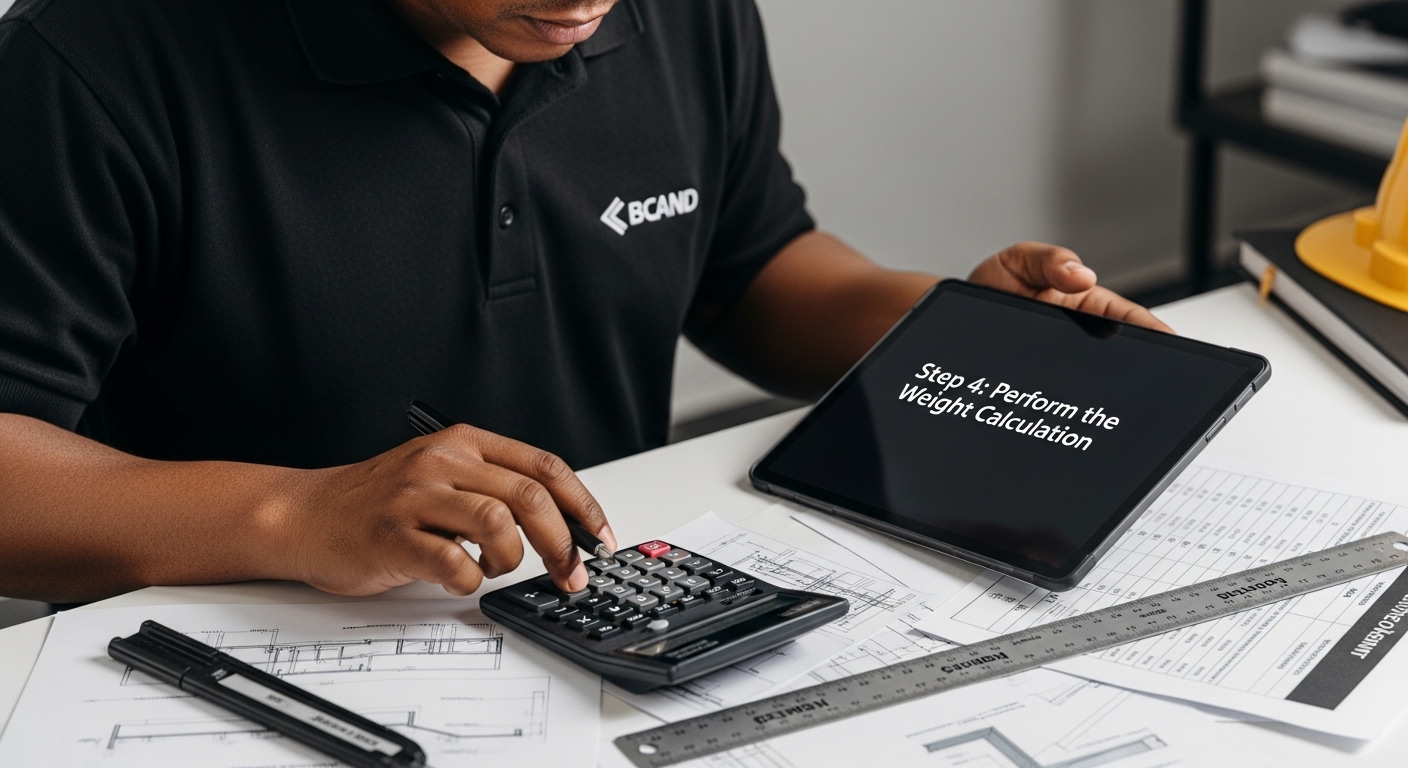
Step 4: Perform the Weight Calculation Using Measured Data
Executing precise weight calculations represents the critical moment where your meticulously gathered dimensional data transforms into actionable industrial information. Gauteng industrial professionals understand that this step demands absolute concentration and systematic computational approach to ensure maximum accuracy.
Systematic calculation begins by plugging your previously measured dimensions into the established weight calculation formula. Multiply the length, width, and thickness of your steel section to determine total volume, then multiply this volume by the specific density of your steel grade. For standard carbon steel, the density remains consistently around 7.85 grams per cubic centimeter, though variations exist depending on specific metallurgical composition. Read more about understanding steel composition to enhance your comprehension of these nuanced calculations.
Professional engineers recommend using digital calculation tools to minimize human error.
Spreadsheet software like Microsoft Excel or specialized engineering calculation platforms can automatically perform these computations with remarkable precision. When manually calculating, use a scientific calculator capable of handling multiple decimal places. Always round your final weight calculation to two decimal places for practical industrial applications.
Address potential calculation challenges by maintaining a systematic approach. Verify each computational step independently, checking your work against multiple calculation methods. For complex steel sections with irregular geometries, break down the section into simpler geometric shapes and calculate each component separately before aggregating the total weight. This method provides greater accuracy and helps identify potential measurement or computational discrepancies.
Final verification involves cross-referencing your calculated weight with manufacturer specifications and conducting a practical sanity check. Experienced industrial professionals recommend comparing your calculated weight against expected ranges for similar steel sections. Significant deviations warrant a complete recalculation or consultation with metallurgical experts. Documenting your calculation process, including all intermediate steps, measurement tools used, and environmental conditions, creates a comprehensive audit trail essential for quality control and future reference in Gauteng’s demanding industrial landscape.
Step 5: Verify the Calculation for Accuracy
Verification represents the final critical safeguard in your steel weight calculation process, transforming computational results from potential estimates into reliable industrial data. Gauteng industrial professionals understand that accuracy is not just a preference but an absolute necessity in engineering and manufacturing environments.
Comprehensive verification requires a multifaceted approach that goes beyond simple mathematical rechecking. Begin by independently recalculating your weight determination using alternative computational methods. This might involve using different calculation tools, spreadsheet platforms, or even manual computational techniques. Crosscheck your results against manufacturer specifications, ensuring that your calculated weight falls within acceptable tolerance ranges. Explore our guide on steel quality verification to understand additional verification protocols relevant to your specific steel section.
Professional metallurgical practices recommend employing multiple verification strategies. Digital calculation tools provide exceptional precision, but human oversight remains crucial. Compare your computational results against established industry benchmarks for similar steel sections. Statistical variations exceeding 2-3% warrant a complete recalculation or consultation with metallurgical experts. Advanced engineering teams often utilize calibrated weighing equipment to perform physical weight verification, providing a definitive cross-reference to computational methods.
Documentation serves as your final verification mechanism. Maintain a comprehensive record of your entire calculation process, including original measurements, computational steps, verification methods, and any noted discrepancies. This documentation not only provides a transparent audit trail but also enables future reference and continuous improvement of your weight calculation methodologies. Professional engineers emphasize the importance of systematic record-keeping as a fundamental quality control mechanism in Gauteng’s demanding industrial landscape.
Use this table as a quick checklist to verify each step of your steel weight calculation process is accurate and documented for future reference in Gauteng industrial settings.
| Step | Verification Task | Criteria for Passing |
|---|---|---|
| Identify Steel Section | Confirm section type and grade match project specs | Matches SA/industry standard, correct grade |
| Measure Dimensions | Check calibration and tool accuracy; clean surfaces | Within 0.1 mm, no residue or dirt present |
| Calculate Weight | Review calculations, apply correct formula and density | Steps and values clearly recorded |
| Perform Calculation | Use digital tool and manual calculation comparison | Results within 2% of each other |
| Verify Result | Crosscheck with manufacturer specs/physical weighing | Within expected or documented tolerance range |
| Document Results | Complete template, include all metadata and method info | All fields populated, digital file created |
Successful verification is characterized by consistent computational results, alignment with manufacturer specifications, and a documented process that meets stringent industrial standards. By implementing these rigorous verification protocols, you transform steel weight calculation from a simple mathematical exercise into a precise, reliable industrial practice.
Step 6: Document the Results for Future Reference
Documentation transforms your precise steel weight calculations from mere numerical data into a valuable organizational asset. Gauteng industrial professionals recognize that comprehensive record-keeping is not just an administrative task but a critical component of quality management and future project planning.
Systematic documentation requires creating a detailed report that captures every aspect of your weight calculation process. Begin by generating a standardized digital template that includes essential information such as steel section type, material grade, dimensional measurements, calculation methodology, and final weight determination. Explore our guide on steel quality verification to understand additional documentation protocols relevant to industrial steel applications.
Professional engineers recommend maintaining both digital and physical copies of your documentation. Create a comprehensive digital file using spreadsheet software or specialized engineering documentation platforms. Include high-resolution images of your measurement tools, steel section, and intermediate calculation steps. Physical documentation should include printed reports with original measurement notes, providing a tangible backup that can withstand potential digital data loss.
Your documentation must address potential future scenarios. Include contextual information such as project name, date of calculation, environmental conditions during measurement, and the specific industrial application of the steel section. Professional metallurgical practices suggest creating a metadata section that allows quick reference and future traceability. Implement a consistent file naming convention that allows immediate identification of the document’s contents, making retrieval simple for team members.
Successful documentation serves multiple strategic purposes beyond simple record-keeping.
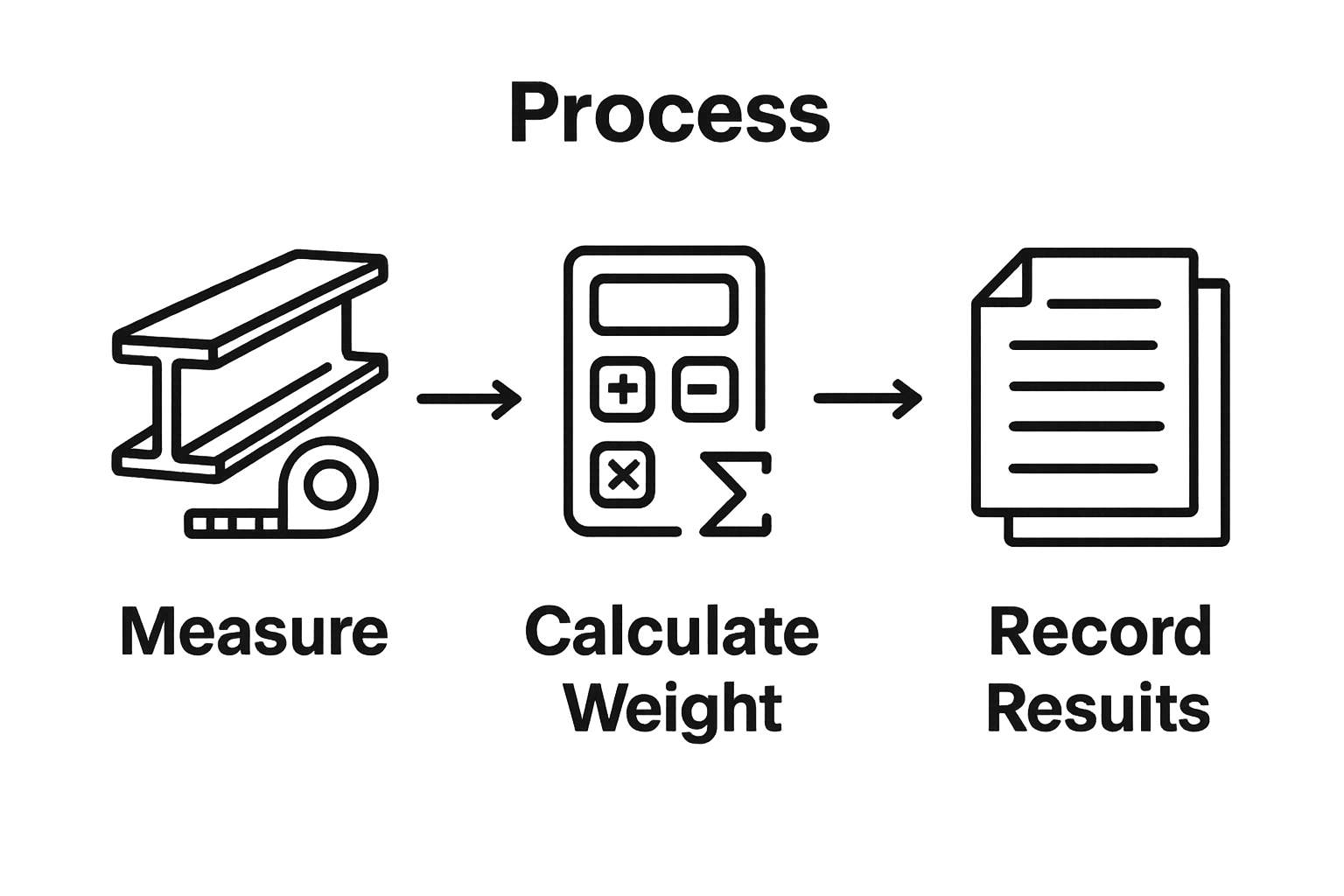 It provides a comprehensive audit trail for quality control, enables knowledge transfer between team members, and creates a historical reference for future projects. Gauteng industrial environments demand precision, and your meticulously documented steel weight calculations become a testament to your team’s commitment to excellence and systematic approach to engineering challenges.
Make Every Kilo Count: Trusted Steel Solutions for Gauteng’s Industrial Challenges
Accurate steel weight calculations are essential to the success of any project in Gauteng’s tough industries. If you have ever faced the frustration of incorrect measurements, calculation errors, or questionable material specifications, you know these mistakes can lead to wasted resources, structural risks and costly setbacks. With complex steel grades, varying section shapes and demand for precision, your operation cannot afford to rely on guesswork or outdated methods.
Discover how Genesis Steel supports you every step of the way. Explore our Uncategorised Archives to find related topics, solutions and insights on steel calculation and selection.
Ready to take the guesswork out of your steel calculations? Visit Genesis Steel for a quick quote, detailed product specifications or trusted advice on hot-rolled steel sheets and plates. Get immediate access to a comprehensive range, experienced support and reliable supply, all from one leading Gauteng partner. Secure the quality and precision your next project demands – contact Genesis Steel today.
Frequently Asked Questions
How do I determine the type of steel section I need for my project?
To determine the type of steel section required, identify the specific applications and characteristics needed for your project. Common types include hot-rolled steel sheets, plates, structural beams, and various angles. Consult with a metallurgical specialist for exact material specifications and grades.
What tools are recommended for measuring steel dimensions accurately?
Using digital calipers is recommended for precise measurements of smaller sections, while laser measuring devices are ideal for longer structural components. Ensure that tools are calibrated and maintained for consistent results.
What is the formula for calculating the weight of steel?
The fundamental formula for calculating steel weight is Weight = Volume × Density. First, calculate the volume by multiplying the length, width, and thickness, then multiply this volume by the specific density of the steel grade.
Why is it important to verify steel weight calculations?
Verification is crucial to ensure accuracy and reliability in weight calculations. It helps identify potential errors, ensures compliance with manufacturer specifications, and contributes to the quality control process in engineering and industrial applications.