

Steel plate thickness tolerance might sound simple but it can make or break a project. A difference of just one millimetre could change a structure’s load-bearing capacity by over 10 percent. Most people think a slight measurement slip hardly matters and yet the smallest variation can spell disaster for safety or send costs through the roof.
Table of Contents
- What Is Steel Plate Thickness Tolerance?
- Why Is Steel Plate Thickness Tolerance Important?
- How Steel Plate Thickness Tolerance Works In Manufacturing
- Key Concepts In Steel Plate Thickness Tolerance
- Practical Applications Of Steel Plate Thickness Tolerance
Quick Summary
| Takeaway | Explanation |
|---|---|
| Steel plate thickness varies within allowed tolerances | Manufacturers set permissible limits for thickness deviations to maintain quality and functionality in production. |
| Precision measurement is vital for quality assurance | Advanced techniques like laser scanning and ultrasonic devices ensure accurate thickness measurement, minimizing deviations. |
| Thickness impacts structural integrity and safety | Even small variations in thickness can significantly affect load-bearing capacity and overall safety in constructions. |
| Different industries require specific thickness tolerances | Each sector, from construction to aerospace, has unique standards for steel plate thickness to ensure optimal performance. |
| Strict standards govern steel plate manufacturing | Industry guidelines dictate tolerance ranges that manufacturers must adhere to, preventing structural failures and ensuring consistency. |
What is Steel Plate Thickness Tolerance?
Steel plate thickness tolerance represents the acceptable range of variation from a specified nominal thickness during manufacturing and processing. When steel plates are produced, absolute precision is challenging, so manufacturers establish permissible deviations to ensure quality and functionality.
Defining Thickness Tolerance Parameters
Thickness tolerance is fundamentally about understanding the acceptable limits of deviation in steel plate measurements. Engineers and fabricators rely on these specifications to ensure structural integrity and performance. The tolerance typically defines how much a steel plate can differ from its stated thickness without compromising its intended application.
Key characteristics of steel plate thickness tolerance include:
- Measured in millimetres or fractions of millimetres
- Determined by industry standards and manufacturing specifications
- Varies depending on steel grade and production method
Importance in Industrial Applications
Precision matters critically in sectors like construction, manufacturing, and engineering. Even minor variations in steel plate thickness can significantly impact structural reliability, load-bearing capacity, and overall project performance. Our comprehensive steel thickness conversion guide provides additional insights into understanding these critical measurements.
According to the International Trade Administration Commission of South Africa, industrial standards mandate strict tolerances to maintain quality and safety across different steel applications. These tolerances ensure that steel plates consistently meet design specifications, preventing potential structural failures or performance inconsistencies.
Manufacturers typically employ advanced measurement techniques like laser scanning and precision callipers to verify thickness tolerances, guaranteeing that each steel plate meets the required specifications with minimal variation.
Why is Steel Plate Thickness Tolerance Important?
Steel plate thickness tolerance plays a crucial role in ensuring structural integrity, safety, and performance across multiple industrial applications. Understanding its significance helps engineers, fabricators, and project managers make informed decisions about material selection and design specifications.
Critical Performance and Safety Implications
The importance of steel plate thickness tolerance extends far beyond simple measurement. Deviations from specified thickness can dramatically impact a structure’s load-bearing capacity, mechanical properties, and overall reliability. Precision in thickness directly influences structural strength, making it a fundamental consideration in engineering and construction projects.
Key performance considerations include:
- Structural load distribution and weight-bearing capabilities
- Resistance to mechanical stress and environmental conditions
- Predictability of material behaviour under different loading scenarios
Economic and Engineering Consequences
Inaccurate thickness tolerances can lead to significant economic and technical challenges. Overcompensating with excess material increases project costs, while insufficient thickness compromises structural integrity. Learn more about steel plate load capacity considerations to understand the intricate relationships between thickness and performance.
According to research published in Frontiers in Built Environment, steel plates with improper thickness-to-width ratios are particularly susceptible to structural failures, highlighting the critical nature of precise manufacturing tolerances.
Manufacturers and engineers must carefully calculate and verify thickness tolerances to ensure materials meet stringent industrial standards. This process involves sophisticated measurement techniques, advanced quality control protocols, and a deep understanding of material science principles.
How Steel Plate Thickness Tolerance Works in Manufacturing
Steel plate thickness tolerance is a sophisticated process involving precise measurement techniques, advanced manufacturing technologies, and stringent quality control protocols. Manufacturers employ multiple strategies to ensure steel plates meet exact specifications throughout production.
Measurement and Verification Techniques
Precision measurement forms the cornerstone of thickness tolerance management. Manufacturers utilize advanced technologies to track and validate steel plate thickness with exceptional accuracy. These techniques include:
- Digital laser scanning systems
- Ultrasonic thickness measurement devices
- Precision mechanical callipers
- Electromagnetic thickness gauges
Each measurement technique offers unique advantages in capturing minute variations in steel plate thickness, enabling manufacturers to detect deviations as small as fractions of a millimetre.
The following table summarises the primary measurement techniques used in the verification of steel plate thickness tolerance, along with their main benefits and typical use cases.
| Measurement Technique | Main Benefit | Typical Use Cases |
|---|---|---|
| Laser Scanning Systems | High precision, rapid, and non-contact measurement | Mass production quality checks |
| Ultrasonic Thickness Measurement | Accurate, works through coatings and paints | Field inspection, quality assurance |
| Precision Mechanical Callipers | Simple, reliable for small sample sizes | Workshop verification, manual checks |
| Electromagnetic Thickness Gauges | Non-destructive, fast for large volumes | Manufacturing line monitoring, quick scans |
Quality Control and Standardization
Manufacturing processes integrate multiple checkpoints to guarantee thickness consistency. Statistical process control allows engineers to monitor production variations and make real-time adjustments. Our technical information guide provides additional insights into these sophisticated quality management approaches.
According to the International Trade Administration Commission of South Africa, industrial standards mandate specific tolerance ranges that manufacturers must consistently achieve. These standards ensure that steel plates maintain predictable performance characteristics across different industrial applications.
Manufacturers typically establish acceptable thickness variation limits based on the specific grade of steel, intended application, and industry-specific requirements. These limits represent a delicate balance between practical manufacturing constraints and rigorous performance expectations.
Key Concepts in Steel Plate Thickness Tolerance
Understanding steel plate thickness tolerance requires grasping several fundamental technical and engineering principles that govern material specification, performance, and quality control. These key concepts provide a comprehensive framework for professionals working with steel plates across various industrial applications.
Fundamental Measurement Parameters
Nominal thickness represents the standard or specified thickness of a steel plate before manufacturing variations.
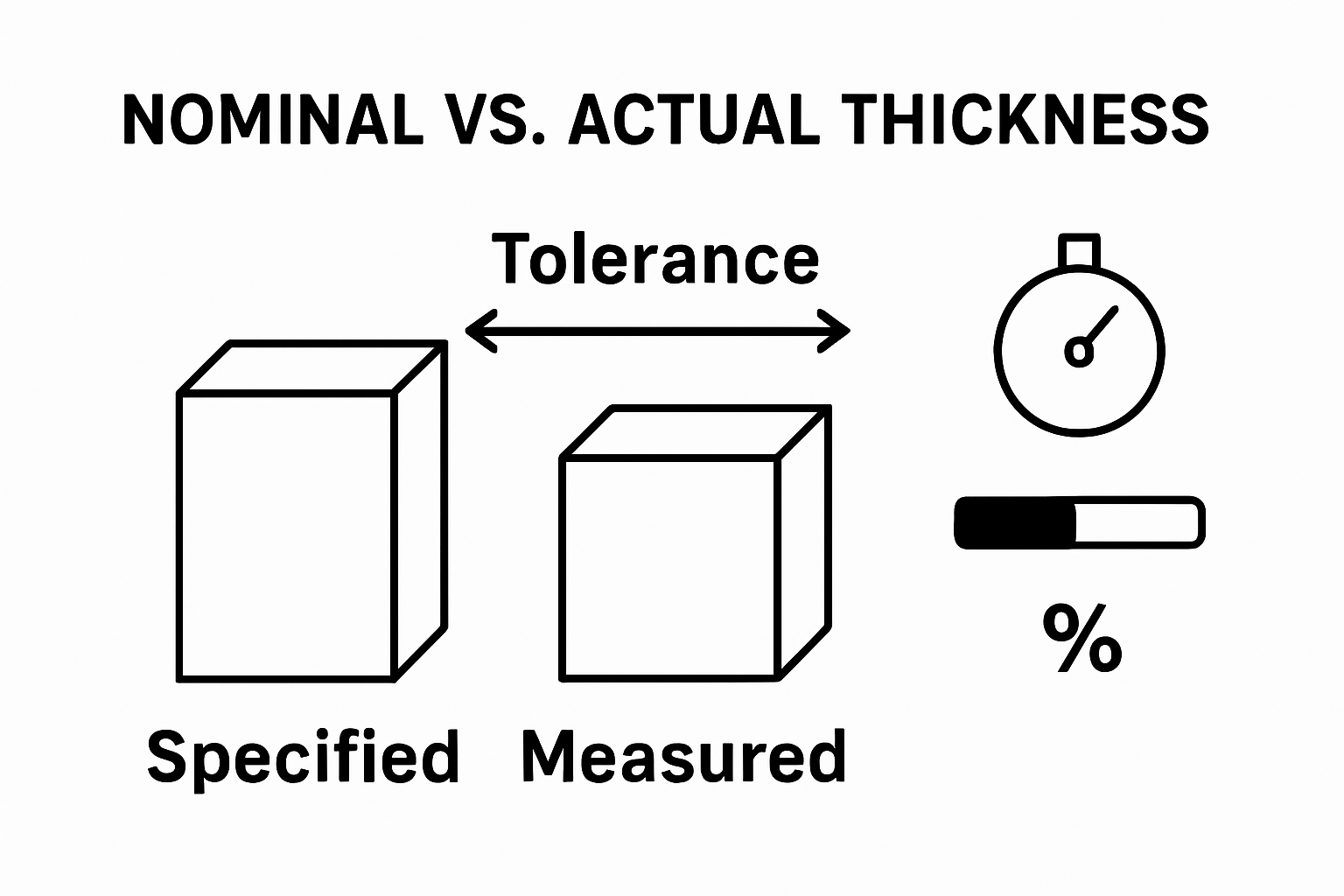 This baseline measurement serves as the reference point for determining acceptable tolerance ranges. Actual thickness refers to the precise measurement after production, which can vary slightly from the nominal specification.
Key measurement parameters include:
- Absolute deviation limits
- Percentage variation allowances
- Directional thickness variations
- Measurement precision techniques
Tolerance Classification and Standards
Steel plate thickness tolerances are typically classified according to specific industrial standards and manufacturing specifications. Tolerance grades define the permissible variations in plate thickness, with different industries requiring different levels of precision. Our steel thickness conversion chart provides detailed insights into these complex measurement standards.
According to research published in SANS 10160-4 standards, steel structural design requires meticulous consideration of thickness tolerances to ensure structural integrity and safety. These standards outline precise parameters for acceptable thickness variations across different steel grades and applications.
Professionals must understand that thickness tolerance is not a static concept but a dynamic specification influenced by material composition, manufacturing processes, and intended end-use requirements.
Practical Applications of Steel Plate Thickness Tolerance
Steel plate thickness tolerance plays a critical role across multiple industrial sectors, directly influencing design integrity, structural performance, and safety standards. Understanding its practical applications helps engineers and manufacturers make informed decisions about material selection and design specifications.
Industrial Sector Applications
Steel plate thickness tolerance impacts various critical industries, each with unique requirements and performance expectations. Different sectors demand precise thickness measurements to ensure optimal functionality and safety.
Key industrial applications include:
- Construction and infrastructure development
- Heavy machinery and equipment manufacturing
- Shipbuilding and marine engineering
- Aerospace and transportation industries
- Mining and mineral processing equipment
Performance and Design Considerations
Engineers must carefully evaluate thickness tolerance when designing structures and components. Precise thickness measurements determine load-bearing capacities, structural stability, and overall mechanical performance. Learn more about steel plate weight calculations to understand how thickness variations impact material properties.
According to South African National Standard SANS 3001-PD1:2016, technical specifications mandate strict tolerance parameters for steel plate thickness, particularly in critical applications where structural integrity is paramount. These standards ensure that manufactured steel plates meet rigorous performance and safety requirements across diverse industrial contexts.
Manufacturers and engineers must consistently apply advanced measurement techniques and quality control protocols to maintain the precise thickness tolerances required by different industrial applications.
This table outlines the main industrial sectors where steel plate thickness tolerance plays a critical role, highlighting some of the typical performance requirements for each sector.
| Industrial Sector | Key Performance Requirements |
|---|---|
| Construction | Load-bearing reliability, consistent strength |
| Machinery Manufacturing | Durability, resistance to mechanical stress |
| Shipbuilding/Marine | Corrosion resistance, weight distribution |
| Aerospace/Transport | Minimal weight variance, safety compliance |
| Mining/Processing Equipment | Structural toughness, wear resistance |
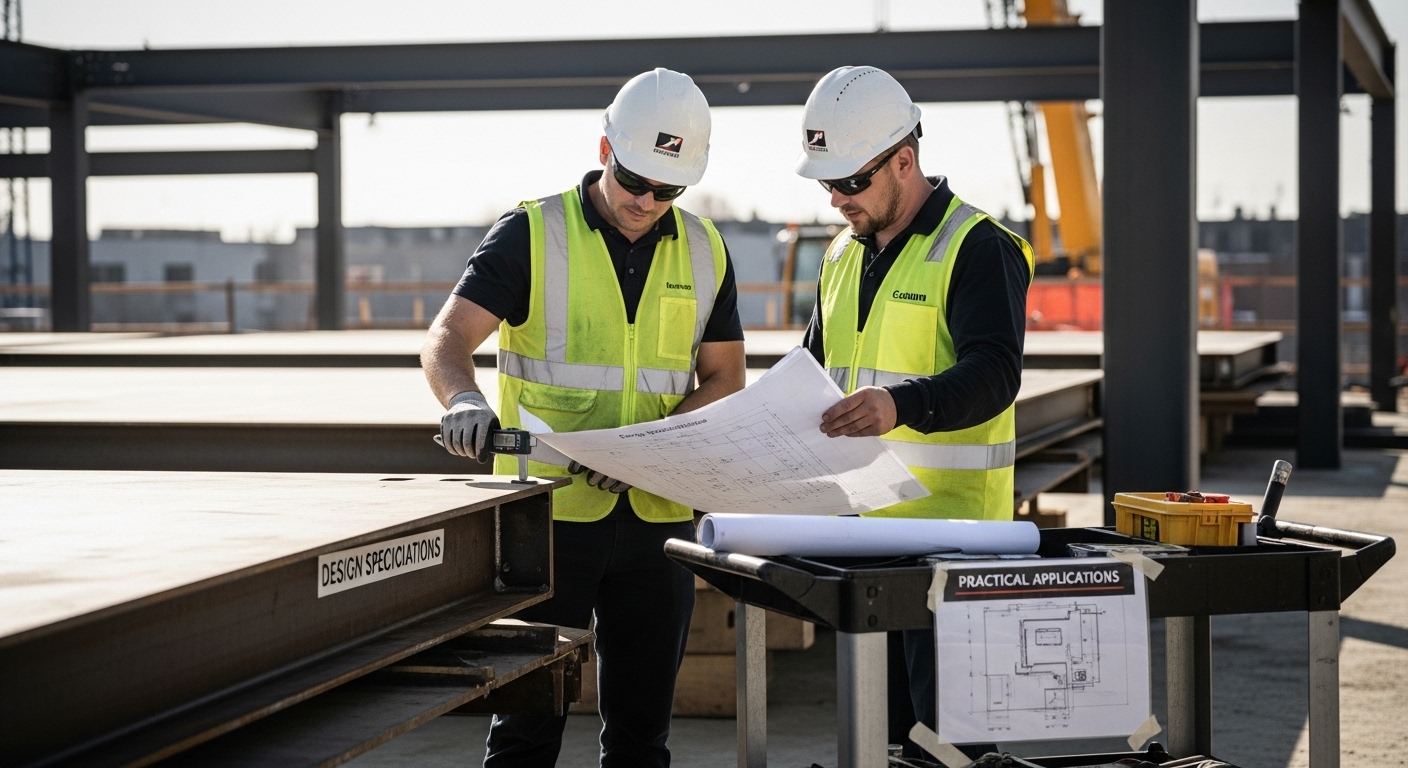 This approach guarantees reliable performance and minimizes potential structural failures.
Need Accurate Steel Plate Thickness Tolerance? Partner With Specialists Who Understand Precision
If you are concerned about thickness tolerance in steel plates affecting your safety, project costs, or structural integrity, you are not alone. Too many projects experience material shortfalls because the supplied plate does not match exact tolerance specifications. The article highlighted how precise thickness measurements support load-bearing strength, reliability, and compliance with industry standards. At Genesis Steel, we understand how essential this accuracy is to your business and the risks involved if it is compromised. Explore our comprehensive category and see how our expert team ensures every hot-rolled steel plate meets your required tolerance.
You deserve consistent outcomes and peace of mind on every order. Visit Genesis Steel to discover our full steel plate range, fast delivery, and unwavering commitment to quality. Reach out to our experienced team today for personal advice or a tailored quote—secure the right plate specification for your next project and eliminate costly setbacks.
Frequently Asked Questions
What is steel plate thickness tolerance?
Steel plate thickness tolerance refers to the acceptable range of variation from a specified nominal thickness during manufacturing. It ensures that steel plates meet required specifications without compromising their performance or structural integrity.
Why is steel plate thickness tolerance important in industrial applications?
Thickness tolerance is crucial because even minor deviations can impact a structure’s load-bearing capacity and reliability. It affects how materials behave under stress and environmental conditions, making it a key factor in design and engineering.
How do manufacturers measure and verify steel plate thickness tolerance?
Manufacturers use advanced measurement techniques, such as digital laser scanning, ultrasonic thickness measurement devices, precision mechanical callipers, and electromagnetic gauges, to ensure steel plates meet exact thickness specifications.
What are the common applications of steel plate thickness tolerance?
Steel plate thickness tolerance is important in various sectors, including construction, heavy machinery manufacturing, shipbuilding, aerospace, and mining. Each application requires precise measurements to guarantee optimal performance and safety.