

Manufacturing processes are behind almost everything we use each day and they are leaving a much bigger mark on the planet than most people realise. Some factories in South Africa can produce over 5 million tonnes of CO2 emissions every year. You might think the biggest concern is the energy they burn. Actually, the real shock comes from how every single step, from raw material extraction to transport, quietly adds up to a massive carbon footprint. This turns even the simplest product into a surprising driver of climate change.
Table of Contents
- Defining Carbon Footprint In Manufacturing Processes
- Importance Of Reducing Carbon Footprint For Businesses
- How Manufacturing Activities Contribute To Carbon Footprint
- Measuring And Analyzing Carbon Footprint In Production
- Strategies For Mitigating Carbon Emissions In Manufacturing
Quick Summary
| Takeaway | Explanation |
|---|---|
| Understand carbon footprint measurement | Accurately assess emissions across all manufacturing stages for effective reduction strategies. |
| Reduce operational costs through carbon management | Managing emissions leads to greater energy efficiency, saving money while enhancing corporate reputation. |
| Implement advanced technologies for emissions reduction | Use energy-efficient equipment and adopt renewable energy sources to lower carbon output significantly. |
| Establish robust carbon accounting systems | Develop comprehensive frameworks for monitoring and managing emissions within your business model. |
| Adapt to emerging regulations proactively | Stay ahead of environmental regulations to avoid penalties and maintain competitiveness in the market. |
Defining Carbon Footprint in Manufacturing Processes
Carbon footprint in manufacturing represents the total greenhouse gas emissions produced throughout a product’s entire lifecycle. These emissions contribute significantly to global climate change and environmental degradation. Manufacturers increasingly recognize the critical importance of understanding and managing their carbon footprint to reduce environmental impact and operational costs.
Understanding Carbon Footprint Measurement
Measuring carbon footprint involves calculating the total greenhouse gas emissions generated during different stages of manufacturing. This comprehensive assessment includes direct and indirect emissions from multiple sources:
- Energy consumption during production
- Raw material extraction and transportation
- Manufacturing equipment operations
- Waste management processes
- Product distribution and logistics
According to CSIR research, manufacturers must establish clear system boundaries to accurately track and quantify these emissions. This process requires detailed data collection and sophisticated tracking mechanisms.
Environmental and Economic Implications
The carbon footprint of manufacturing processes extends beyond environmental concerns. Companies that effectively manage their emissions can gain significant competitive advantages. By reducing carbon footprint, manufacturers can:
- Lower operational expenses
- Improve energy efficiency
- Enhance corporate reputation
- Comply with emerging environmental regulations
Additionally, understanding carbon footprint helps businesses identify inefficiencies in their production processes. This knowledge enables strategic improvements that simultaneously reduce environmental impact and optimize resource utilization.
For those interested in understanding how steel production fits into this ecosystem, our comprehensive guide provides deeper insights into sustainable manufacturing practices.
Importance of Reducing Carbon Footprint for Businesses
Reducing carbon footprint has transformed from an environmental consideration to a critical strategic imperative for businesses across industries. Modern organizations recognize that carbon reduction is not merely an ecological responsibility but a fundamental driver of competitive advantage, operational efficiency, and long-term sustainability.
Strategic Business Advantages
Businesses that proactively manage and reduce their carbon footprint unlock multiple strategic benefits. Carbon reduction strategies provide significant economic opportunities by optimizing resource consumption, minimizing waste, and creating more efficient operational processes. Companies that demonstrate environmental leadership can differentiate themselves in increasingly competitive markets.
Key strategic advantages include:
- Enhanced brand reputation and customer loyalty
- Improved investor attractiveness
- Potential cost savings through energy efficiency
- Reduced exposure to future carbon taxation
- Early adaptation to emerging environmental regulations
According to government research, businesses that transition towards low-carbon practices can prevent potential economic isolation and maintain robust international trade relationships.
Economic and Regulatory Landscape
The economic landscape is rapidly evolving, with stringent environmental regulations and carbon pricing mechanisms becoming increasingly prevalent. Businesses that fail to address their carbon footprint risk significant financial penalties, reduced market access, and diminished competitiveness.
Major industrial sectors are experiencing unprecedented pressure to demonstrate sustainable practices. Investors, customers, and regulatory bodies now expect transparent carbon management strategies. Companies that proactively measure, report, and reduce their emissions position themselves as forward-thinking and responsible corporate citizens.
Learn more about sustainable steel production practices that demonstrate how strategic carbon management can be effectively implemented across industrial sectors.
How Manufacturing Activities Contribute to Carbon Footprint
Manufacturing activities represent a significant source of global greenhouse gas emissions, with complex processes generating substantial carbon output across multiple production stages.
Understanding these contributions is crucial for developing effective strategies to mitigate environmental impact and improve industrial sustainability.
Energy Intensive Production Processes
Manufacturing sectors generate carbon emissions through various interconnected activities. The primary contributors include energy consumption, industrial process emissions, and material transformation. High-temperature industrial processes, particularly in metal fabrication and heavy manufacturing, require substantial energy inputs that typically rely on fossil fuel combustion.
Key sources of carbon emissions in manufacturing include:
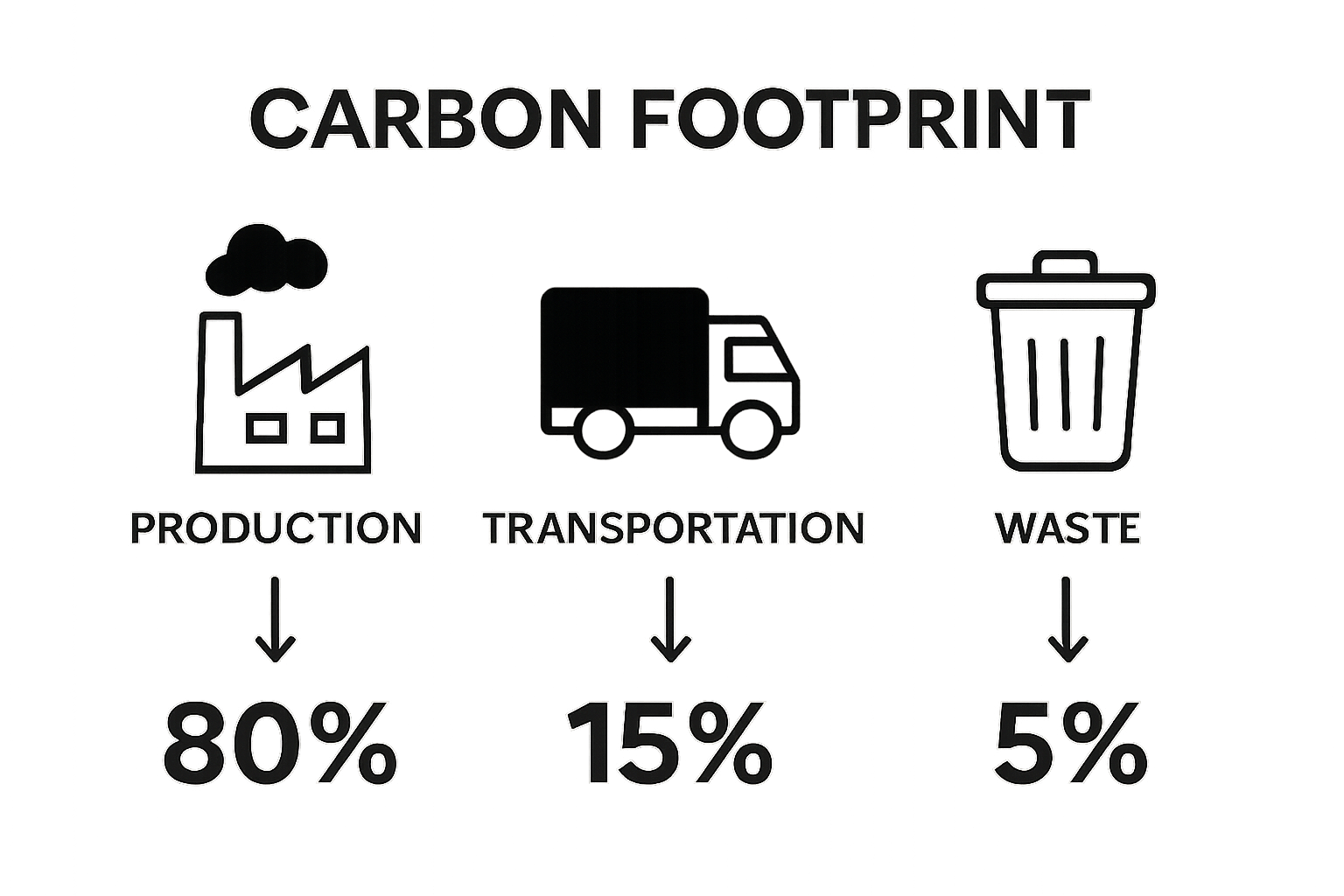
- Electricity generation for industrial equipment
- Thermal energy requirements for material processing
- Chemical transformations during production
- Transportation of raw materials and finished products
- Industrial waste management processes
According to South Africa’s National Greenhouse Gas Inventory Report, industrial manufacturing contributes significantly to national carbon emissions, highlighting the urgent need for comprehensive emission reduction strategies.
Below is a table summarising the main sources of carbon emissions found within manufacturing as discussed in the article, helping to clarify their roles within the overall carbon footprint.
| Source of Emission | Description |
|---|---|
| Energy Consumption | Use of electricity and fossil fuels for powering industrial equipment |
| Thermal Energy Requirements | High-temperature processes for material processing |
| Chemical Transformations | Release of greenhouse gases during chemical reactions in production |
| Transportation | Emissions from moving raw materials and finished products |
| Waste Management | Emissions generated from managing industrial waste |
| Raw Material Extraction & Processing | Emissions from mining, transporting, and processing raw materials |
Material Processing and Transformation
Different manufacturing sectors generate varying levels of carbon emissions based on their specific production requirements. Metal manufacturing, particularly steel production, involves energy-intensive processes that release substantial greenhouse gases. The transformation of raw materials into finished products requires multiple stages of heating, chemical treatment, and mechanical processing, each contributing to the overall carbon footprint.
The complexity of manufacturing carbon emissions lies in their multifaceted nature. Beyond direct energy consumption, indirect emissions from supply chain activities, raw material extraction, and product lifecycle significantly impact total carbon output.
Explore our comprehensive guide on sustainable steel production practices to understand how advanced manufacturing techniques can minimize environmental impact.
Measuring and Analyzing Carbon Footprint in Production
Measuring and analyzing carbon footprint represents a complex scientific and operational process that demands precision, comprehensive data collection, and sophisticated analytical techniques. Manufacturers must develop robust methodologies to accurately quantify their greenhouse gas emissions across various production stages.
Comprehensive Measurement Frameworks
Carbon footprint measurement involves systematic tracking of greenhouse gas emissions throughout the entire manufacturing lifecycle. This intricate process requires identifying and quantifying emissions from multiple sources, including direct operational activities and indirect supply chain interactions.
Key components of carbon footprint measurement include:
- Establishing clear system boundaries
- Identifying emission sources and types
- Collecting granular operational data
- Calculating emissions using standardized protocols
- Verifying and validating measurement results
Proper measurement frameworks enable businesses to develop targeted strategies for reducing their environmental impact and improving operational efficiency.
The following table provides a concise overview of the key components involved in measuring carbon footprint within manufacturing, supporting a clearer understanding of the measurement process described above.
| Measurement Component | Purpose and Explanation |
|---|---|
| System Boundaries | Define which production stages and supply chain activities are included |
| Emission Source Identification | Pinpoint direct and indirect sources of greenhouse gas emissions |
| Data Collection | Gather detailed operational and process-specific data |
| Standardised Calculation | Use recognised protocols to quantify emissions from collected data |
| Verification & Validation | Ensure accuracy and reliability of measured results |
Analytical Approaches and Tools
Modern carbon footprint analysis employs advanced technological tools and standardized methodological approaches. Manufacturers utilize life cycle assessment (LCA) techniques to comprehensively evaluate emissions across product development stages. These sophisticated analytical methods help organizations understand the complete environmental implications of their production processes.
According to research on manufacturing carbon accounting, detailed emission hotspot identification allows companies to implement targeted reduction strategies.
For professionals seeking deeper insights into sustainable manufacturing practices, our comprehensive guide on steel production lifecycles provides valuable technical perspectives on emissions management.
Strategies for Mitigating Carbon Emissions in Manufacturing
Mitigating carbon emissions in manufacturing requires a comprehensive, strategic approach that integrates technological innovation, operational redesign, and sustainable practices. Manufacturers must develop multifaceted strategies that address emissions across production systems, supply chains, and organizational processes.
Technological and Operational Interventions
Emission reduction strategies encompass a range of technological and operational interventions designed to minimize carbon output. Key approaches include implementing energy-efficient equipment, transitioning to renewable energy sources, and optimizing production processes to reduce waste and energy consumption.
Critical technological strategies include:
- Upgrading to high-efficiency industrial machinery
- Implementing advanced process control systems
- Adopting renewable energy technologies
- Developing closed-loop manufacturing systems
- Investing in carbon capture and storage technologies
According to government policy research, national regulations are increasingly supporting carbon mitigation efforts through comprehensive carbon budget allocations.
Systemic and Policy-Driven Approaches
Effective carbon emission mitigation extends beyond individual technological solutions. Manufacturers must develop holistic strategies that integrate environmental considerations into core business models. This includes implementing comprehensive carbon accounting systems, setting ambitious emission reduction targets, and developing circular economy principles.
Organizational strategies involve creating robust carbon management frameworks that align technological innovation with strategic business objectives. This approach requires continuous monitoring, reporting, and systematic improvement of emission reduction initiatives.
Learn more about advanced carbon steel applications that demonstrate innovative approaches to sustainable manufacturing practices.
Reduce Your Manufacturing Carbon Footprint with Trusted Steel Solutions
If managing your manufacturing carbon footprint feels too complex or overwhelming, you are not alone. The path to lower emissions and improved efficiency begins with making the right material choices. Genesis Steel understands the challenge of tracking emissions from every stage of production, especially when it comes to sourcing heavy materials. Our hot-rolled steel sheets and steel plates are supplied in a wide range of grades, helping manufacturers like you choose solutions that support both sustainability goals and operational efficiency.
Choose steel that matches your focus on responsible manufacturing. Visit Genesis Steel today to discover how our commitment to efficiency and quality can help your business lower its carbon footprint. Take the next step to future-proof your manufacturing with a partner who prioritises both your success and a low-carbon future. Explore our business solutions now.
Frequently Asked Questions
What is a carbon footprint in manufacturing?
A carbon footprint in manufacturing refers to the total greenhouse gas emissions produced throughout a product’s entire lifecycle, impacting global climate change and the environment.
How is carbon footprint measured in manufacturing processes?
Carbon footprint measurement involves calculating direct and indirect greenhouse gas emissions from various sources such as energy consumption, raw material extraction, manufacturing operations, and transportation, requiring detailed data collection and analysis.
Why is it important for manufacturers to reduce their carbon footprint?
Reducing carbon footprint is crucial for manufacturers as it lowers operational costs, enhances energy efficiency, improves corporate reputation, and ensures compliance with evolving environmental regulations, giving a competitive advantage in the market.
What strategies can manufacturers implement to mitigate carbon emissions?
Manufacturers can use several strategies to mitigate carbon emissions including investing in energy-efficient technologies, adopting renewable energy sources, optimizing production processes to minimize waste, and implementing carbon capture and storage solutions.