

Building supplier relationships used to be about sending orders and getting deliveries. Now, things are very different. Research shows that strong supplier relationships can actually drive national manufacturing growth in South Africa. Surprised? Many think success rests on cutting costs or finding the lowest price, but it turns out that trust and collaboration with your suppliers are the real gamechangers for long-term business success.
Table of Contents
- What Developing Supplier Relationships Means
- The Importance Of Strong Supplier Partnerships
- Key Elements Of Effective Supplier Relationships
- Navigating Challenges In Supplier Relationships
- Real-World Impacts Of Supplier Relationships In Industry
Quick Summary
| Takeaway | Explanation |
|---|---|
| Develop trust through transparent communication | Open dialogue and reliable performance foster trust essential for successful supplier relationships. |
| Invest in mutual value creation | Collaborating for shared objectives enhances long-term success for both businesses and suppliers. |
| Recognize suppliers as strategic partners | Viewing suppliers as partners rather than vendors unlocks significant competitive advantages. |
| Implement structured risk management | Proactively addressing potential challenges strengthens relationships and enhances operational resilience. |
| Leverage innovation through collaboration | Joint initiatives with suppliers drive technological advancements and improve product development cycles. |
What Developing Supplier Relationships Means
Developing supplier relationships represents a strategic approach in business that goes beyond traditional transactional interactions. At its core, this process involves creating meaningful, collaborative connections with suppliers that generate mutual value and long-term benefits for both parties.
Understanding the Strategic Foundation
Supplier relationships are not merely about purchasing goods or services. They represent a sophisticated interaction where businesses seek to establish trust, communication, and shared objectives.
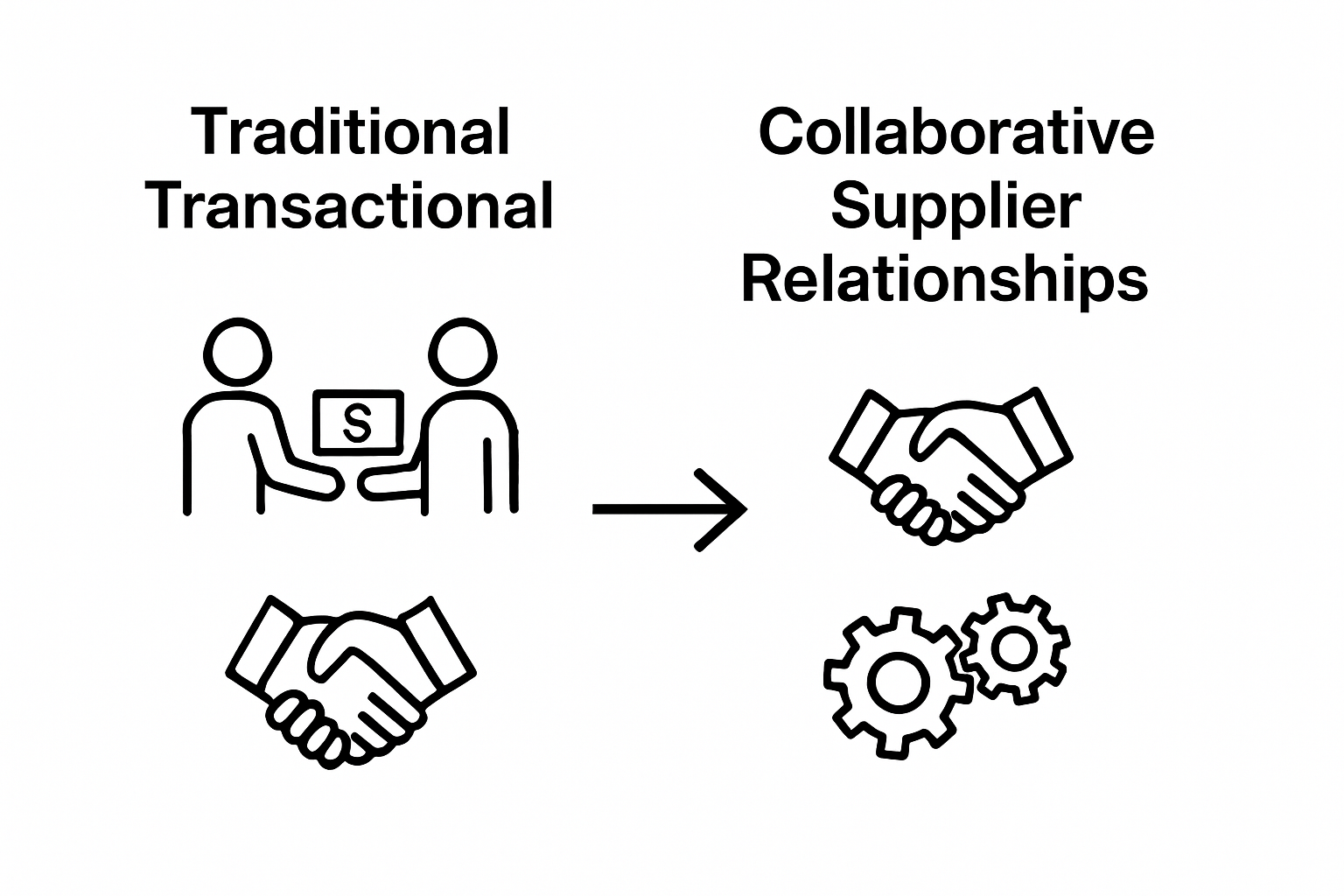 According to research from the South African Journal of Business Management, supply chain integration plays a critical role in enhancing overall business performance.
Key characteristics of developing robust supplier relationships include:
- Establishing transparent communication channels
- Creating mutual performance expectations
- Sharing strategic information and insights
- Developing collaborative problem-solving approaches
Strategic Value and Performance Impact
For businesses in Gauteng’s industrial sectors, developing supplier relationships translates into tangible competitive advantages. When companies invest time and resources into nurturing these relationships, they create ecosystems of trust and collaboration that drive operational excellence.
The strategic benefits extend beyond immediate transactional outcomes. Strong supplier relationships enable businesses to:
- Reduce supply chain risks
- Improve product quality and innovation
- Negotiate more favorable terms
- Respond more effectively to market changes
Companies that prioritize relationship development often experience enhanced flexibility, reduced procurement costs, and improved overall supply chain resilience. By viewing suppliers as strategic partners rather than mere vendors, organizations can unlock significant competitive potential and create sustainable business ecosystems.
The table below compares transactional supplier relationships with strategic supplier partnerships, highlighting key differences discussed in the article.
| Aspect | Transactional Relationship | Strategic Partnership |
|---|---|---|
| Focus | Price and efficiency | Trust, collaboration, shared value |
| Communication | Limited, order-based | Transparent, ongoing dialogue |
| Objective Alignment | Short-term, individual goals | Long-term, mutual objectives |
| Performance Expectations | Minimal, contract-based | Shared metrics, regular reviews |
| Value Creation | One-sided (buyer-driven) | Mutual, joint innovation |
| Risk Management | Reactive, dispute-focused | Proactive, structured strategies |
| Impact on Growth | Limited operational improvement | Enhances resilience and competitiveness |
The Importance of Strong Supplier Partnerships
Strong supplier partnerships represent a critical strategic asset for businesses operating in Gauteng’s competitive industrial landscape. These relationships transcend traditional procurement models by creating collaborative ecosystems that drive innovation, efficiency, and sustainable growth.
Strategic Economic Significance
In the context of Gauteng’s industrial sectors, supplier partnerships are not merely transactional interactions but intricate networks of mutual benefit. Research from the Gauteng Department of Roads and Transport highlights the importance of strategic collaborations in enhancing operational effectiveness.
The strategic value of strong supplier partnerships includes:
- Mitigating supply chain vulnerabilities
- Driving technological innovation
- Creating shared economic opportunities
- Promoting local industrial development
Performance and Competitive Advantages
Companies that invest in robust supplier relationships gain significant competitive advantages. Strong partnerships enable businesses to:
- Accelerate product development cycles
- Reduce operational costs
- Enhance quality control mechanisms
- Build more resilient supply chains
Moreover, these partnerships facilitate knowledge transfer and create symbiotic relationships where both parties contribute to mutual growth. By understanding ISO standards for steel quality assurance, businesses can establish more transparent and reliable supplier relationships that meet international benchmarks.
Ultimately, strong supplier partnerships represent a sophisticated approach to business strategy. They transform traditional vendor relationships into collaborative partnerships that drive innovation, efficiency, and sustainable economic growth in Gauteng’s dynamic industrial ecosystem.
Key Elements of Effective Supplier Relationships
Effective supplier relationships are complex, multifaceted interactions that require strategic planning, mutual understanding, and consistent commitment from both parties. These relationships extend far beyond simple transactional exchanges, forming intricate networks of collaboration and shared objectives.
Foundation of Trust and Communication
According to research in the South African automotive manufacturing industry, trust emerges as the fundamental cornerstone of successful supplier relationships. Building genuine trust involves transparent communication, consistent performance, and alignment of strategic goals.
Critical components of establishing trust include:
- Maintaining open and honest dialogue
- Demonstrating reliability in meeting commitments
- Sharing relevant strategic information
- Resolving conflicts constructively
Performance and Mutual Value Creation
Supplier relationships are not one-sided transactions but collaborative partnerships that generate mutual value. Businesses must approach these relationships with a holistic perspective that considers both parties’ long-term success.
Key strategies for creating mutual value involve:
- Developing shared performance metrics
- Investing in joint innovation initiatives
- Creating flexible collaboration frameworks
- Recognizing and rewarding consistent performance
By understanding ISO standards for steel quality assurance, companies can establish clearer expectations and more robust relationship management protocols. These standards provide a structured approach to evaluating and maintaining high-quality supplier interactions.

Ultimately, effective supplier relationships require continuous investment, adaptability, and a genuine commitment to mutual growth. They represent sophisticated strategic assets that can significantly enhance organizational competitiveness and operational resilience.
Navigating Challenges in Supplier Relationships
Supplier relationships in Gauteng’s industrial landscape are complex ecosystems fraught with potential obstacles that require strategic management and proactive problem-solving. Understanding and anticipating these challenges is crucial for maintaining robust, productive partnerships.
Identifying Common Relationship Barriers
Research from the Journal of Transport and Supply Chain Management reveals significant challenges in supplier relationship management, particularly within South African business contexts. These challenges often stem from communication gaps, misaligned expectations, and systemic operational differences.
Primary challenges businesses encounter include:
- Misalignment of strategic objectives
- Inconsistent performance standards
- Communication breakdowns
- Differing technological capabilities
- Financial instability of suppliers
Strategic Mitigation and Risk Management
Effective navigation of supplier relationship challenges requires a multifaceted approach that emphasizes transparency, continuous dialogue, and structured risk management. Companies must develop comprehensive strategies that anticipate potential disruptions and create flexible response mechanisms.
Key strategies for managing supplier relationship challenges involve:
- Conducting regular performance evaluations
- Establishing clear communication protocols
- Developing contingency planning
- Creating collaborative problem-solving frameworks
By understanding ISO standards for steel quality assurance, businesses can implement standardized processes that minimize relationship uncertainties and establish clear performance expectations.
Successful supplier relationship management is not about eliminating challenges but developing adaptive strategies that transform potential obstacles into opportunities for collaborative growth and mutual understanding.
The table below summarises key challenges in developing supplier relationships along with strategies that businesses can use to address them, as outlined in the article.
| Relationship Challenge | Description | Suggested Mitigation Strategy |
|---|---|---|
| Misalignment of Objectives | Business and supplier goals differ | Align objectives through open discussion |
| Inconsistent Performance | Varying standards and delivery issues | Regular performance reviews |
| Communication Breakdowns | Lack of clear, timely communication | Establish communication protocols |
| Differing Technological Levels | Disparity in technology adoption or capability | Invest in joint process improvements |
| Financial Instability | Supplier faces supply or liquidity risks | Implement contingency and risk planning |
Real-World Impacts of Supplier Relationships in Industry
Supplier relationships transcend theoretical concepts, delivering tangible, measurable impacts across Gauteng’s industrial sectors. These strategic partnerships fundamentally reshape how businesses operate, innovate, and compete in increasingly complex market environments.
Economic and Operational Transformation
Research from the University of Pretoria highlights the profound economic implications of collaborative supply chain relationships. Effective supplier partnerships can drive national manufacturing growth by creating interconnected ecosystems of innovation and efficiency.
Key real-world economic impacts include:
- Accelerating technological knowledge transfer
- Reducing operational costs through collaborative strategies
- Supporting local supplier development initiatives
- Enhancing national manufacturing capabilities
Innovation and Competitive Advantage
Supplier relationships are not merely transactional but serve as critical platforms for technological advancement and competitive differentiation. Companies that strategically engage suppliers can unlock significant innovation potential.
Strategic innovation impacts encompass:
- Co-developing advanced manufacturing technologies
- Sharing research and development insights
- Creating adaptive supply chain solutions
- Responding more effectively to market disruptions
By understanding ISO standards for steel quality assurance, businesses can establish frameworks that facilitate more meaningful, innovative supplier interactions.
Ultimately, supplier relationships represent sophisticated strategic assets that extend far beyond traditional procurement models.
They are dynamic, collaborative networks that generate value through shared knowledge, mutual trust, and a commitment to continuous improvement.
Transform Supplier Relationships Into Consistent Steel Supply in Gauteng
Navigating the complexities of supplier relationships can leave your business exposed to unpredictable lead times, inconsistent steel quality, and misaligned expectations. If you are struggling to build trust, maintain clear communication, or align performance standards as discussed in the article, you know the risk this poses to your supply chain strength and growth prospects.

At Genesis Steel, we make supplier relationships simple by focusing on trust, transparency and fast service. Our wide stock range and dedication to ISO standards give you the reliability and quality your business deserves. Do not let uncertainty slow you down. Visit our homepage to discover how our team can help you secure the steel you need, when you need it. Act now to partner with a supplier that is invested in your success, so you can focus on growth, not delays.
Frequently Asked Questions
What are the key characteristics of effective supplier relationships?
Effective supplier relationships are characterized by transparent communication, mutual performance expectations, shared strategic information, and collaborative problem-solving approaches.
How do strong supplier partnerships enhance operational performance?
Strong supplier partnerships can reduce supply chain risks, improve product quality and innovation, negotiate favorable terms, and enhance flexibility in responding to market changes.
What challenges can arise in developing supplier relationships?
Common challenges include misalignment of strategic objectives, inconsistent performance standards, communication breakdowns, differing technological capabilities, and the financial instability of suppliers.
How can businesses mitigate risks in supplier relationships?
Businesses can mitigate risks by conducting regular performance evaluations, establishing clear communication protocols, developing contingency plans, and creating collaborative problem-solving frameworks.