

Cutting steel sheets sounds straightforward enough. Every year, industries process over 1.6 billion tonnes of steel worldwide, so you would think slicing up a single sheet would be simple. But even one millimetre off during prep can wreck your whole project and waste hours. The real difference comes from knowing the step most DIYers overlook right at the start.
Table of Contents
- Step 1: Gather Necessary Tools And Materials
- Step 2: Prepare The Steel Sheet For Cutting
- Step 3: Mark Precise Cutting Lines On The Sheet
- Step 4: Choose The Right Cutting Method For Steel
- Step 5: Execute The Cutting Process Safely
- Step 6: Inspect And Finish The Cut Edges
Quick Summary
| Key Point | Explanation |
|---|---|
| 1. Gather essential cutting tools | Use plasma cutters, saws, and shears based on sheet thickness and design complexity for optimal performance. |
| 2. Prioritise safety measures | Always wear PPE, establish a safety perimeter, and inspect tools to minimise risks during cutting. |
| 3. Ensure precise measurements | Use high-quality measuring instruments to avoid deviations, as accuracy affects the final cut quality. |
| 4. Mark cutting lines accurately | Utilize appropriate marking tools and techniques to create clear, precise cutting guidelines on the steel sheet. |
| 5. Inspect and finish cut edges | Thoroughly check cut edges for imperfections and use grinders to refine and ensure quality for structural integrity. |
Step 1: Gather Necessary Tools and Materials
Cutting steel sheets requires meticulous preparation and the right equipment. Before beginning any steel sheet cutting project, assembling a comprehensive toolkit ensures precision, safety, and efficiency. Professionals understand that proper preparation minimizes potential errors and reduces workplace risks.
The fundamental tools for cutting steel sheets include high-quality cutting implements specifically designed for metal fabrication. Your primary cutting instruments will depend on the project’s complexity and the steel sheet’s thickness. For most applications, you’ll want to select from several specialized cutting tools:
- Plasma cutter
- Circular saw with metal cutting blade
- Angle grinder with metal cutting disc
- Handheld metal cutting shears
- Reciprocating saw
Additional essential materials include personal protective equipment (PPE) to safeguard against potential hazards. According to North Carolina State University’s Industrial and Systems Engineering department, selecting appropriate cutting tools involves considering material characteristics and specific operational requirements.
Before commencing your steel sheet cutting process, verify you have comprehensive safety gear: heavy-duty work gloves, safety glasses with side shields, ear protection, and a sturdy dust mask. These protective items defend against metal fragments, sparks, and potentially harmful metal particulates that can emerge during cutting operations.
Measurement tools represent another critical component of your toolkit. Precision measuring instruments like metal rulers, angle squares, and marking tools enable accurate cutting lines. Digital calipers can provide extremely precise measurements for complex fabrication projects, ensuring your steel sheets are cut with professional-grade accuracy.
Finally, prepare your workspace by ensuring adequate ventilation, a stable work surface, and proper lighting. Clear the area of unnecessary objects, and position your steel sheets on a robust, level platform that can withstand the cutting process. By methodically gathering your tools and creating a safe, organized environment, you set the foundation for successful steel sheet cutting.
Below is a summary table of the required tools and materials for cutting steel sheets safely and accurately. Use this as a checklist to make sure you have everything ready before you start.
| Tool/Material | Purpose/Description |
|---|---|
| Plasma cutter | For clean, precise cuts on most steel sheet thicknesses |
| Circular saw with metal blade | For straight cuts on thinner steel sheets |
| Angle grinder with metal disc | For rough cutting and edge finishing |
| Handheld metal shears | For manual cutting of moderate-sized sheets |
| Reciprocating saw | For cutting through steel in tight spaces or heavier sheets |
| Work gloves | Protects hands from sharp edges and heat |
| Safety glasses (side shields) | Shields eyes from sparks and metal fragments |
| Ear protection | Protects hearing from loud tool operation |
| Dust mask | Prevents inhalation of metal particulates |
| Metal ruler / Tape measure | Ensures precise measurement of cutting lines |
| Angle square | For marking straight, perpendicular cutting lines |
| Digital calipers | For high-precision measurement and checking finished edges |
| Clamps | To secure the sheet on the work surface without shifting |
Step 2: Prepare the Steel Sheet for Cutting
Preparing steel sheets for cutting requires systematic precision and careful attention to detail. This critical stage determines the quality and accuracy of your final cut, transforming raw material into a precisely shaped component. The preparation process involves multiple nuanced steps that professional fabricators execute with calculated expertise.
Begin by thoroughly cleaning the steel sheet surface. Remove any dirt, rust, oil, or debris using a clean cloth and appropriate metal degreasing solution. Surface contamination can interfere with cutting accuracy and potentially damage your cutting tools. Wear clean work gloves to prevent transferring additional oils or dirt onto the cleaned surface.
Next, focus on marking your cutting lines with exceptional precision. Use a high-quality metal scribe or permanent marker designed for metalwork. For straight cuts, employ a metal straightedge or carpenter’s square to ensure perfectly aligned guidelines. If your project requires complex geometric shapes, consider using digital marking tools or template systems that provide computer-aided precision.
Measurement represents the most crucial aspect of steel sheet preparation. According to North Carolina State University’s Industrial and Systems Engineering department, selecting appropriate cutting parameters directly impacts the quality of your final product. Double-check all measurements before initiating any cutting process. A single millimeter deviation can compromise the entire project.
Verify your steel sheet’s condition by examining its thickness, flatness, and structural integrity. Look for any warping, uneven edges, or material defects that might complicate the cutting process. For projects requiring precise steel plate specifications, understanding material characteristics becomes paramount.
Before proceeding to cutting, secure the steel sheet on a stable, vibration-free work surface. Use clamps or securing mechanisms that hold the material firmly without causing additional stress or deformation. The sheet should remain completely immobile during the marking and cutting phases to guarantee optimal results.
Step 3: Mark Precise Cutting Lines on the Sheet
Marking precise cutting lines represents the critical bridge between your design concept and final steel sheet fabrication. Professional metalworkers understand that accuracy during this phase determines the entire project’s success. Your marking technique will directly influence the quality and precision of the subsequent cutting process.
Begin by selecting high-contrast marking tools specifically designed for metal surfaces. Professional metal scribes, permanent industrial markers with fine tips, or layout fluid with sharp scribe needles provide exceptional visibility and precision. These specialized tools allow you to create crisp, clear lines that will guide your cutting implements with remarkable accuracy.
Position your metal straightedge or precision square carefully across the steel sheet surface. Ensure the measurement tool remains absolutely perpendicular to the sheet’s edge, eliminating any potential angle distortions. According to North Carolina State University’s Industrial and Systems Engineering department, maintaining geometric precision during marking prevents cumulative measurement errors that could compromise your final cut.
For complex cutting patterns, consider utilizing digital marking techniques. Computer-aided design (CAD) software and digital marking templates can transfer intricate geometric designs directly onto your steel sheet. These technological approaches minimize human error and provide millimeter-level precision for sophisticated cutting requirements.
When marking curved or non-linear cutting paths, use flexible curve rulers or carefully constructed templates. These specialized tools allow you to transfer complex geometric shapes onto the steel sheet surface with remarkable fidelity. Take your time during this process, making deliberate, steady movements to ensure line continuity and accuracy.
Verify your marking by viewing the lines from multiple angles and checking their alignment with your original design specifications. Consistent line thickness and uninterrupted flow are indicators of a well-executed marking process. Learn more about precise steel fabrication techniques to enhance your understanding of professional marking methods.
Step 4: Choose the Right Cutting Method for Steel
Selecting the appropriate cutting method for steel sheets represents a pivotal decision that directly impacts your project’s quality, efficiency, and overall success. Professional fabricators understand that no single cutting technique works universally across all steel sheet configurations and project requirements.
Plasma cutting emerges as an exceptional method for most steel sheet cutting applications. This technology utilizes a high-temperature plasma arc that swiftly and precisely slices through conductive materials. Plasma cutters excel at handling varying steel sheet thicknesses, providing clean, precise cuts with minimal material distortion. They prove particularly effective for intricate designs and complex geometric shapes that require exceptional edge quality.
For thinner steel sheets, mechanical cutting methods like circular saws with specialized metal-cutting blades offer excellent precision. These tools provide controlled, straight cuts with reduced heat generation. Handheld metal shears also represent a versatile option for smaller projects, allowing manual control and flexibility when working with moderate-sized steel sheets.
According to North Carolina State University’s Industrial and Systems Engineering department, the selection of cutting method depends on multiple critical factors. Consider the steel sheet’s thickness, material composition, required precision, edge quality expectations, and available equipment. Professionals recommend evaluating these parameters meticulously before committing to a specific cutting technique.
This table compares common steel sheet cutting methods mentioned in the article, helping you quickly choose the most suitable technique for your project requirements.
| Cutting Method | Best For | Precision & Finish | Equipment Needed | Notes |
|---|---|---|---|---|
| Plasma cutting | Most sheet thicknesses, complex designs | High; clean, minimal distortion | Plasma cutter | Fast, versatile; may need more edge finishing |
| Circular saw | Thin sheets, straight cuts | Medium; controlled cuts | Saw, metal-cutting blade | Generates less heat than plasma or laser |
| Handheld shears | Thin to moderate sheets, manual jobs | Medium; flexible for small tasks | Metal shears | Manual; good for small jobs |
| Laser cutting | High-precision, complex and repeating jobs | Very high; smoothest finish | Laser cutter | Expensive but unmatched for precision jobs |
| Angle grinder | Rough trimming & finishing | Low (for cutting); high (finish) | Angle grinder, metal disc | Also used for deburring and edge finishing |
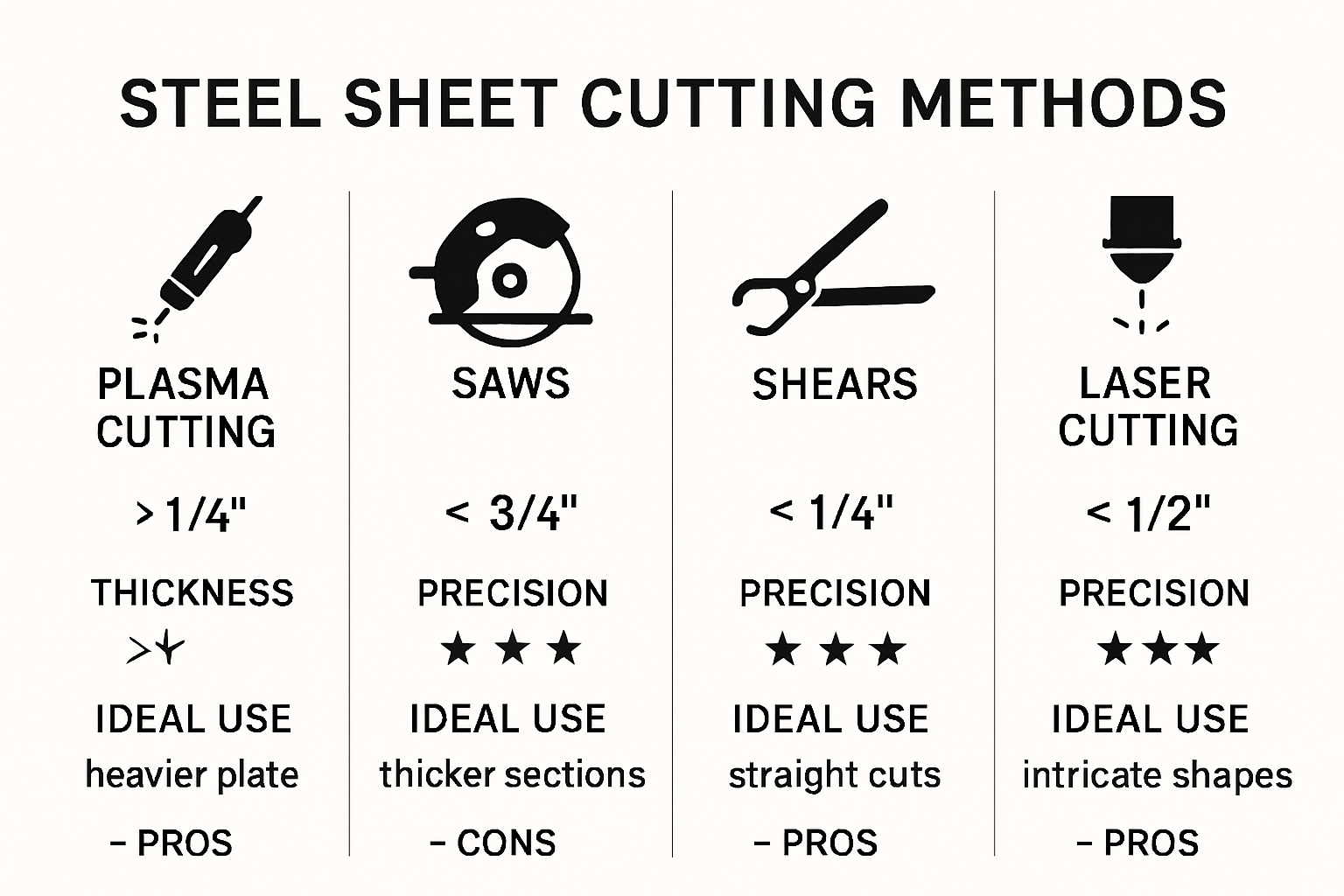
For projects demanding exceptional precision and minimal material waste, laser cutting technology provides unparalleled results. Laser cutters utilize concentrated light beams to slice through steel sheets with microscopic accuracy. While more expensive, they deliver superior edge quality and remarkable repeatability, making them ideal for high-volume or intricate fabrication work.
Before finalizing your cutting method, explore advanced steel fabrication techniques to understand the nuanced considerations. Verify your chosen method by conducting a test cut on a similar material sample, ensuring the technique meets your project’s specific dimensional and quality requirements.
Step 5: Execute the Cutting Process Safely
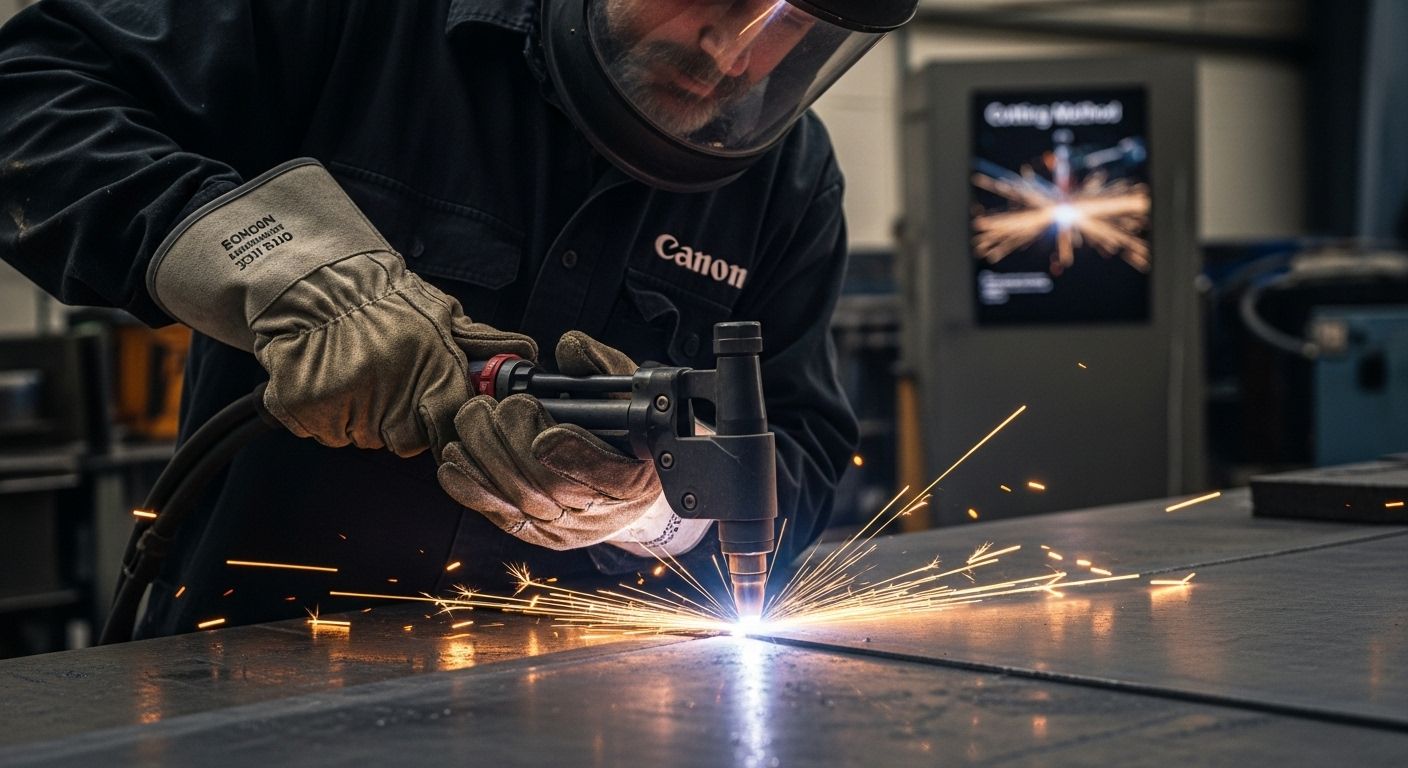
Safety represents the paramount consideration when cutting steel sheets, transforming a potentially hazardous task into a controlled, precise operation. Professional fabricators prioritize personal protection and systematic procedural execution above all other considerations during the cutting process.
Begin by establishing a comprehensive safety perimeter around your workspace. Clear the immediate area of unnecessary personnel, flammable materials, and potential obstructions. Ensure adequate ventilation to disperse potentially harmful metal particulates and welding fumes. Position fire extinguishers within immediate reach and confirm they are appropriate for metal-related fires.
Dress in full personal protective equipment (PPE) without compromise. This includes flame-resistant clothing, heavyweight leather welding gloves, a face shield with appropriate shading, safety glasses with side shields, steel-toed boots, and a respirator designed for metalworking environments. Each piece of protective gear serves a critical function in defending against potential injuries from sparks, metal fragments, and intense heat.
According to North Carolina State University’s Industrial and Systems Engineering department, systematic equipment preparation dramatically reduces workplace incidents. Conduct a thorough pre-operation inspection of your cutting tools, checking for any damage, loose components, or potential mechanical failures. Verify that all guards are correctly positioned and operational, and that electrical connections remain secure and undamaged.
When initiating the cutting process, maintain consistent, controlled movements. Position yourself strategically to maximize visibility and minimize physical strain. Keep your body positioned away from potential spark trajectories and maintain a stable, balanced stance. Move the cutting tool with deliberate, steady motions, allowing the tool’s design to do the primary work while you provide guidance.
Explore advanced safety protocols for metal fabrication to enhance your understanding of professional safety techniques. After completing the cut, allow the steel sheet and cutting tool to cool naturally. Inspect the cut edge for any irregularities, burrs, or potential structural weaknesses that might require additional processing or attention.
Step 6: Inspect and Finish the Cut Edges
Inspecting and finishing cut steel sheet edges represents the final critical stage in transforming raw material into a precision component. Professional fabricators understand that edge quality determines the structural integrity and aesthetic value of the entire fabrication project.
Begin your inspection by examining the cut edges under strong, direct lighting. Look carefully for any irregularities such as burrs, jagged protrusions, or microscopic fractures that might compromise the steel sheet’s structural performance. Use a bright work light and position yourself to capture even the most subtle surface imperfections. Run your gloved hand carefully along the edge, feeling for any rough or uneven sections that might require additional processing.
Grinding represents the primary method for refining cut edges and eliminating imperfections. Select an angle grinder equipped with a fine-grit metal finishing disc to smooth out any rough areas. Move the grinder consistently along the edge, maintaining a steady angle and applying uniform pressure. The goal is to create a smooth, uniform surface without removing excessive material or altering the sheet’s dimensional specifications.
According to North Carolina State University’s Industrial and Systems Engineering department, precise edge finishing involves understanding the nuanced relationship between cutting technique and surface preparation. Different cutting methods require specific finishing approaches, with plasma-cut edges typically needing more aggressive smoothing compared to laser-cut surfaces.
Precision measurement tools become essential during the final inspection phase. Use digital calipers to verify edge straightness and consistency. Check the edge’s squareness using a precision metal square, ensuring that any deviations remain within acceptable tolerances. Micron-level precision separates professional-grade fabrication from amateur work.
Explore advanced metal fabrication techniques to further refine your edge finishing skills. A successful inspection concludes with a surface that feels smooth to the touch, shows no visible irregularities, and meets the specific dimensional requirements of your project. Remember that patience and attention to detail transform a good cut into an exceptional final product.
Take Your Steel Sheet Cutting Projects Further With Genesis Steel
Struggling with precision, safety and reliable supply when cutting steel sheets? Many fabricators know that even the best equipment and careful preparation mean nothing without high-quality steel that meets every specification. You need consistency in flatness, thickness, and grade to achieve clean cuts and professional results. If accuracy, timely delivery, and expert support matter for your next project, this is where Genesis Steel stands out.
Explore our complete steel solutions
Get immediate access to South Africa’s top supply of hot-rolled steel sheets and plates in a wide range of sizes and grades. Partner with a trusted team that understands your exact fabrication needs. Visit Genesis Steel now and let our experienced staff help you work more efficiently, improve your workflow and level up everything from cutting to finishing. Don’t let substandard materials hold back your next job—take action and experience our exceptional quality and service today.
Frequently Asked Questions
What tools are essential for cutting steel sheets?
To cut steel sheets efficiently, essential tools include a plasma cutter, circular saw with a metal cutting blade, angle grinder with a metal cutting disc, handheld metal cutting shears, and a reciprocating saw. Personal protective equipment (PPE) such as gloves, safety glasses, ear protection, and a dust mask is also crucial for safety.
How do I prepare a steel sheet before cutting?
Preparation involves cleaning the steel sheet’s surface to remove dirt, rust, and oil. Next, mark cutting lines with precision using metal scribes or markers and measuring tools. Ensure the sheet is securely clamped on a stable surface to maintain accuracy during the cutting process.
What is the best cutting method for different thicknesses of steel sheets?
Plasma cutting is ideal for most thicknesses and provides clean cuts. For thinner sheets, mechanical methods like circular saws or handheld shears are effective. For high precision, laser cutting can be used, although it is more expensive and best for complex designs.
How can I ensure safety while cutting steel sheets?
Establish a safety perimeter around your workspace, wear full PPE, and conduct a pre-operation inspection of your tools. Make sure to maintain controlled movements while cutting and ensure adequate ventilation to disperse harmful fumes and particulates.