

Steel goes through one of the most complex journeys in modern industry. It starts with raw materials like iron ore, coal, and limestone pulled from the earth and ends as beams in skyscrapers or frames in vehicles. Most people might think its story ends once a building comes down or a car is scrapped, but no. Steel is nearly 100 percent recyclable and keeps its strength, no matter how many times it gets reused. The most important part of steel’s life isn’t the beginning, but how it never truly ends.
Table of Contents
- What Is The Life Cycle Of Steel And Its Phases?
- Why The Life Cycle Of Steel Matters For Industry And Sustainability
- How The Life Cycle Of Steel Works: From Extraction To Recycling
- Key Concepts In The Life Cycle Of Steel: Production, Use, And Disposal
- Real-World Applications Of The Life Cycle Of Steel In Gauteng
Quick Summary
| Takeaway | Explanation |
|---|---|
| Steel is highly recyclable | Almost 100% of steel can be recycled without loss of integrity, contributing to sustainability. |
| Tech advancements enhance steel production | New metallurgical methods aim to reduce energy use and minimize waste during steel manufacturing. |
| Steel underpins various industries | Steel plays a crucial role in construction, transport, and manufacturing, driving global economic growth. |
| Circular economy in steel sector | Implementing recycling and resource recovery maximizes sustainability in steel’s life cycle. |
| Proper material selection is crucial | Understanding steel grades helps in choosing the right product for specific industrial applications. |
What is the Life Cycle of Steel and Its Phases?
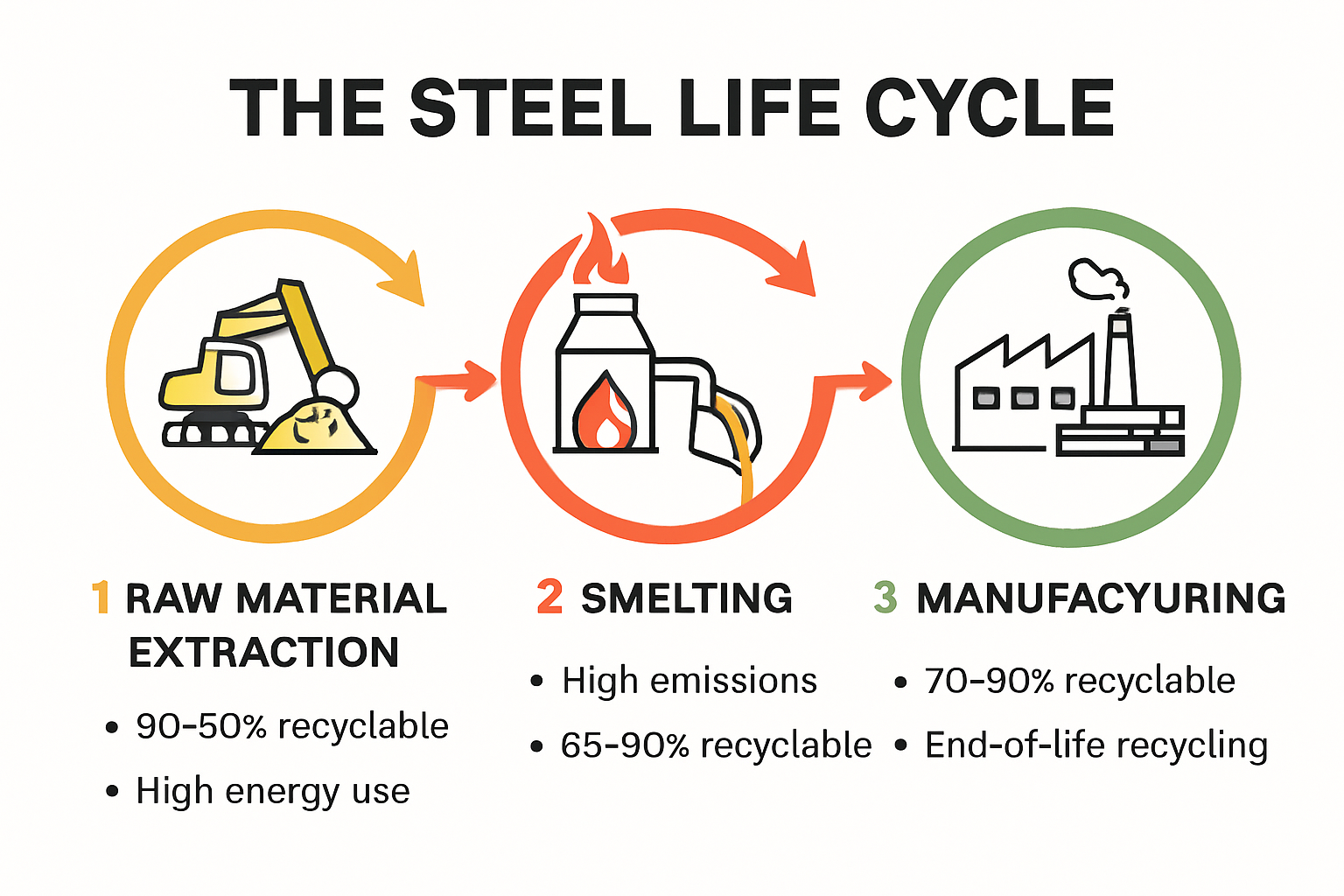
The life cycle of steel represents a comprehensive journey from raw material extraction to final product disposal, encompassing multiple interconnected stages that transform basic resources into versatile industrial materials. Understanding this process reveals the remarkable complexity behind one of humanity’s most essential engineering substances.
To help clarify the principal stages in the steel life cycle, the following table outlines each phase and its key activities or characteristics.
| Life Cycle Phase | Key Activities/Characteristics |
|---|---|
| Raw Material Extraction & Production | Mining iron ore, coal, and limestone; geological surveys; sustainable mining techniques |
| Manufacturing & Fabrication | Blast furnace processing; alloying with carbon and other elements; forming steel grades |
| Usage in Industry | Deployment in construction, transport, infrastructure, machinery, and energy sectors |
| End-of-Life & Recycling | Collection and sorting; remelting steel; reduced energy consumption versus primary production |
| Circular Economy Integration | Adoption of recycling and resource-recovery practices; supporting sustainability |
Raw Material Extraction and Production
Steel production begins with extracting key raw materials like iron ore, coal, and limestone. These fundamental components are mined from geological deposits worldwide, representing the initial phase of steel’s transformative journey. Explore our guide on steel fabrication processes to understand how these raw materials are systematically converted into usable steel products.
The extraction process involves multiple critical steps:
- Identifying suitable mineral deposits
- Conducting geological surveys
- Implementing sustainable mining techniques
- Processing raw materials through complex metallurgical processes
Manufacturing and Fabrication Stages
Once raw materials are collected, manufacturers transform them through intricate metallurgical processes. Blast furnaces heat iron ore at extremely high temperatures, separating pure iron from impurities. This molten metal is then combined with precise carbon percentages and other alloying elements to create different steel grades with unique mechanical properties.
According to World Steel Association, steel manufacturing involves sophisticated technological interventions that ensure consistent quality, strength, and performance across various industrial applications.
End of Life and Recycling
Unlike many materials, steel possesses an extraordinary characteristic: nearly 100% recyclability. At the conclusion of its functional lifecycle, steel can be completely reprocessed without losing structural integrity. This unique attribute makes steel a sustainable material, significantly reducing environmental impact and conserving natural resources.
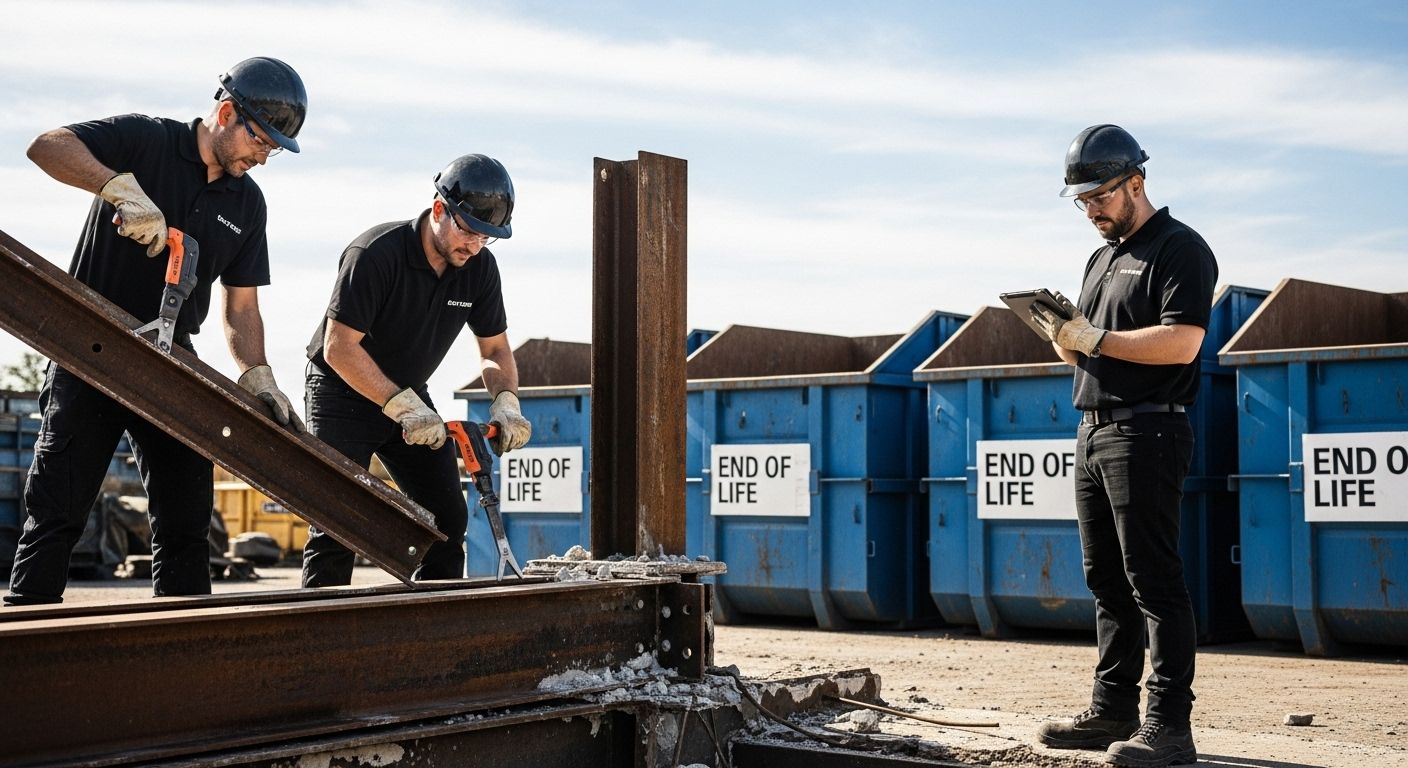
The recycling process involves collecting, sorting, and remelting steel products, which requires substantially less energy compared to primary steel production, demonstrating steel’s remarkable circular economic potential.
Why the Life Cycle of Steel Matters for Industry and Sustainability
Steel’s life cycle represents far more than a simple manufacturing process; it embodies a critical intersection between industrial productivity and environmental responsibility. Understanding its broader implications reveals how this fundamental material supports economic development while addressing global sustainability challenges.
Below, you will find a comparison table outlining the major impacts of steel’s life cycle on industry and sustainability, as explored in this section.
| Aspect | Description |
|---|---|
| Economic & Industrial Significance | Drives industrial supply chains, infrastructure, and employment; supports economic and technological development |
| Environmental Sustainability & Resource Efficiency | Emphasises recyclability; reduces environmental impact and carbon footprint through repeated recycling |
| Technological Innovation & Future Potential | Focus on energy-efficient production, waste reduction, and adoption of advanced metallurgical techniques |
| Circular Economy | Encourages complete material recovery and minimises waste via recycling and reprocessing |
Economic and Industrial Significance
The life cycle of steel is integral to numerous industrial sectors, driving economic growth and technological innovation. Learn more about selecting the right steel for your industrial needs to appreciate its versatile applications. Steel serves as a foundational material in construction, transportation, energy infrastructure, and manufacturing, making its efficient production and utilization crucial for global economic development.
Key economic impacts include:
- Supporting multiple industrial supply chains
- Enabling infrastructure development
- Creating employment across manufacturing and related sectors
- Driving technological innovation and engineering solutions
Environmental Sustainability and Resource Efficiency
According to the U.S. Department of Energy, steel’s life cycle assessment provides critical insights into reducing environmental impact. Recycling and circular economy principles are particularly significant, with steel offering unprecedented material recovery potential. The ability to repeatedly reprocess steel without degrading its fundamental properties makes it a sustainable material choice for industries seeking to minimize carbon footprints.
Technological Innovation and Future Potential
Advances in steel production and processing continue to enhance its life cycle efficiency. Modern metallurgical techniques focus on reducing energy consumption, minimizing waste, and developing more sustainable production methodologies.
Emerging technologies like advanced carbon capture, renewable energy integration, and precision manufacturing are transforming how steel is produced, used, and recycled.
Industrial sectors increasingly recognize steel not just as a material, but as a strategic resource that demands holistic management across its entire lifecycle. By understanding and optimizing each stage of steel production, industries can simultaneously drive economic progress and environmental stewardship.
How the Life Cycle of Steel Works: From Extraction to Recycling
The life cycle of steel represents a sophisticated, multistage process that transforms raw materials into a versatile and sustainable industrial resource. Understanding this intricate journey illuminates the complex technological and environmental considerations underlying steel production and utilization.
Raw Material Acquisition and Initial Processing
Steel production commences with strategic extraction of fundamental raw materials. Iron ore, coal, and limestone form the primary components, sourced through carefully planned mining operations. Learn more about identifying critical steel grades to appreciate the nuanced requirements of material selection.
Key stages in raw material processing include:
- Geological surveying and deposit identification
- Mineral extraction using advanced mining technologies
- Preliminary material sorting and quality assessment
- Initial chemical and physical material characterization
Metallurgical Transformation and Manufacturing
According to the World Steel Association, the metallurgical transformation represents a critical phase where raw materials undergo profound physical and chemical changes. Blast furnaces heat iron ore to temperatures exceeding 1500 degrees Celsius, enabling the separation of pure iron from mineral impurities. This molten metal is then meticulously alloyed with precise carbon percentages and additional elements to create specific steel grades with tailored mechanical properties.
Recycling and Circular Economic Principles
Steel’s extraordinary recyclability distinguishes it from many industrial materials. Nearly 100% of steel can be reprocessed without structural degradation, creating a remarkable closed-loop material system. The recycling process involves sophisticated sorting, remelting, and remanufacturing techniques that significantly reduce energy consumption compared to primary steel production.
Industrial sectors increasingly recognize steel not merely as a commodity, but as a strategic material requiring holistic lifecycle management. By optimizing each production stage, industries can simultaneously advance technological innovation, economic productivity, and environmental sustainability.
Key Concepts in the Life Cycle of Steel: Production, Use, and Disposal
Steel represents a complex material ecosystem that extends far beyond simple manufacturing processes. Its life cycle encompasses intricate interactions between technological innovation, economic considerations, and environmental sustainability, creating a comprehensive framework that defines modern industrial material management.
Material Composition and Structural Fundamentals
Steel’s fundamental composition determines its performance across diverse industrial applications. Discover how to select precise steel grades for understanding the nuanced characteristics that distinguish different steel types. Iron and carbon form the core structural elements, with additional alloying elements introducing specific mechanical properties such as enhanced strength, corrosion resistance, and thermal stability.
Key material composition considerations include:
- Carbon percentage influencing material hardness
- Trace metal additions modifying mechanical properties
- Structural integrity requirements for specific industrial applications
- Performance characteristics under varying environmental conditions
Technological Transformation and Industrial Utilization
According to the International Energy Agency, steel production represents a sophisticated technological process involving multiple complex transformations. Metallurgical engineering techniques enable the conversion of raw materials into high-performance industrial products through precise thermal and chemical manipulations.
The industrial utilization of steel spans multiple critical sectors, including construction, transportation, energy infrastructure, and manufacturing. Each application demands unique material specifications, driving continuous technological innovation in steel production methodologies.
Lifecycle Management and Sustainable Practices
Modern steel lifecycle management transcends traditional linear production models, embracing circular economic principles. Recyclability emerges as a fundamental characteristic, with contemporary industrial practices focusing on minimizing waste, reducing energy consumption, and maximizing material recovery.
The disposal and recycling stages represent crucial components of steel’s lifecycle, where advanced technological processes enable near complete material recovery. By implementing sophisticated sorting, remelting, and remanufacturing techniques, industries can transform potential waste into valuable resources, demonstrating steel’s remarkable potential for sustainable material management.
Real-World Applications of the Life Cycle of Steel in Gauteng
Gauteng represents a critical industrial hub where steel’s life cycle demonstrates profound technological and economic significance. The region’s robust manufacturing, mining, and infrastructure sectors showcase steel’s versatility and strategic importance across multiple complex industrial domains.
Mining and Heavy Industrial Applications
Steel’s structural integrity plays a pivotal role in Gauteng’s mining and heavy industrial sectors. Explore our comprehensive guide on hot-rolled steel applications to understand the material’s critical performance characteristics. Mining equipment, structural supports, transportation infrastructure, and processing machinery rely extensively on specialized steel grades engineered to withstand extreme operational conditions.
Key mining and industrial steel applications include:
- Underground mining shaft reinforcement
- Heavy machinery component fabrication
- Mineral processing equipment construction
- Transportation infrastructure development
Construction and Infrastructure Development
According to the Centre for Environmental Rights, Gauteng’s construction sector represents a significant arena for steel’s transformative potential. Structural steel forms the backbone of modern architectural and engineering projects, enabling the creation of complex, resilient infrastructure that supports economic growth and urban development.
From bridges and industrial facilities to commercial buildings and transportation networks, steel provides the fundamental structural framework that enables Gauteng’s continuous technological advancement and economic expansion.
Technological Innovation and Sustainable Practices
Gauteng’s industrial landscape increasingly emphasizes sustainable steel lifecycle management. Circular economic principles drive innovative approaches to material recycling, waste reduction, and energy efficiency. Advanced metallurgical techniques enable the continuous reprocessing of steel, transforming potential waste into valuable resources across multiple industrial sectors.
By implementing sophisticated sorting, remelting, and remanufacturing processes, Gauteng’s industrial ecosystem demonstrates a progressive approach to material management that balances economic productivity with environmental responsibility.
Take Control of Steel’s Life Cycle with Genesis Steel’s Solutions
Understanding the complete life cycle of steel lets you see the challenges of choosing the right grades, managing costs, and ensuring your materials can stand up to modern industry demands. If your business needs fast access to reliable steel sheets and plates in Gauteng, it is time to take action. We know that secure supply and consistent quality are crucial at every phase from extraction to recycling. Check out our Uncategorised archives for insights on how industry leaders stay ahead or visit our main site for a complete overview of our products and services.
Do not let uncertainty slow down your projects. Partner with Genesis Steel to secure a wide range of top-grade carbon steel products, all under one roof. Discover what fast and dedicated service can do for your business when you choose us today. Start your journey at Genesis Steel.
Frequently Asked Questions
What are the main phases in the life cycle of steel?
The life cycle of steel consists of several crucial phases: raw material extraction, manufacturing and fabrication, and end-of-life recycling. These stages encompass everything from mining iron ore and coal to transforming these materials into steel and ultimately recycling used steel products.
Why is steel considered a sustainable material?
Steel is regarded as a sustainable material due to its remarkable recyclability; nearly 100% of steel can be reprocessed without loss of structural integrity. This characteristic, combined with energy-efficient recycling processes, significantly reduces environmental impact and conserves natural resources.
How does steel recycling contribute to environmental sustainability?
Steel recycling contributes to environmental sustainability by minimizing energy consumption and reducing waste. Recycling steel requires substantially less energy compared to producing new steel from raw materials and ensures that valuable resources are recovered and reused, enhancing the principles of a circular economy.
What role does technological innovation play in the steel life cycle?
Technological innovation is critical throughout the steel life cycle, particularly in enhancing energy efficiency, reducing waste, and improving production methodologies. Advances such as carbon capture methodologies and renewable energy integration are transforming steel production and making it more sustainable.