

Steel is everywhere in industry, from massive bridges to everyday machinery, and the grade you choose decides if your project stands strong or crumbles. Most folks assume a few letters and numbers stamped on a beam tell the full story. Yet even experienced engineers can misinterpret steel grades, risking project safety and massive losses. Fresh surprises await when you see how modern tech and sharp local strategies flip the script on steel selection and verification.
Table of Contents
- Understanding Steel Grade Markings And Codes
- Key Methods To Identify Steel Grades On-Site
- Why Steel Grade Matters For Industrial Projects
- Tips For Sourcing And Verifying Steel In Gauteng
Quick Summary
| Takeaway | Explanation |
|---|---|
| Understand steel grade codes | Familiarize yourself with international and national marking systems to identify steel compositions and properties. |
| Use non-destructive testing | Implement non-damaging techniques such as spectroscopic analysis to determine steel grades on-site. |
| Verify with metallurgical tests | Conduct independent testing and consult experts for accurate steel grade confirmation before use. |
| Select steel grades carefully | Match the chosen steel grade to project specifications to ensure safety and structural integrity. |
| Research local suppliers thoroughly | Evaluate suppliers based on certifications and quality systems to ensure you procure reliable materials. |
Understanding Steel Grade Markings and Codes
Identifying steel grades requires understanding the complex system of markings and codes used across industrial manufacturing. These standardized identifiers provide critical information about a steel’s composition, mechanical properties, and intended applications.
International Coding Systems for Steel Grades
Steel grade markings are not universal but follow specific national and international standards. ASTM International provides comprehensive guidelines for steel grade classification, which engineers and manufacturers use globally. These codes typically include alphanumeric sequences that reveal precise details about the steel’s chemical composition, strength characteristics, and processing methods.
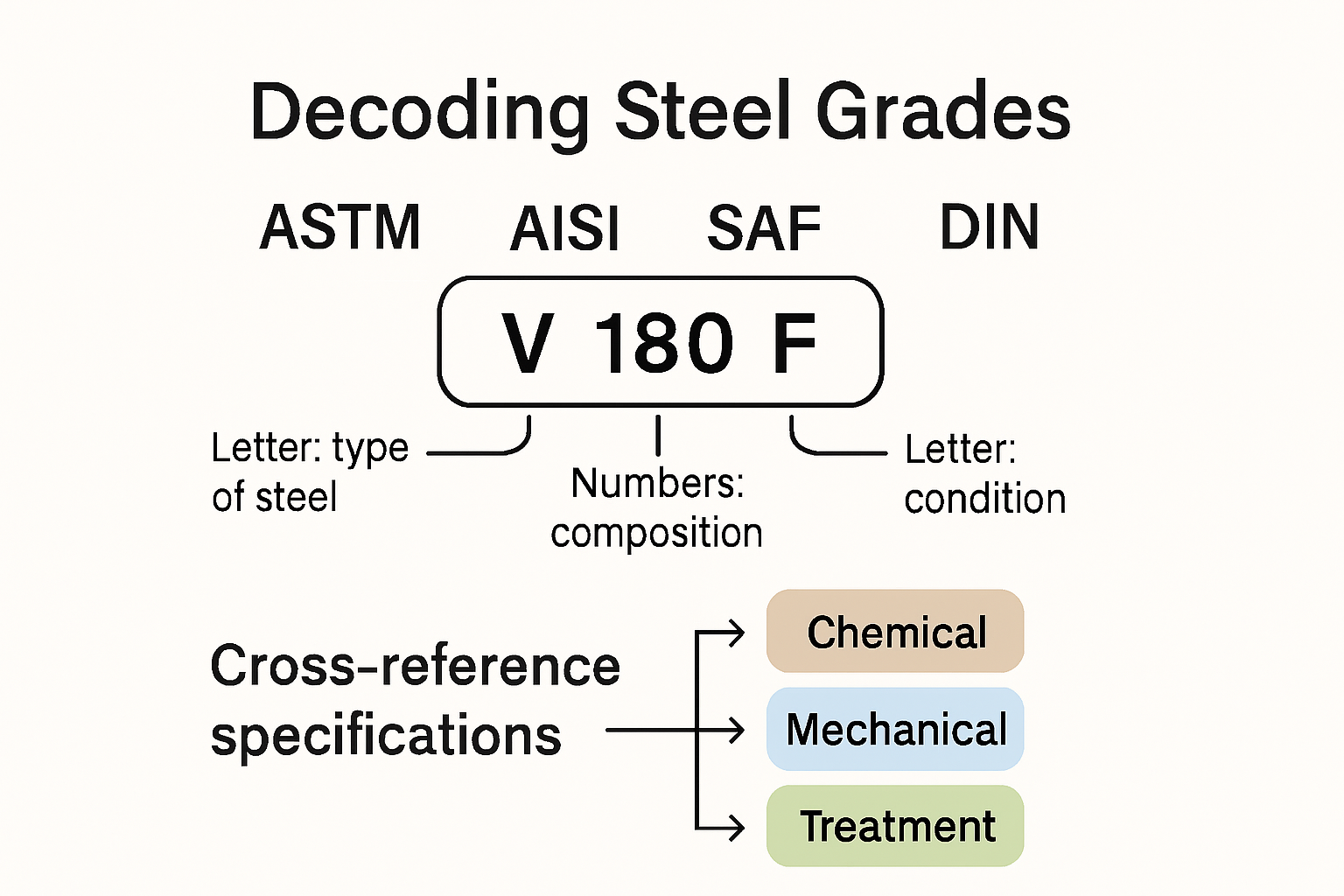
For example, a typical steel grade code might include:
- Composition indicators: Letters representing primary alloying elements
- Strength classifications: Numerical values indicating yield strength
- Processing specifications: Additional characters describing heat treatment or manufacturing process
Decoding Mechanical and Chemical Properties
Professional metallurgists use sophisticated techniques to decode these markings. The Materials Information Society notes that understanding these codes requires knowledge of standardized nomenclature across different international systems like AISI, SAE, and DIN standards.
Key elements in steel grade identification include:
- Chemical composition percentages
- Tensile strength ratings
- Corrosion resistance indicators
- Temperature and environmental performance specifications
For industrial buyers in technical sectors, accurately interpreting these markings is crucial. A misunderstood steel grade can lead to catastrophic failures in critical infrastructure, machinery, or construction projects. Precision in understanding these codes ensures selecting the right material for specific engineering requirements.
Practical Approaches to Steel Grade Verification
Beyond visual markings, professional verification involves multiple strategies. Spectroscopic analysis, mechanical testing, and professional consultation provide definitive confirmation of a steel’s exact grade and properties. These methods go beyond surface-level markings, offering comprehensive insights into the material’s true characteristics.
Industrial professionals should always:
- Cross-reference manufacturer certifications
- Conduct metallurgical testing when uncertainty exists
- Consult specialized steel grade reference guides
For those seeking more detailed insights into steel grade identification, our comprehensive guide on steel plate specifications offers advanced technical perspectives tailored for Gauteng’s industrial sectors.
Key Methods to Identify Steel Grades On-Site
Identifying steel grades on-site requires a combination of technical expertise, specialized equipment, and systematic evaluation techniques. Industrial professionals must employ multiple strategies to accurately determine steel composition and properties without compromising material integrity.
Non-Destructive Testing Techniques
Non-destructive testing methods provide critical insights into steel grades without damaging the material. The National Center for Biotechnology Information highlights portable optical emission spectrometers as a revolutionary on-site analysis tool. These advanced devices enable rapid chemical composition assessment by creating a spark discharge that vaporizes a tiny material sample, analyzing the emitted light spectrum to determine precise elemental content.
Key non-destructive techniques include:
- Spectroscopic analysis: Measures elemental composition through light spectrum evaluation
- Magnetic permeability testing: Assesses material magnetic properties
- Ultrasonic thickness measurements: Determines material consistency and potential variations
Advanced Sensor-Based Identification Methods
Cutting-edge research from arXiv demonstrates emerging technologies transforming steel grade identification. Machine learning algorithms combined with non-invasive electromagnetic sensors now enable real-time quality control during production and on-site assessment. These sophisticated systems can rapidly analyze material properties without interrupting operational workflows.
To assist readers in quickly comparing on-site steel grade identification techniques, the table below summarises the main non-destructive and advanced sensor-based methods discussed, along with what each method detects.
| Method | Key Use | What It Detects |
|---|---|---|
| Spectroscopic analysis | Non-destructive chemical identification | Elemental composition |
| Magnetic permeability testing | Non-destructive property assessment | Magnetic characteristics |
| Ultrasonic thickness measurements | Material consistency check | Thickness, internal variations |
| Contactless electromagnetic scanning | Advanced, real-time property analysis | Full material property profile |
| Machine learning pattern recognition | Automated classification | Graded material patterns |
Industrial professionals can leverage these advanced identification strategies:
- Contactless electromagnetic scanning
- Machine learning pattern recognition
- Comprehensive sensor data interpretation
Professional Verification Protocols
Despite technological advancements, expert human intervention remains crucial in steel grade verification. Trained metallurgists combine multiple assessment strategies to ensure accurate identification. Atomic magnetometer imaging provides an additional layer of non-destructive structural analysis, enabling detection of microscopic variations that might indicate specific material characteristics.
Comprehensive verification typically involves:
- Cross-referencing manufacturer documentation
- Conducting multiple independent tests
- Utilizing advanced scanning technologies
- Consulting specialized metallurgical experts
For Gauteng’s industrial sectors seeking more detailed insights, our comprehensive guide to carbon steel properties offers advanced technical perspectives on material identification and selection strategies.
Why Steel Grade Matters for Industrial Projects
Steel grade selection is a critical decision that directly impacts the performance, safety, and economic viability of industrial projects. Beyond mere material specification, the right steel grade determines structural integrity, operational efficiency, and long-term project sustainability.
Structural Performance and Load Resistance
Steel Construction Information emphasizes that each industrial project requires precise steel grade selection to ensure optimal structural performance. Different steel grades offer varying levels of strength, ductility, and load-bearing capabilities, making their selection crucial for engineering design.
Key performance considerations include:
- Tensile strength variations
- Corrosion resistance levels
- Temperature tolerance ranges
- Fatigue and impact resistance
Engineers must carefully match steel grades to specific project requirements, understanding that a miscalculation can lead to catastrophic structural failures or premature material degradation.
Economic and Lifecycle Cost Implications
TWI Global research reveals that steel grade selection significantly influences the overall economic profile of industrial projects. The right grade impacts material costs, fabrication processes, maintenance expenses, and potential future replacement requirements.
Economic factors to consider:
- Initial material procurement costs
- Fabrication and processing expenses
- Long-term maintenance requirements
- Potential downtime and replacement costs
Industrial professionals must adopt a holistic approach, evaluating not just immediate project needs but also long-term operational sustainability when selecting steel grades.
Environmental and Safety Considerations
Scott Process Engineering highlights that steel grade selection directly influences project safety and environmental resilience. Specialized grades can provide enhanced resistance to extreme temperatures, chemical exposures, and mechanical stresses.
Critical safety and environmental aspects include:
- Resistance to environmental degradation
- Compliance with industry safety standards
- Adaptability to harsh operational conditions
- Minimizing potential structural risks
For Gauteng’s industrial sectors seeking comprehensive insights, our detailed guide on carbon steel properties provides advanced technical perspectives on material selection strategies.
Ultimately, steel grade selection is a sophisticated engineering decision that requires technical expertise, comprehensive analysis, and a forward-thinking approach to industrial project design and implementation.
Tips for Sourcing and Verifying Steel in Gauteng
Sourcing and verifying high-quality steel in Gauteng’s industrial landscape requires a strategic approach that combines technical expertise, rigorous verification processes, and understanding of local manufacturing standards. Industrial professionals must navigate complex procurement challenges to ensure material reliability and project success.
Supplier Evaluation and Quality Assurance
Selecting the right steel supplier is fundamental to obtaining reliable materials. Research from Industry 4.0 technologies suggests implementing advanced quality control mechanisms that go beyond traditional verification methods. Industrial buyers should develop comprehensive evaluation criteria that assess suppliers based on multiple performance indicators.
Key supplier assessment factors include:

- Certification and compliance documentation
- Consistent material traceability
- Technical testing capabilities
- Quality management systems
- Proven track record in industrial supply
Professional procurement teams must conduct thorough due diligence, requesting comprehensive material certifications, independent test reports, and verifiable manufacturing process documentation.
Technical Verification Protocols
Beyond supplier reputation, technical verification remains crucial in steel procurement. Industrial buyers should implement multi-stage verification processes that combine documentary evidence, physical testing, and advanced technological assessment.
The following table organises the primary supplier and material verification factors outlined, helping you compare essential criteria for sourcing and quality assurance in Gauteng’s industrial steel market.
| Verification Step | Description |
|---|---|
| Certification & compliance | Confirm supplier provides legal and industry certifications |
| Material traceability | Track steel from manufacturer to project site |
| Technical testing capabilities | Assess if supplier can perform or provide quality test results |
| Quality management systems | Check presence of systematic procedures for ensuring product quality |
| Independent metallurgical testing | Arrange for outside lab or expert verification where needed |
| Non-destructive material analysis | Use non-destructive on-site tests for extra validation |
| Chemical and mechanical testing | Review or perform detailed laboratory analysis for composition and strength |
Comprehensive verification strategies involve:
- Independent metallurgical testing
- Non-destructive material analysis
- Chemical composition verification
- Mechanical property assessments
- Comparative reference testing
Advanced techniques like spectroscopic analysis and electromagnetic scanning provide additional layers of material validation, ensuring that procured steel meets exact project specifications.
Local Market Navigation and Procurement Strategies
Understanding Gauteng’s specific industrial steel market requires local expertise and strategic networking. Industrial buyers must develop relationships with reputable suppliers while maintaining a critical, data-driven approach to material procurement.
Effective local procurement strategies include:
- Engaging with established local manufacturers
- Participating in industry networking platforms
- Attending technical conferences and trade exhibitions
- Maintaining updated knowledge of regional manufacturing standards
For detailed insights into local steel plate specifications tailored to Gauteng’s industrial sectors, explore our comprehensive steel plate guide that provides advanced technical perspectives on material selection and procurement.
Successful steel sourcing in Gauteng demands a holistic approach that combines technical knowledge, rigorous verification, and strategic market understanding. Industrial professionals who invest time in comprehensive evaluation processes will consistently secure high-quality materials that meet their precise project requirements.
Frequently Asked Questions
What are the main international coding systems for steel grades?
Steel grades are identified using various international coding systems such as ASTM, AISI, SAE, and DIN. These codes include alphanumeric sequences that indicate the chemical composition, mechanical properties, and manufacturing processes of the steel.
How can I verify the steel grade on-site without damaging the material?
Non-destructive testing techniques, such as spectroscopic analysis, magnetic permeability testing, and ultrasonic thickness measurements, allow you to determine the steel grade without damaging the material, ensuring both accuracy and integrity.
Why is it important to choose the correct steel grade for my project?
Selecting the right steel grade is critical for ensuring structural integrity, load resistance, and performance in your project. A miscalculation can lead to failures or complications, impacting safety, economic costs, and project timelines.
What are the key factors to consider when sourcing steel?
When sourcing steel, consider factors such as supplier certifications, technical testing capabilities, quality management systems, and the steel’s traceability. Conducting independent metallurgical testing can also provide additional assurance of material quality.
Take the Guesswork Out of Steel Grade Identification with Genesis Steel
Still struggling to confidently verify your steel grades on-site or worried about the risks linked to uncertain material quality? If issues like misreading steel grade markings or uncertainty over chemical and mechanical properties are keeping your team up at night, there is a way out. Our decades of hands-on experience and proven reputation for fast, reliable sourcing mean you never have to compromise on quality or project safety. For industrial buyers wanting assurance and peace of mind, we have the expertise, the range, and the verification systems you need. Dive deeper into trusted sourcing by visiting our Uncategorised Archives for case studies and tips tailor-made for your sector.
Choose certainty for your next steel requirement. The skilled team at Genesis Steel helps you match the right grade to your project, backed by full traceability and rapid delivery across Gauteng. Do not let uncertainty cost you money or reputation. Get in touch now to secure your steel and get expert support every step of the way.