

Measuring steel weight can seem straightforward. Yet even a small mistake with your scale or tape can throw off your calculations by several kilograms. Precision counts because South African steel grades can vary in density by up to 4 percent from one type to the next. Many people get caught out thinking a quick measurement will do the job, but understanding the exact type, shape, and even the tiny surface details can change the outcome completely.
Table of Contents
- Step 1: Gather Required Tools And Materials
- Step 2: Identify The Type And Shape Of Steel
- Step 3: Calculate The Volume Of Steel
- Step 4: Use Steel Density To Determine Weight
- Step 5: Verify Your Measurements For Accuracy
Quick Summary
| Key Point | Explanation |
|---|---|
| 1. Use precise tools for measurement | Employ high-precision digital scales to ensure accurate weight readings of steel samples. |
| 2. Calibrate equipment before measuring | Always calibrate your digital scale and inspect tools to guarantee reliable measurement outcomes. |
| 3. Understand steel type and shape | Identify the steel’s characteristics and geometry to apply appropriate measurement techniques effectively. |
| 4. Calculate volume accurately | Utilize suitable formulas for different geometrical shapes to determine the steel’s volume precisely. |
| 5. Verify measurements for consistency | Cross-reference results by using multiple methods and tools to confirm the accuracy of weight calculations. |
Step 1: Gather Required Tools and Materials
Accurate steel weight measurement requires precise equipment and careful preparation. Before beginning your measurement process, assembling the right tools will ensure reliable results and professional outcomes. Proper tool selection is critical to achieving accurate weight calculations.
Essential Measurement Equipment
For professional steel weight measurement, you will need several specialized tools and instruments. Digital weighing scales form the cornerstone of precise measurements, with industrial-grade platforms capable of handling substantial steel loads being essential. Select a scale with appropriate weight capacity and resolution matching your specific steel samples.
Your measurement toolkit should include:
- High-precision digital scale (minimum 0.1kg accuracy)
- Clean, flat calibration surface
- Steel measuring tape or laser distance meter
- Protective work gloves
- Metal cleaning cloth
- Digital vernier caliper for dimensional measurements
According to National Institute for Occupational Safety and Health, selecting ergonomically designed measurement tools reduces potential errors and enhances worker safety during industrial measurement tasks.
Preparation and Calibration Steps
Before commencing measurements, thoroughly inspect and calibrate your equipment. Ensure your digital scale is placed on a stable, level surface away from air currents or vibrations that could influence readings. Calibrate the scale using standard reference weights to guarantee measurement accuracy. Clean your steel sample thoroughly to remove any surface contaminants that might affect weight calculations.
Carefully check your digital scale’s maximum weight capacity and ensure it exceeds the anticipated steel sample weight. Some industrial scales offer multiple measurement modes, allowing you to switch between kilograms, pounds, and other weight units depending on your specific requirements. Wear protective gloves to maintain measurement hygiene and prevent potential surface contamination of your steel sample.
By meticulously preparing your tools and workspace, you establish a solid foundation for precise steel weight measurement, minimizing potential errors and ensuring reliable results throughout your measurement process.
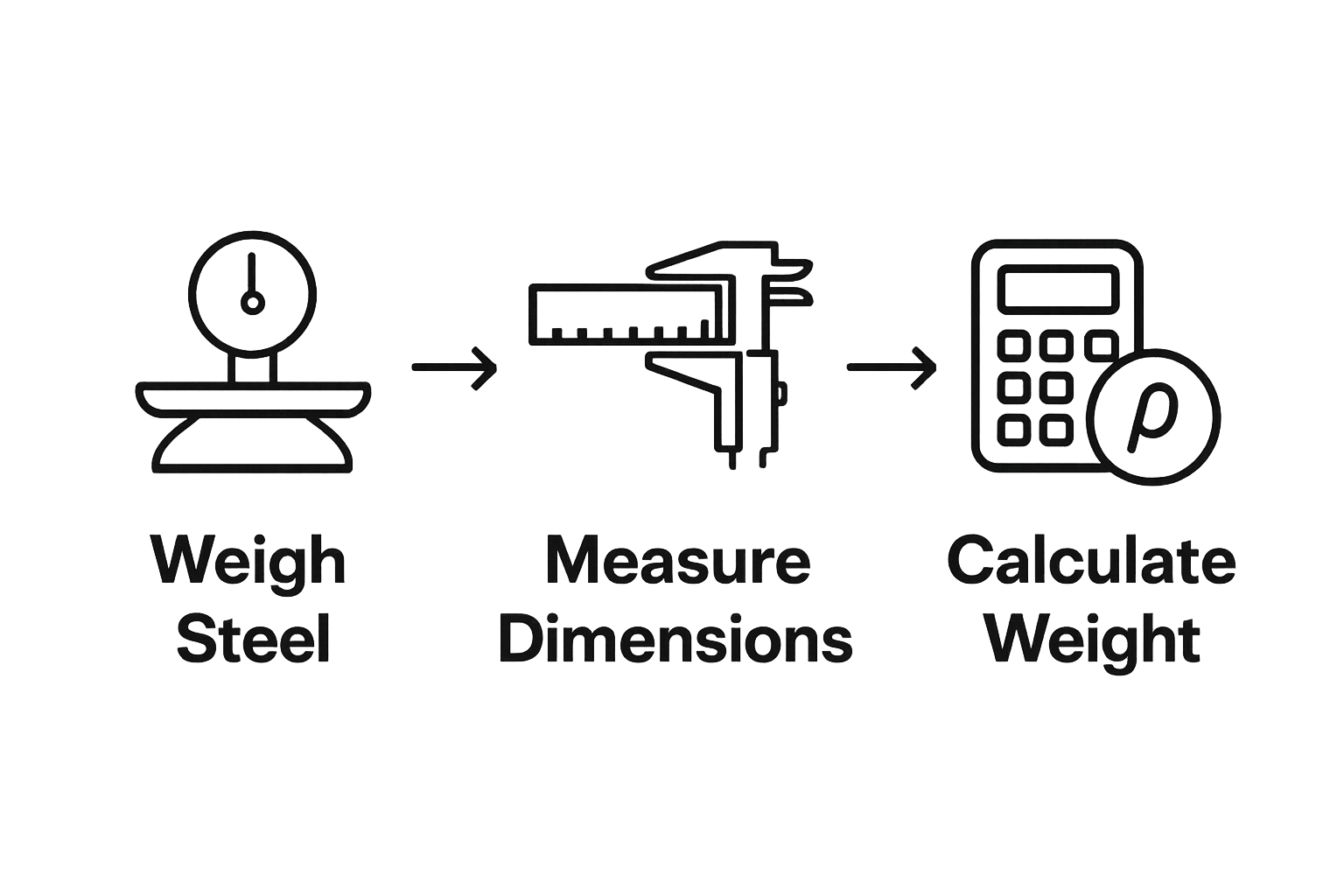
Step 2: Identify the Type and Shape of Steel
Accurate steel weight measurement begins with precise identification of the steel’s type and geometric configuration. Understanding the material characteristics is fundamental to selecting appropriate measurement techniques and ensuring reliable weight calculations.
Steel comes in numerous varieties including carbon steel, alloy steel, stainless steel, and tool steel. Each type possesses distinct physical properties that influence its weight and measurement approach. Visual and physical inspection provides initial insights into the steel’s specific characteristics. Examine the steel’s surface texture, color, and structural composition carefully.
Geometric shapes significantly impact weight measurement strategies. Common steel forms include:
- Flat sheets and plates
- Structural beams and angles
- Circular and rectangular bars
- Pipes and tubular sections
- Complex fabricated structures
According to South African Qualifications Authority, understanding the relationship between material dimensions and processing requirements is crucial for accurate measurement and quality assurance.
Measurement Preparation Techniques
To accurately identify steel characteristics, utilize precision measurement tools like digital calipers and laser measurement devices. Measure the steel’s length, width, and thickness with extreme precision. For irregularly shaped pieces, break down the measurement into manageable geometric sections. Pay special attention to surface irregularities, mill scales, or coating layers that might affect weight calculations.
If you need additional guidance on understanding steel quality, learn more about steel material characteristics. Professional inspections involve checking material grade markings, consulting manufacturer specifications, and understanding metallurgical composition.
By meticulously identifying the steel’s type and shape, you establish a robust foundation for precise weight measurement. This careful preliminary assessment ensures that subsequent weighing procedures will yield accurate and reliable results, minimizing potential measurement errors and supporting critical industrial and engineering applications.
Step 3: Calculate the Volume of Steel
Calculating the volume of steel is a critical step in determining its precise weight. Accurate volume measurement requires systematic geometric calculations that account for the specific shape and dimensions of your steel material. This process transforms your earlier visual and dimensional assessments into a quantifiable mathematical representation.
For different steel geometries, volume calculation methods vary. Rectangular and square sections utilize simple length x width x height calculations. Multiply the length by width and then by thickness to determine the total volume. Cylindrical steel bars require a different approach using the formula volume = π * radius² * length. For more complex shapes, break down the object into basic geometric components and calculate each section separately.
Key volume calculation considerations include:
- Consistent measurement units (metric or imperial)
- Precise dimensional measurements
- Accounting for surface irregularities
- Understanding material density variations
According to the Department of Mechanical and Mechatronic Engineering at Stellenbosch University, standard steel section catalogs provide essential reference points for precise volume calculations.
Precision Measurement Techniques
Utilize digital calipers or laser measurement tools to obtain highly accurate dimensions. Measure each geometric axis multiple times and calculate the average to minimize potential measurement errors. For irregularly shaped steel pieces, consider using 3D scanning technology or breaking the object into manageable geometric segments.
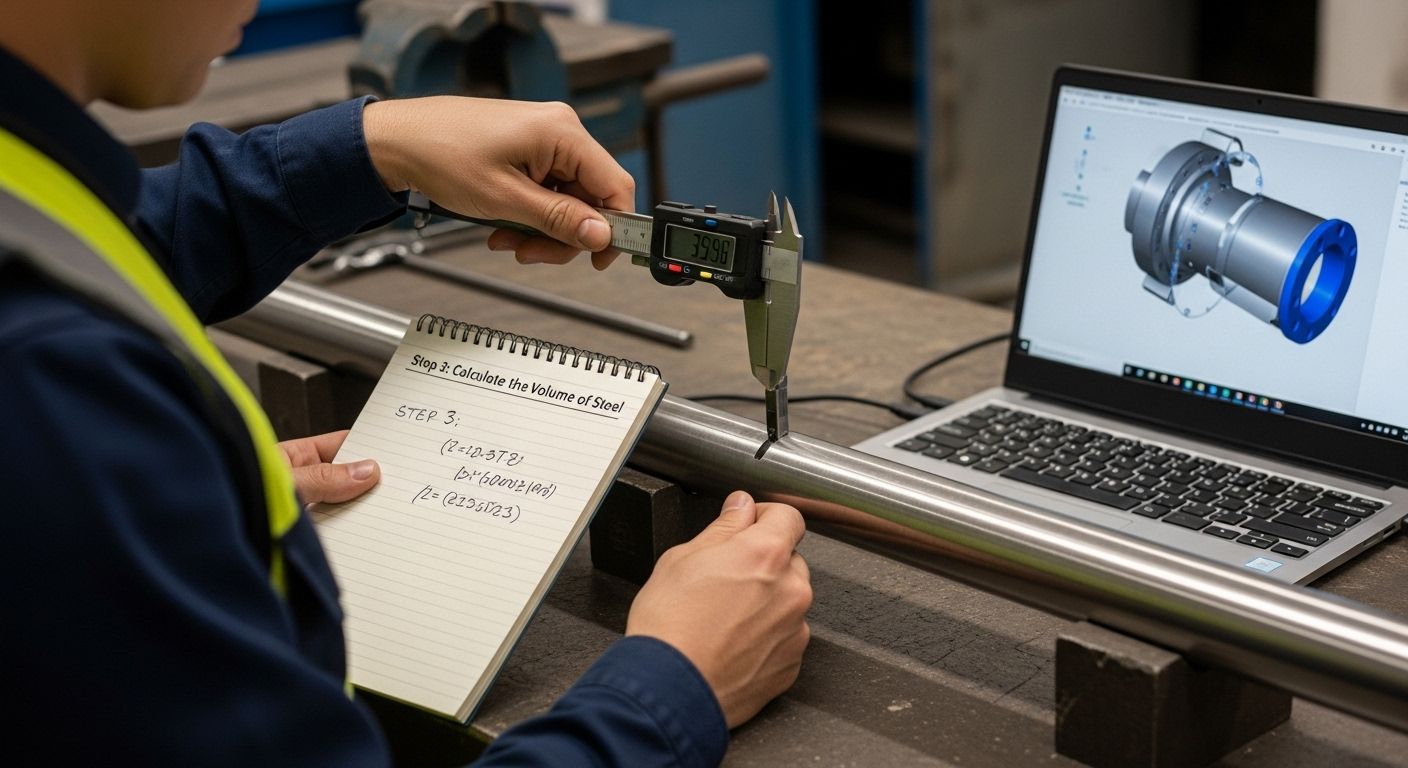
If you need additional guidance on understanding steel measurements, explore our comprehensive steel thickness conversion resource. Professional measurement requires attention to detail and an understanding of how slight dimensional variations can significantly impact volume calculations.
Remember that volume calculation serves as a crucial intermediate step between dimensional measurement and final weight determination. By meticulously calculating the steel’s volume, you establish a reliable foundation for subsequent weight measurements, ensuring precision and consistency in your industrial or engineering applications.
Step 4: Use Steel Density to Determine Weight
Density serves as the critical bridge between volume and weight calculations for steel materials. Precise density values transform your previously calculated volume into an accurate total weight representation. Understanding how different steel grades and compositions affect density is fundamental to achieving reliable measurement outcomes.
Steel densities typically range between 7.75 and 8.05 grams per cubic centimeter, depending on specific metallurgical composition. Carbon content, alloying elements, and manufacturing processes influence these minute variations. Professional weight determination requires selecting the most appropriate density coefficient for your specific steel type.
Key density calculation considerations include:
- Specific steel grade characteristics
- Manufacturing process variations
- Temperature and environmental conditions
- Potential material impurities
- Precise volume measurements
The weight calculation formula remains straightforward: multiply the material’s volume by its specific density. For example, a steel piece with 0.5 cubic meters volume and 7.85 g/cm³ density would weigh approximately 3,925 kilograms.
Practical Measurement Strategies
Consult metallurgical reference charts and manufacturer specifications to obtain precise density values for your specific steel type. Digital measurement tools and conversion calculators can streamline this process, reducing manual computation errors. Some advanced digital scales incorporate density calculation features, providing immediate weight readings.
If you need additional support understanding steel weight calculations, explore our comprehensive steel plate weight guide. Professional engineers and metallurgists recommend maintaining consistent measurement conditions to ensure optimal accuracy.
Careful density determination transforms raw dimensional data into meaningful weight information.
By meticulously applying density calculations, you establish a reliable method for predicting steel weight across diverse industrial and engineering applications, ensuring precision and consistency in your measurement protocols.
Step 5: Verify Your Measurements for Accuracy
Measurement verification represents the critical final stage in ensuring reliable steel weight calculations. Precision validation protects against potential computational errors and guarantees the integrity of your initial measurements. Professional engineers understand that even minor measurement discrepancies can significantly impact project outcomes and material procurement decisions.
Cross-referencing measurement techniques provide the most robust approach to accuracy verification. Repeat your volume and weight calculations using alternative measurement methods, comparing results to identify any potential inconsistencies. Utilize multiple measurement tools such as digital calipers, laser measurement devices, and precision scales to triangulate your initial findings.
Key verification strategies include:
- Performing measurements three consecutive times
- Using different measurement instruments
- Checking calculations with independent observers
- Recording and comparing measurement variations
- Documenting measurement methodology
According to the National Regulator for Compulsory Specifications, instrument calibration plays a crucial role in maintaining measurement reliability and consistency.
Handling Measurement Discrepancies
Systematic error identification becomes paramount when measurement variations exceed acceptable tolerance levels. Statistical methods like standard deviation calculations help quantify measurement uncertainties. When discrepancies emerge, revisit each measurement step methodically. Examine potential sources of error including instrument calibration, environmental conditions, and measurement technique.
Learn more about precise steel measurement techniques to enhance your understanding of complex measurement protocols. Professional metallurgists recommend maintaining a structured approach to measurement verification, treating each calculation as a critical quality control checkpoint.
Successful measurement verification demonstrates your commitment to precision.
The table below summarises key strategies for verifying your steel weight measurements and handling discrepancies, providing a quick checklist for quality assurance.
| Verification Step | Description |
|---|---|
| Repeat measurements | Take three consecutive readings with each instrument |
| Use different instruments | Cross-check with scales and measurement devices |
| Independent observer check | Have a second person verify the measurements |
| Check calculation methods | Review all math steps and formulas used |
| Record measurement variations | Document any differences in results |
| Re-examine calibration and setup | Ensure all tools are calibrated and workspace is level |
| Address environmental influences | Account for temperature, vibrations, or air movement |
| Document methodology | Keep a log of each verification procedure |
Take the Guesswork Out of Steel Weight Measurement – Choose Proven Accuracy
Struggling to turn complex measurements and density calculations into accurate steel weights? Precise results matter, whether you are planning a project or managing industrial procurement. The challenges explained in our article – from finding the right measuring equipment to understanding density – show how easy it is to lose time and miss out on reliability if you do not have the right backup. Why risk errors when the experts are just a click away?
Make your next steel measurement hassle-free with Genesis Steel. Our experienced team and wide range of specialist hot-rolled steel sheets and plates ensure you get quality, correct sizing, and the help you need from start to finish. Do not let uncertainty hold back your next move. Visit us today for professional service and the accuracy your project deserves.
Frequently Asked Questions
How do I choose the right tools for measuring steel weight?
To accurately measure steel weight, you need high-precision digital scales capable of handling substantial loads, a steel measuring tape or laser distance meter, a digital vernier caliper, and cleaning materials. Ensure that all tools are ergonomically designed to reduce errors and enhance safety.
What is the best way to calculate the volume of steel?
To calculate the volume of steel, use specific geometric formulas based on its shape. For rectangular sections, multiply the length, width, and thickness. For cylindrical shapes, use the formula volume = π * radius² * length. For complex shapes, break them down into smaller geometrical components.
How does steel density affect weight calculation?
Steel density is crucial in determining weight as it serves as the bridge between volume and weight. Different steel grades have varying densities, generally ranging between 7.75 and 8.05 grams per cubic centimeter. Ensure to use the specific density for your steel type in the calculation formula: weight = volume × density.
What are effective verification strategies for ensuring accurate measurements?
To verify measurements, repeat your volume and weight calculations using multiple measurement techniques and tools. Perform measurements consecutively and cross-check results with different instruments or independent observers to identify any discrepancies and ensure accuracy.