

Steel yield strength sits at the heart of every major engineering decision, shaping the safety and durability of buildings, bridges, and machinery. Now here is something many people miss. A single data point about yield strength can decide whether a structure stands firm for decades or fails suddenly under pressure. This hidden detail holds more power over industrial success than most realise.
Table of Contents
- Defining Steel Yield Strength: A Key Material Property
- Why Steel Yield Strength Is Critical In Design And Safety
- How Steel Yield Strength Is Measured And Calculated
- The Role Of Steel Yield Strength In Various Industries
- Interpreting Steel Yield Strength Data For Project Success
Quick Summary
| Takeaway | Explanation |
|---|---|
| Yield strength defines a material’s stress limit. | It indicates the maximum stress steel can endure before permanent deformation occurs, crucial for material performance assessments. |
| Accurate yield strength measurement is essential. | Employing tensile testing and stress-strain curve analysis ensures precise identification of yield points for safe engineering practices. |
| Yield strength influences structural safety and integrity. | Understanding yield strength allows engineers to design safer buildings and infrastructure that can bear expected loads without failure. |
| Effective data interpretation boosts project success. | Analyzing yield strength data for safety margins and material reliability is vital in preventing structural failures and ensuring design efficiency. |
Defining Steel Yield Strength: A Key Material Property
Steel yield strength represents a fundamental mechanical property that determines how much stress a material can withstand before permanently deforming. Understanding this concept is critical for engineers, manufacturers, and designers who require precise material performance predictions.
The Scientific Definition of Yield Strength
Yield strength quantifies the maximum stress a steel material can experience while maintaining its original shape and structural integrity. When external forces are applied to steel, it initially responds elastically, meaning it can return to its original dimensions after the force is removed. Mechanical research demonstrates that beyond a specific stress point, the material transitions from elastic to plastic deformation, where permanent shape changes occur.
Key characteristics of yield strength include:
- The precise point where material deformation becomes permanent
- A critical threshold for structural design and engineering applications
- A measurable indicator of material performance under mechanical stress
Importance in Industrial Applications
Yield strength determines the suitability of steel for various industrial applications. Manufacturers rely on this property to select appropriate materials for construction, machinery, and infrastructure projects. Learn more about our steel manufacturing process to understand how we ensure consistent material quality.
In engineering contexts, yield strength helps professionals predict material behavior under different load conditions. For instance, in building construction, understanding yield strength enables architects and engineers to design structures that can withstand anticipated mechanical stresses without compromising structural integrity.
The measurement of yield strength involves precise testing methodologies, typically using tensile strength tests that apply controlled loads to steel specimens. These tests generate stress-strain curves that graphically represent the material’s mechanical response, allowing engineers to identify exact yield points and design safety margins accordingly.
By comprehensively understanding steel yield strength, professionals can make informed decisions about material selection, structural design, and risk management across multiple industrial sectors.

Why Steel Yield Strength is Critical in Design and Safety
Steel yield strength plays a pivotal role in determining the structural integrity and safety of engineering projects across multiple industries. Understanding its significance helps professionals make informed decisions about material selection and design parameters.
Structural Performance and Load Bearing Capacity
Yield strength directly influences a material’s ability to withstand mechanical stress without experiencing permanent deformation. When engineers design critical infrastructure like bridges, buildings, and industrial machinery, they must precisely calculate the maximum loads these structures will encounter. Our comprehensive steel plate load capacity guide provides deeper insights into these complex calculations.
Key considerations for structural performance include:
- Predicting maximum stress levels before material failure
- Calculating safety margins for different loading conditions
- Ensuring consistent performance under varied environmental conditions
Risk Mitigation in High-Stress Environments
Research from the University of KwaZulu-Natal highlights the critical importance of understanding yield strength in temperature-dependent scenarios, particularly in high-risk environments like industrial facilities and construction sites. By knowing a material’s precise yield strength, engineers can design structures that maintain integrity under extreme conditions.
In sectors such as mining, construction, and manufacturing, understanding yield strength helps prevent catastrophic failures. A material that reaches its yield point without warning can compromise entire structural systems, leading to potential safety risks and substantial economic losses.
Professionals use yield strength measurements to establish design safety factors, which involve selecting materials with sufficient strength reserves to handle anticipated and unexpected loads. This approach ensures that structures remain stable and reliable throughout their operational lifecycle, protecting both human lives and significant financial investments.
By comprehensively analyzing steel yield strength, engineers and designers create robust solutions that balance performance, safety, and economic efficiency across diverse industrial applications.
How Steel Yield Strength is Measured and Calculated
Measuring steel yield strength requires sophisticated testing methodologies that provide precise insights into material performance under mechanical stress. These scientific approaches help engineers and designers understand the fundamental mechanical properties of steel.
Tensile Testing Methodology
Tensile testing represents the primary method for determining steel yield strength. In this process, a standardized steel specimen is subjected to gradually increasing tensile loads until deformation occurs. Our detailed technical guide offers comprehensive insights into these measurement techniques.
Key steps in tensile testing include:
- Preparing a uniform steel specimen with specific geometric dimensions
- Applying controlled axial tension using specialized testing equipment
- Recording stress and strain measurements throughout the loading process
- Identifying the precise point where permanent deformation begins
Stress-Strain Curve Analysis
Research from Stellenbosch University highlights the importance of stress-strain curve analysis in determining yield strength. This graphical representation demonstrates how steel responds to increasing mechanical loads, revealing critical material characteristics.
The stress-strain curve helps engineers identify several important parameters:
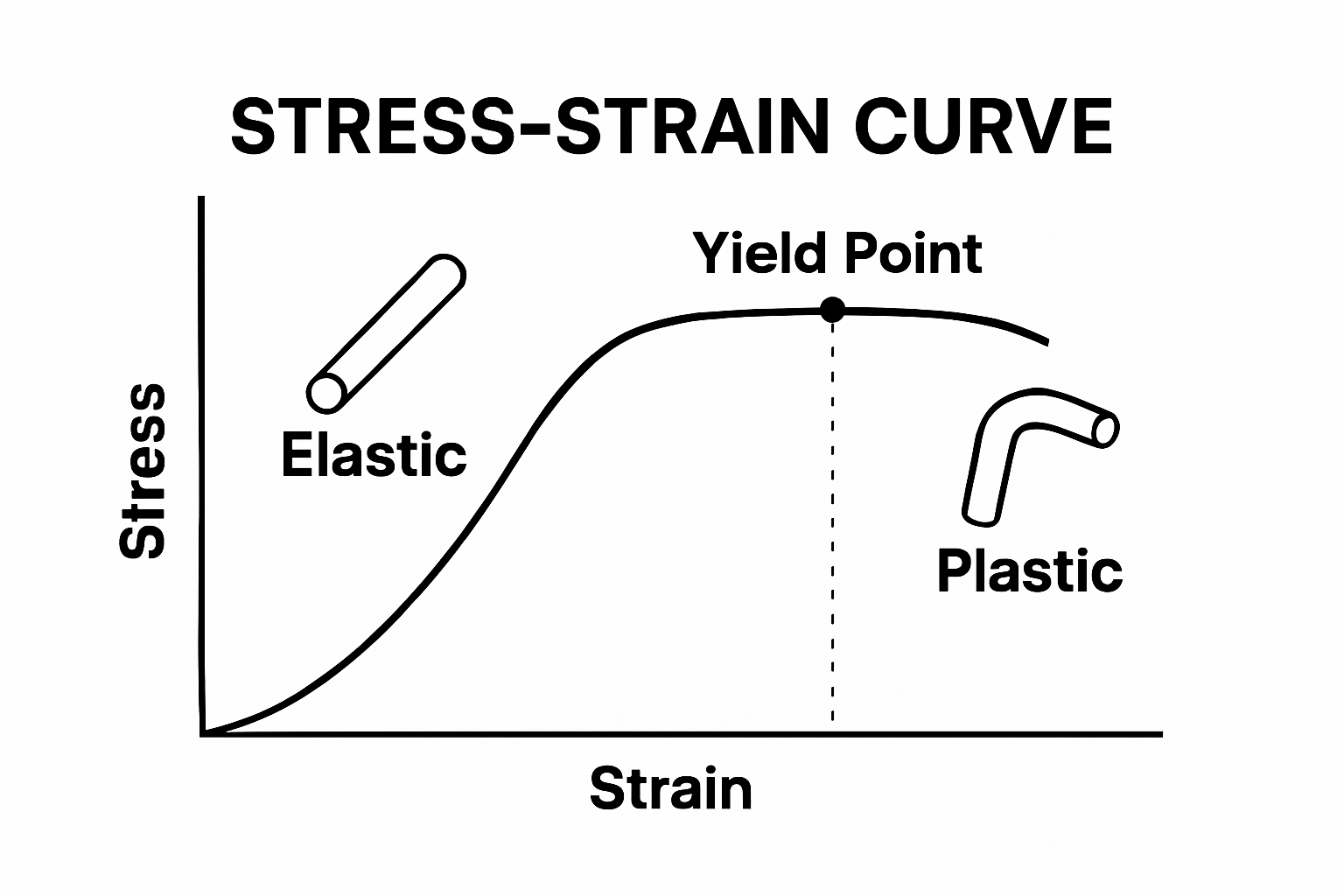
- Elastic region: Where material returns to original shape after load removal
- Yield point: Precise moment permanent deformation begins
- Ultimate tensile strength: Maximum stress the material can withstand
Professionals use sophisticated measuring instruments like extensometers and digital imaging systems to capture minute changes in material dimensions during testing. These advanced techniques ensure accurate measurement of yield strength, providing engineers with reliable data for designing critical infrastructure and mechanical systems.
Below is a summary of the key stages and features identified in the tensile testing process, allowing for quick comparison and understanding of each stage’s significance in measuring steel yield strength.
| Stage of Tensile Testing | Description |
|---|---|
| Preparation of Specimen | Uniform steel sample is formed with precise dimensions |
| Application of Tension | Axial load is gradually applied using specialised equipment |
| Stress Measurement | Measurement of applied force across the specimen |
| Strain Measurement | Recording how much the sample elongates under stress |
| Detection of Yield Point | Identification of the exact stress where permanent deformation starts |
| Generation of Stress-Strain Curve | Data from measurements plotted for analysis of material behaviour |
| Use of Advanced Instruments | Use of extensometers and digital imaging for high accuracy |
By understanding and precisely measuring yield strength, engineers can make informed decisions about material selection, structural design, and safety parameters across various industrial applications.
The Role of Steel Yield Strength in Various Industries
Steel yield strength serves as a critical performance indicator across multiple industrial sectors, influencing design, safety, and operational efficiency. Its significance extends far beyond theoretical measurements, playing a pivotal role in real-world engineering and manufacturing applications.
Construction and Infrastructure Development
In construction, yield strength determines the structural integrity of buildings, bridges, and critical infrastructure. Learn more about how steel is manufactured for industrial applications to appreciate the precision required in material selection. Engineers rely on precise yield strength measurements to:
- Design load-bearing structures with predictable performance
- Calculate safety margins for complex architectural projects
- Ensure long-term durability under varying environmental conditions
Manufacturing and Industrial Equipment
Research from the Department of Trade, Industry and Competition highlights the steel sector’s crucial contribution to South Africa’s industrial landscape. Yield strength plays a fundamental role in manufacturing by enabling:
- Precise engineering of machinery components
- Development of high-performance industrial equipment
- Reliable performance under extreme mechanical stress
In sectors such as mining, automotive, and heavy machinery, yield strength determines the reliability and safety of critical components. A material that can withstand higher stress levels without permanent deformation allows manufacturers to design more robust and efficient equipment.
The ability to predict and control material behavior through yield strength measurements enables industries to push technological boundaries, create more innovative solutions, and develop increasingly sophisticated engineering applications.
The following table provides a concise comparison of how steel yield strength impacts various major industries, making it easy to see the role and benefits across construction and manufacturing applications.
| Industry Sector | Role of Yield Strength | Key Benefits |
|---|---|---|
| Construction & Infrastructure | Determines structural integrity of buildings and bridges | Enables safe load-bearing and long-term durability |
| Manufacturing & Equipment | Allows precision design of machinery and components | Improves reliability and performance in harsh conditions |
| Mining | Ensures equipment maintains strength under intense operational stresses | Minimises catastrophic failures and downtime |
| Automotive | Supports creation of strong, lightweight vehicle parts | Enhances passenger safety and vehicle lifespan |
| Heavy Machinery | Guarantees robustness under continuous mechanical loads | Reduces risk of performance limitations |
Interpreting Steel Yield Strength Data for Project Success
Interpreting steel yield strength data requires a strategic approach that transforms complex mechanical measurements into actionable insights for engineering and construction projects. Professionals must understand how to translate these technical specifications into practical design and safety considerations.
Establishing Safety Margins and Performance Parameters
Successful project execution depends on accurately interpreting yield strength data to establish robust safety margins. Learn how to verify steel quality systematically to ensure precise material selection and performance prediction. Engineers must consider multiple factors when analyzing yield strength data:
- Comparing measured yield strength against design requirements
- Identifying potential material performance limitations
- Calculating appropriate safety factors for specific applications
Risk Assessment and Material Selection Strategies
Research from South African industrial engineering perspectives emphasizes the critical role of comprehensive data interpretation in project management. Professionals must develop sophisticated strategies for translating yield strength measurements into practical risk assessment protocols.
Key considerations for effective data interpretation include:
- Understanding the relationship between yield strength and material reliability
- Evaluating potential performance variations across different environmental conditions
- Developing predictive models that account for material stress responses
The nuanced interpretation of yield strength data enables engineers to make informed decisions about material selection, design modifications, and potential performance limitations. By developing a comprehensive understanding of these technical measurements, professionals can create more resilient, efficient, and reliable engineering solutions that meet or exceed project specifications.
Ultimately, successful yield strength data interpretation requires a holistic approach that combines technical expertise, analytical thinking, and a deep understanding of material behavior under varying stress conditions.
Choose the Right Steel for Your Project’s Yield Strength Demands
Are you worried about finding steel that matches your project’s strict yield strength requirements? Unpredictable performance, structural failures, and lost project time are real challenges when material properties let you down. The article explains how crucial precise yield strength is for safety, load bearing, and long-term resilience. At this stage, you need more than just knowledge—you need a dependable steel partner who understands the stakes.

Genesis Steel stocks a wide variety of carbon steel sheets and plates, each carefully graded for dependable yield strength and long-lasting structural integrity. Our experienced team supports you with hands-on service and quick delivery, ensuring your specs are always met. Explore our latest steel inventory or visit Genesis Steel’s homepage to see how we deliver excellence on every order. Take the guesswork out of steel selection—connect with us now to meet your project’s yield strength needs with absolute confidence.
Frequently Asked Questions
What is steel yield strength?
Steel yield strength is the maximum stress a steel material can withstand while maintaining its original shape and structural integrity before permanent deformation occurs.
Why is yield strength important in construction?
Yield strength is crucial in construction as it ensures that structures can withstand anticipated mechanical stresses without compromising safety and integrity, allowing engineers to design safe and reliable infrastructure.
How is steel yield strength measured?
Steel yield strength is typically measured using tensile testing, where a standardized specimen undergoes gradually increasing tensile loads until permanent deformation begins, allowing the identification of the yield point.
What factors affect the yield strength of steel?
Factors that can affect the yield strength of steel include its chemical composition, processing methods, temperature, and any previous mechanical work done on the material, such as welding or forging.