
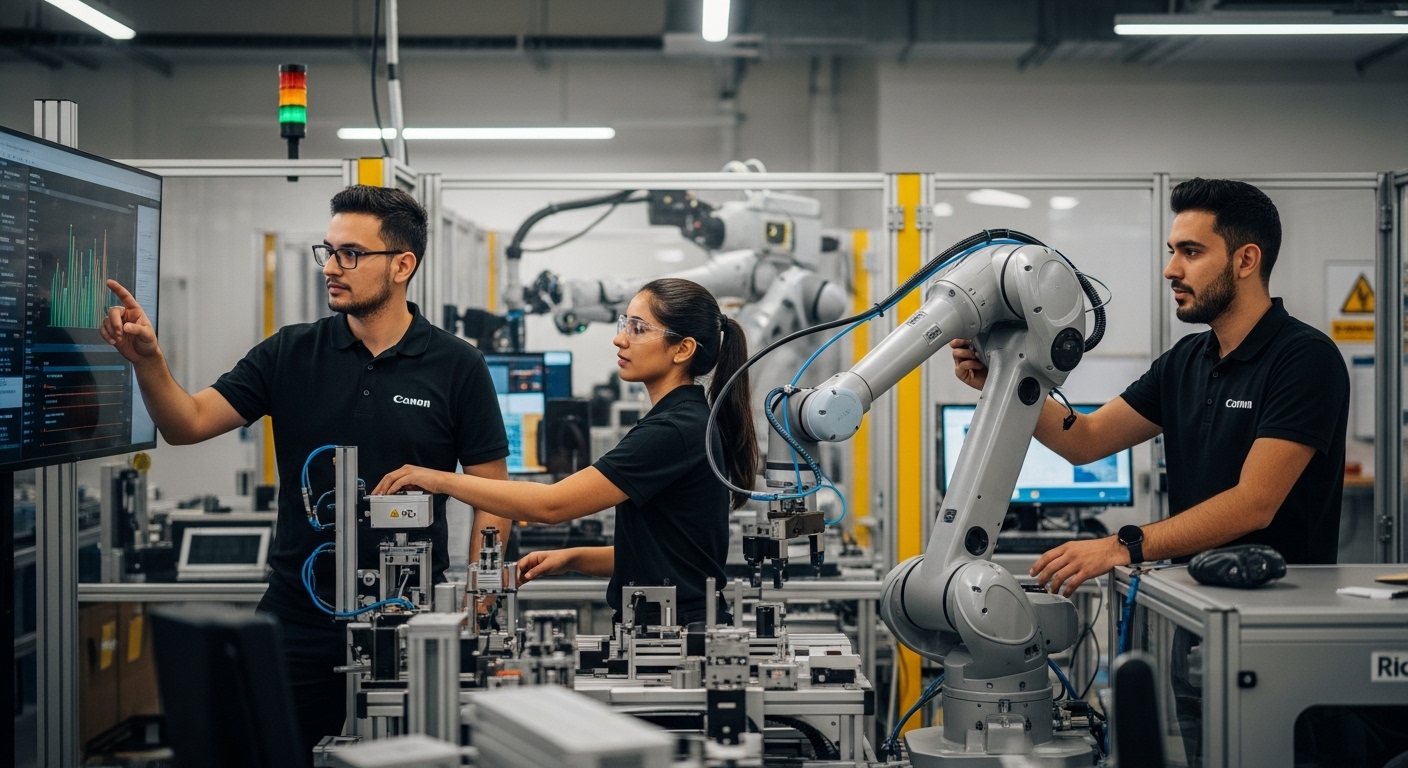
Industrial automation has changed the way South African companies run their operations. Research shows that businesses using these advanced systems can see up to 40 percent higher productivity and lower long term costs. You would think this means robots are replacing everyone. Actually, it is transforming the workforce in a much more surprising way by freeing people from repetitive jobs so they can focus on big picture solutions and innovation.
Table of Contents
- Improved Efficiency And Productivity
- Cost Reduction Over Time
- Enhanced Safety In The Workplace
- Better Quality Control And Consistency
- Real-Time Data And Analytics
- Greater Flexibility And Scalability
- Faster Return On Investment
Quick Summary
| Takeaway | Explanation |
|---|---|
| Invest in Automation for Efficiency | Industrial automation significantly enhances operational efficiency and productivity by minimizing manual processes and optimizing resource allocation. |
| Long-Term Cost Savings | Although initial costs may be high, automation leads to reduced labor expenses and optimized resource use over time, resulting in substantial financial benefits. |
| Enhance Workplace Safety | Automated systems reduce human exposure to hazardous environments, improving overall workplace safety through intelligent monitoring and risk management protocols. |
| Achieve Consistent Quality Control | Automation ensures precision and consistency in production, dramatically improving quality control through real-time monitoring and immediate corrective actions. |
| Leveraging Real-Time Analytics | The integration of real-time data analytics allows for immediate decision-making, enhancing performance tracking and predictive maintenance capabilities. |
1: Improved Efficiency and Productivity
Industrial automation represents a transformative approach for businesses seeking to enhance operational performance. By integrating advanced technologies and intelligent systems, companies can dramatically improve their efficiency and productivity across multiple operational domains.
According to research from the South African Journal of Economic and Management Sciences, organizations adopting industrial automation technologies experience significant gains in overall productivity. These technological interventions enable businesses to streamline complex processes, reduce manual interventions, and optimize resource allocation.
The core industrial automation benefits center on several key strategic advantages:
- Faster Production Cycles: Automated systems operate continuously without human fatigue
- Consistent Quality Output: Precision machinery reduces human error and maintains uniform product standards
- Reduced Operational Downtime: Intelligent monitoring systems detect and address potential issues proactively
Implementing industrial automation requires a strategic approach. Businesses must carefully assess their existing workflows, identify potential automation opportunities, and develop a phased implementation strategy. This approach ensures smooth technology integration and minimizes disruption to existing operations.
Technological advancements have made automation more accessible and adaptable across various industrial sectors. From manufacturing to logistics, automated systems can handle repetitive tasks with remarkable speed and accuracy. By replacing manual processes with intelligent machinery, companies can allocate human resources to more complex, strategic responsibilities that require creative problem solving and critical thinking.
While initial investment costs might seem substantial, the long term returns on industrial automation are substantial. Reduced labor expenses, improved product consistency, and enhanced operational efficiency translate into significant competitive advantages for forward thinking businesses.
The ultimate goal of industrial automation is not to replace human workers but to empower them. By removing mundane, repetitive tasks, businesses can create more engaging work environments that allow employees to focus on innovation, strategy, and complex problem solving.
2: Cost Reduction Over Time
Industrial automation represents a strategic investment that delivers substantial financial benefits through progressive cost reduction mechanisms. By systematically replacing manual processes with intelligent technological solutions, businesses can achieve significant economic advantages over extended operational periods.
According to research by Durban University of Technology, organizations implementing automation technologies experience measurable cost savings across multiple operational dimensions. These financial benefits emerge through several strategic channels:
- Reduced Labor Expenses: Automated systems minimize human resource requirements
- Lower Error Rates: Precision machinery reduces costly production mistakes
- Optimized Resource Allocation: Intelligent systems enhance overall operational efficiency
The initial investment in industrial automation might appear substantial. However, businesses quickly realize substantial financial returns through decreased operational expenses. Automated systems operate with remarkable consistency, consuming fewer resources and generating more predictable output compared to traditional manual processes.
Long Term Financial Strategies become more achievable when organizations integrate advanced automation technologies. These systems enable businesses to:
- Track precise operational metrics
- Identify potential efficiency improvements
- Make data driven financial decisions
Energy consumption represents another critical area where industrial automation delivers cost reductions. Modern automated systems are designed with energy efficiency as a core consideration, utilizing advanced technologies that minimize power consumption while maintaining high performance standards.
Workforce training expenses also decrease significantly with automation implementation. Once intelligent systems are integrated, ongoing training requirements become more streamlined and focused on advanced technological management rather than repetitive manual skill development.
Strategic cost reduction through industrial automation is not about eliminating human workers but about redistributing human talent towards more complex, value adding activities. By investing in intelligent technological solutions, businesses create a more sustainable, economically efficient operational environment that adapts quickly to changing market demands.
3: Enhanced Safety in the Workplace
Industrial automation represents a revolutionary approach to workplace safety, providing sophisticated technological solutions that dramatically reduce human exposure to hazardous working environments. By integrating intelligent systems and advanced machinery, businesses can create safer operational ecosystems that protect workers and minimize potential risks.
According to the South African Minister of Employment and Labour, workplace safety regulations demand proactive risk management strategies. Industrial automation directly supports these objectives by systematically eliminating human involvement in dangerous tasks.
Key safety advantages of industrial automation include:
- Reduced Human Exposure: Robotic systems handle high risk tasks
- Precision Monitoring: Advanced sensors detect potential hazards instantly
- Consistent Safety Protocols: Automated systems maintain uniform safety standards
Technological Interventions transform traditional safety approaches by introducing intelligent risk management mechanisms. Automated machinery can operate in environments with extreme temperatures, toxic substances, or physically demanding conditions that would be dangerous for human workers.
Machines equipped with sophisticated sensors can continuously monitor workplace conditions, detecting potential safety risks before they escalate. These systems provide real time data analysis, enabling immediate interventions and preventing potential accidents.
Industrial automation also supports comprehensive safety documentation and compliance tracking. Intelligent systems automatically record operational parameters, safety incidents, and maintenance requirements, creating transparent and accountable safety management frameworks.
Beyond physical protection, automation contributes to psychological safety by reducing worker stress associated with dangerous tasks. Employees can be reassigned to roles that require creativity, strategic thinking, and complex problem solving, thereby improving overall workplace satisfaction and mental well being.
The ultimate goal of industrial automation in safety management is not to replace human workers but to create a collaborative environment where technology protects and empowers employees. By leveraging advanced technological solutions, businesses can develop workplace cultures that prioritize human welfare while maintaining high operational efficiency.
4: Better Quality Control and Consistency
Industrial automation introduces unprecedented levels of precision and uniformity in manufacturing processes, transforming how businesses approach quality control and product consistency. By replacing manual interventions with intelligent technological systems, organizations can achieve remarkable standards of production reliability.
According to research from the South African Journal of Economic and Management Sciences, artificial intelligence and automated technologies play a critical role in enhancing manufacturing quality control mechanisms. These advanced systems provide continuous monitoring, instantaneous data analysis, and immediate corrective actions.
Key advantages of automated quality control include:
- Real Time Monitoring: Instant detection of potential manufacturing variations
- Precise Measurement: Microscopic accuracy in product assessment
- Consistent Performance: Elimination of human error and fatigue
Technological Precision enables businesses to establish stringent quality benchmarks that remain consistently achievable. Automated systems can perform hundreds of quality checks per minute, far exceeding human capabilities in detecting minute discrepancies.
Intelligent machinery utilizes advanced sensors and algorithms to measure product dimensions, material composition, and structural integrity with unparalleled accuracy. These technologies can identify potential defects or variations that might be imperceptible to human inspectors, ensuring only products meeting exact specifications reach final production stages.
Automated quality control systems generate comprehensive digital records of every production cycle. This documentation provides traceable evidence of product quality, supporting compliance requirements and enabling continuous process improvement. Manufacturers can analyze these detailed records to identify patterns, predict potential issues, and refine production methodologies.
Beyond immediate quality improvements, these technological interventions contribute to building stronger customer trust. Consistent, high quality products demonstrate a commitment to excellence and reliability, ultimately enhancing brand reputation and competitive positioning in the marketplace.
The integration of industrial automation in quality control represents more than technological advancement. It signifies a strategic approach to manufacturing that prioritizes precision, reliability, and continuous improvement across all operational domains.
5: Real-Time Data and Analytics
Industrial automation transforms data collection and analysis into a powerful strategic tool, enabling businesses to make instantaneous, informed decisions. By integrating sophisticated monitoring systems, organizations can capture, process, and interpret operational data with unprecedented speed and accuracy.
According to Statistics South Africa’s digital transformation strategy, technological advancements are revolutionizing how businesses collect and utilize data. Real time analytics provide immediate insights into complex operational processes, allowing for rapid strategic adjustments.
Key benefits of real time data and analytics include:
- Instant Performance Tracking: Continuous monitoring of operational metrics
- Predictive Maintenance: Early detection of potential equipment failures
- Strategic Decision Making: Data driven insights for immediate interventions
Technological Integration enables businesses to transform raw operational data into actionable intelligence. Intelligent systems continuously collect information from multiple sources, creating comprehensive dashboards that provide holistic views of organizational performance.
Advanced sensors and interconnected machinery generate massive volumes of data every second. These technological ecosystems can identify subtle patterns, predict potential disruptions, and recommend proactive solutions before issues escalate. Machine learning algorithms analyze historical and current data, enabling more sophisticated predictive capabilities.
The convergence of automation and data analytics creates powerful feedback loops. Each operational cycle generates valuable information that can be immediately analyzed and used to optimize future processes. This continuous improvement mechanism allows businesses to become increasingly efficient and responsive to changing market conditions.
Companies can now track key performance indicators in real time, understanding exactly how each component of their production system contributes to overall organizational goals. This granular level of insight was previously impossible with traditional manual monitoring methods.
Ultimately, real time data and analytics represent more than technological capability. They signify a fundamental shift in how businesses understand, manage, and optimize their operational ecosystems, transforming data from a passive record into an active strategic asset.
6: Greater Flexibility and Scalability
Industrial automation provides businesses with unprecedented capabilities to adapt and scale operations rapidly in response to dynamic market demands. By implementing intelligent technological systems, organizations can transform their production capabilities, creating more responsive and versatile manufacturing environments.
According to research from the South African Journal of Industrial Engineering, advanced automation technologies enable businesses to develop highly adaptable production systems that can quickly reconfigure to accommodate diverse product requirements and changing market conditions.
Key advantages of enhanced flexibility and scalability include:
- Rapid Production Reconfiguration: Swift adaptation to changing market demands
- Modular System Design: Easy integration of new technological components
- Customizable Manufacturing Processes: Ability to produce varied product specifications
Technological Adaptability allows businesses to move beyond traditional manufacturing constraints. Intelligent automated systems can be programmed to handle multiple product variations with minimal manual intervention, reducing setup times and increasing overall operational efficiency.
Modern automation technologies feature plug and play capabilities, enabling businesses to incrementally upgrade their systems without complete infrastructure overhauls. This approach allows for continuous technological evolution, ensuring that manufacturing capabilities remain cutting edge and competitive.
Automated systems provide remarkable scalability, allowing businesses to increase or decrease production volumes quickly. During peak demand periods, intelligent machinery can automatically adjust operational parameters to maintain optimal performance. Conversely, during slower periods, systems can reduce energy consumption and operational costs.
The integration of flexible automation supports mass customization strategies. Businesses can now offer personalized products without sacrificing production efficiency, meeting increasingly sophisticated consumer expectations for tailored solutions.
Ultimately, greater flexibility and scalability represent more than technological capabilities. They signify a strategic approach to manufacturing that prioritizes adaptability, responsiveness, and continuous innovation in an ever changing global marketplace.
7: Faster Return on Investment
Industrial automation represents a strategic financial investment that enables businesses to accelerate their economic performance and achieve more rapid returns compared to traditional operational models. By integrating intelligent technological solutions, organizations can optimize resource utilization, reduce operational expenses, and generate substantial financial benefits in shorter time frames.
According to the Section 12I Tax Allowance Incentive, businesses implementing advanced technological systems can access significant financial support mechanisms that enhance investment recovery potential. These incentives are specifically designed to encourage technological innovation and industrial modernization.
Key strategies for achieving faster investment returns include:
- Reduced Operational Costs: Minimizing ongoing expenses through automated processes
- Enhanced Productivity: Generating more output with less resource consumption
- Continuous Performance Optimization: Implementing intelligent systems that improve efficiency
Financial Performance Acceleration occurs through multiple interconnected mechanisms. Automated systems operate with higher precision, lower error rates, and consistent performance levels that traditional manual processes cannot match. This translates directly into measurable economic advantages.
Technological investments generate compounding benefits that extend far beyond initial implementation costs. Intelligent systems continuously learn and adapt, becoming more efficient over time. Each operational cycle produces incremental improvements, creating a virtuous cycle of performance enhancement and cost reduction.
Automation technologies enable businesses to scale operations more efficiently, allowing rapid response to market opportunities. Quick reconfiguration capabilities mean organizations can pivot production strategies without substantial additional investment, further accelerating potential returns.
The financial benefits of industrial automation extend beyond immediate operational improvements. Businesses gain competitive advantages through enhanced capabilities, improved product quality, and more responsive manufacturing processes. These strategic advantages translate into increased market share and potential revenue growth.
Below is a comprehensive table summarising the seven key industrial automation benefits discussed in the article, offering South African businesses a clear overview of the operational and strategic advantages.
| Benefit | Description | Key Insights for SA Businesses |
|---|---|---|
| Improved Efficiency & Productivity | Automation accelerates production cycles, reduces manual tasks, and boosts consistency across operations. | Empowers workers to focus on innovation and problem solving. |
| Cost Reduction Over Time | Reduces labour expenses, error rates, and optimises resource use—even with high initial investments. | Enables sustainable long-term financial strategies. |
| Enhanced Workplace Safety | Lowers human exposure to hazards and ensures consistent safety standards via smart monitoring systems. | Supports compliance and employee well-being. |
| Better Quality Control & Consistency | Improves precision, real-time monitoring, and uniformity in products using advanced sensors and analytics. | Builds stronger client trust and brand reputation. |
| Real-Time Data & Analytics | Enables instant insights for performance tracking, maintenance planning, and speedy data-driven decisions. | Transforms raw data into strategic value. |
| Greater Flexibility & Scalability | Allows fast reconfiguration, modular upgrades, and scalable outputs to adapt to shifting market demands. | Facilitates mass customisation and operational agility. |
| Faster Return on Investment | Offers quicker payback through reduced operational costs, productivity gains, and continuous incremental improvement. | Gains government incentives and accelerates competitiveness. |
Ultimately, faster return on investment represents more than a financial metric. It signifies a transformative approach to business strategy that prioritizes technological innovation, efficiency, and continuous improvement as fundamental drivers of economic success.
Unlock True Manufacturing Efficiency with Genesis Steel’s Quality Solutions
Are you ready to achieve the fast production cycles, exceptional product consistency, and real-time operational insights discussed in “7 Key Industrial Automation Benefits for Your Business”? The transformation starts by choosing supply partners who understand the demands of automated manufacturing. At Genesis Steel, we supply top-quality hot-rolled steel sheets and plates in a variety of grades and sizes. This means your automated systems always have reliable, high-grade materials for efficient processing and less downtime.
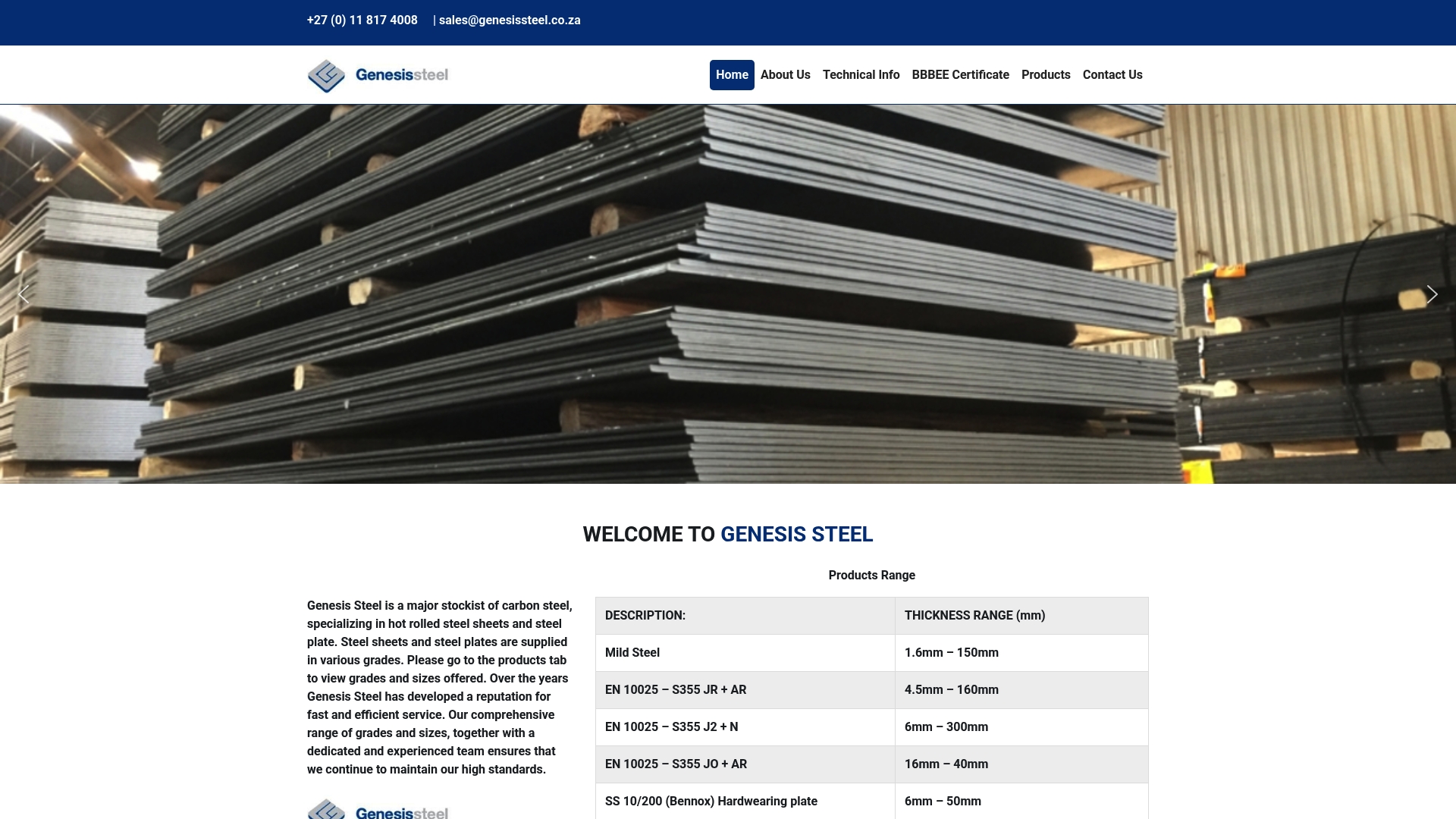
Empower your team to focus on strategic growth rather than supply worries. By partnering with Genesis Steel, you gain access to fast and efficient service, a dedicated team, and a large inventory housed at our Gauteng facility. It is your chance to put the principles of advanced automation into practice with quality you can trust. Visit Genesis Steel and take the next step toward more productive, safer, and scalable operations. Secure the edge you need in today’s competitive market—reach out today for a tailored solution.
Frequently Asked Questions
What are the main benefits of industrial automation for businesses?
Industrial automation enhances efficiency and productivity, reduces operational costs, improves workplace safety, ensures better quality control, provides real-time data analytics, and offers greater flexibility and scalability for production processes.
How does industrial automation improve workplace safety?
Industrial automation reduces human exposure to hazardous tasks, employs precision monitoring systems to detect potential hazards, and maintains consistent safety protocols, thereby creating a safer work environment.
Can industrial automation help in reducing operational costs?
Yes, industrial automation can significantly lower operational costs by reducing labor expenses, decreasing error rates, optimizing resource allocation, and enhancing overall efficiency in production processes.
How does real-time data and analytics benefit automated systems?
Real-time data and analytics provide immediate insights into operational performance, enable predictive maintenance, and support strategic decision-making through data-driven insights, leading to more efficient business processes.