

Steel plates are the backbone of Gauteng’s industrial projects and one simple mistake in weight calculations could throw your whole budget off course. Now get this. Gauteng companies that use precise steel plate weight calculations have seen up to 15% reduction in material waste. The real surprise is that mastering these calculations is not just about maths or engineering – it is the key to cost control, safety, and staying ahead of your competition.
Table of Contents
- Understanding Steel Plate Specifications
- Step-By-Step Steel Plate Weight Calculation
- Key Benefits For Gauteng Industrial Projects
- Choosing The Right Steel Plate For Your Needs
Quick Summary
| Takeaway | Explanation |
|---|---|
| Understand steel specs for weight calculations | Knowing material composition and dimensions is crucial for accurate steel plate weight assessments. |
| Use precise formulas for weight calculation | Apply the formula: Weight = Density × Thickness × Length × Width for reliable results. |
| Consider industry-specific needs | Different sectors have unique plate requirements affecting weight, such as mining versus construction. |
| Enhance cost management and procurement | Accurate weight calculations improve budgeting, inventory control, and reduce material waste significantly. |
| Select steel plates based on project requirements | Evaluate performance characteristics and environmental conditions to choose suitable steel plates. |
Understanding Steel Plate Specifications
Steel plate specifications form the critical foundation for accurate weight calculations and industrial applications across Gauteng’s manufacturing and engineering sectors. These specifications provide essential details about material composition, dimensions, and mechanical properties that directly impact weight determination and structural performance.
Chemical Composition and Mechanical Properties
Understanding steel plate specifications begins with analyzing their fundamental characteristics. According to ASTM International, the standard specification for carbon structural steel plates defines precise requirements for chemical composition and mechanical properties. These specifications determine critical factors such as tensile strength, yield point, and elongation, which are fundamental to calculating steel plate weight accurately.
For instance, carbon content, manganese percentage, and other alloying elements significantly influence the plate’s density and overall weight. Engineers and procurement managers must carefully review these specifications to ensure the selected steel plates meet project requirements. The chemical composition directly affects the plate’s weight per square meter, making it a crucial consideration in weight calculations.
Dimensional Tolerances and Weight Calculations
Precision in dimensional measurements is paramount for accurate steel plate weight calculation. Research from the South African Bureau of Standards highlights the importance of understanding thickness, width, and length tolerances. These dimensional specifications can vary slightly between manufacturing batches, which means weight calculations must account for potential variations.
Typical steel plate specifications include:
- Thickness range: Typically from 3mm to 100mm
- Width specifications: Standard sizes ranging from 1000mm to 3000mm
- Length variations: Customizable lengths based on industrial requirements
Each of these dimensional aspects directly impacts the final weight calculation. Procurement specialists and engineers must pay close attention to these specifications to ensure precise material ordering and project planning.

Industry-Specific Plate Specifications
Gauteng’s diverse industrial landscape requires specialized steel plate specifications tailored to specific sector needs. Our comprehensive guide on steel plate types provides deeper insights into industry-specific requirements. Different sectors such as mining, construction, and manufacturing demand unique steel plate characteristics that influence weight calculations.
To help readers quickly compare how steel plate requirements differ across Gauteng’s major industrial sectors, the following table summarises key specification priorities for mining, construction, and manufacturing as discussed in the article.
| Industry Sector | Key Specification Priority | Typical Plate Requirement |
|---|---|---|
| Mining | Extreme abrasion & heavy loads | High wear resistance and strength, specific alloy composition |
| Construction | Structural integrity & load-bearing | Plates with superior load capacity and mechanical properties |
| Manufacturing | Precision and consistent properties | Uniform dimensions, weldability, and surface finish |
For example, plates used in heavy industrial applications might require higher strength and corrosion resistance, which can affect their chemical composition and subsequently their weight. Understanding these nuanced specifications ensures accurate material selection and precise weight estimation for complex engineering projects.
Mastering steel plate specifications is not just about numbers. It represents a critical skill for professionals in Gauteng’s industrial sectors, enabling precise material selection, accurate cost estimation, and efficient project planning.
Step-by-Step Steel Plate Weight Calculation
Accurate steel plate weight calculation is a critical process for industrial professionals in Gauteng, requiring precision and systematic methodology. The calculation process involves understanding specific parameters and applying standardized mathematical formulas to determine exact material weight.
Basic Weight Calculation Formula
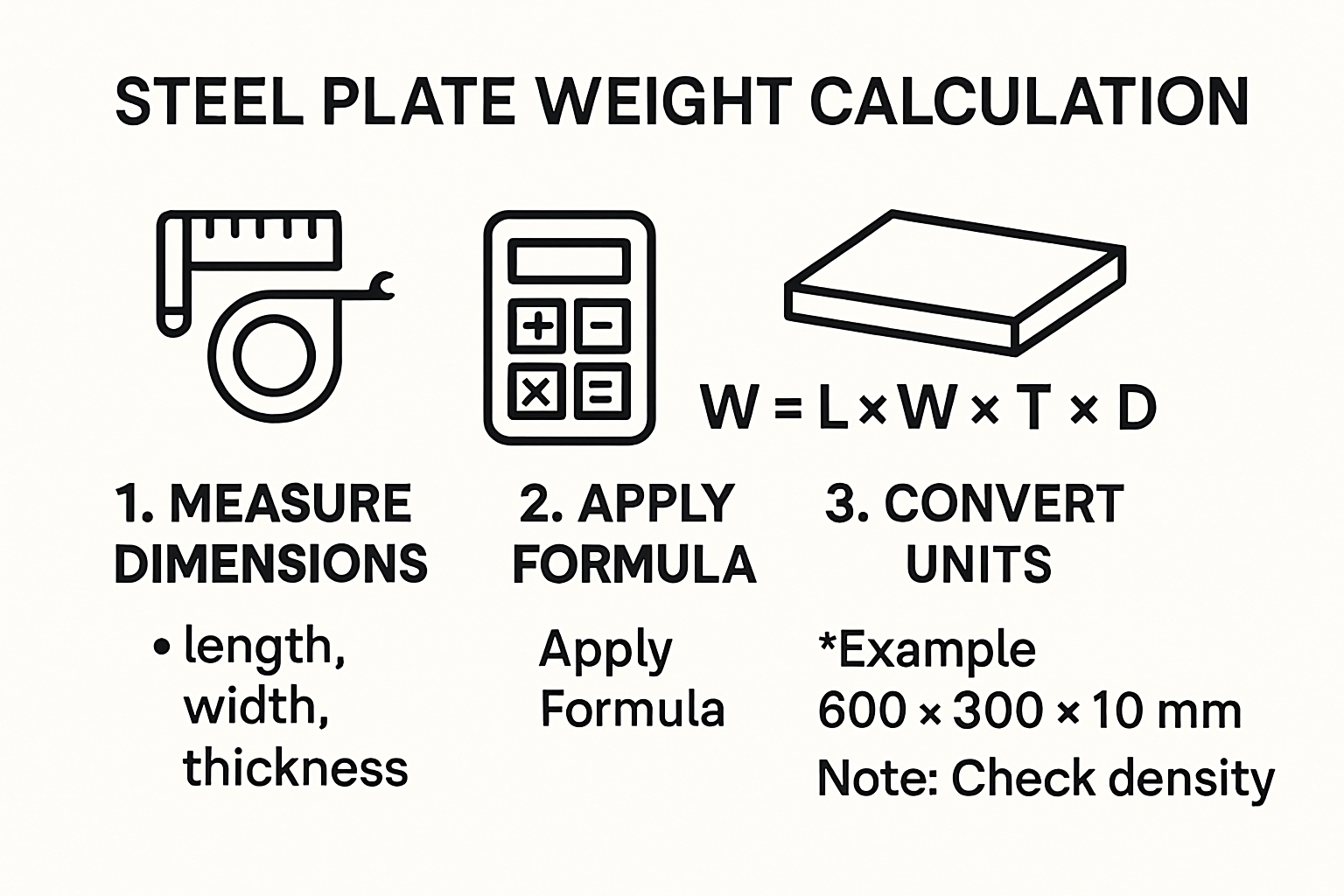
According to SteelConstruction.info, the fundamental weight calculation for steel plates relies on three primary variables: density, thickness, and surface area. The standard formula is straightforward: Weight = Density × Thickness × Length × Width.
For carbon steel, the standard density is approximately 7.85 grams per cubic centimeter. This means for every cubic centimeter of steel, the weight will be 7.85 grams. Engineers and procurement specialists must use precise measurements to ensure accurate calculations. The formula allows for quick and reliable weight estimation across various plate dimensions.
Practical Calculation Example
Let’s walk through a practical example to demonstrate the steel plate weight calculation process. Consider a steel plate with the following specifications:
- Length: 2 meters
- Width: 1 meter
- Thickness: 10 millimeters
Using the standard density of 7.85 g/cm³, the calculation would proceed as follows:
- Convert dimensions to centimeters
- Multiply length × width × thickness
- Multiply the result by the steel density
Below is a step-by-step process table outlining how to calculate steel plate weight, reflecting the systematic methodology described in the practical calculation example.
| Step | Action | Details |
|---|---|---|
| 1 | Convert dimensions | Change length, width, thickness to centimetres (if initially in metres/mm) |
| 2 | Multiply length × width × thickness | Calculate the plate’s total volume in cubic centimetres |
| 3 | Multiply volume by steel density | Use standard density: 7.85g/cm³ for carbon steel |
| 4 | Compute final weight | Result is steel plate weight in grams (convert to kilograms if needed) |
This methodical approach ensures consistent and reliable weight calculations for industrial applications across Gauteng’s manufacturing sectors. Our comprehensive guide on steel plate types provides additional insights into specialized plate characteristics that might influence weight calculations.
Advanced Considerations in Weight Calculation
Professionals must also account for additional factors that can subtly impact steel plate weight. Surface treatments, specific alloy compositions, and manufacturing tolerances can introduce minor variations in the final weight calculation. Temperature and environmental conditions might also marginally affect the precise weight, though these variations are typically minimal in controlled industrial environments.
For extremely precise calculations, specialized digital tools and calibrated weighing equipment can provide more accurate measurements. However, the fundamental formula remains a reliable method for quick and efficient weight estimation in most industrial contexts.
Mastering steel plate weight calculation represents more than a technical skill. It is a critical competency that enables accurate project planning, cost estimation, and material procurement for Gauteng’s diverse industrial landscape. Professionals who understand these calculation methods can make more informed decisions, optimize resource allocation, and ensure project efficiency.
Key Benefits for Gauteng Industrial Projects
Accurate steel plate weight calculation provides transformative advantages for industrial projects across Gauteng’s dynamic manufacturing and engineering sectors. By implementing precise weight determination strategies, companies can unlock significant operational efficiencies and strategic advantages.
Cost Management and Procurement Optimization
According to South African Manufacturing Insights, precise weight calculations directly impact material procurement strategies. Accurate weight measurements enable procurement managers to:
- Budget Precision: Calculate exact material costs with minimal variance
- Inventory Control: Optimize storage and transportation logistics
- Tender Preparation: Develop more competitive and accurate project proposals
Companies that master steel plate weight calculation can reduce material waste by up to 15%, translating into substantial cost savings across large-scale industrial projects. This precision allows for more strategic resource allocation and improved financial planning.
Structural Integrity and Engineering Performance
Engineering professionals recognize that accurate weight calculations are fundamental to ensuring structural integrity. Structural Engineering Research Network emphasizes that precise weight determination influences critical design parameters such as load-bearing capacity, stress distribution, and overall mechanical performance.
In sectors like mining, construction, and heavy manufacturing, even minor weight calculation errors can compromise project safety and structural reliability. Gauteng’s industrial landscape demands exacting standards, where each kilogram matters in complex engineering applications.
Project Planning and Logistical Efficiency
Comprehensive weight calculations streamline project planning across multiple industrial domains. Our specialized guide on steel plate applications highlights how precise weight measurements impact transportation, equipment selection, and project timeline management.
Industrial projects benefit from weight calculations through:
- Transportation Planning: Accurate load management for trucks and shipping
- Equipment Selection: Matching machinery capabilities with material specifications
- Time Management: Reducing unexpected delays caused by material miscalculations
Professionals who invest time in mastering steel plate weight calculation methodologies position themselves as strategic assets in Gauteng’s competitive industrial environment. The ability to provide precise, reliable weight information becomes a significant differentiator in project bidding, execution, and overall operational excellence.
Beyond technical calculations, understanding steel plate weights represents a holistic approach to industrial project management. It demonstrates a commitment to precision, efficiency, and strategic thinking that distinguishes top-tier engineering and manufacturing professionals in Gauteng’s dynamic industrial landscape.
Choosing the Right Steel Plate for Your Needs
Selecting the appropriate steel plate is a critical decision for industrial professionals in Gauteng, requiring a comprehensive understanding of project requirements, material characteristics, and performance specifications. The selection process involves careful evaluation of multiple factors to ensure optimal performance and cost-effectiveness.
Material Composition and Performance Characteristics
According to research published in Frontiers in Built Environment, the structural performance of steel plates varies significantly based on their composition and manufacturing process. Engineers must consider critical factors such as:
- Tensile strength
- Corrosion resistance
- Weldability
- Impact resistance
Our comprehensive guide to steel plate types provides deeper insights into the nuanced selection process. Different industrial applications demand specific material properties. For instance, mining projects require plates with exceptional wear resistance, while construction sectors might prioritize plates with superior structural integrity and load-bearing capabilities.
Environmental and Structural Considerations
The National Academies Press highlights the importance of understanding section loss and material degradation. Industrial professionals must evaluate environmental conditions that could impact steel plate performance, including:
- Exposure to corrosive environments
- Temperature fluctuations
- Mechanical stress levels
- Potential chemical interactions
A research study in biotechnology emphasizes the critical differences in material behavior under various loading conditions. High-strength steel plates, for example, demonstrate unique shrinkage and deflection characteristics that must be carefully considered during the selection process.
Application-Specific Selection Criteria
Gauteng’s diverse industrial landscape requires a nuanced approach to steel plate selection. Different sectors present unique challenges:
- Mining: Plates must withstand extreme abrasion and heavy loads
- Construction: Emphasis on structural integrity and load-bearing capacity
- Manufacturing: Precision and consistent material properties are crucial
Professionals must look beyond basic specifications. The ideal steel plate selection process involves:
- Comprehensive project requirement analysis
- Detailed material property assessment
- Long-term performance evaluation
- Cost-effectiveness consideration
Ultimately, choosing the right steel plate transcends technical specifications. It represents a strategic decision that impacts project reliability, safety, and overall economic performance. Industrial professionals who master this selection process position themselves as critical assets in Gauteng’s competitive industrial ecosystem.
The art of selecting the perfect steel plate combines technical expertise, strategic thinking, and a deep understanding of material science. It requires a holistic approach that considers immediate project needs and long-term performance expectations.
Frequently Asked Questions
What is the formula for calculating the weight of a steel plate?
The formula for calculating the weight of a steel plate is Weight = Density × Thickness × Length × Width. For carbon steel, the standard density is approximately 7.85 grams per cubic centimeter.
How do I ensure accurate weight calculations for steel plates?
To ensure accurate weight calculations, it is crucial to use precise measurements for thickness, length, and width, as well as to consider the steel plate’s density based on its material composition.
Why are steel plate specifications important in weight calculations?
Steel plate specifications are important because they provide critical information about chemical composition, mechanical properties, and dimensions, which directly affect weight determination and the structural performance of the plates.
What factors should I consider when selecting steel plates for industrial applications?
When selecting steel plates, consider factors such as material composition and performance characteristics, environmental conditions, and application-specific requirements to ensure optimal performance and cost-effectiveness.
Unlock Precision and Value with Expert Steel Plate Solutions
In Gauteng’s fast-paced industries, miscalculating steel plate weight can lead to costly overruns, wasted materials and strained project timelines. The article above showed how even a small calculation error can ripple across your entire project. If you are tired of uncertainty, let Genesis Steel be your partner in accuracy. Our team knows the difference precise weight calculations make. We deliver quality, reliability and a wide range of carbon steel plates to help you keep your projects on track. From tailored grades to on-demand stock and proven advice, you can rely on us for solutions that work as hard as you do. For more resources, visit our Uncategorised Archives – Genesis Steel or browse our full offering.
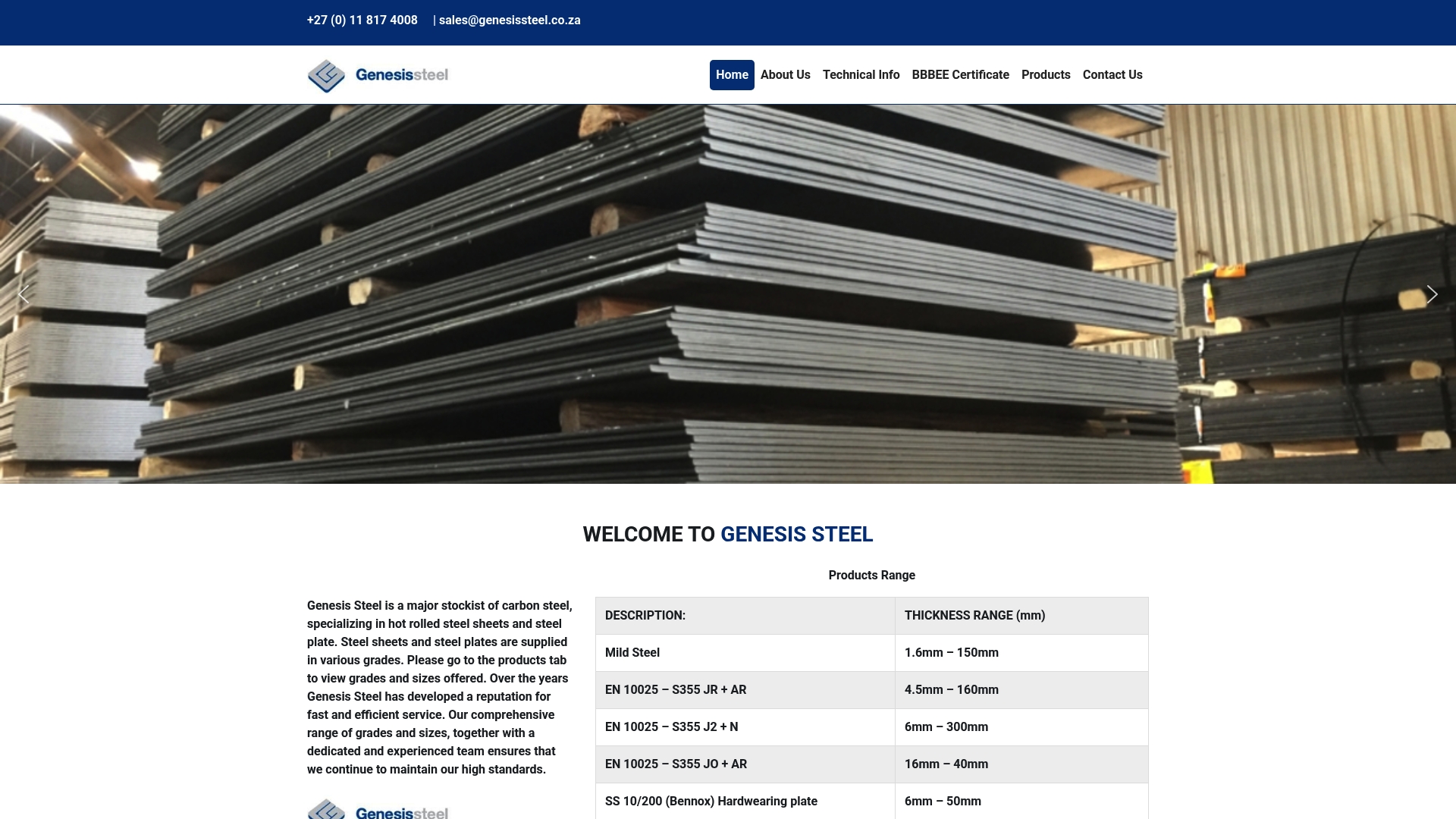
Experience the Genesis Steel standard today. Connect with our experts at Genesis Steel for fast quotations, technical support and personalised service. Make your next industrial project a success with quality steel, accurate weights and a reputation you can trust.