

Steel plate load capacity sits at the heart of every safe structure and heavy piece of equipment you see around South Africa.
Many builders reckon it is all about choosing the thickest plate and hoping for the best. But the real shock comes from how different steel grades, temperature swings, and stress conditions can change load capacity by more than 30 percent between projects. It turns out even small details in material makeup or plate geometry can swing the outcome between lifelong reliability and costly disaster.
Table of Contents
- What Is Steel Plate Load Capacity And Why It Matters
- The Science Behind Load Capacity Of Steel Plates
- Factors Influencing Steel Plate Load Capacity
- Applications Of Steel Plate Load Capacity In Various Industries
- Understanding Load Testing And Standards For Steel Plates
Quick Summary
| Takeaway | Explanation |
|---|---|
| Steel plate load capacity is crucial. | It defines the maximum weight a steel plate can bear without failure, impacting safety in various industries. |
| Consider key factors for assessment. | Material strength, thickness, geometry, and environmental stress are essential in calculating load capacity. |
| Dynamic loading must be evaluated. | Engineers must analyze stress distributions and potential fatigue when assessing performance under various loads. |
| Adhere to standard testing protocols. | Consistent methods ensure accurate evaluation of steel plates, reinforcing quality and safety in engineering. |
| Utilize advanced modeling techniques. | Modern computational methods enhance predictions of load capacity, ensuring reliable structural performance. |
What is Steel Plate Load Capacity and Why It Matters
Steel plate load capacity represents the maximum weight or force a steel plate can safely support without experiencing structural failure or permanent deformation. This critical engineering parameter determines the structural integrity and performance of steel plates across multiple industrial applications, from construction and manufacturing to heavy machinery and infrastructure development.
Understanding Load Capacity Fundamentals
Load capacity is not a simple static measurement but a complex calculation involving multiple interconnected factors. Material strength, plate thickness, geometric configuration, and anticipated stress conditions all contribute to determining how much weight a steel plate can reliably carry. Explore our comprehensive guide on steel plate specifications to understand these critical parameters.
Key considerations in assessing steel plate load capacity include:
- Yield strength of the specific steel grade
- Plate thickness and dimensional characteristics
- Environmental and operational stress factors
- Potential dynamic loading conditions
Industrial Significance of Load Capacity Calculations
In industrial settings, understanding steel plate load capacity is not merely an academic exercise but a critical safety and engineering requirement. According to research from Purdue University, precise load capacity calculations prevent catastrophic structural failures that could result in significant economic losses and potential human safety risks.
Engineers and project managers rely on accurate load capacity assessments to:
- Design structurally sound infrastructure
- Prevent potential material failure
- Optimize material usage and cost efficiency
- Ensure long-term structural performance
By comprehensively understanding steel plate load capacity, industries can make informed decisions about material selection, structural design, and operational safety, ultimately contributing to more reliable and efficient engineering solutions.
The Science Behind Load Capacity of Steel Plates
The scientific understanding of steel plate load capacity involves complex engineering principles that integrate material science, structural mechanics, and advanced computational modeling. These interdisciplinary approaches enable precise predictions of how steel plates will perform under various loading conditions.
Material Properties and Structural Mechanics
Load capacity fundamentally depends on intrinsic material characteristics and structural configurations. Yield strength, elastic modulus, and metallurgical composition play critical roles in determining a steel plate’s load-bearing capabilities. Learn more about steel plate engineering principles to understand these fundamental parameters.
Key material science considerations include:
- Atomic structure and crystalline arrangements
- Grain boundary interactions
- Molecular bonding strengths
- Thermal and mechanical stress responses
Computational Modeling and Predictive Analysis
Modern engineering leverages sophisticated computational techniques to simulate and predict steel plate load capacity. According to research from the National Institute of Standards and Technology, finite-element modeling allows engineers to create highly accurate virtual representations of steel plate behavior under complex loading scenarios.
Advanced predictive analysis techniques involve:
- Finite-element method simulations
- Stress-strain curve evaluations
- Dynamic loading scenario predictions
- Probabilistic failure mode assessments
By integrating advanced computational models with rigorous material testing, engineers can develop comprehensive load capacity predictions that ensure structural safety and optimize material performance across diverse industrial applications.
Factors Influencing Steel Plate Load Capacity
Steel plate load capacity is a nuanced engineering parameter influenced by multiple interconnected physical and mechanical variables. Understanding these complex factors enables precise prediction and optimization of structural performance across diverse industrial applications.
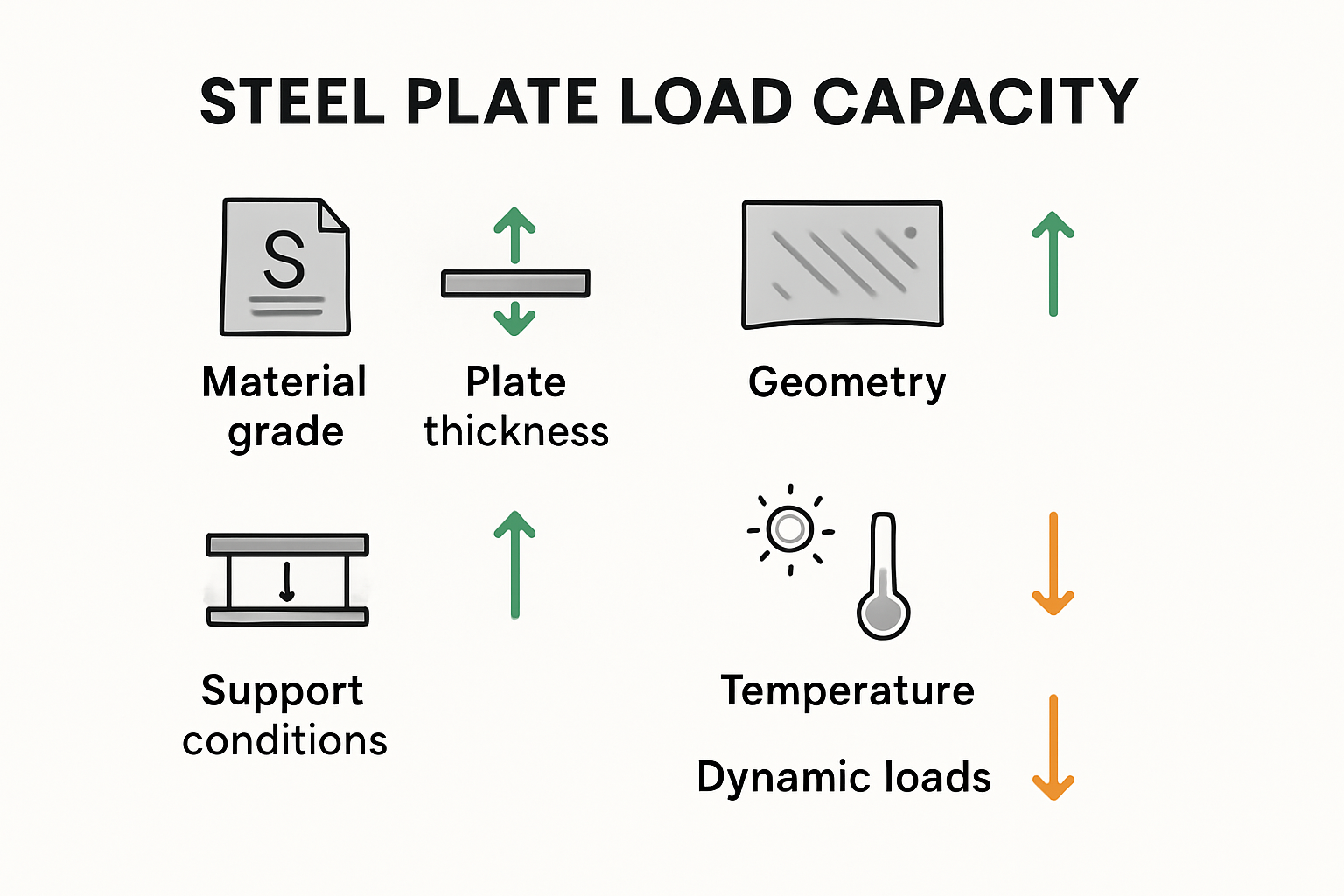
Below is a breakdown of the main factors that influence the load capacity of steel plates, helping you see how each plays a role in structural performance:
| Factor | Description |
|---|---|
| Material Strength | The yield strength and grade of steel, determining basic capacity |
| Plate Thickness | Thicker plates generally bear more load |
| Geometric Configuration | Plate dimensions, aspect ratios, and boundary supports |
| Environmental Stress Factors | Effects like temperature swings and corrosive environments |
| Dynamic Loading Conditions | Varying, repeated, or impact loads affecting fatigue |
| Heat Treatment and Alloy Composition | Processes and elements influencing structural properties |
| Support Conditions | How the plate is fixed or allowed to flex |
Material Composition and Structural Characteristics
Material composition represents the foundational determinant of load capacity. Different steel grades exhibit unique mechanical properties that directly impact load-bearing capabilities. Explore our detailed steel plate specifications guide to understand these critical variations.
Key material composition factors include:
- Chemical elemental ratios
- Metallurgical microstructure
- Heat treatment processes
- Alloying element concentrations
Geometric and Environmental Considerations
Geometric configuration and environmental conditions significantly influence steel plate load capacity. Plate thickness, width-to-thickness ratio, and support configurations play crucial roles in determining structural performance. According to research from the Federal Highway Administration, these geometric parameters directly impact load-bearing potential.
Critical geometric and environmental factors include:
- Plate dimensions and aspect ratios
- Support boundary conditions
- Temperature variations
- Potential corrosive environments
Dynamic Loading and Stress Analysis
Load capacity extends beyond static measurements, requiring comprehensive analysis of dynamic loading scenarios. Engineers must consider complex stress distributions, potential fatigue mechanisms, and probabilistic failure modes when evaluating steel plate performance. By integrating advanced computational modeling and empirical testing, professionals can develop robust load capacity predictions that ensure structural reliability and safety across challenging industrial environments.
Applications of Steel Plate Load Capacity in Various Industries
Steel plate load capacity plays a pivotal role across multiple industrial sectors, enabling complex engineering solutions and ensuring structural reliability in diverse applications. Understanding these nuanced load-bearing requirements helps engineers design safer, more efficient systems.
To make sense of the key differences between steel plate load capacity applications across industries, see the summary below:
| Industry Sector | Typical Applications | Load Capacity Focus |
|---|---|---|
| Construction & Infrastructure | Building supports, bridges, architectural frameworks | Long-term safety, seismic resistance |
| Heavy Manufacturing | Machinery frames, lifting gear, storage tanks | Preventing equipment failure |
| Specialized Engineering | Maritime, aerospace, renewable energy structures | Withstanding extreme/probabilistic loads |
| Mining & Extraction | Extraction equipment, transport structures | Resistance to dynamic, harsh conditions |
| Industrial Equipment | Industrial lifting, pressurised vessels | Reliable daily heavy loading |
Construction and Infrastructure Development
Structural engineering relies extensively on precise steel plate load capacity calculations. Bridges, high-rise buildings, and critical infrastructure depend on accurate load predictions to maintain safety and performance. Discover comprehensive steel plate engineering insights to understand these critical applications.
Key construction applications include:
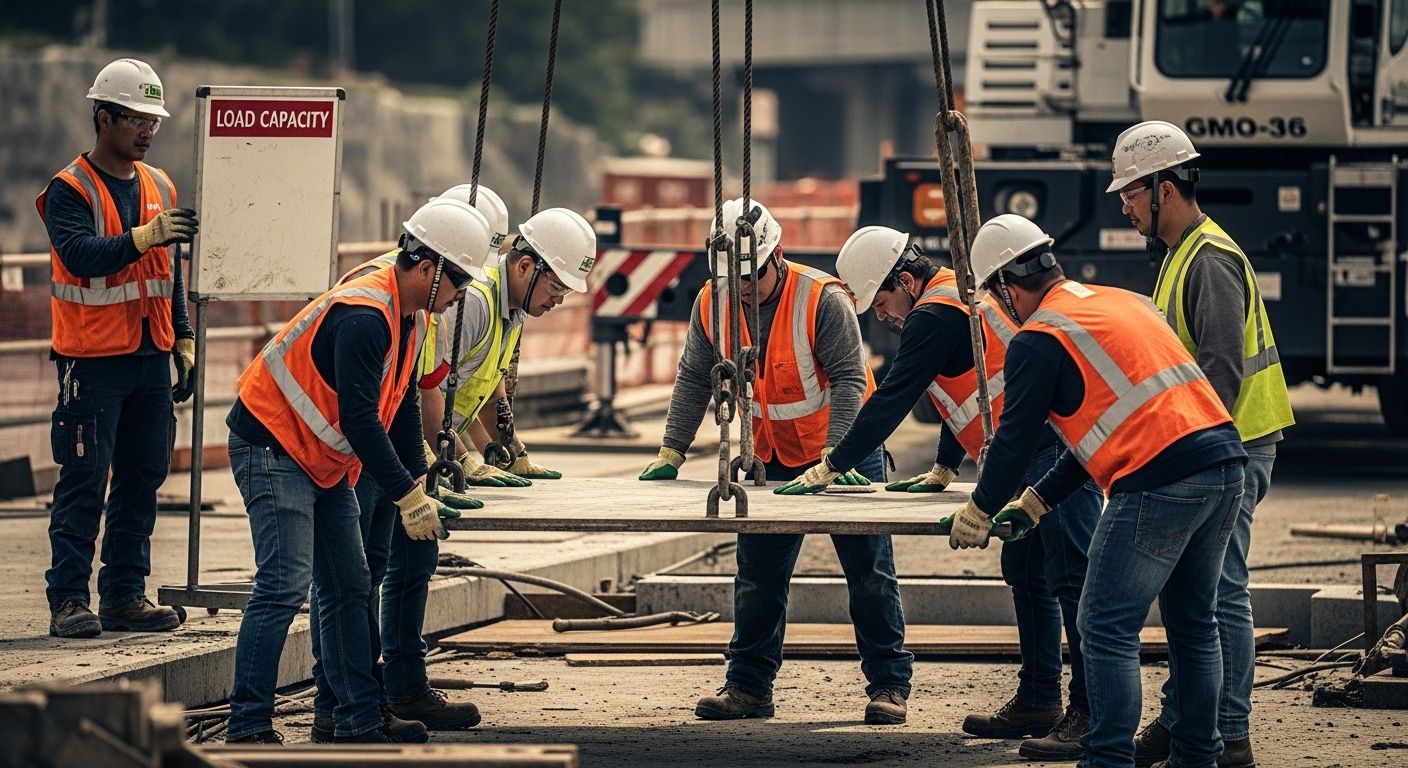
- Building foundation support systems
- Seismic reinforcement structures
- Bridge deck and support mechanisms
- Large-span architectural frameworks
Heavy Manufacturing and Industrial Equipment
Manufacturing sectors leverage steel plate load capacity principles to design robust machinery and equipment. According to research from the Federal Highway Administration, understanding load-bearing capabilities prevents catastrophic equipment failures and ensures operational safety.
Critical industrial applications involve:
- Heavy machinery structural components
- Industrial lifting and transportation equipment
- Pressure vessel and storage tank design
- Mining and extraction equipment frameworks
Specialized Engineering Solutions
Advanced engineering disciplines like aerospace, maritime, and renewable energy industries require sophisticated load capacity assessments. Engineers must integrate complex computational models with material science principles to develop innovative structural solutions that withstand extreme operational conditions. By continuously refining load capacity understanding, industries can push technological boundaries while maintaining rigorous safety standards.
Understanding Load Testing and Standards for Steel Plates
Load testing and standardization represent critical processes in ensuring the structural integrity and safety of steel plates across industrial applications. These systematic approaches provide engineers and manufacturers with comprehensive methodologies to validate and verify load-bearing capabilities.
Regulatory Testing Frameworks
Standardized testing protocols form the foundation of load capacity assessment. These rigorous frameworks establish consistent methods for evaluating steel plate performance under various stress conditions. Explore our comprehensive steel plate testing guide to understand these critical evaluation processes.
Key regulatory testing considerations include:
- Uniform testing methodology development
- Precise measurement protocols
- Comprehensive stress condition simulations
- Systematic documentation requirements
International Standards and Compliance
Industry-specific standards govern steel plate load testing across global engineering sectors. According to research from the American Iron and Steel Institute, these standards ensure consistent quality and safety benchmarks for structural materials.
Critical international standards address:
- Material performance specifications
- Load-bearing capacity verification
- Safety margin calculations
- Quality control protocols
Advanced Testing Methodologies
Modern load testing incorporates sophisticated computational modeling and empirical testing techniques. Engineers utilize advanced non-destructive evaluation methods, including ultrasonic testing, magnetic particle inspection, and finite element analysis, to assess steel plate load capacity with unprecedented precision. By integrating cutting-edge technologies with established scientific principles, professionals can develop increasingly reliable and sophisticated structural solutions that meet the most demanding industrial requirements.
Secure Your Industrial Projects with Proven Steel Plate Solutions
Are you concerned about the safety and reliability of your steel structures? If ensuring accurate steel plate load capacity has felt overwhelming or risky, you are not alone. Many engineers and managers need fast answers to pressing issues like load limits, structural failure, and the right grade selection for demanding industrial environments. At Genesis Steel, our in-depth knowledge backs every project, and our dedicated range of steel plates addresses the core challenges discussed in this article, including optimal grade selection and stress resistance.
Build with confidence and avoid the costly pitfalls of guessing. Our expert team is standing by to help you select the right steel plate, tailored to your project’s load capacity needs. Visit Genesis Steel today and experience fast, efficient service and custom solutions just for you. Get the steel confidence you need—make your next move with Genesis Steel now.
Frequently Asked Questions
What is steel plate load capacity?
Steel plate load capacity refers to the maximum weight or force that a steel plate can support safely without structural failure or permanent deformation.
What factors influence the load capacity of steel plates?
Key factors influencing load capacity include material strength, plate thickness, geometric configuration, environmental stress factors, and dynamic loading conditions.
How is load capacity calculated for steel plates?
Load capacity is calculated based on material properties such as yield strength, elastic modulus, and structural characteristics, as well as through advanced computational modeling and empirical testing.
Why is understanding load capacity important in industrial applications?
Understanding load capacity is crucial to ensure structural integrity, prevent material failure, optimize material usage, and enhance overall operational safety in various engineering applications.