

Steel welding is the backbone of every major industry in Gauteng, powering factories, mines and infrastructure projects across the province. You might think it’s all brute sparks and muscle but precision runs the show here. Over 60 percent of large-scale welds in Gauteng now use advanced automated or robotic methods for quality and speed. The real winners are the teams who combine old-school knowhow with cutting-edge tech, changing how projects get built from the ground up.
Table of Contents
- Key Steel Welding Techniques Used In Gauteng
- Choosing The Right Technique For Your Project
- Safety And Quality Best Practices In Steel Welding
- Optimising Costs And Project Timelines With Proper Techniques
Quick Summary
| Takeaway | Explanation |
|---|---|
| Select welding techniques based on material properties. | Assess carbon content and thickness to choose appropriate methods to ensure structural integrity. |
| Prioritize safety with comprehensive protective measures. | Implement PPE like flame-resistant clothing and helmets to protect against hazards during welding operations. |
| Utilize prefabrication to streamline project timelines. | Conduct substantial fabrication work in controlled environments to enhance quality and reduce on-site labor needs. |
| Adopt advanced computational tools for process optimization. | Use simulation techniques to predict structural outcomes, improving workflow efficiency and minimizing waste. |
| Conduct thorough cost-benefit analyses for technique selection. | Evaluate initial costs against long-term productivity to choose methods that optimize both quality and expenses. |
Key Steel Welding Techniques Used in Gauteng
Steel welding techniques represent the backbone of industrial manufacturing and fabrication across Gauteng’s robust industrial landscape. Understanding these techniques is critical for ensuring structural integrity, performance, and safety in complex steel fabrication projects.
Primary Welding Methods for Industrial Applications
In the industrial sectors of Gauteng, several key welding techniques have emerged as fundamental to steel fabrication and manufacturing processes. Research examining new welding technologies in South Africa highlights three primary methods dominating the region’s industrial practices.
Shielded Metal Arc Welding (SMAW) remains a cornerstone technique for steel fabrication. This method involves using a consumable electrode coated with flux, which provides excellent versatility for different steel thicknesses and positions. SMAW is particularly valued in construction, mining infrastructure, and heavy equipment manufacturing for its reliability and adaptability.
Gas Metal Arc Welding (GMAW/MIG) offers superior precision and efficiency. This technique uses a continuous wire electrode and external gas shield, enabling faster welding speeds and cleaner welds compared to traditional methods. Manufacturing facilities in Gauteng frequently employ GMAW for high-volume production requirements where consistency and speed are paramount.
Advanced Welding Techniques and Safety Considerations
According to OSHA safety guidelines, advanced welding techniques must prioritize worker safety alongside technical performance. Submerged Arc Welding (SAW) exemplifies this approach, featuring an automatic process where the arc is submerged beneath a granular flux covering. This method significantly reduces operator exposure to harmful radiation and provides exceptional weld quality for thick steel plates.
Gauteng’s industrial sectors increasingly integrate technological advancements into welding processes. Automated welding systems and precision robotic techniques are transforming traditional fabrication workflows. These innovations enable higher repeatability, reduced human error, and enhanced overall production efficiency.
Specialized Welding Techniques for Complex Steel Structures
Certain industrial applications demand specialized welding approaches. Tungsten Inert Gas (TIG) welding represents a sophisticated technique ideal for creating high-precision welds in critical aerospace, pharmaceutical, and advanced engineering contexts. This method provides exceptional control and produces extremely clean, strong welds with minimal post-weld cleaning requirements.
Learn more about our advanced steel welding techniques for Gauteng industries and understand how cutting-edge methodologies are reshaping industrial manufacturing capabilities. Professional welders and engineers must continuously adapt to emerging technologies and maintain rigorous training to leverage these sophisticated techniques effectively.
To help readers understand the distinguishing features and applications of key steel welding techniques used in Gauteng industries, the following table compares the main methods discussed in the article.
| Welding Technique | Key Features | Typical Application Areas |
|---|---|---|
| Shielded Metal Arc Welding (SMAW) | Versatile, uses consumable electrode with flux | Construction, mining, heavy equipment |
| Gas Metal Arc Welding (GMAW/MIG) | Continuous wire, gas shield, fast & clean | High-volume manufacturing, consistent welds |
| Submerged Arc Welding (SAW) | Automated, reduces operator exposure, high quality | Thick steel plates, industrial structural work |
| Tungsten Inert Gas Welding (TIG) | High precision, very clean, minimal post-cleaning | Aerospace, pharmaceutical, critical structures |
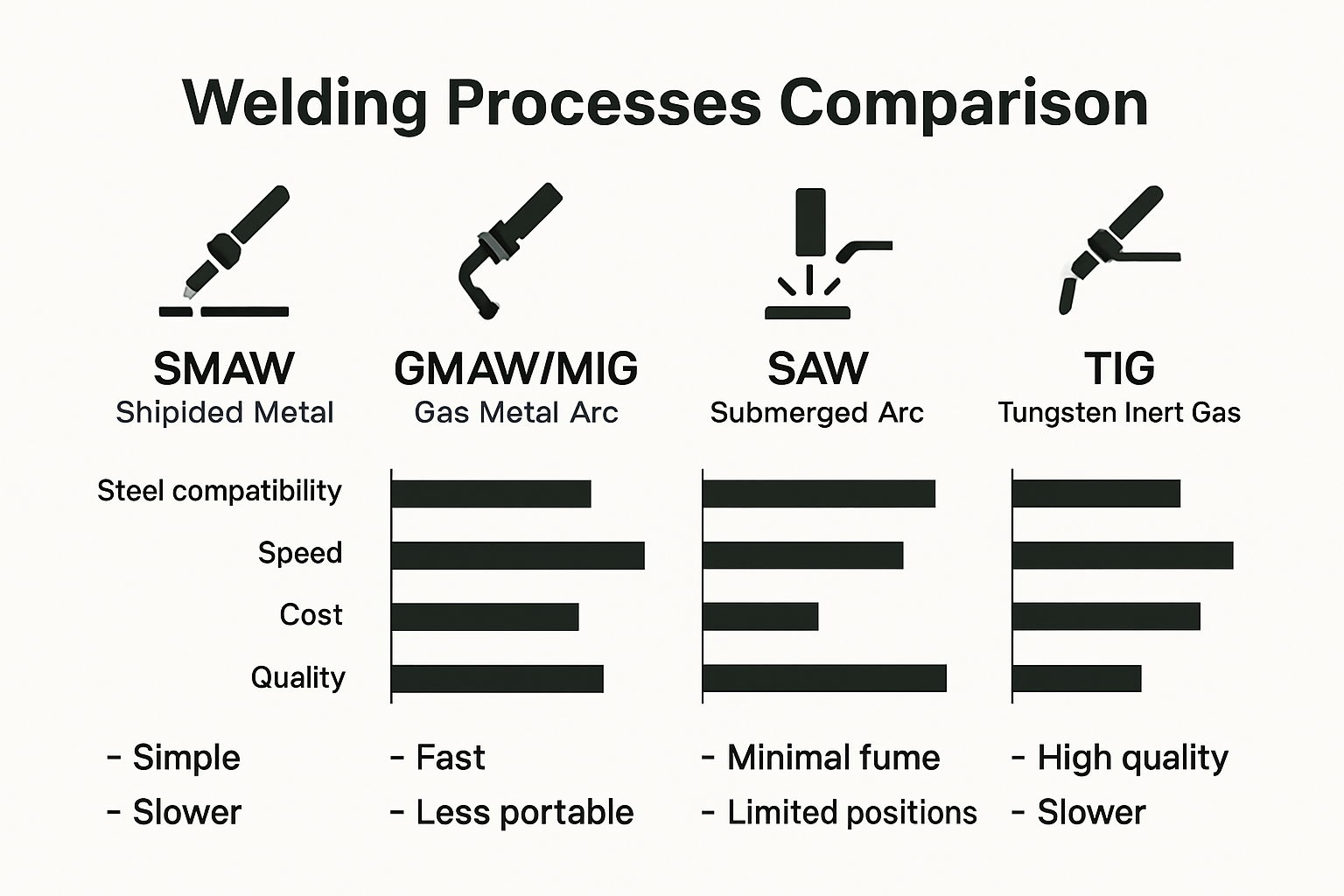
The future of steel welding in Gauteng hinges on balancing technological innovation, safety protocols, and practical industrial requirements. By mastering these diverse techniques, local manufacturers can maintain competitive advantages in increasingly complex global markets.
Choosing the Right Technique for Your Project
Selecting the appropriate steel welding technique is a critical decision that directly impacts project quality, efficiency, and overall manufacturing outcomes. The complexity of modern industrial requirements demands a strategic approach to technique selection, considering multiple interconnected factors.
Material Characteristics and Project Specifications
The fundamental starting point for selecting a welding technique involves comprehensive evaluation of material characteristics. Different steel grades and thicknesses require specific welding approaches. Research from the International Welding Institute emphasizes that material composition significantly influences welding technique selection.
Carbon steel, which represents a substantial portion of industrial steel applications in Gauteng, presents unique welding challenges. Factors such as carbon content, alloying elements, and material thickness determine the most suitable welding method. For instance, low carbon steels generally respond well to multiple welding techniques, while high carbon steels demand more precise, controlled approaches to prevent structural compromises.
Performance Requirements and Environmental Conditions
Project-specific performance requirements play a crucial role in technique selection. According to the American Welding Society, industrial environments in regions like Gauteng present unique challenges that influence welding technique choices. Considerations include:
- Mechanical Stress Tolerance: Projects requiring high tensile strength and impact resistance might necessitate specialized techniques like Tungsten Inert Gas (TIG) welding.
- Corrosion Resistance: Environments with high humidity or chemical exposure demand welding techniques that provide enhanced protective properties.
- Temperature Variations: Gauteng’s diverse industrial landscape requires techniques that can maintain structural integrity across temperature fluctuations.
Cost-Effectiveness and Productivity Metrics
Beyond technical considerations, economic factors significantly influence welding technique selection. Learn more about optimizing welding techniques for industrial efficiency to understand the delicate balance between initial investment and long-term performance.
Each welding technique carries distinct cost implications. Shielded Metal Arc Welding (SMAW) might offer lower initial equipment costs but could result in slower production rates. Conversely, advanced techniques like Gas Metal Arc Welding (GMAW) might require higher upfront investments but provide superior productivity and reduced labor costs in high-volume manufacturing scenarios.
Industrial decision-makers must conduct comprehensive cost-benefit analyses that extend beyond immediate expenses. Factors such as equipment maintenance, consumable materials, worker training, and potential rework costs should be meticulously evaluated.
The selection of steel welding techniques depends on a variety of interrelated factors, as detailed throughout the article. The table below summarises the main factors to consider when choosing an appropriate welding method for industrial projects in Gauteng.
| Selection Factor | Description | Example Impact on Technique |
|---|---|---|
| Material Characteristics | Steel grade, carbon content, and thickness | High carbon requires precise, controlled welds |
| Performance Requirements | Strength, stress tolerance, corrosion, temperature resistance | TIG for high stress, special welds for corrosion |
| Environmental Conditions | Humidity, temperature variations, exposure to chemicals | Protective welding for harsh conditions |
| Cost-Effectiveness & Productivity | Initial equipment vs long-term efficiency | SMAW for low cost, GMAW for high output |
| Project Specifications | Scale, complexity, engineering demands | Advanced methods for complex structures |
Professional welding teams in Gauteng’s industrial sectors increasingly adopt a holistic approach to technique selection. This involves collaborating with metallurgical experts, understanding specific project requirements, and leveraging advanced diagnostic tools to make informed decisions.
Ultimately, selecting the right welding technique is not a one-size-fits-all proposition. It requires deep technical knowledge, careful analysis, and a nuanced understanding of both material science and industrial engineering principles. By approaching technique selection as a strategic process, manufacturers can optimize their welding workflows, enhance product quality, and maintain competitive advantages in increasingly complex global markets.
Safety and Quality Best Practices in Steel Welding
Safety and quality represent the cornerstone of effective steel welding practices in industrial environments. Professional welders and manufacturing teams must implement comprehensive strategies to protect workers and ensure exceptional project outcomes.
Personal Protective Equipment and Workplace Safety
According to the Occupational Safety and Health Administration, comprehensive personal protective equipment (PPE) is critical in mitigating workplace hazards. Welders in Gauteng’s industrial sectors must utilize specialized gear including:
- Flame-Resistant Clothing: Protecting against extreme heat and potential sparks
- Specialized Welding Helmets: Providing complete facial and eye protection from intense light and radiation
- High-Quality Respiratory Protection: Preventing inhalation of potentially harmful metal particulates
- Insulated Gloves: Offering thermal and electrical protection during complex welding operations
Beyond equipment, establishing strict safety protocols involves comprehensive training programs that emphasize hazard recognition, emergency response, and continuous skill development.
Quality Control and Technical Precision
Research from the International Institute of Welding highlights the critical importance of maintaining rigorous quality control standards. Technical precision in steel welding requires multiple layers of validation:
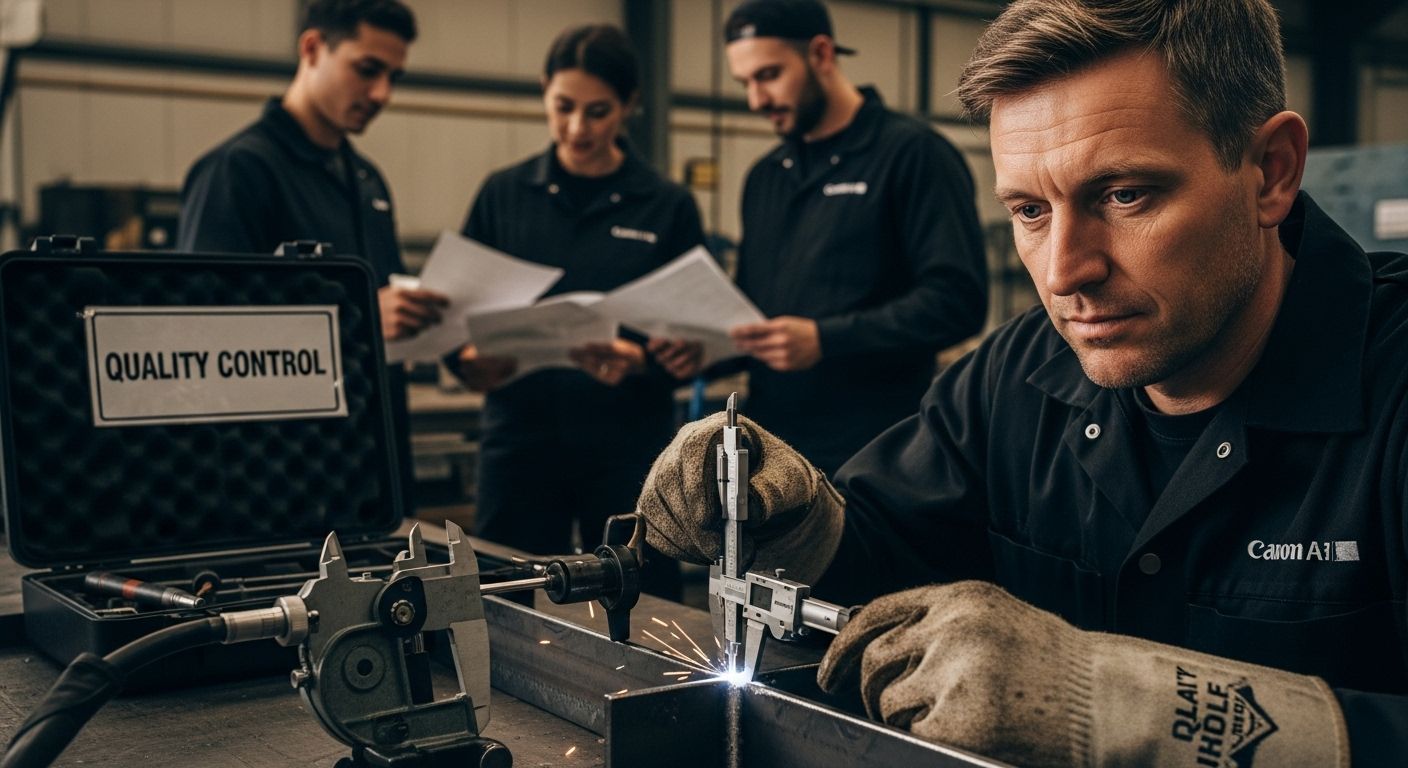
Non-destructive testing methods such as ultrasonic and radiographic inspections enable detailed assessment of weld integrity without compromising the structural components. These advanced diagnostic techniques allow engineers to identify potential microscopic defects that could compromise long-term performance.
Calibration of welding equipment represents another crucial quality control measure. Precise instrument settings ensure consistent performance across different steel grades and project specifications. Professional teams must regularly verify equipment performance using standardized measurement protocols.
Advanced Monitoring and Continuous Improvement
Learn more about advanced welding quality management to understand the evolving landscape of industrial welding standards. Modern welding operations increasingly incorporate digital monitoring systems that provide real-time performance data, enabling immediate intervention and continuous process optimization.
Traceability has become a paramount concern in industrial welding. Comprehensive documentation of welding parameters, material specifications, and individual technician credentials helps maintain accountability and supports long-term quality assurance.
The complexity of modern industrial environments demands a holistic approach to welding safety and quality. This involves integrating technological innovations, maintaining stringent training standards, and fostering a culture of continuous learning and improvement.
Professional teams must recognize that safety and quality are not static concepts but dynamic processes requiring constant adaptation. By embracing advanced technologies, maintaining rigorous standards, and prioritizing worker protection, Gauteng’s industrial sectors can continue to lead in sophisticated steel fabrication techniques.
Optimising Costs and Project Timelines with Proper Techniques
In the competitive landscape of Gauteng’s industrial manufacturing, optimizing welding project costs and timelines represents a critical strategic imperative. Successful organizations understand that efficient welding techniques directly translate into significant economic advantages and enhanced operational performance.
Strategic Planning and Workflow Efficiency
According to the American Institute of Steel Construction, comprehensive strategic planning is fundamental to reducing project expenses and accelerating completion timelines. Industrial teams must develop sophisticated workflow strategies that minimize unnecessary delays and maximize resource utilization.
Prefabrication techniques have emerged as a transformative approach in steel welding project management. By completing substantial portions of welding work in controlled workshop environments, manufacturers can significantly reduce on-site construction times, minimize potential weather-related disruptions, and ensure more consistent quality standards.
Key prefabrication advantages include:
- Reduced On-Site Labor Requirements: Minimizing personnel deployment at project locations
- Enhanced Quality Control: Leveraging controlled manufacturing environments
- Predictable Cost Structures: Enabling more accurate budget forecasting
Advanced Computational Optimization Strategies
Research from a maritime technology convention highlights sophisticated computational approaches for welding sequence optimization. Modern GPU-based hardware and advanced analysis solvers enable engineers to simulate and predict welding-induced structural distortions before actual implementation.
These computational techniques allow project managers to:
- Identify potential structural challenges in advance
- Simulate multiple welding sequence scenarios
- Reduce computational analysis time
- Minimize potential rework and material wastage
Cost Management and Production Planning
Research published in production management literature emphasizes the importance of integrated cost models in steel production planning. By developing comprehensive frameworks that evaluate multiple production variables, industrial teams can systematically reduce operational expenses.
Learn more about optimizing welding project economics to understand the nuanced strategies for managing complex industrial welding projects. Critical cost optimization strategies include:
- Precise material selection
- Efficient equipment utilization
- Comprehensive workforce training
- Advanced predictive maintenance protocols
Successful cost optimization requires a holistic approach that transcends traditional linear thinking. Modern industrial teams must integrate technological innovations, human expertise, and strategic planning to create robust, adaptable workflows.
The future of industrial welding in Gauteng demands continuous adaptation. Organizations that invest in advanced computational tools, strategic planning methodologies, and comprehensive training programs will position themselves at the forefront of competitive manufacturing landscapes. By embracing innovation and maintaining a forward-thinking approach, industrial teams can transform welding project management from a cost center into a strategic competitive advantage.
Frequently Asked Questions
What are the primary welding methods used in Gauteng industries?
The primary welding methods in Gauteng include Shielded Metal Arc Welding (SMAW), Gas Metal Arc Welding (GMAW/MIG), and Submerged Arc Welding (SAW). These methods cater to various applications, from construction to high-volume manufacturing.
How does material type affect the choice of welding technique?
Different steel grades, such as low and high carbon steels, require specific welding approaches to maintain structural integrity. Low carbon steels can be welded using multiple methods, while high carbon steels need more controlled techniques to prevent structural issues.
What safety measures should be implemented during steel welding?
Welders should use comprehensive personal protective equipment (PPE) such as flame-resistant clothing, specialized helmets, respiratory protection, and insulated gloves to safeguard against hazards like extreme heat and harmful fumes.
How can project timelines be optimized through welding techniques?
Optimizing project timelines can be achieved by using prefabrication methods that allow welding to be performed in controlled environments, thus reducing on-site construction time and enhancing quality control.
Ready for Steel Welding Results That Last?
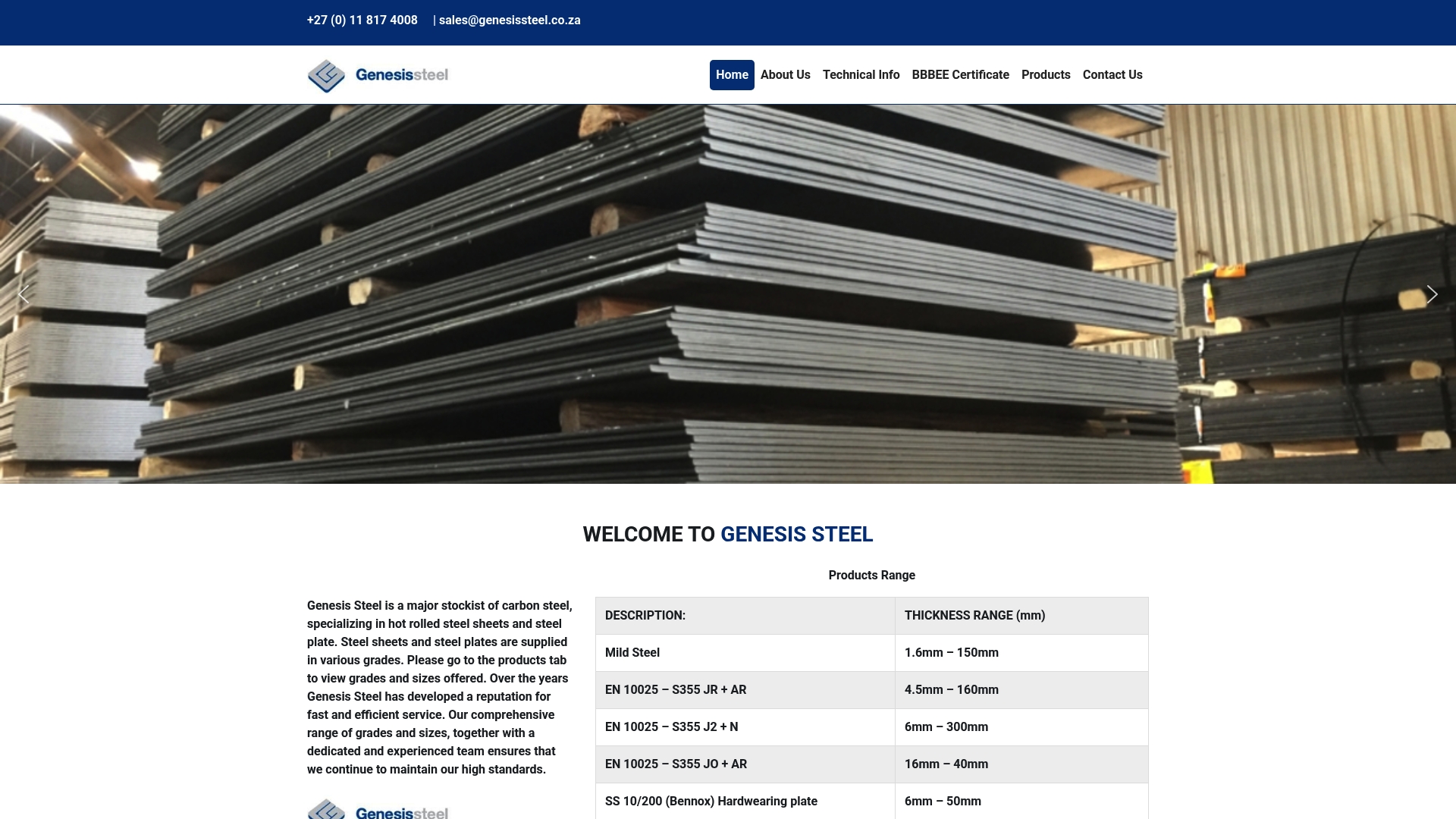
You have just discovered how the right steel welding technique can transform your project’s timeline, quality and production costs in Gauteng. But there is one crucial step left: sourcing steel that matches your technique and project goals. At Genesis Steel, we understand the challenges you face from complex material specifications to the need for a reliable turnaround. Our extensive selection of hot-rolled steel sheets and plates in multiple grades supports every welding method discussed in this article. You get qualified technical advice and dependable delivery so you never lose momentum.
When your next job demands top performance from start to finish, trust the steel partner who knows what is at stake. Visit Genesis Steel today, or browse the Uncategorised Archives to find products and resources that will keep your Gauteng projects on track. Secure your competitive edge now before the next deadline approaches.