

Steel stands at the heart of nearly every major construction or manufacturing project in South Africa. With more than 1.8 billion tons of steel produced globally each year, it is easy to think all steel is created equal. But the real surprise comes when you realise that choosing between carbon steel and alloy steel can completely change a project’s outcome and even its entire budget. That one decision could mean the difference between lasting performance and unexpected failure.
Table of Contents
- Defining Carbon Steel And Alloy Steel
- The Importance Of Material Properties In Steel
- Applications Of Carbon Steel Vs Alloy Steel In Industry
- Understanding The Cost And Performance Trade-offs
- Selecting The Right Steel For Your Project
Quick Summary
| Takeaway | Explanation |
|---|---|
| Understand carbon vs alloy steel | Carbon steel is primarily iron and carbon, while alloy steel includes various elements for enhanced properties. |
| Mechanical properties are critical | Key properties like tensile strength and yield strength determine a steel’s suitability for specific applications. |
| Evaluate cost vs performance trade-offs | Carbon steel offers lower initial costs, but alloy steel may provide long-term savings through durability. |
| Select steel based on project requirements | Consider load, environmental factors, and budget when choosing the right steel for your project. |
| Collaborate in material selection | Involve engineers and procurement professionals to find optimal steel types for specific applications. |
Defining Carbon Steel and Alloy Steel
Understanding the fundamental differences between carbon steel and alloy steel is crucial for professionals in manufacturing, construction, and engineering industries. These two distinct steel types share similarities but possess unique characteristics that make them suitable for different applications.
What is Carbon Steel?
Carbon steel is a fundamental metallic alloy primarily composed of iron and carbon, with carbon content typically ranging between 0.05% and 2.1%. According to metallurgical research, the carbon percentage determines the steel’s strength, hardness, and ductility.
Key characteristics of carbon steel include:
- Low cost of production
- Relatively simple manufacturing process
- Widely available in various industrial applications
- Moderate strength and durability
The carbon content significantly influences the steel’s mechanical properties. Low carbon steel contains less than 0.30% carbon and offers excellent formability, while high carbon steel with over 0.60% carbon provides superior hardness and wear resistance.
What Defines Alloy Steel?
Alloy steel represents a more complex metal composition, deliberately enhanced with additional elements to modify its properties. Alloying elements such as nickel, chromium, molybdenum, and vanadium are introduced to improve specific characteristics like corrosion resistance, thermal stability, and mechanical strength.
The strategic addition of alloying elements enables manufacturers to create steel with precise performance requirements. Chromium, for instance, enhances corrosion resistance, while nickel improves toughness and impact strength.
Compared to carbon steel, alloy steel offers more specialized performance capabilities. Engineers and designers can select alloy steel variants tailored to extreme environmental conditions, high-stress applications, or specific mechanical requirements in industries ranging from aerospace to heavy machinery manufacturing.
The fundamental distinction between carbon steel and alloy steel lies not just in composition but in their targeted performance characteristics, making material selection a critical decision in engineering and design processes.
The table below contrasts the primary features, benefits, and limitations of carbon steel and alloy steel to clarify their differences for project selection.
| Feature / Property | Carbon Steel | Alloy Steel |
|---|---|---|
| Composition | Mainly iron with 0.05%-2.1% carbon | Iron with additional alloying elements (e.g. chromium, nickel) |
| Mechanical Strength | Moderate to high, varies with carbon content | Generally higher, tailored for specific applications |
| Corrosion Resistance | Lower, especially in harsh environments | Improved with certain alloying elements |
| Cost | Lower upfront cost, more economical for large volumes | Higher initial cost, offsets with enhanced durability |
| Application Examples | Construction, pipelines, storage tanks, automotive panels | Aerospace, chemical processing, high-temperature machinery |
| Manufacturing Complexity | Simpler manufacturing, widely available | More complex, tailored properties for advanced needs |
| Key Advantage | Affordable and versatile | Superior performance in demanding conditions |
| Typical Longevity | Sufficient for standard environments, may need maintenance | Longer lifespan in challenging or extreme environments |
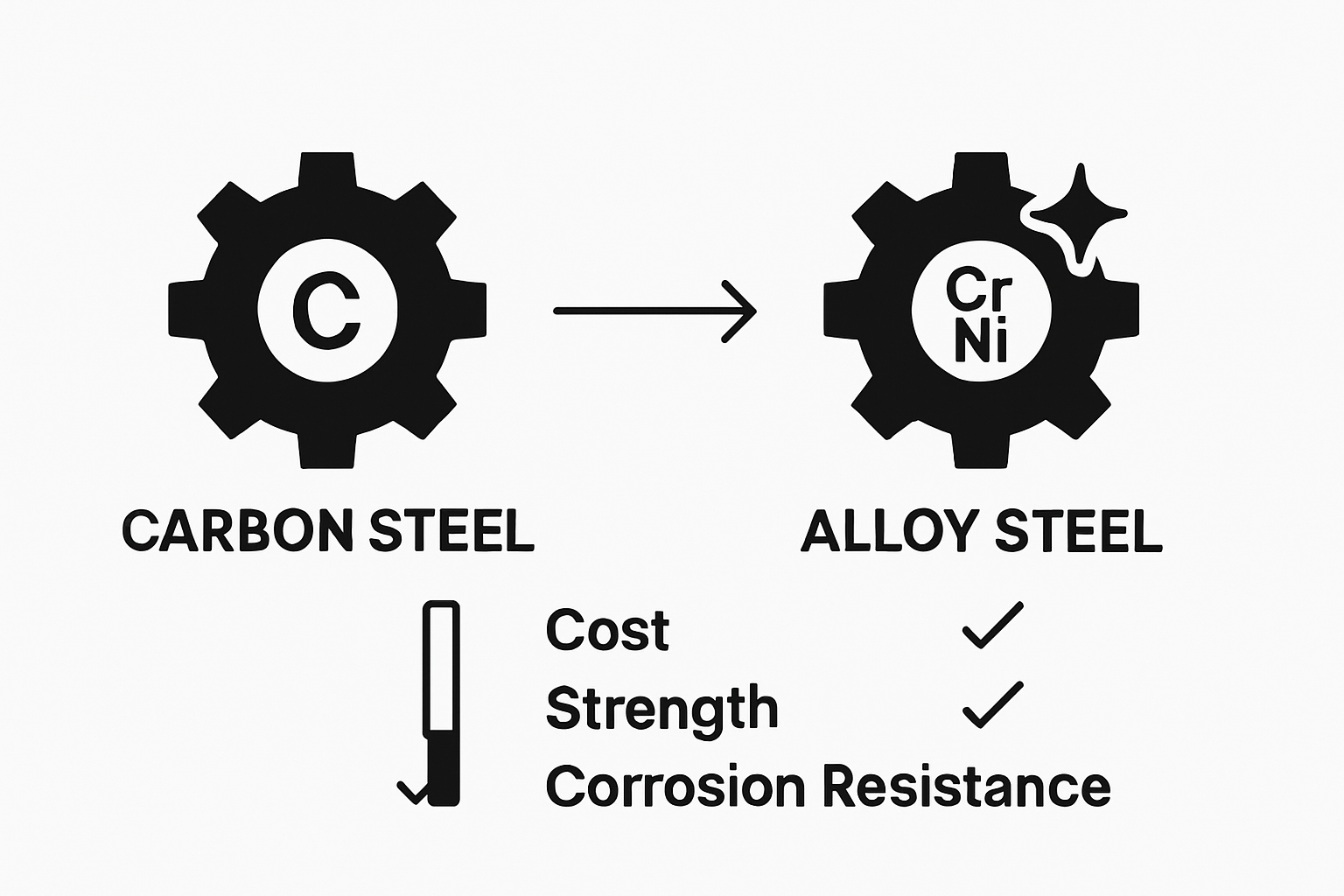
The Importance of Material Properties in Steel
In industrial and engineering applications, understanding the material properties of steel is paramount for ensuring optimal performance, safety, and durability of components. These properties determine how steel will respond to various mechanical, thermal, and environmental challenges.
Mechanical Properties and Performance
Mechanical properties define steel’s fundamental behavior under different stress conditions. According to materials science research, these properties include:
- Tensile strength
- Yield strength
- Elongation
- Impact resistance
- Hardness
Tensile strength represents the maximum stress a material can withstand while being stretched before failing. This property is crucial in determining steel’s suitability for load-bearing structures, machinery components, and critical engineering applications.
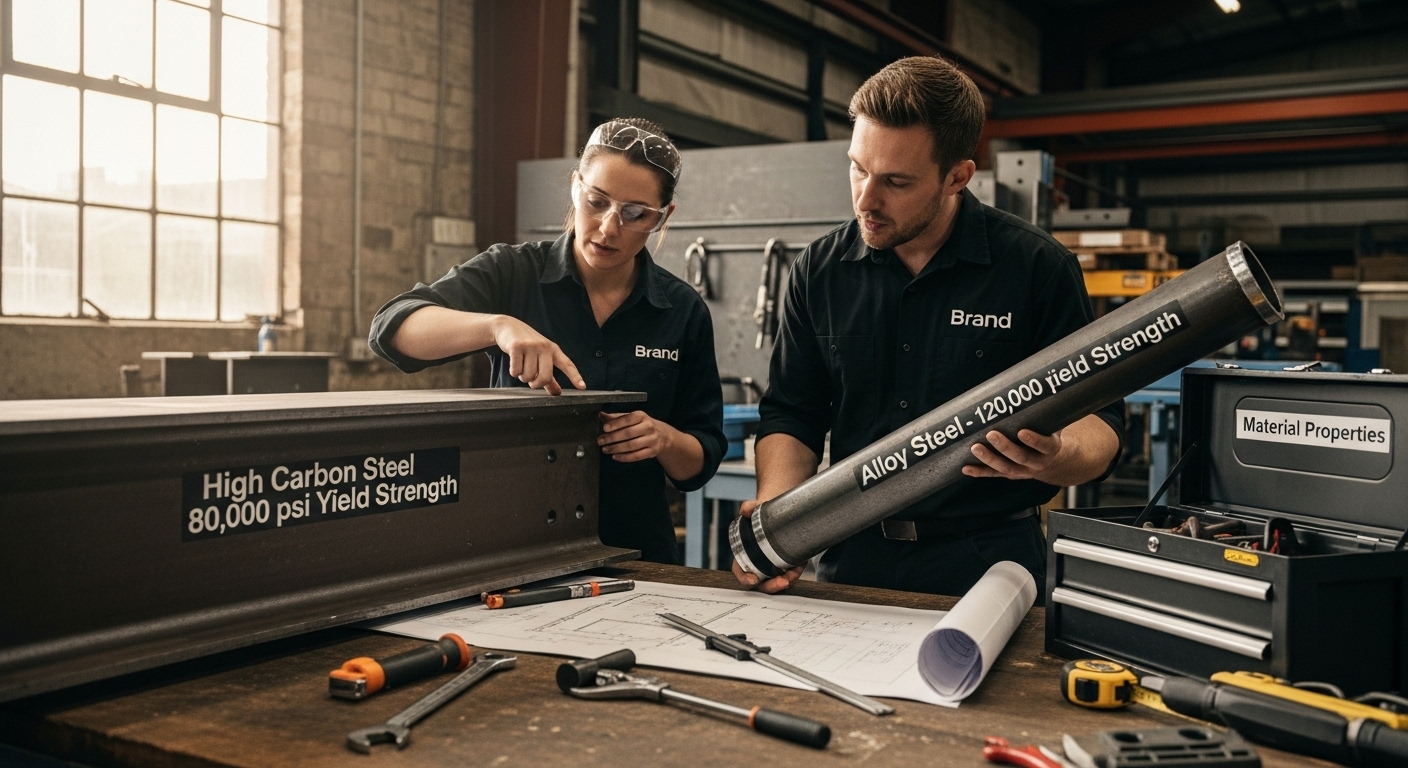
Yield strength indicates the point at which steel begins to deform plastically, providing engineers with essential information about the material’s load-bearing capabilities. Higher yield strength means the steel can resist permanent deformation under applied loads.
Thermal and Corrosion Resistance
Beyond mechanical performance, steel’s thermal and corrosion resistance play critical roles in material selection. Different steel compositions exhibit varying abilities to withstand extreme temperatures and chemical environments.
Corrosion resistance, for instance, becomes paramount in industries exposed to harsh chemicals, marine environments, or extreme weather conditions. Learn more about how steel is manufactured to understand how different alloying elements contribute to enhanced material properties.
Thermal stability determines a steel’s performance under high-temperature conditions, which is essential in applications like aerospace, industrial furnaces, and high-stress machinery. Chromium and molybdenum additions can significantly improve a steel’s ability to maintain structural integrity at elevated temperatures.
Engineers and designers must carefully evaluate these material properties to select the most appropriate steel type for specific applications, ensuring optimal performance, safety, and longevity of critical components across diverse industrial sectors.
Applications of Carbon Steel vs Alloy Steel in Industry
Choosing the right steel type is crucial for optimizing performance and cost-effectiveness across various industrial sectors. Each steel variant offers unique characteristics that make them suitable for specific applications and environmental conditions.
Carbon Steel Industrial Applications
According to metallurgical research, carbon steel finds widespread use in numerous industrial contexts due to its affordability and versatility. Explore the key benefits of carbon steel for industrial projects to understand its comprehensive utility.
Primary industrial applications for carbon steel include:
- Construction and infrastructure projects
- Basic manufacturing equipment
- Storage tanks and pipelines
- Agricultural machinery
- Automotive body panels
Low carbon steel is particularly prevalent in sectors requiring extensive forming and welding. Its malleability makes it ideal for sheet metal fabrication, structural components, and general engineering applications where extreme strength is not the primary requirement.
Alloy Steel Specialized Applications
Alloy steel represents a more sophisticated material solution for demanding industrial environments. Its enhanced properties enable performance in complex and challenging conditions that would compromise standard carbon steel.
Key specialized applications for alloy steel encompass:
- Aerospace and aviation components
- High-temperature industrial machinery
- Precision engineering tools
- Chemical processing equipment
- Power generation turbines
Chromium and nickel-based alloy steels excel in environments requiring exceptional corrosion resistance, thermal stability, and mechanical strength. These advanced materials are critical in sectors like petrochemical processing, offshore engineering, and advanced manufacturing.
The strategic selection between carbon and alloy steel depends on specific project requirements, including load-bearing capacity, environmental exposure, budget constraints, and desired performance characteristics. Engineers must carefully evaluate these factors to ensure optimal material selection for each unique industrial application.
Understanding the Cost and Performance Trade-offs
Selecting the appropriate steel type requires a nuanced understanding of cost versus performance considerations. Engineers and procurement specialists must balance material expenses, long-term durability, and specific project requirements to make informed decisions.
Economic Considerations in Steel Selection
According to materials economics research, carbon steel represents a more economical initial investment compared to specialized alloy steels. Discover how to optimize your steel selection process for maximum cost-effectiveness.
Key economic factors influencing steel selection include:
- Initial material procurement costs
- Manufacturing and processing expenses
- Long-term maintenance requirements
- Anticipated operational lifespan
- Replacement and repair frequencies
Low carbon steel offers the most budget-friendly option for projects with moderate performance requirements. Its lower alloying element content translates directly into reduced material expenses, making it attractive for large-scale infrastructure and general manufacturing applications.
Performance Implications of Cost Constraints
While cost remains a critical factor, performance capabilities cannot be overlooked. Alloy steels demand higher initial investments but provide substantial long-term benefits in demanding operational environments.
Performance trade-offs to consider:
- Enhanced corrosion resistance
- Superior mechanical strength
- Extended component lifespan
- Reduced maintenance intervals
- Better performance under extreme conditions
Engineers must conduct comprehensive cost-benefit analyses that consider not just immediate material expenses, but projected operational efficiency, potential downtime, and replacement frequencies. A marginally higher upfront investment in alloy steel can yield significant savings through improved durability and reduced maintenance requirements.
Ultimately, the decision between carbon and alloy steel involves a sophisticated evaluation of technical specifications, environmental challenges, and financial constraints. Successful material selection demands a holistic approach that balances immediate budget considerations with long-term performance expectations.
Selecting the Right Steel for Your Project
Choosing the most appropriate steel type requires a systematic approach that considers multiple technical, environmental, and economic factors. Engineers and project managers must conduct comprehensive evaluations to ensure optimal material selection for their specific application requirements.
Critical Evaluation Criteria
According to materials science research, steel selection depends on the precise combination of mechanical properties, operating environment, and cost considerations. Learn more about optimizing your steel selection process to make informed decisions.
Key evaluation criteria for steel selection include:
- Mechanical load requirements
- Environmental exposure conditions
- Temperature range of operation
- Corrosion resistance needs
- Budget constraints
- Expected component lifespan
Mechanical load requirements represent the foundational assessment criterion. Engineers must precisely calculate anticipated stress levels, potential dynamic loads, and expected deformation tolerances to determine the most suitable steel variant.
Environmental and Operational Considerations
Beyond mechanical properties, environmental conditions play a crucial role in steel selection. Alloy steels provide superior performance in challenging operational environments that demand exceptional resistance to corrosion, thermal fluctuations, and chemical interactions.
Environmental factors to assess:
- Humidity levels
- Chemical exposure
- Temperature variations
- Potential for oxidation
- Mechanical wear conditions
- Potential for stress corrosion
The final selection process requires a holistic approach that balances technical specifications with practical constraints.
To help guide steel selection for industrial projects, the following table summarises the key evaluation criteria and how carbon steel and alloy steel typically perform or respond in each area.
| Evaluation Criterion | Carbon Steel | Alloy Steel |
|---|---|---|
| Mechanical Load Requirements | Suitable for moderate to high | Suitable for high to extreme |
| Environmental Exposure | Adequate for standard | Excellent in harsh/chemical settings |
| Temperature Range | Standard ranges | Performs well at elevated temperatures |
| Corrosion Resistance | Limited, prone to rust | Superior (if alloyed accordingly) |
| Budget Constraints | Cost-effective choice | Higher upfront cost |
| Expected Component Lifespan | Moderate, more frequent maintenance | Extended, less maintenance needed |
| Specialised Performance Needs | Not suitable | Preferred for demanding applications |
Successful steel selection demands collaborative input from design engineers, materials specialists, and procurement professionals. By systematically evaluating performance requirements, environmental challenges, and budgetary limitations, teams can identify the most appropriate steel type that delivers optimal performance throughout the component’s operational lifecycle.
Choose the Perfect Steel For Your Next Project
Struggling to match the right steel to your unique performance and budget needs? If you found yourself concerned with balancing mechanical strength, corrosion resistance, or project cost while reading about carbon steel versus alloy steel, know you are not alone. The real challenge is finding a supplier who not only understands load requirements, material properties and the difference between carbon and alloy steel, but also delivers reliable availability and expert support every step of the way.
Explore our stock and solutions
Genesis Steel is your partner in smart steel choices. When you need hot-rolled steel sheet or steel plate in the right grade and size, our experienced team and wide stock range are ready to help. Visit Genesis Steel today or contact our specialists to secure materials specifically tailored for your goals. Act now to ensure your project benefits from fast service and trusted advice from one of South Africa’s leading carbon steel suppliers.
Frequently Asked Questions
What is the main difference between carbon steel and alloy steel?
The main difference lies in their composition: carbon steel is primarily made of iron and carbon, while alloy steel includes additional elements like nickel and chromium to enhance specific properties.
What are the applications of carbon steel in industry?
Carbon steel is commonly used in construction, manufacturing equipment, storage tanks, agricultural machinery, and automotive body panels due to its affordability and versatility.
Why would I choose alloy steel over carbon steel for my project?
Alloy steel is chosen for its enhanced mechanical properties, such as improved corrosion resistance and strength, making it ideal for demanding applications in aerospace, chemical processing, and high-temperature environments.
How does the carbon content affect the properties of carbon steel?
The carbon content in carbon steel influences its strength, hardness, and ductility. Lower carbon content provides better formability, while higher carbon content results in increased hardness and wear resistance.