

Fire in a steel building is not just about smoke and chaos. When flames hit, steel can lose up to 90 percent of its strength at 600 degrees Celsius. Most people think the solution is just to slap on a bit of paint or insulation. The real shocker is how advanced fire resistance strategies can actually turn a steel frame from a meltdown risk into the safest part of a structure.
Table of Contents
- What Is Fire Resistance In Steel Structures?
- The Importance Of Fire Resistance In Construction
- How Fire Resistance Works In Steel Frameworks
- Key Factors Affecting Fire Resistance Ratings
- Practical Applications And Real-World Examples
Quick Summary
| Takeaway | Explanation |
|---|---|
| Steel loses strength over 300°C | Steel’s mechanical properties begin to degrade significantly at 300 degrees Celsius, necessitating fire protection measures. |
| Appropriate materials enhance fire resistance | Selecting the right steel composition and protective coatings is crucial for improving a structure’s ability to withstand fire. |
| Fire resistance protects human life | Robust fire-resistant designs provide critical evacuation time and improve safety during emergencies, ultimately safeguarding lives. |
| Financial benefits of fire resistance | Enhanced fire protection can reduce insurance costs, decrease damage during incidents, and improve overall property value. |
| Design influences structural performance | The geometry and external factors of steel structures significantly affect their ability to maintain integrity when exposed to fire. |
What is Fire Resistance in Steel Structures?
Fire resistance represents a critical engineering characteristic that determines how effectively steel structures can withstand extreme temperatures and prevent structural collapse during fire events. Understanding fire resistance goes beyond simple material properties and involves complex interactions between thermal performance, material composition, and structural integrity.
Fundamental Concepts of Steel Fire Resistance
Steel structures possess unique thermal characteristics that influence their performance during fire exposure. At elevated temperatures, steel experiences significant strength and stiffness reductions, which can compromise the overall structural stability. Fire resistance measures the ability of steel components to maintain their load-bearing capacity, structural integrity, and compartmentation functions during specified fire exposure durations.
Key factors influencing fire resistance include:
- Material composition of the steel
- Structural configuration and design
- Protective coating or fireproofing treatments
- Thickness and cross-sectional properties of steel elements
Thermal Behaviour of Steel During Fire Exposure
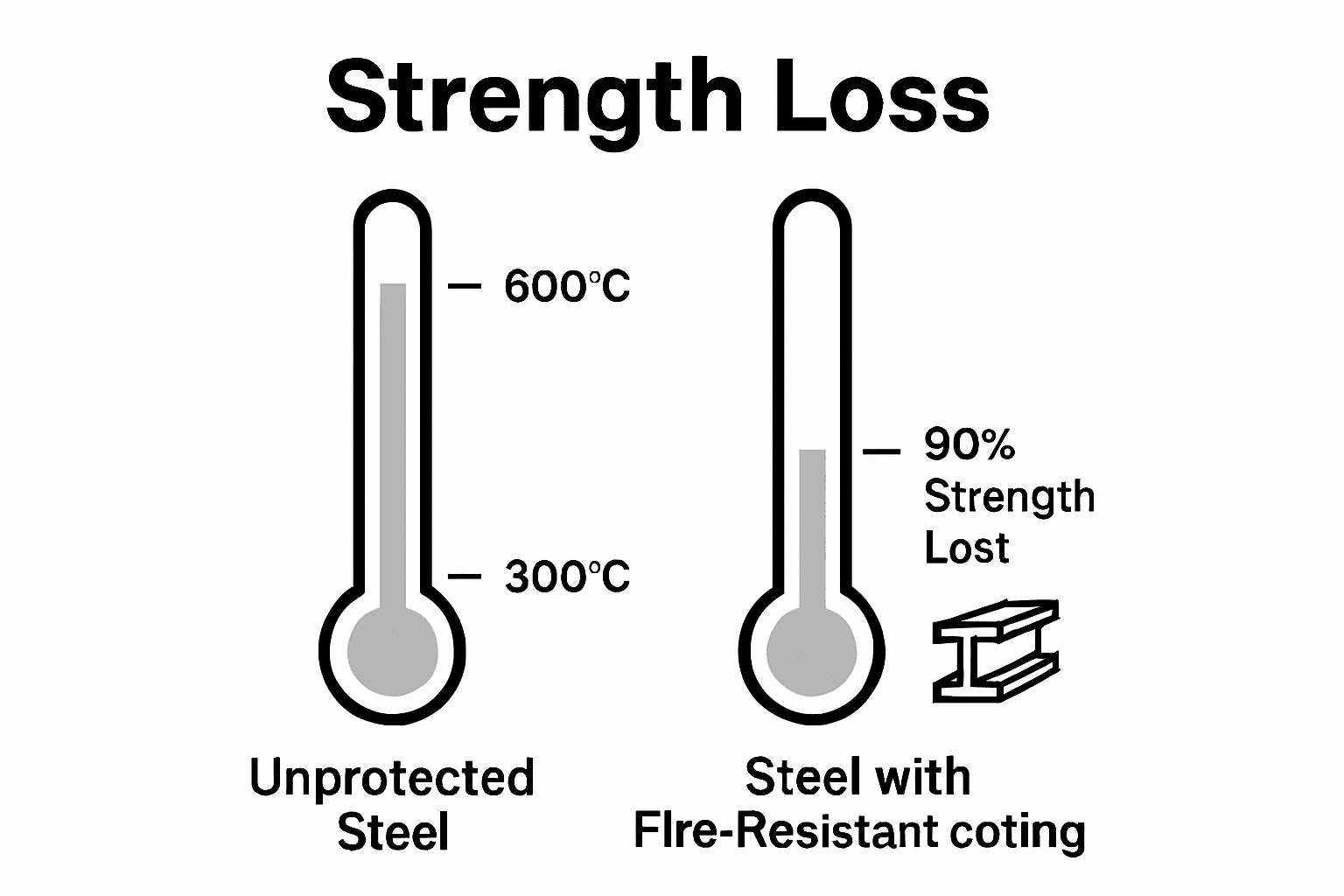
As temperatures rise, steel undergoes critical transformations that directly impact its mechanical properties. According to research from the International Journal of Steel Structures, steel begins to lose significant strength at approximately 300 degrees Celsius, with progressive degradation occurring as temperatures increase. At around 600 degrees Celsius, unprotected steel can lose up to 90% of its original strength, making fire protection strategies essential for maintaining structural reliability.
Engineers and architects must carefully design steel structures to incorporate fire-resistant strategies that mitigate potential thermal degradation. This involves selecting appropriate materials, implementing protective systems, and understanding the complex thermal dynamics that occur during fire events. Comprehensive fire resistance design ensures that steel structures can effectively resist fire-induced structural failure and provide critical safety margins during emergency scenarios.
The Importance of Fire Resistance in Construction
Fire resistance in construction is not merely a technical requirement but a fundamental safety imperative that protects human lives, preserves property, and ensures structural resilience during potentially catastrophic fire events. Beyond regulatory compliance, fire resistance represents a comprehensive approach to mitigating risks and creating safer built environments.
Economic and Safety Impact of Fire Resistance
The financial implications of inadequate fire resistance are substantial. According to research from the National Fire Protection Association, fire-related damages in construction and industrial settings result in billions of rands in annual economic losses. Proactive fire resistance strategies can dramatically reduce these potential financial catastrophes by preventing total structural failure and minimizing damage.
Key economic considerations include:
- Reduced insurance premiums
- Lower potential for business interruption
- Minimized reconstruction and repair costs
- Enhanced property value and marketability
Human Safety and Structural Integrity
At its core, fire resistance is fundamentally about protecting human life. Steel structures with robust fire resistance capabilities provide crucial evacuation time, prevent rapid structural collapse, and create safe egress routes during emergency scenarios. Comprehensive fire protection transforms buildings from potential death traps into structured environments that prioritize occupant safety.
Engineering standards and building codes increasingly mandate sophisticated fire resistance requirements, recognizing that intelligent structural design can mean the difference between life and death. By implementing strategic fire resistance techniques, construction professionals create environments that not only withstand extreme thermal conditions but also provide critical protective barriers during potential fire emergencies.
How Fire Resistance Works in Steel Frameworks
Fire resistance in steel frameworks operates through complex thermal management mechanisms that protect structural integrity during high-temperature exposures. Understanding these intricate processes requires a comprehensive examination of material science, engineering principles, and strategic protective strategies.
Thermal Degradation Mechanisms
Steel undergoes predictable transformations when exposed to extreme temperatures. According to research from the Materials and Structures Journal, steel experiences progressive mechanical property changes as thermal energy increases. Critical temperature thresholds represent pivotal moments where structural performance dramatically shifts.
Key thermal degradation characteristics include:
- Gradual reduction in material strength
- Increased thermal expansion
- Metallurgical structural modifications
- Progressive loss of load-bearing capacity
Protective Strategies and Fireproofing Techniques
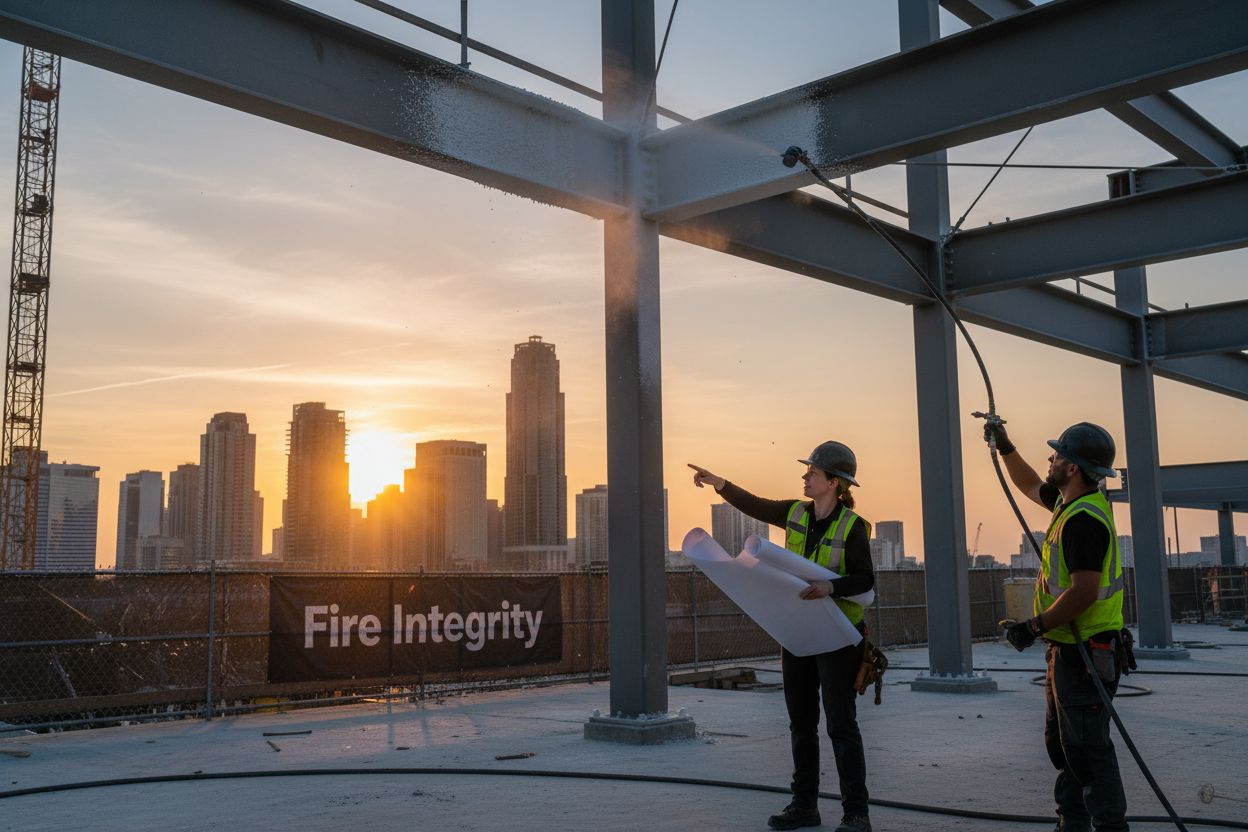
Engineers employ multiple sophisticated approaches to enhance steel framework fire resistance. Intumescent coatings provide a primary defense mechanism, expanding when exposed to high temperatures and creating insulative barriers that protect underlying steel structures. These advanced materials transform from thin protective layers into thick, carbonaceous shields that dramatically slow heat transmission.
Additional protection strategies involve applying specialized fire-resistant materials, designing structural redundancies, and implementing sophisticated thermal barriers.
The table below summarises the main protective fireproofing strategies used in steel structures and explains their primary role in enhancing fire resistance.
| Fireproofing Technique | Description | Key Benefit |
|---|---|---|
| Intumescent Coating | Paint-like material that swells into an insulating foam when heated | Slows heat transfer to steel |
| Fire-Resistant Materials | Application of boards, sprays, or wraps with fire-retardant properties | Adds a physical thermal barrier |
| Structural Redundancy Design | Designing alternate load paths within the framework | Maintains integrity under failure |
| Thermal Barriers | Installation of insulation layers specific to fire exposure | Reduces chance of heat breakthrough |
Key Factors Affecting Fire Resistance Ratings
Fire resistance ratings represent complex evaluations of structural performance under extreme thermal conditions. These ratings are not arbitrary measurements but carefully calculated assessments that determine a steel structure’s capacity to maintain integrity during potential fire scenarios.
Material Composition and Structural Configuration
The fundamental characteristics of steel directly influence its fire resistance capabilities. According to research from the International Fire Protection Journal, material composition plays a crucial role in determining thermal performance. Alloy variations and specific metallurgical properties significantly impact how steel responds to elevated temperatures.
Key material factors include:
- Chemical composition of steel
- Carbon content percentage
- Presence of alloying elements
- Microstructural characteristics
Environmental and Design Considerations
Beyond material properties, multiple external factors substantially influence fire resistance ratings. Structural geometry and environmental conditions create complex interactions that modify thermal performance. The cross-sectional dimensions, connection types, and loading configurations all contribute to how effectively a steel structure maintains its load-bearing capacity during fire exposure.
Engineers must carefully evaluate multiple interconnected variables to develop comprehensive fire resistance strategies.
This table highlights the key factors influencing fire resistance ratings of steel and clarifies the role each factor plays in determining overall structural performance during a fire.
| Factor | Description | Effect on Fire Resistance |
|---|---|---|
| Steel Chemical Composition | Alloy and elemental makeup of the steel | Affects strength retention at high temps |
| Carbon Content | Percentage of carbon in the steel matrix | Impacts brittleness and fire reactivity |
| Cross-sectional Dimensions | Thickness and geometry of steel elements | Thicker elements resist heat longer |
| Structural Geometry | Arrangement and connection of structural components | Influences heat flow and load distribution |
| Protective Coatings/Fireproofing | Use of fire-resistant paints, wraps, or boards | Directly enhances fire protection |
Practical Applications and Real-World Examples
Fire resistance in steel structures extends far beyond theoretical concepts, manifesting in critical infrastructure, industrial facilities, and high-risk environments where thermal protection becomes a fundamental safety requirement. Real-world applications demonstrate the transformative potential of advanced fire resistance technologies across multiple sectors.
Industrial and Critical Infrastructure Applications
Industrial settings represent primary domains where fire resistance technologies prove most critical. According to research from the International Journal of Steel Construction, strategic fire resistance implementations have dramatically reduced potential catastrophic failures in manufacturing, petrochemical, and energy production facilities.
Key industrial application areas include:
- Petroleum refineries
- Chemical processing plants
- Power generation facilities
- Mining infrastructure
- Large-scale manufacturing complexes
Emergency Response and Safety Infrastructure
Specialized steel frameworks in emergency response facilities require extraordinary fire resistance capabilities. Structures like fire stations, emergency command centers, and critical communication infrastructure demand robust thermal protection that ensures continued operational capacity during extreme fire scenarios. Engineered steel systems provide essential structural integrity, allowing these critical facilities to maintain functionality when community safety depends most on their resilience.
By implementing sophisticated fire resistance strategies, engineers transform steel from a potentially vulnerable material into a sophisticated protective system.
 These advanced approaches not only prevent structural collapse but create dynamic environments that actively resist thermal degradation, ultimately safeguarding human lives and critical infrastructure during potential emergency scenarios.
Secure Your Next Project with Reliable Fire-Resistant Steel Solutions
Struggling to keep your steel structures safe under extreme conditions? As highlighted in our article, understanding fire resistance in steel is vital for preventing collapses, minimising potential damage, and achieving peace of mind during emergencies. The risk of structural failure due to compromised strength at high temperatures can put lives and business continuity on the line. Genesis Steel understands how important material grade, thickness, and proven fire resistance are when planning safer, more durable builds.
Give your projects a real advantage by partnering with Genesis Steel. Our extensive selection of hot-rolled steel sheets and plates in various fire-resistant grades means you can meet strict safety codes and improve overall resilience. Visit our Genesis Steel homepage to connect with expert support and secure steel that is engineered for South African conditions. Ensure your next structure stands stronger – contact Genesis Steel today.
Frequently Asked Questions
What is fire resistance in steel structures?
Fire resistance in steel structures measures their ability to withstand high temperatures and maintain structural integrity during a fire. It involves the performance of materials, design, and protective measures to prevent structural collapse.
How does exposure to high temperatures affect steel?
At elevated temperatures, steel can lose significant strength, with a potential reduction of up to 90% at around 600 degrees Celsius. This loss in strength makes fire resistance critical for maintaining structural reliability.
What factors influence the fire resistance of steel structures?
Key factors include the material composition, structural design, protective coatings or fireproofing treatments, and the thickness of the steel elements. Each of these elements contributes to the overall fire resistance rating of a structure.
What are common fireproofing techniques used in steel structures?
Common fireproofing techniques include the application of intumescent coatings, specialized fire-resistant materials, and thermal barriers. These strategies are designed to enhance fire resistance and protect steel frameworks during high-temperature incidents.