

Steel is everywhere in modern buildings and factories, trusted for its strength and reliability in massive projects. You might assume it stands up to anything, but even this tough metal starts losing its strength at around 550 degrees Celsius. Most people expect steel to stand firm, yet its real test comes in a fire. The way steel shifts under that kind of heat changes the whole meaning of safety and risk for industries—what matters most might not be strength alone, but how long that strength lasts when the temperature soars.
Table of Contents
- What Is Fire Resistance In Steel And Its Importance?
- The Science Behind Fire Resistance: How Steel Reacts To Heat
- Fire Resistance Ratings: Understanding The Specifications And Standards
- Applications Of Fire-Resistant Steel In Various Industries
- Challenges And Innovations In Enhancing Steel Fire Resistance
Quick Summary
| Takeaway | Explanation |
|---|---|
| Steel loses strength above 550°C. | Understanding critical temperatures helps in designing safer structures that can withstand fire. |
| Fire resistance ratings specify structural integrity. | Ratings indicate how long materials can endure fire conditions while maintaining load-bearing capacity. |
| Improved fabrication enhances fire resistance. | Advanced techniques in steel fabrication contribute significantly to the fire performance of steel components. |
| Innovative coatings boost thermal performance. | New material technologies like intumescent coatings extend the duration steel can withstand high temperatures. |
| Performance-based design allows customization. | Modern approaches facilitate tailored solutions to improve structural performance during fire events. |
What is Fire Resistance in Steel and Its Importance?
Fire resistance in steel represents a critical engineering characteristic that determines how structural steel materials perform and maintain structural integrity when exposed to extreme high-temperature conditions. Understanding fire resistance involves recognizing how steel responds to thermal stress and the potential implications for industrial safety and construction durability.
The Science Behind Steel Fire Resistance
Steel’s fire resistance depends on several fundamental material properties and engineering principles. At its core, fire resistance measures how long steel can maintain its structural strength and load-bearing capacity when subjected to intense heat. Unlike some materials that immediately fail under thermal stress, steel undergoes complex thermal transformations that impact its mechanical properties.
When temperatures rise, steel experiences significant changes in its molecular structure. Pure steel begins to lose its structural strength around 550 degrees Celsius, with substantial reduction in load-bearing capacity occurring between 600 and 700 degrees Celsius. These temperature thresholds make understanding fire resistance crucial for architects, engineers, and construction professionals who design critical infrastructure.
Strategic Importance in Industrial Applications
Fire resistance in steel is not just a theoretical concept but a practical necessity across multiple sectors. In industrial environments like mining, manufacturing, and construction, steel’s ability to withstand high temperatures can mean the difference between catastrophic failure and controlled structural performance.
Key considerations for fire resistance include:
- Maintaining structural integrity during extreme thermal events
- Preventing progressive structural collapse
- Providing critical safety margins for personnel evacuation
- Minimizing potential economic losses from infrastructure damage
Professionals increasingly rely on advanced steel fabrication techniques to enhance fire resistance properties. By understanding these complex interactions between temperature and material performance, engineers can design more robust and resilient steel structures that provide superior protection against potential fire-related risks.
The Science Behind Fire Resistance: How Steel Reacts to Heat
Understanding how steel responds to extreme temperatures requires a deep dive into material science and thermal engineering principles. Steel’s complex molecular structure enables it to exhibit unique behaviors when exposed to high heat, making its fire resistance a critical area of study for engineers and designers across multiple industries.
Thermal Expansion and Molecular Transformation
When steel encounters high temperatures, its atomic structure undergoes significant transformations. The material experiences thermal expansion, where its molecular bonds stretch and redistribute, causing dimensional changes. At approximately 538 degrees Celsius, steel begins to lose its structural strength, with its load-bearing capacity dramatically reducing between 600 and 700 degrees Celsius.
Key thermal behavior characteristics include:
- Gradual reduction in yield strength
- Increased molecular vibration
- Potential metallurgical phase transformations
- Non-linear thermal conductivity
Metallurgical Responses to Heat Stress
Different steel grades demonstrate varied responses to thermal stress. Carbon content, alloying elements, and manufacturing processes significantly influence how steel performs under high-temperature conditions. Learn more about steel manufacturing techniques that impact fire resistance properties.
Research from the American Institute of Steel Construction indicates that while fire exposure can cause significant structural challenges, properly engineered steel can maintain substantial structural integrity. The material’s ability to redistribute thermal stress and maintain partial load-bearing capacity makes it unique among construction materials.
Professional engineers employ sophisticated thermal modeling and material testing to predict and enhance steel’s fire resistance. By understanding these intricate thermal interactions, they can design structures that provide critical safety margins during potential fire events, protecting both human life and critical infrastructure.
Fire Resistance Ratings: Understanding the Specifications and Standards
Fire resistance ratings represent critical technical benchmarks that define how structural materials perform under extreme thermal conditions. These standardized measurements provide engineers, architects, and construction professionals with essential guidelines for designing safe and resilient structures capable of withstanding potential fire scenarios.
Defining Fire Resistance Ratings
Fire resistance ratings quantify the duration a specific material or structural assembly can maintain its structural integrity and load-bearing capacity when exposed to standardized fire conditions. These ratings are typically expressed in time increments such as 30, 60, 90, or 120 minutes, indicating how long a component can resist fire without catastrophic failure.
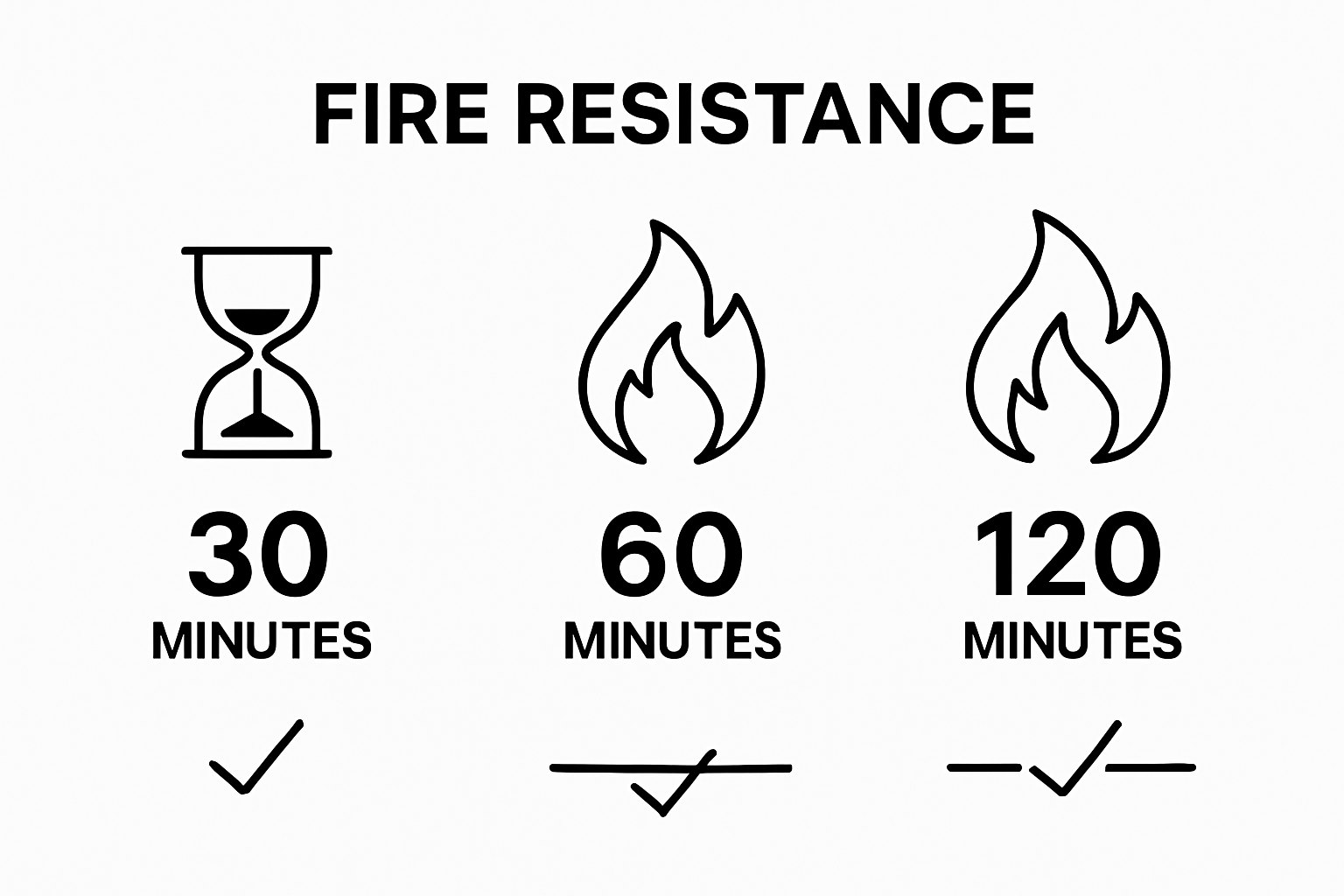
Key components of fire resistance ratings include:
- Structural stability under elevated temperatures
- Ability to prevent fire spread
- Maintaining load-bearing capacity
- Thermal insulation performance
Regulatory and Testing Standards
Professional organizations like the National Institute of Standards and Technology have developed comprehensive frameworks for establishing and testing fire resistance standards. These frameworks involve rigorous methodologies that assess how different materials respond to controlled fire exposure.
Steel fire resistance ratings are determined through standardized testing procedures that simulate realistic fire scenarios. Advanced heat treatment techniques play a crucial role in enhancing these ratings, allowing engineers to develop more fire-resistant steel components.
Industry standards typically evaluate fire resistance across multiple critical parameters:
- Temperature progression curves
- Mechanical load conditions
- Material deformation thresholds
- Structural collapse prevention
By establishing these precise ratings, professionals can design infrastructure that provides reliable protection during potential fire events, ultimately safeguarding human life and critical assets.
Applications of Fire-Resistant Steel in Various Industries
Fire-resistant steel plays a pivotal role across multiple industrial sectors, providing critical safety and structural performance in environments where thermal resilience is paramount. Its unique material properties enable engineers and designers to create robust solutions that protect infrastructure, equipment, and human lives from potential fire hazards.
Industrial and Construction Applications
In construction and infrastructure development, fire-resistant steel serves as a fundamental material for creating safe, durable structures. High-rise buildings, industrial facilities, and critical infrastructure rely on steel’s ability to maintain structural integrity during fire events. Advanced steel fabrication techniques enable the production of specialized steel components designed to withstand extreme thermal conditions.
Key industrial applications include:
- Fireproof building frameworks
- Industrial plant structural supports
- Emergency infrastructure design
- Protective equipment manufacturing
Specialized Sector Implementations
Critical industries such as mining, petrochemical, and aerospace demand exceptional fire resistance from their structural materials. These sectors require steel components that can maintain performance under extreme thermal stress while ensuring operational continuity and personnel safety.
Research from the American Institute of Steel Construction highlights that specialized fire-resistant steel treatments can extend structural performance by several critical minutes during potential fire scenarios. This additional time allows for crucial emergency responses and potential evacuation procedures.
Industries leveraging fire-resistant steel demonstrate a commitment to safety and risk mitigation. By selecting materials with superior thermal resilience, organizations can protect valuable assets, minimize potential economic losses, and prioritize human safety in high-risk environments.
Challenges and Innovations in Enhancing Steel Fire Resistance
Enhancing fire resistance in steel represents a complex engineering challenge that demands continuous technological innovation and sophisticated material science approaches. Researchers and engineers are constantly developing new strategies to improve steel’s thermal performance and structural integrity during extreme fire conditions.
Material Science and Coating Innovations
Advanced material science has introduced groundbreaking techniques for improving steel’s fire resistance. Intumescent coatings and nano-engineered thermal protective layers represent cutting-edge solutions that significantly extend steel’s performance under high-temperature environments. Discover our advanced steel manufacturing techniques that incorporate these innovative protective strategies.
Key technological approaches include:
- Nano-ceramic thermal barrier coatings
- Intumescent fire-resistant paint systems
- Ceramic-based protective overlays
- Advanced metallic composite treatments
Performance-Based Design Methodologies
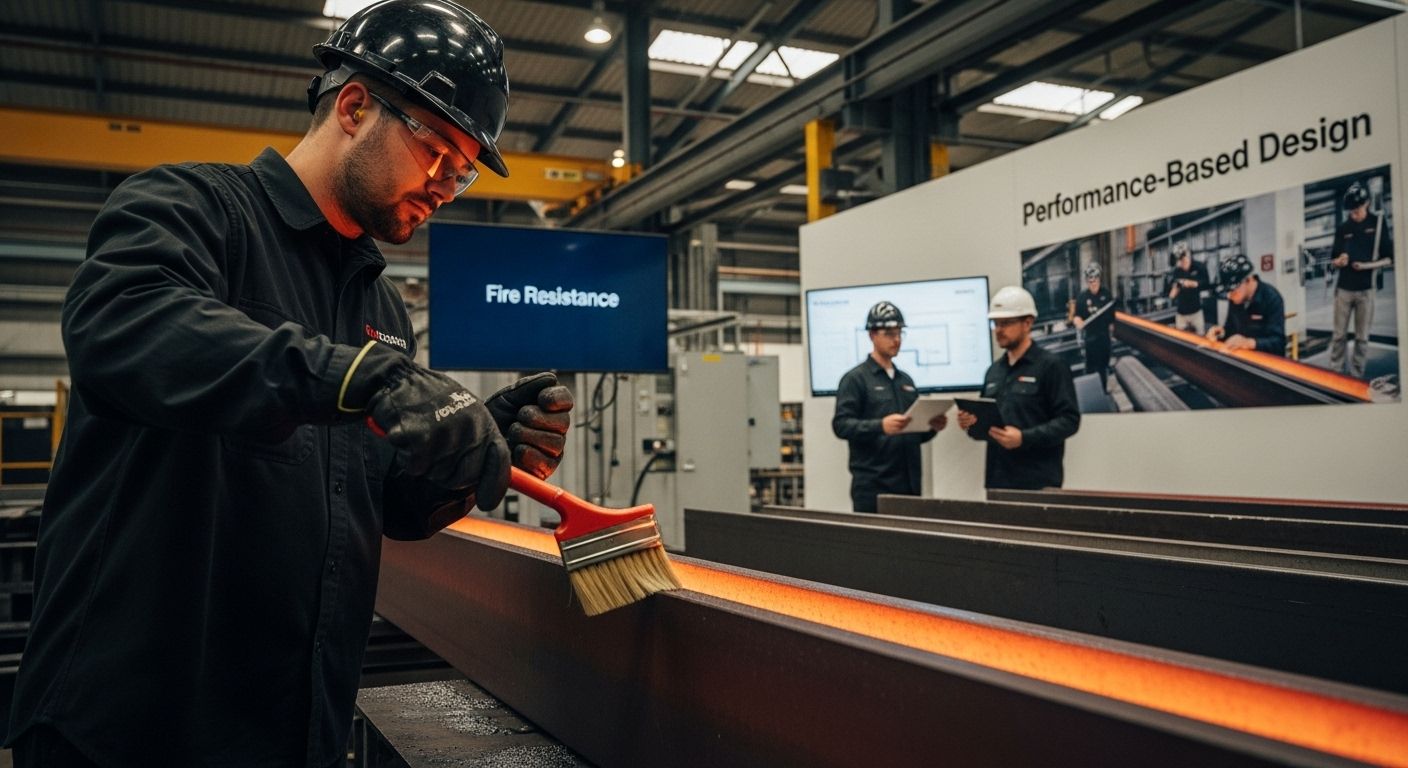
Modern engineering is shifting towards performance-based design methodologies that move beyond traditional prescriptive standards. According to research from the National Institute of Standards and Technology, these innovative approaches enable more precise predictions of structural behavior during fire events.
Engineers now employ sophisticated computational modeling and simulation techniques to assess how different steel compositions and treatments respond to various thermal scenarios. This approach allows for more nuanced and targeted fire resistance solutions that can be customized for specific industrial applications and environmental conditions.
The ongoing quest to enhance steel’s fire resistance continues to push the boundaries of material engineering, promising increasingly sophisticated solutions that prioritize safety, durability, and structural performance in high-risk environments.
Secure Your Project with Superior Fire-Resistant Steel Solutions
When it comes to fire resistance, you cannot afford to compromise on quality or expertise. If the article made you realise how challenging it is to protect structures and lives when extreme temperatures strike, you are not alone. At Genesis Steel, we address these very pain points by supplying high-quality hot-rolled steel sheets and steel plates engineered to deliver the critical structural integrity and fire-resistant performance your project demands. Our wide range of grades and experienced local team mean you get fast, reliable service and technical know-how you can trust.
Are you ready to transform your approach to fire safety with proven steel solutions? Partner with Genesis Steel today to ensure your next build withstands even the harshest conditions. For more insights and to see our full product selection, browse our Uncategorised Archives or visit our main site. Protect your investment and your people by choosing steel that stands up to the heat. Contact us now while your project is still in the planning stages for maximum impact.
Frequently Asked Questions
What is fire resistance in steel?
Fire resistance in steel refers to the material’s ability to maintain its structural integrity and load-bearing capacity when exposed to high temperatures. This characteristic is crucial for ensuring safety in construction and industrial applications.
How does steel respond to high heat?
When exposed to high temperatures, steel undergoes significant molecular changes that affect its strength. It begins losing structural integrity around 550 degrees Celsius, with notable reductions in load-bearing capacity occurring between 600 and 700 degrees Celsius.
Why is fire resistance important in construction?
Fire resistance is critical in construction because it helps prevent structural collapse during fire events, provides safety margins for personnel evacuation, and minimizes potential economic losses due to infrastructure damage.
What factors influence steel’s fire resistance?
Several factors influence fire resistance in steel, including the steel grade, carbon content, alloying elements, and manufacturing techniques. Advanced fabrication methods can also enhance the fire-resistance properties of steel components.
Below is a comparison table summarising how key factors influence the fire resistance of steel, as highlighted in the article.
| Factor | Influence on Fire Resistance | Explanation |
|---|---|---|
| Steel Grade | Significant | Different grades respond variably to heat based on alloy composition and intended use. |
| Carbon Content | Strong | Higher carbon generally reduces fire resistance due to altered molecular structure and lower ductility. |
| Alloying Elements | Strong | Addition of elements like chromium or nickel can enhance high-temperature stability. |
| Manufacturing Technique | Moderate to Strong | Advanced fabrication (e.g., heat treatment, controlled rolling) improves fire resistance. |
| Coating Type | Strong | Intumescent or nano-ceramic coatings provide thermal protection, prolonging structural integrity in fire. |
| Structural Design | Moderate | Design for load distribution and redundancy helps maintain integrity in high-heat scenarios. |