

Steel plays a massive role in everything from skyscrapers to your car’s frame, but not all steel is made the same way. Many people think hot rolled and cold rolled steel are nearly identical since they start with the same raw material. The shock is that the real difference has nothing to do with what goes in but everything to do with how it’s processed and used. Cold rolled steel can be up to 20 percent stronger than hot rolled steel just because of this.
Table of Contents
- Defining Hot Rolled Steel And Cold Rolled Steel
- The Importance Of Hot Rolling And Cold Rolling Processes
- Key Differences In Properties And Applications
- Choosing The Right Steel For Your Project
- Real-World Examples And Industry Applications
Quick Summary
| Takeaway | Explanation |
|---|---|
| Hot rolled steel is shaped at high temperatures. | The process involves heating steel above 900°C, making it easier to shape and reduce internal stress. |
| Cold rolled steel offers tighter tolerances. | Manufactured at room temperature, cold rolled steel provides better dimensional accuracy and surface finish. |
| Choose steel based on application needs. | Selecting between hot and cold rolled steel depends on project specifications, such as strength and precision. |
| Hot rolled steel is ideal for structural applications. | Its robust nature makes it suited for construction and heavy machinery projects where precision is less critical. |
| Cold rolled steel is best for high-precision needs. | Preferred in industries needing exceptional surface quality and accuracy, like automotive and electronics manufacturing. |
Defining Hot Rolled Steel and Cold Rolled Steel
Steel processing techniques play a critical role in determining the mechanical properties and performance characteristics of metal products. Hot rolled steel and cold rolled steel represent two fundamental manufacturing approaches that transform raw steel into versatile materials for industrial applications.
Understanding Hot Rolled Steel Processing
Hot rolled steel is manufactured through a sophisticated thermal processing method where steel is heated above its recrystallization temperature, typically around 900 degrees Celsius. According to materials science research from AZoM, this high-temperature treatment allows manufacturers to shape steel more easily, reducing internal stress and improving workability.
The hot rolling process involves several critical stages:
- Initial heating of steel billets to extremely high temperatures
- Passing the heated steel through powerful rolling mills
- Continuously reshaping the material while maintaining elevated temperatures
- Allowing controlled cooling to stabilize the steel’s molecular structure
Cold Rolled Steel: Precision Manufacturing
Cold rolled steel represents a more refined manufacturing technique that occurs after the initial hot rolling process. Unlike hot rolling, cold rolling happens at room temperature, which enables significantly tighter dimensional tolerances and superior surface finish.
Key characteristics of cold rolled steel include:
- Enhanced mechanical strength
- Improved surface smoothness
- Increased dimensional precision
- More consistent and predictable material properties
Read more about our hot rolled steel options for Gauteng industries, where we provide specialized steel solutions tailored to industrial requirements. The selection between hot and cold rolled steel depends on specific project needs, mechanical performance expectations, and intended application parameters.
The table below compares the core features and differences between hot rolled and cold rolled steel as described in the article.
| Feature/Property | Hot Rolled Steel | Cold Rolled Steel |
|---|---|---|
| Processing Temperature | Above 900°C | Room temperature |
| Dimensional Accuracy | Lower (looser tolerances) | Higher (tighter tolerances) |
| Surface Finish | Rougher | Smoother (superior finish) |
| Mechanical Strength | Standard | Up to 20% stronger than hot rolled |
| Internal Stress | Reduced through plastic deformation | Increased due to room-temperature processing |
| Common Uses | Construction, heavy machinery, structural frames | Automotive panels, appliances, precision components |
| Production Cost | Lower | Higher (due to extra processing) |
The Importance of Hot Rolling and Cold Rolling Processes
Manufacturing steel involves sophisticated processing techniques that fundamentally transform raw materials into versatile industrial products. Hot rolling and cold rolling processes represent critical metallurgical methods that determine steel’s mechanical properties, structural integrity, and performance characteristics.
Economic and Industrial Significance
According to research from ScienceDirect, hot rolling is crucial for reducing steel slab thickness and improving production efficiency. These processes are not merely technical procedures but strategic manufacturing approaches that directly impact industrial productivity and material quality.
The economic implications of these processes are substantial:
- Reduction of material waste during manufacturing
- Enhanced production throughput
- Improved material performance across various applications
- Cost effective metal transformation techniques
Performance and Structural Modifications
Hot rolling and cold rolling fundamentally alter steel’s microstructural characteristics. Hot rolling occurs at high temperatures, allowing significant plastic deformation and eliminating internal material stress. Cold rolling, performed at room temperature, provides precision and improves surface finish while increasing material strength.
Key performance modifications include:
- Increased material strength and hardness
- Improved dimensional accuracy
- Enhanced surface smoothness
- Refined grain structure
Explore our comprehensive steel processing techniques that demonstrate how advanced manufacturing methods translate into superior industrial solutions. Understanding these processes enables engineers and manufacturers to select optimal steel products for specific industrial requirements and performance expectations.
Key Differences in Properties and Applications
Understanding the distinctive properties and applications of hot rolled and cold rolled steel is crucial for engineers, manufacturers, and industrial professionals selecting the most appropriate material for specific projects. These processing techniques result in significantly different material characteristics that influence performance across various industrial sectors.
Mechanical and Surface Property Variations
According to materials research from AZoM, hot rolled and cold rolled steel exhibit fundamental differences in mechanical properties and surface characteristics. Hot rolled steel typically presents a rougher surface texture and less precise dimensional tolerances, while cold rolled steel offers superior surface smoothness and exceptional dimensional accuracy.
Key mechanical property differences include:
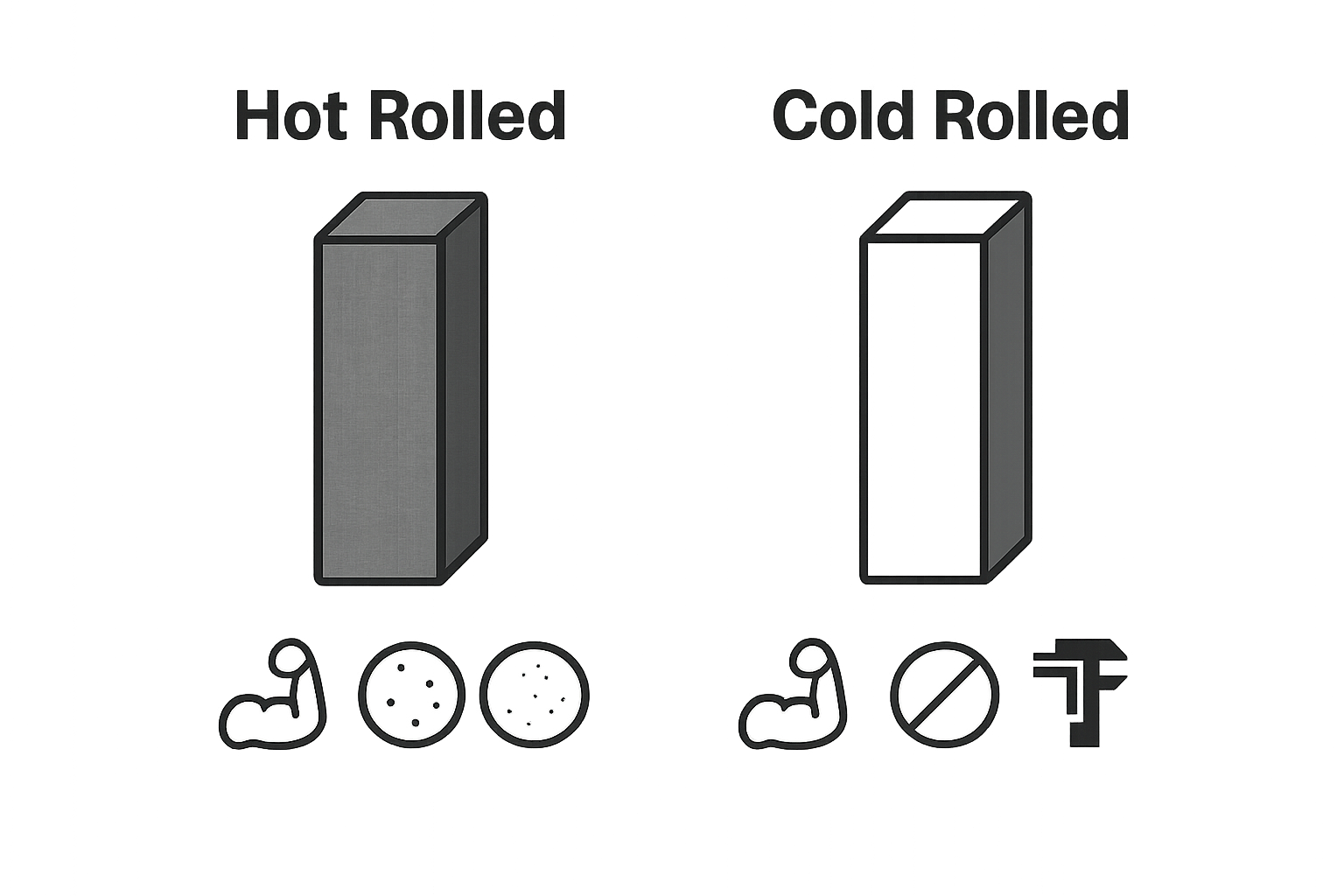
- Surface roughness levels
- Dimensional precision
- Internal material stress
- Grain structure refinement
Industrial and Sectoral Applications
The unique properties of each steel processing method determine their suitability for specific industrial applications.
This table summarises the main application areas for hot rolled and cold rolled steel based on their material characteristics and industrial relevance.
| Application Sector | Hot Rolled Steel Usage | Cold Rolled Steel Usage |
|---|---|---|
| Building Construction | Frames, beams, infrastructure | Limited (only where high finish or precision needed) |
| Heavy Machinery | Foundations, frames, shipping containers | Not commonly used |
| Automotive Industry | Chassis, structural components | Body panels, interior/exterior precision parts |
| Electronic & Appliance Manufacturing | Rarely used | Enclosures, casing, appliance panels |
| Precision Engineering | Not typical | High-tolerance mechanical and medical components |
- Structural building frames
- Railway track components
- Heavy machinery frames
- Large industrial equipment
Cold rolled steel, with its refined surface and tight tolerances, becomes the preferred choice for applications demanding high precision and aesthetic quality, including:
- Automotive body panels
- Home appliance manufacturing
- Precision engineering components
- Electronic enclosures
Learn more about our specialized steel solutions for Gauteng industries, where we match specific processing techniques to unique industrial requirements. The selection between hot and cold rolled steel ultimately depends on the precise performance characteristics and application demands of each specific project.
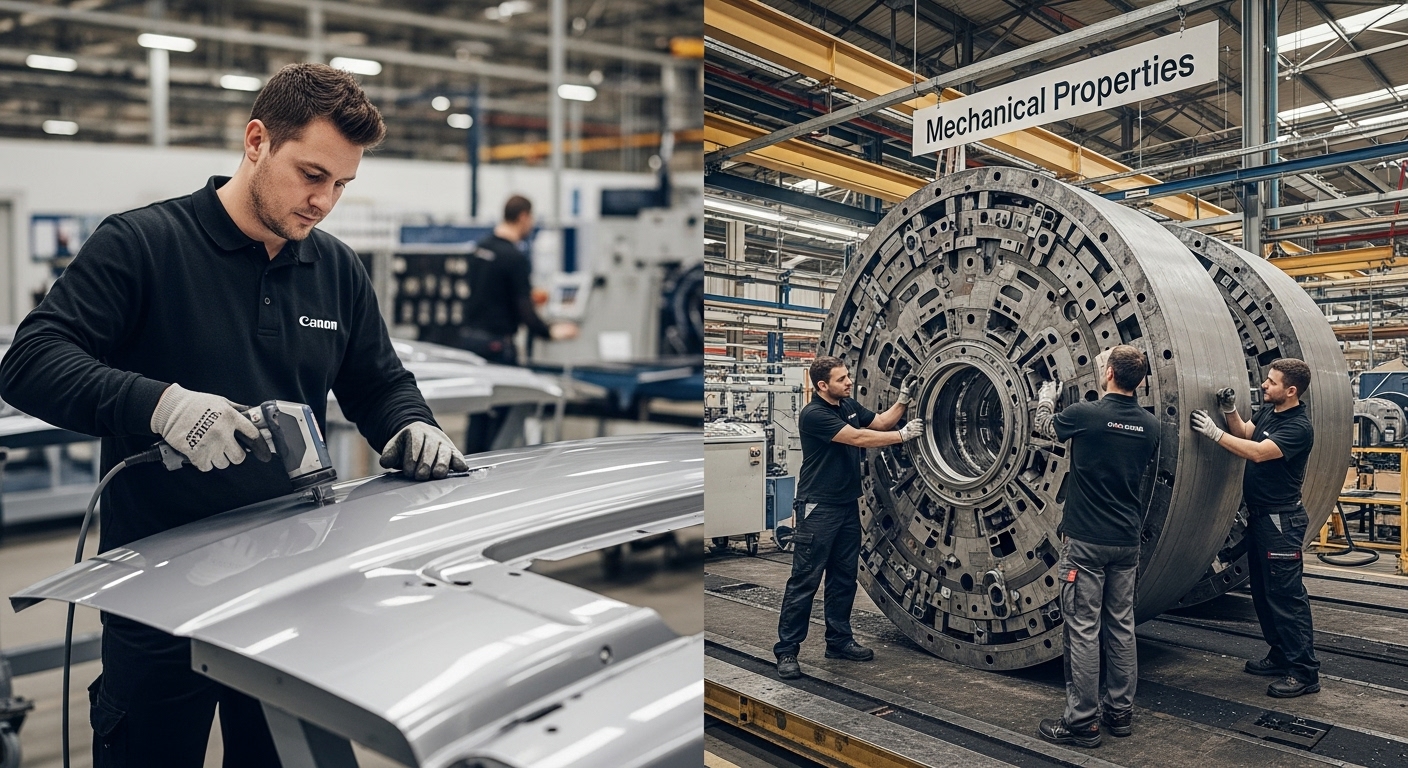
Choosing the Right Steel for Your Project
Selecting the appropriate steel processing method requires careful consideration of project specifications, performance requirements, and budgetary constraints. Engineers and project managers must evaluate multiple factors to determine whether hot rolled or cold rolled steel best suits their specific industrial applications.
Performance Requirement Analysis
According to materials engineering research, the selection of steel processing technique significantly impacts final product performance. Critical evaluation involves assessing project parameters such as dimensional precision, mechanical strength, surface finish, and intended operational environment.
Key performance considerations include:
- Required mechanical strength levels
- Dimensional accuracy tolerance
- Anticipated environmental exposure
- Budget constraints
- Expected product lifecycle
Decision Making Framework
The decision between hot rolled and cold rolled steel depends on specific project requirements. Hot rolled steel provides excellent structural integrity for large-scale industrial applications, while cold rolled steel offers superior precision for high-tolerance engineering projects.
Selection criteria typically involve:
- Evaluating mechanical performance needs
- Understanding environmental stress factors
- Analyzing cost effectiveness
- Considering manufacturing complexity
- Assessing long term durability requirements
Discover our comprehensive carbon steel solutions for industrial projects to gain deeper insights into material selection strategies. The ultimate goal is matching steel processing techniques with precise project specifications to achieve optimal performance, cost efficiency, and structural reliability.
Real-World Examples and Industry Applications
Steel processing techniques directly influence product performance across diverse industrial sectors, with hot rolled and cold rolled steel finding specialized applications in multiple engineering and manufacturing domains. Understanding these real-world implementations helps engineers and designers make informed material selection decisions.
Construction and Structural Engineering
According to materials research from AZoM, hot rolled steel plays a crucial role in large-scale infrastructure and construction projects. Its robust characteristics make it ideal for applications demanding substantial structural integrity and load-bearing capacity.
Typical construction applications include:
- Bridge structural components
- Building framework and support beams
- Industrial warehouse infrastructure
- Heavy machinery foundations
- Shipping container manufacturing
Precision Manufacturing and Engineering
Cold rolled steel emerges as the preferred material in industries requiring exceptional dimensional accuracy and superior surface finish. Its refined processing enables intricate design implementation across various high-precision sectors.
Precision manufacturing applications encompass:
- Automotive body panels
- Electronic equipment enclosures
- Precision mechanical components
- Medical device manufacturing
- Advanced robotics engineering
Explore our comprehensive carbon steel solutions for industrial projects, demonstrating how specialized steel processing techniques translate technical capabilities into practical, high-performance industrial solutions. The strategic selection of hot or cold rolled steel directly influences product quality, performance reliability, and overall project success across multiple engineering domains.
Choose Steel with Confidence for Your Next Industrial Project
Struggling to decide between hot rolled and cold rolled steel for your build or manufacturing line? The article above explains how choosing the wrong steel can impact your project’s strength, budget, and overall quality. At Genesis Steel, we understand how overwhelming it can be to match steel sheet or plate properties to your specification. Many buyers worry about getting the right grade or missing out on the performance and finishing advantages discussed in this guide. Our expertise lies in helping Gauteng industries and businesses select exactly the steel that delivers reliable results, whether you need robust hot rolled sheets or precise plates. For even more knowledge, check out Uncategorised Archives – Genesis Steel where you’ll find further resources to inform your choice.
Ready to solve your steel selection challenge today? Partner with Genesis Steel for personalised guidance, fast lead times, and a wide range of quality hot-rolled steel sheets and plates guaranteed to fit your needs. Make your next project a success by visiting https://genesissteel.co.za and speak to our experienced team now.
Frequently Asked Questions
What is the main difference between hot rolled steel and cold rolled steel?
Hot rolled steel is processed at high temperatures, resulting in lower dimensional precision and a rough surface finish, while cold rolled steel is shaped at room temperature, providing tighter tolerances and a smoother surface.
What are the typical applications for hot rolled steel?
Hot rolled steel is commonly used in structural applications such as building frameworks, railway tracks, and heavy machinery due to its strength and ability to withstand high loads without requiring precise dimensions.
Why is cold rolled steel preferred for precision manufacturing?
Cold rolled steel is favored in precision manufacturing due to its enhanced mechanical strength, improved surface finish, and tighter dimensional tolerances, making it ideal for applications like automotive components and electronics enclosures.
How do the processing techniques impact the properties of steel?
The hot rolling process reduces internal stresses and allows for significant plastic deformation, while cold rolling increases strength and surface quality, resulting in different mechanical properties and suitability for various applications.