

Heat treated steel sounds like a boring technical term, but it actually sits at the heart of almost every major industry in South Africa. Think cars, mining, and massive construction all relying on steel that goes through an advanced process to get extra tough.
What’s wild is how this works purely by tweaking temperature and timing and yet the result can mean steel becomes up to three times harder and more durable than untreated metal. This transformation is all about science and precision, not luck.
Table of Contents
- Understanding The Basics Of Heat Treated Steel
- The Importance Of Heat Treatment In Steel Production
- How Heat Treatment Modifies Steel Properties
- Key Applications Of Heat Treated Steel In Industry
- Factors To Consider When Selecting Heat Treated Steel
Quick Summary
| Takeaway | Explanation |
|---|---|
| Heat treatment enhances steel properties. | Controlled heating and cooling alter steel’s microstructure, improving its hardness, strength, and durability. |
| Key processes include annealing and quenching. | These methods modify steel for specific applications by softening or increasing hardness, enhancing its mechanical performance. |
| Heat treated steel is vital in critical industries. | Sectors like automotive, aerospace, and construction rely on these tailored materials to withstand extreme operational conditions. |
| Select steel based on chemical composition. | The alloying elements, particularly carbon, significantly affect the material’s heat treatment response and performance characteristics. |
| Understand operational environments for selection. | Assessing expected mechanical and thermal stresses is crucial for ensuring the appropriate heat treated steel is utilized in specific applications. |
Understanding the Basics of Heat Treated Steel
Heat treated steel represents a critical metallurgical process that transforms raw steel into a material with enhanced mechanical properties. At its core, heat treatment involves carefully controlled heating and cooling cycles designed to modify the internal microstructure of steel, ultimately improving its performance characteristics for specific industrial applications.
The Science Behind Heat Treatment
The fundamental principle of heat treatment revolves around manipulating steel’s molecular structure through precise temperature variations. By subjecting steel to specific thermal cycles, metallurgists can alter its physical and mechanical properties without changing the metal’s overall chemical composition.
This process allows engineers to enhance critical attributes such as hardness, strength, ductility, and wear resistance.
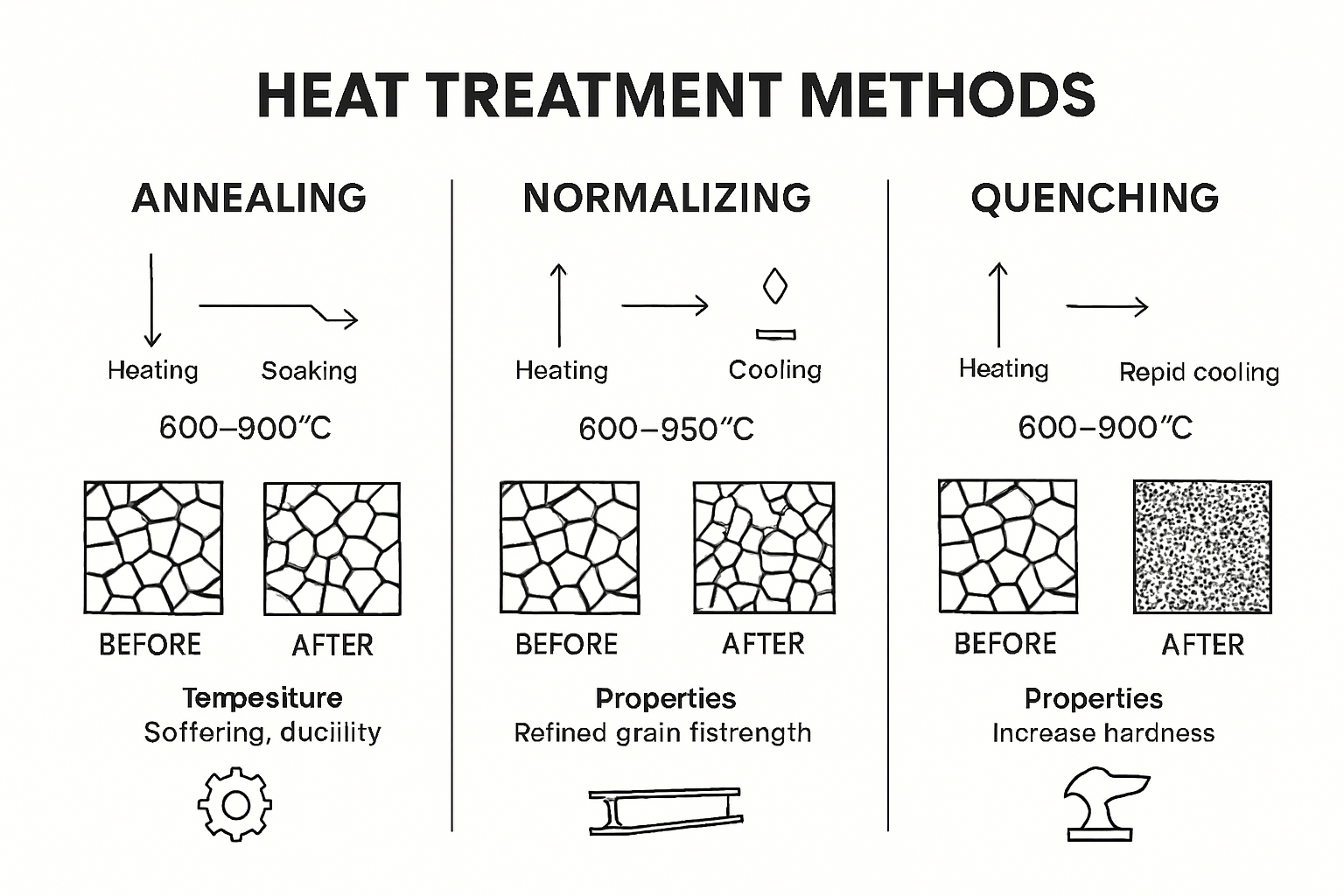
Key transformation processes in heat treatment include:
- Annealing: Softening steel by heating and slowly cooling to reduce internal stresses
- Normalizing: Refining steel’s grain structure to improve overall mechanical properties
- Quenching: Rapidly cooling steel to increase hardness and strength
To help you quickly see the differences between the main heat treatment processes, here is a comparison of their methods and effects on steel properties:
| Heat Treatment Process | Method Description | Main Purpose | Key Resulting Property |
|---|---|---|---|
| Annealing | Heat and slowly cool steel | Reduce internal stresses | Increased ductility, softer |
| Normalizing | Heat and air-cool steel | Refine grain structure | Improved toughness |
| Quenching | Heat and rapidly cool (often in oil or water) | Increase hardness | Higher hardness, brittleness |
Industrial Applications and Significance
The strategic importance of heat treated steel spans multiple critical industries. Explore our comprehensive guide on industrial steel grades to understand the nuanced applications of heat treated materials. Manufacturing sectors like automotive, aerospace, construction, and mining rely extensively on heat treated steel components that can withstand extreme operational conditions.
According to research from the Metallurgical Society, heat treatment enables engineers to precisely engineer steel’s microstructure, creating materials that meet increasingly demanding performance specifications. By controlling cooling rates, temperature ranges, and duration of thermal cycles, metallurgists can develop steel with tailored characteristics ranging from ultra-hard cutting tools to flexible structural components.
The Importance of Heat Treatment in Steel Production
Heat treatment plays a pivotal role in transforming standard steel into a high-performance material essential for modern industrial applications. By strategically manipulating temperature and cooling processes, manufacturers can dramatically enhance steel’s mechanical properties, making it more suitable for challenging operational environments.
Performance Enhancement Through Precise Thermal Cycles
The critical importance of heat treatment lies in its ability to fundamentally modify steel’s internal microstructure without altering its base chemical composition. This scientific approach allows engineers to customize steel’s characteristics with remarkable precision. Thermal processing enables the controlled transformation of steel’s grain structure, resulting in materials with superior mechanical attributes such as increased strength, improved ductility, and enhanced wear resistance.
Key performance improvements achieved through heat treatment include:
- Increased material hardness for tools and cutting equipment
- Enhanced structural integrity for critical mechanical components
- Improved resistance to mechanical stress and fatigue
Economic and Industrial Implications
Discover more about specialized steel production techniques that leverage advanced heat treatment methodologies. The economic significance of heat treatment extends far beyond metallurgical science, directly impacting manufacturing efficiency and product longevity across multiple industrial sectors.
According to research from The Minerals, Metals & Materials Society, heat treatment processes are fundamental in optimizing steel properties for demanding environments. By carefully controlling thermal cycles, manufacturers can produce steel components that meet increasingly sophisticated engineering requirements, reducing material failure risks and extending equipment operational lifespans.
How Heat Treatment Modifies Steel Properties
Heat treatment represents a sophisticated metallurgical process that systematically transforms steel’s intrinsic properties by manipulating its internal microstructure through precisely controlled thermal cycles. This scientific approach enables engineers to fundamentally alter steel’s mechanical characteristics without changing its core chemical composition.
Microstructural Transformation Mechanisms
The core principle of heat treatment involves strategically heating steel to specific temperatures and then cooling it at controlled rates. During these thermal cycles, steel’s crystalline structure undergoes fundamental reorganization, which directly influences its mechanical performance. This microscopic transformation allows metallurgists to modify critical material attributes such as hardness, strength, ductility, and wear resistance.
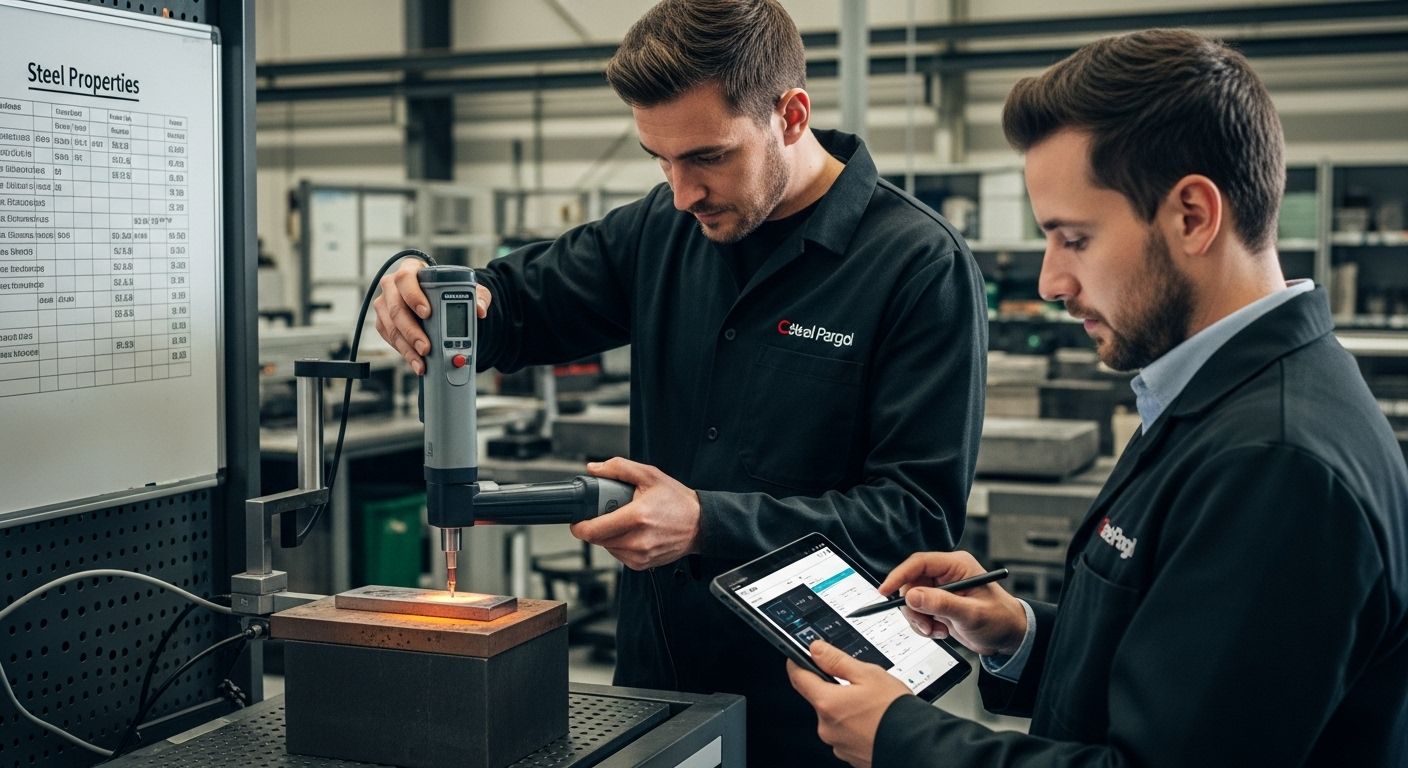
Key microstructural modifications include:
- Phase transformations within steel’s crystalline lattice
- Redistribution of carbon and alloying elements
- Elimination of internal stress and structural defects
Performance Property Modifications
Learn more about advanced steel manufacturing techniques that leverage precise thermal processing. Different heat treatment methods produce distinct material characteristics, enabling engineers to design steel with targeted performance profiles for specific industrial applications.
According to research from the Materials Research Society, heat treatment enables metallurgists to engineer steel with remarkable precision. By controlling variables like heating duration, peak temperature, and cooling rate, manufacturers can produce steel components with exceptional mechanical properties tailored to meet increasingly sophisticated engineering requirements.
Key Applications of Heat Treated Steel in Industry
Heat treated steel serves as a critical material across numerous industrial sectors, providing engineers and manufacturers with versatile solutions for demanding operational environments. By leveraging advanced thermal processing techniques, industries can develop steel components with precisely engineered mechanical properties that meet increasingly complex performance requirements.
Strategic Industrial Deployment
Heat treated steel finds extensive application in high-performance sectors where material reliability and durability are paramount. The strategic modifications achieved through thermal processing enable steel to withstand extreme mechanical stresses, temperature variations, and corrosive conditions that would compromise standard steel materials.
Primary industrial domains utilizing heat treated steel include:
- Automotive manufacturing for critical engine and transmission components
- Aerospace engineering for structural and mechanical parts
- Heavy machinery and mining equipment construction
- Precision tooling and cutting instrument production
- Oil and gas infrastructure development
Performance Critical Applications
Explore our comprehensive guide to industrial steel specifications that highlight the transformative capabilities of heat treatment. Different industrial applications demand specific material characteristics, making heat treated steel an indispensable engineering solution.
According to research from the National Institute of Standards and Technology, heat treatment enables manufacturers to develop steel with tailored mechanical properties. By precisely controlling thermal cycles, engineers can create materials with optimized strength, hardness, and resilience, addressing the sophisticated performance requirements across diverse industrial landscapes.
Factors to Consider When Selecting Heat Treated Steel
Selecting the appropriate heat treated steel requires a comprehensive understanding of multiple complex factors that directly influence material performance and suitability for specific industrial applications. Engineers and procurement specialists must carefully evaluate various technical and operational parameters to ensure optimal material selection.
Chemical Composition and Mechanical Properties
The chemical composition of steel fundamentally determines its heat treatment potential and final mechanical characteristics. Critical elements like carbon, manganese, chromium, and nickel play pivotal roles in defining steel’s response to thermal processing and its ultimate performance capabilities.
Key considerations in material selection include:
- Carbon content and its impact on hardness and strength
- Alloying element percentages affecting material performance
- Potential interactions between different metallic components
- Corrosion resistance requirements
- Expected operational temperature ranges
When selecting heat treated steel for your project or industrial application, several key factors must be considered. The table below summarises the main selection criteria and their significance:
| Selection Factor | Description |
|---|---|
| Chemical composition | Influences heat treatment response and final properties |
| Carbon content | Directly affects hardness and strength levels |
| Alloying elements (e.g. Cr, Ni) | Modify performance, corrosion resistance, and temperature limits |
| Expected operating temperature | Determines material stability and suitability |
| Corrosion resistance | Required for harsh or chemical environments |
| Loading and stress conditions | Guides strength and ductility requirements |
Performance Environment Assessment
Discover our comprehensive guide to steel grade identification that provides deeper insights into material selection strategies. Understanding the specific operational environment is crucial for selecting heat treated steel that can withstand anticipated mechanical and thermal stresses.
According to research from the National Academies Press, mechanical properties are intricately linked to chemical composition and manufacturing processes. By carefully analyzing factors such as anticipated loading conditions, temperature fluctuations, and potential chemical exposures, engineers can make informed decisions about the most suitable heat treated steel for their specific industrial requirements.
Unlock the Full Power of Heat Treated Steel for Your Next Project
Struggling to find steel that can handle high stress, heavy loads, or corrosive environments? You have just learned how vital heat treatment is in transforming steel’s microstructure for better hardness, strength, and durability. This process is essential for industries needing materials that perform reliably under pressure. When standard steel just does not make the cut, getting the right grade and a dependable supplier is everything. Learn how our wide selection of steel sheets and plates matches the advanced requirements highlighted in this article.
Bring your project requirements to Genesis Steel. Benefit from expert advice, a huge range of heat treatable grades, and South African service trusted by top industries. Need help identifying the right material for your industrial application? Get guidance on steel grade selection and fast, efficient delivery direct from our well-established facility. Secure quality, strength, and peace of mind—explore your options now or contact us today to take your project further.
Frequently Asked Questions
What is heat treated steel?
Heat treated steel is steel that has undergone a controlled heating and cooling process to enhance its mechanical properties such as hardness, strength, and ductility while maintaining its chemical composition.
What are the benefits of using heat treated steel in industrial applications?
The benefits of heat treated steel include improved hardness, increased structural integrity, enhanced wear resistance, and customized mechanical properties tailored for specific applications like automotive, aerospace, and construction.
How does the heat treatment process modify the properties of steel?
The heat treatment process involves heating steel to specific temperatures and then cooling it at controlled rates, which leads to microstructural changes that enhance properties like strength, ductility, and fatigue resistance.
What industrial sectors commonly utilize heat treated steel?
Heat treated steel is widely used in sectors such as automotive manufacturing, aerospace engineering, heavy machinery construction, precision tooling, and oil and gas infrastructure due to its reliability and performance in challenging environments.