

Structural steel forms the backbone of everything from soaring skyscrapers to massive bridges, holding up the world we live in. Most people think of steel as just heavy metal beams, but that misses the real story. Experts have engineered structural steel so precisely that it is nearly 98% pure iron, with carefully chosen alloys making up the rest. That tiny difference is what gives each steel grade its signature strength and durability, and the secrets behind those blends might surprise you.
Table of Contents
- Defining Structural Steel: Composition And Types
- The Importance Of Structural Steel In Construction
- How Structural Steel Works: Properties And Benefits
- Applications Of Structural Steel: From Buildings To Bridges
Quick Summary
| Takeaway | Explanation |
|---|---|
| Structural steel is essential for modern construction. | Its strength, durability, and reliability make it a preferred choice in various engineering applications. |
| Chemical composition affects performance. | Structural steel typically contains 98% iron and 2% alloying elements, impacting its strength and durability. |
| Selecting the right steel type is crucial. | Different grades like ASTM A36 and A572 are suitable for specific applications based on load and environmental needs. |
| Steel offers significant economic benefits. | Its recyclability and reduced maintenance add cost-effectiveness, making it a smart long-term investment for projects. |
| Structural steel supports innovative designs. | Its high strength-to-weight ratio enables architects to create complex structures with less material, enhancing sustainability. |
Defining Structural Steel: Composition and Types
Structural steel represents a critical engineering material designed specifically for construction and industrial applications where strength, durability, and reliability are paramount. Learn more about steel manufacturing to understand its foundational processes.
Chemical Composition and Characteristics
At its core, structural steel comprises primarily iron with strategic alloying elements that enhance its mechanical properties. According to research from the Federal Highway Administration, typical structural steel contains approximately 98% iron and 2% carefully selected alloying elements such as:
- Carbon (0.10-0.25%): Provides fundamental strength and hardness
- Manganese (0.80-1.50%): Improves hardenability and strength
- Silicon (0.10-0.50%): Enhances oxidation resistance
- Trace amounts of nickel, chromium, and copper for specialized performance
These precise chemical compositions determine the steel’s ultimate tensile strength, yield point, and overall structural integrity. Modern manufacturing techniques allow for remarkable control over these elemental percentages, enabling engineers to specify steel with exact performance characteristics.
The following table details the key alloying elements found in structural steel, highlighting their percentage ranges and contributions to the steel’s characteristics.
| Alloying Element | Percentage Range | Primary Contribution |
|---|---|---|
| Carbon | 0.10 – 0.25% | Provides strength and hardness |
| Manganese | 0.80 – 1.50% | Improves hardenability and strength |
| Silicon | 0.10 – 0.50% | Enhances oxidation resistance |
| Nickel, Chromium, Copper | Trace amounts | Specialised performance (corrosion, toughness) |
Primary Types of Structural Steel
Engineering standards categorize structural steel into several critical grades and types, each suited for specific applications. The most common varieties include:
- ASTM A36: Mild carbon steel, standard for general structural applications
- ASTM A572: High-strength, low-alloy steel with superior mechanical properties
- ASTM A992: Preferred grade for wide-flange shapes with controlled chemistry
- Weathering Steel: Designed to develop protective rust layer without compromising structural integrity
Selecting the appropriate steel type depends on factors like anticipated load, environmental conditions, fabrication requirements, and specific project engineering specifications.
Below is a comparison table outlining the main types of structural steel discussed and their defining characteristics, to help clarify when each variety is most suitable.
| Steel Grade/Type | Key Properties | Typical Applications |
|---|---|---|
| ASTM A36 | Mild carbon steel, good weldability, standard strength | General structural use, fabrication |
| ASTM A572 | High-strength, low-alloy, enhanced mechanical traits | Heavy construction, bridges, skyscrapers |
| ASTM A992 | Controlled chemistry, high strength, ductile | Wide-flange shapes, beams, modern buildings |
| Weathering Steel | Forms protective rust, corrosion resistant | Outdoor/bridge projects, marine environments |
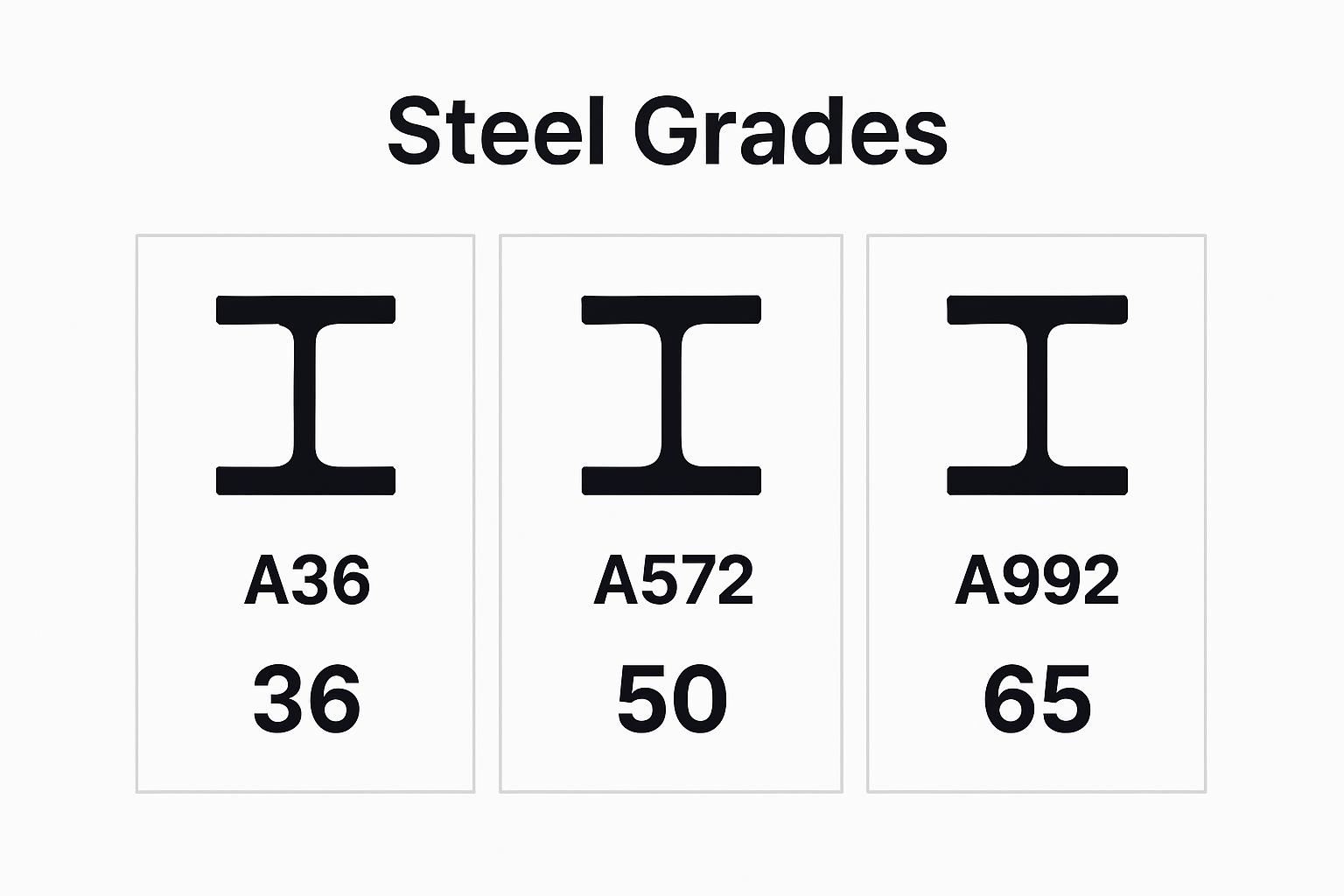
Professional metallurgists and structural engineers collaborate to determine the most suitable steel grade for each unique construction challenge.
Understanding structural steel goes beyond simple material selection – it represents a sophisticated engineering decision balancing performance, cost-effectiveness, and long-term structural reliability.
The Importance of Structural Steel in Construction
Structural steel represents a foundational material that drives modern construction and engineering, offering unparalleled performance across diverse industrial applications. Explore critical structural steel applications for deeper insights into its transformative potential.
Structural Performance and Engineering Advantages
The significance of structural steel stems from its exceptional mechanical properties that enable complex architectural and engineering solutions. According to research from the Federal Highway Administration, steel provides remarkable advantages that make it indispensable in contemporary construction:
- High Strength-to-Weight Ratio: Enables lighter structures with superior load-bearing capabilities
- Exceptional Ductility: Allows controlled deformation without catastrophic failure
- Predictable Engineering Behavior: Enables precise structural modeling and design
These characteristics translate into structures that can withstand significant environmental stresses, from seismic events to extreme weather conditions, while maintaining structural integrity and safety.
Economic and Sustainable Construction Benefits
Beyond performance, structural steel offers compelling economic and environmental advantages. Modern manufacturing processes have transformed steel into a highly sustainable construction material with significant lifecycle benefits:
- Rapid fabrication and installation reducing project timelines
- 100% Recyclability: Can be reprocessed without losing material quality
- Reduced long-term maintenance requirements
- Lower overall construction and lifecycle costs
Engineering professionals recognize structural steel as more than a building material—it represents a strategic investment in durability, efficiency, and sustainable infrastructure development. Its versatility enables everything from intricate architectural designs to robust industrial facilities, making it an irreplaceable component in modern construction practices.
By combining exceptional mechanical properties with economic sustainability, structural steel continues to shape our built environment, driving innovation across multiple industrial sectors.
How Structural Steel Works: Properties and Benefits
Structural steel operates through a sophisticated interplay of mechanical properties that make it a cornerstone of modern engineering and construction. Learn how steel is transformed to understand its remarkable performance characteristics.
Mechanical Behavior and Performance Dynamics
The functionality of structural steel hinges on its unique metallurgical structure and carefully engineered composition. According to research from the Federal Highway Administration, steel exhibits complex mechanical behaviors that distinguish it from other construction materials:
- Stress-Strain Relationship: Demonstrates predictable deformation under load
- Yield Point: Indicates precise moment when material begins permanent deformation
- Ultimate Tensile Strength: Represents maximum load-bearing capacity before failure
These characteristics allow engineers to precisely calculate and predict structural performance, enabling safe and efficient design across diverse engineering applications.
Corrosion Resistance and Durability Mechanisms
Modern structural steel incorporates advanced metallurgical techniques that dramatically enhance its long-term performance and environmental resilience. Key durability mechanisms include:
- Protective oxide layer formation in weathering steel variants
- Advanced alloying elements that improve corrosion resistance
- Engineered surface treatments that extend material lifespan
- Reduced maintenance requirements compared to traditional construction materials
The self-protecting properties of certain steel grades mean structures can maintain structural integrity even in challenging environmental conditions, from marine environments to industrial settings with high chemical exposure.
Structural steel represents more than a mere construction material—it embodies a sophisticated engineering solution that combines strength, adaptability, and long-term performance. Its ability to balance complex mechanical requirements with economic and sustainable design principles makes it an indispensable resource in contemporary engineering and construction practices.
Applications of Structural Steel: From Buildings to Bridges
Structural steel serves as a versatile material powering infrastructure across multiple industries and architectural domains. Explore industry-specific steel applications to understand its transformative potential in contemporary engineering.
Architectural and Construction Applications
In architectural engineering, structural steel provides unparalleled design flexibility and performance capabilities. According to research from the Federal Highway Administration, steel enables complex structural solutions across diverse construction scenarios:
- High-Rise Buildings: Supporting vertical load requirements
- Complex Geometrical Structures: Enabling innovative architectural designs
- Modular Construction Systems: Facilitating rapid assembly and precision engineering
Modern architects leverage structural steel’s exceptional strength-to-weight ratio to create landmark buildings with minimal material usage, reducing overall construction costs and environmental impact.
Infrastructure and Engineering Applications
Beyond architectural uses, structural steel plays a critical role in infrastructure development, particularly in bridge construction and industrial facilities:
- Transportation infrastructure like bridges and transit systems
- Industrial manufacturing facilities
- Power generation and energy infrastructure
- Large-scale agricultural and mining infrastructure
Engineering professionals appreciate structural steel for its ability to withstand extreme environmental conditions, offering reliable performance in challenging operational contexts. Its adaptability allows engineers to design structures that meet specific regional requirements, from seismic zones to corrosive industrial environments.
Structural steel represents more than a construction material—it embodies human engineering’s capacity to transform raw metallurgical science into sophisticated, sustainable infrastructure solutions that drive societal progress and economic development.
Transform Your Next Project with Quality Structural Steel Solutions
Choosing the right structural steel is crucial for construction success. As discussed in the article, challenges such as finding the best grade, achieving long-term strength, and ensuring reliable performance are top concerns for engineers and builders. Too often, sourcing the wrong steel or facing delays can risk both safety and your project’s bottom line.
Browse our latest product selection to solve these challenges
When you work with Genesis Steel, you gain access to a comprehensive range of hot-rolled steel sheets and plates, all available in various grades to match your specification. Our reputation for speed and service means no more waiting endlessly for materials. Secure your order now and move forward with confidence, knowing South Africa’s structural steel experts are behind you. Learn more and see how our solutions meet your needs.
Frequently Asked Questions
What is structural steel made of?
Structural steel is primarily composed of iron, with about 2% alloying elements such as carbon, manganese, and silicon that improve its strength and durability.
What are the main types of structural steel?
The main types of structural steel include ASTM A36 (mild carbon steel), ASTM A572 (high-strength, low-alloy steel), ASTM A992 (used for wide-flange shapes), and weathering steel which develops a protective rust layer.
What are the advantages of using structural steel in construction?
Structural steel offers a high strength-to-weight ratio, exceptional ductility, predictable engineering behavior, and is highly recyclable, which supports both economic and sustainable construction practices.
How does structural steel withstand environmental stresses?
Structural steel’s mechanical properties, such as its yield point and ultimate tensile strength, allow it to endure significant stresses from environmental factors like seismic events and extreme weather while maintaining structural integrity.